
Is SMP suitable for people with a pale complexion and blonde hair?

We do not have any experience with blonde hair so I would not recommend Scalp MicroPigmentation at this time for this combination of skin and hair color.
Is SMP suitable for people with a pale complexion and blonde hair?
We do not have any experience with blonde hair so I would not recommend Scalp MicroPigmentation at this time for this combination of skin and hair color.
Hi Dr. Rassman,
I’ve been on Propecia and Rogaine for 3 years and have been delighted with the results……up until now. Propecia and Rogaine thickened the hair all over my scalp and slowed the regression of my hairline. Unfortunately, it’s becoming apparent that my crown is now thinning, an area that had been strong prior to treatment.
I’m 28 now, and, if possible, I’d like to keep my crown hair for another few years, what are my options?
1) Would upping propecia dosage ever be advisable for a 28 year old?
2) Should I consider Avodart off-limits until it is FDA approved for hair loss?
3) What would you do if you were in this situation?I’ve a check up with the doctor (who I’m very happy with) that originally prescribed the treatment in a couple of weeks, and will pose the same questions to him. However, your opinion is really important to me, and will help inform any decisions I may have to make.
All the best
You’re asking me for advice on a prescription medication that I haven’t prescribed for you, so there’s really not much I can offer. I don’t practice internet medicine.
In general, more finasteride (Propecia) might not be the solution. I’ve upped the dosage in a few patients, but too few to draw conclusions on. Some have told me that they took dutasteride (Avodart) on their own and saw success… but the half life of that medication is quite long compared to finasteride (worrisome in case of side effects, since it’s stronger than finasteride) and the proper dosage for treating hair loss with that medication is unclear.
Wait until your next doctor visit before making any changes to your treatment methods and find out what he says.
Dr Rassman
The New England Journal of Medicine published an article that is freely accessible online to the public and addresses the FDA’s perspectives on risks and benefits of 5α-reductase inhibitors for prostate-cancer prevention and the recent additions (warnings) to the product labels.Link: The Risks and Benefits of 5α-Reductase Inhibitors for Prostate-Cancer Prevention
Of course, I am concerned about the balance between providing helpful info to your readers and creating more confusion, especially since the article is highly technical and there is a small element of readers who believe that the FDA is in “cahoots” with drug companies (which is illogical, since the warning could theoretically decrease sales).
To me, the risk is very, very small, is likely not applicable to young men given that these studies were conducted in older men at risk, and involved finasteride doses 5-fold that currently used for androgenic alopecia, all points that have been made in the Comments section of your prior post. Perhaps one benefit of such articles, though, is making your readers appreciate that much scientific information – even the question earlier this week about finasteride and bone-marrow donation – is so easily accessible.
The issues of risk are more a matter of legal risks rather than actual risks, as you stated above. Remember, however, that there are lawyers standing by when any of these risks materialize real or not.
Thanks for bringing this article to my attention. I’m sure some of the more technically inclined readers will have plenty to say in the comments of this post.
Snippet from the article:
[Yevgeniy “Eugene”] Vasin charged $300 an hour to treat Cotter at his San Jose office and her home. Doctors at UC San Francisco said she had MS and put her on a regimen of medication, but Vasin told her that was wrong. He suggested she cut her medicine intake by half and injected her with vitamins. The injections included Cerebrolysin, a drug used outside the United States to treat Alzheimer’s disease, as well as baldness treatment Proserin and vitamin B-12, prosecutors said.
Read the full story — San Jose man charged with pretending to be a doctor
I assume the article is referring to Procerin, a saw palmetto-based tablet (if there’s a “Proserin” out there, I’m unfamiliar with it). Now I won’t debate whether Procerin works as a hair loss treatment, since regular readers already know my stance on saw palmetto… but I’ve not known it to be a suitable treatment for multiple sclerosis. Perhaps this fake doctor confused MS with BPH.
Hello Dr. Rassman. First, congratulations for your awesome blog.
I would like to ask you about finasteride side effects. I’ve been taking finasteride since I was 19 years old (I’m 27 now)and I never had problems with its side effects. But,suddenly, I believe that I started to feel some sides: shorter lasting erections and a mild testicular pain. But, I notice that I don’t feel these sides all the time. Sometimes I have great sexual relations, without any problem, and don’t feel any testicular pain. Is this possible to happen? Start to feel a side effects after a long time taking the medicine? Does retarded effects exist?
Yes, sometimes the side effects may come on as you age. You should see a urologist (to be safe) about the testicular pain and the erection problems, as it’s possible that what you’re experiencing is unrelated to the drug.
Like a question you answered from another emailer, I’ve also self-prescribed finasteride for the past few months. I went to a doctor a year ago, and he took a 30 second look at my hair and told me that I should consider Propecia. I’m 20 years old and hair loss is worrying me so much. I think I’m losing hair and want to be safe rather than sorry but I know I should get a professional opinion. Can I get a little more information about what would a doctor be able to evaluate me for?
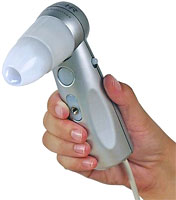 When you visit us, we evaluate you as follows:
Dr. Rassman,
In many of your posts regarding body hair transplant, I see that you tend to discourage the use of body hair for transplants. Some of the reasons include the fact that body hair is curly and does not grow long enough. I am a black person who grows a short Afro. I have a bald spot of the right front side of my scalp which I have managed to concealed with my own pubic hair. It just so happens that my pubic hair is just as curly and has the same texture as my scalp hair. So what I do from time to time, is cut my public hair, wash it thoroughly and then get it entangled with my scalp hair in the balding area. The entangling is due to the curliness of the hair and it holds even in the wind.
So far no one seems to notice. In fact, when I first saw a hair loss doctor, he was amazed at how well I concealed my hair loss.
In any case, I think transplanting hair from the pubic area for African Americans may be a viable option since both the pubic and scalp hair in African Americans is curly and perhaps has the same texture in most African American(as is my case). In any, what is your take on this issue.
I have done a few pubic hair to scalp transplants and they work very well. I recall one African American fellow in particular and a few Caucasian patients that had this done over the past many years. The FUE technique may have a good role here.
I have also seen another person who used pubic hair to entangle with their afro to add bulk with the same observations you demonstrate. It’s certainly not for everybody, and I still say scalp hair works best.
First, a question regarding the mechanism of Propecia…would a frequent blood donor or a person who requires regular phlebotomy (such as for hemochromatosis) have any worries about reducing the effectiveness of Propecia? Given the slow-working nature of the drug, I wonder if blood loss would equate to a detrimental reduction of the drug in the system.
Also, a quick thought for the Propecia haters out there…if you’re an open person and willing to discuss your hair loss, talk to your follically challenged friends- I was amazed at the number of friends I have who have been using Propecia for years. You’re never going to know if you don’t ask- it’s not typically something a person advertises. Also, while I acknowledge the real side effects that are possible, I tend to believe that a lot of the horror stories are a psychosomatic effect from the anxiety of facing possible ED and other scary (but rare, and reversible) side effects. After the testimonials of friends, as well as all of the great information you so generously supply, I will be giving it a try, so long as the blood donation is not an issue.
 If you have hemochromatisis, your doctor should have a say in any drug you take. There would be no impact from the frequent bleeding you need, but I would rather that you get an opinion from your doctor. Also, as far as I’m aware, those that take finasteride (Propecia) are not eligible for donating blood.
Thanks for your other comments, as advice from friends is often more effective and more informational than when I say those things.
what if a person has a norwood 3 hairline and you guys already know it is going to go worse (the hairloss). can you perform SMP and change the NW4 to a NW2 or are you going to wait till he is completely bald and his hairloss has halted?
Scalp MicroPigmentation (SMP) should not be used to convert a Norwood class 4 to a Norwood class 2… unless you made the decision to shave your head for life. Hair transplants would accomplish what you are suggesting, not SMP.
This post isn’t responding to a submitted question, but an observation we’ve been seeing more and more lately…
Donor area depletion is now becoming apparent in many patients who have had many FUEs done in the donor area. Just like strip surgeries, once hair is removed from the donor area, the donor area become thinner with each subsequent Follicular Unit Extraction (FUE) procedure. Those individuals who have had between 3000-6000 grafts extracted with FUE are now showing problems in the donor area where coverage of the back and side of the head is becoming a problem. Somehow doctors and patients thought that FUE was a free ride — no significant donor scar without a downside. But alas, there is no free ride. One does not get something for nothing.
I believe that many doctors do not understand what I wrote above, but they will be caught with their pants down when the patient finds that he has a donor area coverage problem that he never expected. With this assessment, I am referring to the doctors who do FUE right (with minimal transection damage), but I suspect that the number of good doctors who have mastered the technique and get transections in the 5% or less range are a minority of those offering the procedure.
Over and over again I say, “Let the Buyer Beware” and that still remains the Rassman dictum.