
Short Hair Syndrome?

I’m writing on behalf of my mother in law, a 59 year old african american woman. Her hair never seems to grow and she hasn’t gotten a haircut in a long, long while. Can I get your thoughts on “Short Hair Syndrome”? This sounds like what my she is dealing with, but I can’t find any further info on it. Is it even real? The site is https://www.lisaakbari.com/SHS.html

From a medical point of view, or as a physician involved in hair loss for over 15 years, I do not recall ever hearing or reading about “Short Hair Syndrome”… but I can logically give you an explanation for it, assuming the the examination of the hair and scalp is normal and there are no medical problems lingering behind the scene.

First, I will assume that she has no miniaturization going on throughout the scalp. If she does, then short hairs will come about when the hair miniaturizes so that a diagnosis needs to be established. With respect to your mother-in-law whose hair is not growing much, she may have a very short anagen phase (growth phase) of the hair cycle. A short growth phase could produce healthy, but short hairs. Of course, she should see a dermatologist or her primary care physician to see if there are medical issues that are causing such problems.
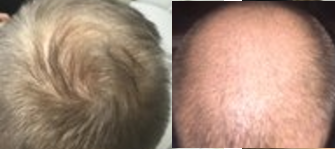
Short Anagen Syndrome

My granddaughter is 13 years old and will be going into the 7th grade. This hair condition she has has become a huge problem with her self esteem and confidence as she is constantly made fun of and bullied. After researching this condition it seems there is absolutely nothing we can do to help her. Is there such a thing as a hair transplant or products to use that would help her? Her hair is so thin and the length is above her ears and very uneven. She has never had her hair cut. The cases I have read about involve much younger children, not any older than six. Can you give me any advice on what we can do ?

If you believe your grand daughter has Short Anagen syndrome you should have her examined by a doctor to confirm the diagnosis. While the Internet is a great source of information, there is no substitute for seeing a doctor in person.

According to National Institutes of Health, Short Anagen Syndrome is a benign disease of the hair growth cycle that prevents the hair from growing long. Treatment is not necessary as this condition tends to improve after puberty, however improvement with minoxidil and cyclosporine has been reported. For more information see the link below:

https://www.ncbi.nlm.nih.gov/pmc/articles/PMC3746230/


Shock loss was severe

I’m 22. I recently went to turkey to complete a FUE hair transplant, where basically it was just to fix my hairline and make it more straight and filled out a bit more and not a full scalp job. I also got my beard filled out as there was little area of no growth, everything was going fine and my transplanted hairs have fell out and i can see some hairs pushing through(please note i wasnt using any medication but have went back on topical minoxidil and started prp treatments). I am currently at the 10 weeks stage but as time has went on through the transplant process at around the 6-8 weeks stage i started to notice extreme hair shedding of my natural hair i had before, big clumps of aleastt 5 hairs each time a brush my hands through my hair, please not my hair is quite fine as it is so its started to really impact my density. My question is will all these hairs grow back when they want to, i went to my local clinic back home and had a hair check where they put a camera into my scalp but there was no baby hairs pushing through for my original shedded hair, will they start to push through later in the cycle? Or is this permanent shedding? Its really stressing me out as my hair density is probs around 70% of what i had originally and its still falling, this is really starting to effect my life and i just want to know that everything will be alright.

Men who are 22 and actively balding will have miniaturized hairs well beyond the visible area to the naked eye. If your doctor had used a hand microscope, he/she would have probably seen significant miniaturization of the hair behind your frontal balding area in your case. These miniaturized hairs will get shocked out from the hair transplant, unless you were put on finasteride. In my experience, shocked-out hairs rarely return. This could have been prevented had someone evaluated you properly and detected these miniaturized hairs. Finasteride can prevent shock loss in most men, but at 22, you are unusually vulnerable to shock loss. I hope that your estimate that 70% of your native hairs remain because that number may sustain your look. You may have another problem if the Turkish clinic has taken out too many grafts (often the case in Turkey). The average Caucasian only has about 6-8000 grafts for hair transplantation in their lifetime. Still, that number depends upon various factors, including (1) remaining hair in the donor area, (2) your final hair loss pattern that should appear by the time you are 30 or less. You have tp get a detailed Master Plan for your future balding (inevitable). Did someone measure your donor supply and give you an estimate as to your total usable donor supply and what your future looks like? Do you know your final hair loss pattern? When you finish your shedding and are growing out your transplants, write to me, and I can discuss this over the phone. My email address is Williamrassman33@gmail.com

Shock Loss in the Recipient Area

HI DR… I would like to know if there is shock loss after hair surgery what is your policy in solving the problem. thanks

I properly inform my patients of the risk, try to mitigate that risk, and am very supportive if it happens. I can not guarantee what will happen to the native hair that is there and which may react poorly to a hair transplant by undergoing shock loss. I have not had a case of shock loss for more than a year. I suspect it is because I prescribe finasteride on all those who are subject to that risk.


2006-11-14 09:20:25Shock Loss in the Recipient Area

Why did I lose my hair after the transplant? (photo)

I am 25 years-old and had a hair transplant three months ago and all of my hair fell out that I had there before the transplant.

You developed shock loss after the surgery, a common event for young men. The prevention for this is the drug Finasteride which seems to work to prevent shock loss which can last almost a year after the surgery. Shock loss is an acceleration of the normal hair loss process and it is particularly dangerous for men in their 20s who have hair transplants.

shockloss

Shock Loss from Female Hairline Lowering Procedure?

I am a 23 year old female considering having my hairline surgically lowered. What I am wondering about is shock loss with this type of procedure. How often does this problem occur and how much hair is usually lost when it does happen? Are there any factors, besides female pattern baldness, that increase the risk of this side effect? Also, do you recommend using Minoxidil to lessen the possibility of fallout, and is it safe if there are no signs of FPB? (The label says not to, but doesn’t say the exact reason why.)

Thank you for your time!

There are no published numbers of the shock hair loss risk after a hairline lowering procedure. This may also depend on the surgeon who performs the surgery and his/her expertise with it. This is a question that should be reserved to the doctor who may be doing your surgery, asking for his/her experience with shock loss and the surgery.

Assuming (worst case) that hair loss occurs, it could be caused by just the manipulation of the hairline and if it did, it should return. If it is caused by too much tension at the suture line, it might not return. Experienced surgeons know this and rarely put much tension on the suture line.

You should also be well informed about other options such as hair transplants to lower the hairline. I do not believe minoxidil will have a significant impact on shock loss.


2007-08-24 14:33:39Shock Loss from Female Hairline Lowering Procedure?

Shock loss from another hair transplant

After experiencing shock loss so dramatically from my first hair transplant, would another hair transplant in the next two years cause more shock loss to happen of my current native hairs too?

Usually not. The shock loss knocked out the miniaturized hairs that were the cause of the shock loss.

Shock loss from forehead reduction surgery and the use of minoxidil

Is it a case that the hair is going to shed anyway post surgery and should I wait until I experience hair loss before using Mixoxidil?

It is not automatically expected that you will have hair loss after forehead reduction surgery. It is a complication of this surgery and something that you should speak with your doctor about as this complication is not uncommon in women over 40. Minoxidil might help but maybe not. So a discussion with your doctor is appropriate. Forehead surgeries in women can cause hair loss and we consider that a complication of the process.

Shock Loss for Previously Transplanted Hairs?

Are previously transplanted hairs at a big risk to shock loss following a second or third transplant?

Generally, transplanted hair is “permanent” and are not at risk of shock loss. Some hair loss may occur immediately after a hair transplant, but it should not be permanent if it is transplanted hair that has fallen out. I have seen shock loss in previously transplanted hair in less than a half dozen men and the hair came back as full as it was in all of them.


2009-01-05 10:59:36Shock Loss for Previously Transplanted Hairs?