
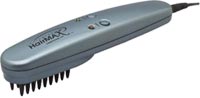
Reader Checks in with His Thoughts on the Latest LaserComb Study

LasercombI reached out to a reader/writer/commenter that has previously sent in some great insights about FDA trials to get his thoughts on the latest Lexington HairMax LaserComb study that was released (read the abstract of the study here). He wrote back with a great overview, and although lengthy, it’s a worthy read for those interested.

Here’s his reply —

—————-

    Dr Rassman

    I am a physician-scientist (MD-PhD) with long-standing experience in the clinical development of drugs, trial designs, and interaction with drug regulatory agencies, and am also an avid reader of baldingblog. As such, I have been critical of Lexington in the past for failure to release clinical trial data in a peer-reviewed journal and in a timely fashion. I have also mentioned that their responses on your blog to questions by your readers (and information posted on their own web site) appear more likely written by marketers than scientists.

    I am presently reviewing for your readers the recently published article that summarizes the clinical study supporting the safety and efficacy of the HairMax LaserComb (Leavitt M, Charles G, Heyman E. Clinical Drug Investigation. 29(5):283-292, 2009).


    In brief, the study enrolled 123 adult male volunteers at 4 participating sites in the United States. These subjects had a diagnosis of current androgenic balding, were between Norwood-Hamilton 2a and V classification, did not have any systemic diseases that could affect hair growth, and were not on any alopecia-related medicine for at least 6 months before study entry (or transplantation at any time). Each subject was randomized in a 2: 1 ratio into one of 2 treatment groups: LaserComb (72 subjects) or a sham device (40 subjects), the latter which emitted incandescent light only (a form of placebo group). The primary efficacy measure included change from baseline to week 26 in hairs identified via digital image and computer-aided counts over an approximately 3 cm vertex area. These assessments were done in a blinded fashion (by an individual who did not know the treatment assignment of the patient). Safety endpoints consisted of standard safety indices evaluated at all visits. Subjects were asked to use their device 3 times weekly on non-concurrent days for 26 weeks. Study visits beyond screening and baseline were at 8 (safety evaluation only), 16 (safety evaluation only), and 26 months.

    The mean age of subjects was 47.9 years. After 26 weeks, the average hair count was 120.7 /cm2 for the LaserComb group and 122.9/cm2 for the sham group. The average change from baseline (primary endpoint) was 17.3 /cm2 for the LaserComb group and -8.9 /cm2 for the sham group; these differences of a placebo-substracted change of about 26 hairs/cm2 were statistically significant. Subjects in the LaserComb group reported more growth at Week 26 (compared with baseline) than those in the sham device group. In contrast, there were no differences in investigator assessment of hair growth between the 2 groups. The LaserComb was generally well tolerated and there were no significant adverse events.

    Impression:

    The basic study design was well done. It contained proper entry criteria for subjects, blinded randomization of patients to treatment groups, reasonable measures of efficacy, and blinded assessment of efficacy. Hair counts/cm2 from baseline to week 26 showed a mean (placebo-subtracted) statistically significant improvement in the vertex of around 26 hairs for the LaserComb group. How clinically meaningful these changes are can best be answered by an experienced hair specialist; of note, 64% of patients receiving LaserComb and 46% of those receiving placebo (sham treatment) rated themselves as having at least minimal growth from baseline to Week 26.

    Given that placebo effects exist in these types of studies, having patients blinded to their treatment assignment is necessary. Yet, patients were able to take their device home and I wonder if there are ways to determine whether the device emits laser vs. incandescent light bulb. A minor point but I would have designed the trial to have patients receive their treatment as an outpatient at the site center. The knowledge of treatment assignment by the subject would not have been expected to influence the blinded reviewer of the hairs related to the primary endpoint, but could influence self-rating and self-satisfaction, and be one explanation for the discrepancy between subject and investigators assessment of hair growth.

    My major study concern is the statistical treatment of patients who withdrew or were withdrawn from the study. The efficacy table has a footnote that properly states that subjects who terminate the study prematurely will have their last study visit value carried forward (i.e. if the subject had a change of -8 hairs at Week 8 when they terminated, this becomes the Week 26 value). Yet, the text (page 288) notes that “ten subjects in the HairMax LaserComb group who terminated prematurely were not included in the primary analysis of efficacy, and one…subject in the sham device group who terminated prematurely was not included.” As a reviewer, I would not recommend publication of the paper unless more information is provided about this latter issue. With only 72 patients in the LaserComb group, dismissal of 10 could have dramatic effects on outcome if those patients withdrew because of ineffectiveness or other reasons. Such withdrawal could dramatically affect the study. If such patients were “lost to follow-up”, proper analysis would still be to assign a last value score, even if this last value was at baseline. It is difficult to understand how some additional patients described on page 288 (lost-to-follow-up, noncompliant, withdrew for reasons not stated) were also handled statistically, especially in light of the statement in the statistical methods section that “the last value was carried forward for subjects who terminated prematurely.” The only apparently logical way a subject would not “be included in the efficacy analysis” is if they had no baseline assessment; otherwise, such subjects would have had their baseline value “carried forward” (i.e. no change).

Reader Adds to the LaserComb / FDA Debate

An insightful reader sent me this great email below, adding to the ongoing laser hair treatment debate, but also providing some clear bullet points of information that much of the media seemed to miss.

————————-

LaserCombI’d like to join in the HairMax LaserComb debate, not on whether Lexington’s clinical trials were scientifically sound or whether lazer can regrow hair, but to set the record straight to those who mistakenly believe, or who dishonestly claim, that it was approved by the FDA.

Generally, what exactly does a 510(k) Clearance mean, and what can one reliably infer from it. Some points to consider:

  • Minoxidil & Propecia went through a Premarket Approval (PMA) process, where it is necessary to prove efficacy with valid scientific evidence, and is called Approval. HairMax went through a Premarket Notification (510(k)) process which involves demonstrating that the new device is substantially equivalent (SE) to another device already on the market, and is called Clearance.
  • Low-risk devices legally marketed prior to May 28 1976 (preamendments devices) with no known safety issues do not require a 510(k) to proceed for market, even though the FDA will have no real idea how effective they are because they’ve never assessed them. (A big clue that the FDA is more concerned about safety than effectiveness for such devices.)
  • The vast majority of 510(k) clearances are granted by proving SE to a preamendments device by showing it has the same technological characteristics and intended use. Hence the FDA cannot say with any certainty just how effective the vast majority of cleared devices actually are.
  • The FDA do not have a clear definition of the level of effectiveness that would be required; simply that it has to be “at least as effective” as the predicate, which for all the FDA knows could be “not at all” in a large number of cases.
  • Clinical trials are very rarely submitted in support of a 510(k) application.
  • Even when clinical trials are submitted, the standard 510(k) forms simply require summary information to be provided, whereas submission of the full trials would surely be a mandatory requirement if the FDA always undertake a thorough review.
  • No one can be sure of what analysis or scrutiny the FDA apply to such trials, or whether this particular department is even equipped to do so. One thing their website does make clear is that it is not within their remit to ensure that they prove efficacy in the absolute sense as would be required for a PMA, but simply to prove substantial equivalence to a predicate device.
  • The FDA will not even confirm whether full details of clinical trials were ever received in support of any 510(k) application, as such information is deemed to be confidential. So the FDA will not confirm whether they could have applied a high level of scrutiny to such trials never mind whether they did.
  • The terms under which a 510(k) is granted prevents the device from being advertised or promoted as constituting an official approval or endorsement by the FDA; to do so would represent an abuse that could potentially lead to the clearance being revoked.

Lexington’s application was different to the vast majority as clinical trials were submitted in support. But:

  • Anyone who describes or believes the HairMax was approved by the FDA is wrong. It was merely cleared for marketing in the USA.
  • By the FDA’s own rules, they see the purpose of clinical data to demonstrate SE to a predicate device, rather than proving efficacy in the absolute sense. In Lexington’s case, their 510(k) application was attempting to prove SE to a device that is not at all effective in hair regrowth.
  • There’s no independent evidence that Lexington even submitted the full clinical trials to the FDA.
  • There’s no independent evidence that the FDA did little more than take Lexington’s trials at face value; just providing they’d obviously made some attempt to put the device to the test. This doesn’t mean the FDA were negligent, but rather to do anything more involved was simply not within their remit when assessing a 510(k) application.
  • Dr. Rassman has already queried the accuracy of the trial’s hair counts on the 2 micro before/after shots.
  • The FDA letter granting Lexington clearance makes clear that this was due to “finding of substantial equivalence to a legally marketed predicate device” (as opposed to it having been proven to be effective).

The FDA’s priority is more about safety than effectiveness, and for any 510(k), it should be thought of as simply the FDA giving the manufacturer the go-ahead to proceed to market because it complies with the premarket notification regulations. It should not be assumed that the FDA were satisfied of a high level of efficacy to a high degree of scientific certainty or otherwise.

The FDA do make provision to guard against this kind of misrepresentation, by making the clearance dependent on complying with 21 CFR 807.97 (Misbranding by reference to premarket notification), which prevents the device from being portrayed as any kind official approval or endorsement by the FDA. But this doesn’t mean that a manufacturer can use the 510(k) in order to prove that their device has been scientifically proven to be effective, just providing they use the correct technical term of “cleared”.

And this leads me onto my second point … This has been a massive publicity bonanza for Lexington, with the HairMax reported heavily in the media as “approved” by the FDA and hence scientifically proven. Others have jumped onto the bandwagon, selling all sorts of lazers as FDA approved. This has resulted in a large-scale misrepresentation of what Lexington’s 510(k) actually means or actually proves, and really is quite a disgrace. Lexington will be keen to distance themselves from any responsibility for this misrepresentation, and if the media chose to mis-report or mis-portray it that’s not their doing. They in no way engineered this or even gave it a helping hand, right?

Some examples of media reports are on YouTube. A classic one is ITV’s This Morning. To the initiated 0.0001%, it’s a classic example of how the FDA clearance has been misinterpreted and misrepresented. But who was responsible for actively making this (and other) videos available to the 99.9999% who will inevitably be misled by it? Why it’s the HairMaxTeam!

I agree with other contributors on the blog. What makes me suspicious is why this data was not submitted for publication immediately upon completion of the study or at least submission of the regulatory filing, as is the norm. I welcome Lexington’s assurance to have the studies peer reviewed and published, but why the extraordinary delay? In the mean time, why not make them available in their current form if they’re so confident of their reliability?

Until it has been properly published and peer-reviewed, this remains a single unpublished study, and so no one can legitimately claim that lazer has been scientifically proven to grow hair. The FDA clearance does not change this one iota, and if Lexington – who cannot represent it as being an official approval but have still described it as “FDA accreditation” on this blog – care to claim otherwise, they could be abusing the terms under which it was granted.

Do You Re-Shed Hairs When You Re-Start Propecia?

I have been taking Propecia for 2 years than stopped for roughly 1 year.

I recently started to taking the medicine again for the last four month, but it seems I am losing a lot of hair.

I am wondering if one experience initial shed again if one stops it for long time and take it again?

In general you should not have increased hair loss after starting Propecia. I have heard of Rogain causing initial hair loss / shedding but not Propecia. I also realize there may be information on the Internet that may say otherwise, but my opinions are based on what I have seen in my practice over the many years. In general male pattern hair loss is genetic and there is no drug or treatment that completely stops the balding process. The medications are there to slow the progression and this rate is different for each individual. When you stop taking Propecia (as you indicate), you experience a “catch up” hair loss over 6+ months where your hair loss state “catches up” to where it would have been without the medication. If you re-start the medication at this point, it will take a good 6+ month to slow the hair loss process down (which means you will continue to see the rate of hair loss despite being on the medication).

Razor Bumps Causing Hair Loss in the Back of My Head

I’m a 26-year-old black male. I have suffered from razor bumps in the back of my head for about 10 years. The razor bumps have now caused hair loss in that area. I have a scar in the back of my head and hair won’t grow in that area. What can I do? I want my hair back. Is it possible that it will grow back? What type of treatment do I need?

If this has been progressing over 10 years or so, then it is likely that you have lost your hair in the various areas where these bumps are. Consider not shaving your head completely, but perhaps just clipping it with a #1 guard electric shaver. Then wait up to 6 months or so and then you may know if this process reverses. Hair transplants could be used if the problem is not too extensive. I’d have to see what you’re describing to recommend much beyond just playing the waiting game.

Raynaud’s Disease and Hair Loss

Hello. I have a rare type of mild skin condition called “Raynaud’s disease” or “Raynaud’s phenomenon”. It basically consists of a tingling sensation on the surface of my skin and scalp, in a designated area for a second or two, when I experience stress or anxiety. For a long time I have wondered if it would eventually lead to thinning or balding on my scalp. I have not experienced any bad side effects yet, but I wanted professional opinions. Do you think my condition will lead to hair-loss? Do people that lose their hair physically feel it prior? Do I have any reason to be concerned?

Raynaud’s phenomenon and Raynaud’s disease, a similar disorder, may be associated with autoimmune disorders such as rheumatoid arthritis, systemic lupus erythematosus, and scleroderma. Genetic female balding is present in 50% of women (most are past 50) and these women can get Raynaud’s disease as well. I would not focus upon hair loss that you might get. This would not be a productive exercise. People with full blown autoimmune diseases like the ones mentioned above, can experience hair loss.


2006-04-26 11:16:02Raynaud’s Disease and Hair Loss

Rates of Hair Loss?

Hello Dr.Rassman!
Thank you for the previous answers! I have another question:

If guy A starts losing his hair when he is 20 and guy B at 27, is it 100% sure that guy A will have less hair than guy B at his 40s? Once again thanks for your time!

TrafficIf guy A starts out traveling at 55mph from Los Angeles on the 405 freeway going south at 4pm on a Memorial Day weekend in an SUV and guy B starts out traveling at 70mph on the 10 freeway east bound at 5pm on the Friday of Thanksgiving weekend in a Porsche, who will have traveled the farthest by 7pm?

If you can answer that question, then I will attempt to answer yours.

For those of you who can not calculate the math challenge (hey, I can’t either) — I would say that no two people lose hair at the same rate, so time varies with the patient.

Rarely, hair transplants don’t last the life time of the patient

There is an autoimmune disease called Lichen planopilaris (LLP) which appears to be a rare inflammatory condition that results in patchy progressive permanent hair loss mainly on the scalp. From time-to-time this disease, which may be present when we perform a hair transplant and is not evident with any of the modalities available, can reactivate and could then kick out the hair that was transplanted. Some patients might have signs that LLP participated in their frontal balding, possibly overlying the genetic component of the hair loss.


2017-11-19 15:59:39Rarely, hair transplants don’t last the life time of the patient

Rare Genetic Vulnerability to Minoxidil?

I’m a hairy 22yr old guy. I over-plucked my eyebrows and wanted them to grow back quickly so I applied Rogaine to them just once. In 1 hour, I felt extreme dizziness and heart palpitations, so I washed off the Rogaine. 2 days later, my eyebrows started falling out. 2 weeks after that, I started losing substantial amounts of hair from my scalp, arms, legs and even pubic area. This enormous amount of hair shedding has been going on for 3 months now. My eyebrows and scalp are starting to look like total crap because the hair isn’t really growing back anymore. All my blood tests have come back normal. I’m positive that the Rogaine set off some kind of systemic reaction in my body. You once answered a question entitled “Rogaine Destroyed My Hair!” I got in contact with the individual who posted that question. He also used Rogaine just once. After speaking with him, I learned that the progression/symptoms of our hair-loss have been almost identical.

Doctor, is it possible that we have some rare genetic vulnerability to Rogaine? And why has it continued to affect our bodies for so long? Shouldn’t any effect be temporary? The other guy is still losing hair and eyebrows, even though he applied the Rogaine 2 years ago. Both he and I notice that when new hair does grow in, it quickly falls out within a week or 2. Thanks doc. I hope you can offer a glimmer of hope.

I have noted your history, but I have no experience with this. As you may know, minoxidil is a drug that was originally made for use in high blood pressure and it produces a drop in blood pressure, which would explain your initial symptoms. With regard to the longer term side effect, I really don’t know, but would strongly suggest that you get your hair examined by an expert with (at the least) mapping and miniaturization studies done.

Rare case of heart complication from taking low dose oral minoxidil

The following is the introduction of the article titled: Pericardial, pleural effusion and anasarca: A rare complication of low-dose oral minoxidil for hair loss

Authors: Ncoza C. Dlova, MBChB, PhD, Tarryn Jacobs, MBChB, and Satish Singh, MBChB

“INTRODUCTION
Topical minoxidil has been used for many years in the treatment of androgenic alopecia and other hair disorders. Although the mechanism of action of topical minoxidil is poorly understood, animal studies have shown that it affects the hair growth cycle by shortening the telogen phase and prolonging the anagen phase.1,2 Lately, there has been growing evidence to support successful use of low-dose oral minoxidil (LDOM) in the treatment of various types of alopecia. The dosing regimens range from 0.25 to 5 mg daily to twice daily, with side effects reported to be dose dependent.”

The presented Pericardial Effusion occurred 3 weeks after starting the low-dose oral minoxidil. The woman presented with significant swelling in her feet and eventually elsewhere. A Pericardial Effusion is a condition where fluid accumulates around the heart, inside the sac (pericardium) that surrounds the heart. Fluid in this space will restrict blood flow to the heart and fluid back up in the body. Significant swelling of the feet and anasarca (a generalized swelling of many body parts) was clearly a warning that brought this woman to a doctor. She was admitted to the hospital, treated with diuretics, and stopped the oral minoxidil, all of which normalized her state of health, so she was discharged from the hospital on the 5th day.

WARNING: People taking oral minoxidil or even high-dose topical minoxidil might develop the symptoms described above. Always seek medical attention when a change in your health to this magnitude appears, especially if you are taking oral minoxidil.

Ref: JAAD Case Reports 2022;28:94-6., 2352-5126, 2022 by the American Academy of Dermatology, Inc. Published, by Elsevier, Inc. This is an open-access article under the CC BY-
NC-ND license (http://creativecommons.org/licenses/by-nc-nd/4.0/). https://doi.org/10.1016/j.jdcr.2022.07.044