
The recipient area requires daily washes to keep the recipient area free of crusts. I generally recommend the use of a sponge and supply my patient with a surgical sponge to fill with soapy water and press on the recipient area daily. By repeating this daily, all crusts can be washed off without any fear of losing grafts. If any crust are present, use a Q tip and dip it into soapy water, and roll it on the crusts and that will lift them off without dislodging them, but never rub them, just roll the Q tip on the recipient crust. I like to see no evidence of any crusting in the recipient area and the crusts from the donor area gone in 7-10 days with daily washing. Now you should NOT pick off the crusts as they will slowly fall off on their own with daily shampooing. Leave the shampoo on your scalp for 10 minutes and then gently rub it with your finger tips once it is water logged. That will get the crusts off without risk to the grafts.
A novel and safe small molecule enhances hair follicle regeneration by facilitating metabolic reprogramming
This article “reports the hair regrowth-promoting effect of a newly synthesized novel small molecule, IM176OUT05 (IM), which activates stem cell metabolism. IM facilitated stemness induction and maintenance during an induced pluripotent stem cell generation process.” This article appears in the most prestigious journal in the science field so I guess it has merit to it.
More and more research is coming forward which makes this field more exciting almost every day
https://www.nature.com/articles/s12276-018-0185-z
2019-03-11 05:52:392018-12-18 10:06:07A novel and safe small molecule enhances hair follicle regeneration by facilitating metabolic reprogramming
Nourkrin, Hair Loss and Hair Regrowth?
Iam a young 50 year old female apart from my hair, which really depresses me. For the last 4 months I have been using Follicle Nutrient Supplement, but it doesn’t appear to be making any difference. I have been to the doctor who suggested Regaine, but I have read about Nourkin and wondered what you thought on this. I will try anything.
I have written much about naturopathic medications that have no science behind them. Their claims are:
- Natural protein and mineral food supplement.
- Clinically proven to reduce thinning hair (proven by whom and where is the proof?)
- Improves the strength of existing hair and promotes the growth of new hair. (Can the hair lift weights that prove it is stronger? Where did the company prove that there is growth of new hair and on who?)
The Nourkrin site claims, “The key ingredient in Nourkrin is a protein compound of marine extracts. This is blended with an organic, soluble silica and vitamin C, making a unique hair recovery programme.”
Ugh.
Enough on this product. There are so many of these types of products that just have no scientific proof to back up their statements, and the makers prey on those like you that will try anything. I hate to be so bold, but you need to be smarter about this and stop chasing these products that may not work. Get your hair evaluated by a medical doctor. Women with hair loss often have a medical condition causing it.
2006-09-12 14:33:192007-10-17 10:33:48Nourkrin, Hair Loss and Hair Regrowth?
Nourkin and Toppik
Are Nourkrin and Toppik ok to use together?
I’m female aged 23 and have been suffering from hair loss for 3 years. I have been using both products for a few months so far.
Nourkrin is a food supplement which contains marine based extract of proteins and polysaccharides, Vitamin C, Silica, Horsetail, and IgG. It is mostly used in UK. Toppik is a topical medication and contains Keratin, Ammonium Chloride, Silica, DMDM Hydantion, and Iodopropynyl Butylcarbamate and it is in particular (fiber like) form that sticks to the hair follicles to make them look fuller. There should be no negative impact with using them both, but you need to always remember that even these simple substances have risks at some level.
2006-11-03 09:31:182006-11-02 16:19:28Nourkin and Toppik
I Have Noticed That There Is Cobblestonning on My Beard 2 Months After the Transplant
After everything has settled down, you should know if this is a problem. I always trim the the skin from FUE grafts to prevent this from happening. At the fifth month, if this is still a problem, see your surgeon.
2018-10-01 06:24:082018-10-01 08:52:31I Have Noticed That There Is Cobblestonning on My Beard 2 Months After the Transplant
I noticed 2 and 3 hair grafts in my frontal hairline and my hairline looks pluggy (photo)
The placement of two or three hair grafts in the frontal hairline is something that should not be done because it makes the hairline detectable and somewhat pluggy. To make matters worse, this patient had the hair on the right side pointed in the wrong direction. What you need is a no-hairline hairline, something I discuss often. This can be corrected as it was in this patient (before on the left and after correction on the right) as shown in the photo repair. Best not to go through a repair and get it done right the first time.
2017-09-15 08:31:392017-09-15 08:32:42I noticed 2 and 3 hair grafts in my frontal hairline and my hairline looks pluggy (photo)
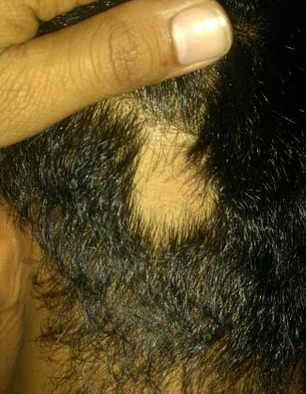
I Have Notice This Patch Behind My Head. Is This the Beginning of Balding for Me. I Am 21 Years Old.
No, this appears to look like a disease called Alopecia areata. You need to see a doctor and have a biopsy followed by treatment if the diagnosis is confirmed.
Nothing like a Good Master Plan in Getting Your Hair Back (From Reddit)
According to this man’s text, finasteride and a hair transplant worked together to help him get his hair back. Great job!
[Before/After] 8 years of DHT blockers, Minox, and a hair transplant in India from tressless
2019-02-04 04:35:502019-02-20 07:25:13Nothing like a Good Master Plan in Getting Your Hair Back (From Reddit)
Notes from the ISHRS 2009 Conference, Part 2
 I just got back from the 17th annual scientific ISHRS meeting (basically a hair transplant doctor’s convention), which went on from July 22-26. Lots of information was presented… lots of lectures, presentations, and discussions. This year’s meeting was in Amsterdam, so I had quite a long flight back to California when it was all over and I was able to do a write up on the plane of what I learned. I thought I’d share…
If you missed yesterday’s post, check out part 1 of my ISHRS meeting notes! Here’s part 2…
Surgical
Hair transplant failures:
Hair transplant failures are often due to undiagnosed scarring (cicatricial) alopecias, so the need to detect them is critically important in advance of the procedure. The skin is often white and shiny and their activity may be in spurts, active at some times and inactive at other times. In my opinion and from my experience, women suffer more undiagnosed scarring alopecias than men and reflecting abnormal patterns of balding may be a clue to their presence. The doctor usually makes the diagnosis when these abnormal balding patterns appear and then the doctor will take multiple skin biopsies in the identified areas. Biopsies are the traditional approach, but the tissues that are taken for biopsy must have some active disease going on to affirm a diagnosis. When the biopsy approach to diagnosis is made, they are made with sizable tools (usually a series of 4 mm punches along the edge of the abnormal balding pattern). Alternatively, test transplants (which are limited procedures) can be done to see if growth occurs at 6-8 months. I have been performing test transplants over the years in such suspicious cases, as this is a more certain way of making the anticipation of success or failure of a traditional hair transplant. Failures of transplants in patients with such scarring alopecias are common.
Hairline design:
This is an area that I find most interesting. My philosophy is very different than most other doctors in the field. I tend to place hairlines in the mature position while most other doctors place the hairlines higher with more recession. There is a belief by many doctors that eventually a traditional mature hairline normally found in a non-balding man will not look normal as a man ages, so the hairline designs offered by many of my colleagues leave portions of the Norwood Class 3 and 4 frontal pattern into the end design of the hairline. Most men, however, want the man that they see in the mirror to reflect the mature hairline, not an “older” looking hairline, so I recommend the mature hairline almost all of the time. This is easily seen at our monthly open house events or online in our Hairline Photo Gallery. As my design of a hairline differs from many of the designs of my colleagues, the art form of a hair transplant surgeon will be evident to all.
Graft trimming:
Graft trimming by the surgeon and his team seems to reflect the robustness of the hair growth. A study was performed by Dr. Michael Beehner, where he trimmed the grafts from chunky to very skinny. The grafts that were made very skinny did not grow as well as those grafts that were made more chunky with more fat surrounding the hair grafts. Dr. Beehner believes that making grafts very skinny seems to:
- Open them up to the damage from drying and being out of the body for any prolonged period.
- Critical elements of the growth centers where stem cells exist, may be trimmed away during graft preparation.
New Hair Institute has always produced chubby grafts for these obvious reasons giving us a good growth track record. There is a direct relationships between the size of the graft and the ability to make recipient sites and place them well. The need to match the graft thickness with the recipient site holes are critical for good graft stability and growth.
FUE:
Four devices were shown to improve the FUE (follicular unit extraction) process. Each claimed that their product was the only one that worked. Every one had a mechanical rotation associated with it one with vibration, others with partial twists of varying diseases. Costs for these devices run as little as $60/each for a disposable device, to as high as possibly $200,000 for robotic controlled FUE soon to be available on the market. Clearly when there are so many options offered, the suggestion is that none really work well. Time will tell which are the best instruments by next year’s ISHRS meeting in Boston.
Saturday morning held a series of sessions called “Breakfast with the Experts”. My session on FUE seemed to have the highest audience. The concerns by the participants were the wild and unsubstantiated claims in performing high numbers of FUEs in a single procedure and a very unrealistic view of damage to the FUE graft from transaction and stripping the grafts in the process of extracting the grafts.
Wound closures:
Would closures from strip surgery were discussed in great detail by many doctors, each promoting their own prejudices. There was clearly no technique that was better than others to prevent scarring. Suggestions on trichophytic closures were one of the few bright spots, but the differences in the techniques used by the various doctors, in my opinion, ranged from effective to completely ineffective. In other words, getting a trichophytic closure is no guarantee of a great result from the technique and a trichophytic closure in one doctor’s hands may be a radically different technique than the same procedure in another doctor’s hands. Results ranged anywhere between wonderful and a complete failure.
Notes from the ISHRS 2009 Conference, Part 1
I just got back from the 17th annual scientific ISHRS meeting (basically a hair transplant doctor’s convention), which went on from July 22-26. Lots of information was presented… lots of lectures, presentations, and discussions. This year’s meeting was in Amsterdam, so I had quite a long flight back to California when it was all over and I was able to do a write up on the plane of what I learned. I thought I’d share…
Treatments
Dutasteride:
Review of the Korean study for this drug indicates that it is safe and effective drug with side effects consistent but slightly higher than those in the finasteride study. The tests, however, did not study the impact of this drug on sperm count. One doctor present at the meeting reported two patients who had become sterile while on the drug (one being his son). Both men, upon stopping the drug, found their sperm count returned to normal. The failure to study sperm count is, in my opinion, a major oversight in the Korean study from a safety point of view. Based upon this private report, I will not prescribe dutasteride without at least 2 years of treatment on finasteride or a frank failure of the finasteride. I will require that anyone getting a prescription from me (each case would be individualized) would have to sign a legal document that states they recognize that sterility is a possible side effect and risk of the drug.
Finasteride:
Finasteride limits Type 2 receptors for 5 alpha reductase, which reduces the incidence of cancer of the prostate… not the risk of developing prostate cancer. The information available only covers a 7 year period and longer term studies are not available. It is unknown if this drug will reduce the risk of prostate cancer.
PRP:
The use of platelet rich plasma (PRP) was a theme for many scientific papers. We have known that for topical use on skin wounds, this PRP has shown value in accelerating healing when applied. Studies for its application for alopecia areata was suggested by one doctor and a few doctors have started to soak the grafts in the plasma of patients to see if the grafts grew sooner, looked more robust and had a high “take” rate. I would not trust the conclusions of these doctors without a good scientific study to back up their observations. For the moment, I would call this “human experimentation”.
Prostaglandin:
Dr. Bessam Farjo presented a paper on prostaglandin receptors in the stimulus of hair growth. The drug latanoprost has been successfully used to grow eyelashes and is now FDA approved for this (in the form of bimatoprost), but the actual mechanism for what has been observed is unknown. It clearly increases the hair length, rate of hair growth and pigment in the treated lash, and there is a suggestion that there may be applications of this drug in the treatment of hair loss with a bit more research. Some early research by Dr. Farjo suggests that this may very well work as a stimulant for hair growth and in future treatments for hair loss.
General
Female hair loss:
One paper by Dr. Neil Sadick showed a finding in over 80% of women with hair loss that suggested an autoimmune type of process may be in play. He suggested that the exact cause of this autoimmune reaction may be a reaction induced by some unidentified triggering event. We have seen types of microscopic findings in such diseases as coronary artery disease which may have initially been triggered by some infection in the plaques found in the wall of the arteries. The suggestion is that it is this inflammatory process which is causing narrowing of the coronary arteries. If Dr. Saddick is correct, hair loss may be amenable to treatments similar to those offered from diseases like systemic lupus.
Hair growth cycle:
Dr. Dominique Van Neste gave the most significant presentation of the meeting, by developing a way to follow the growth of human hairs over days, months, or years. Using sophisticated computer imaging and analysis software, the entire life cycle of many hairs can be seen from their earliest appearance as a thread of hair arising from a new anagen part of the hair cycle to a mature terminal hair and then through the loss of the hair from the beginning of the telogen and shedding process. With these tools, the impact of drugs like minoxidil or finasteride can be shown modifying the hair cycle. What has been shown is that new hairs rarely arise from drugs like finasteride or minoxidil, but that the impact on the hair thickness and the rate of hair growth may reflect the changes the naked eye sees. This tool has great promise in testing multiple herbal products on the market (probably hundreds of natural based products) that are found in fruits and vegetables. Claims on the effectiveness of such herbal products can either become validated or put to sleep once-and-for-all.
HairDX:
HairDX, through Dr. Sharon Keene, will produce a pilot study to determine the connection between the gene found on the X chromosome in females and the CAG repeat score suggesting the sensitivity to blocking the androgens when they are positive for genetic balding. The arguments are two fold:
- Does the female who is balding have a androgen mediated disease (abnormality)? If that would be the case, then drugs like finasteride (in these women) may be effective for the treatment of balding. In the various studies with finasteride, the results varied widely.
- For those women who are CAG repeat positive (suggesting that this subset of women may get a good response from the treatment of DHT blockers like finasteride), will the use of finasteride actually help them with their hair loss? This will be an ongoing study over the next few years.
Read Part 2!