
Is It Normal For Indian Males to Have Maturing Hair Line?

Do Indian heads undergo maturing? My father started going bald at the age of 35 and my grandfather at 40. However my mother’s side is devoid of any kind of MPB. My question is my temples have undergone receding corresponding to the MATURE hairline that I read in this website. Is this normal for an Indian male like me? Also there is no further thinning, as far as I know and my hairline has remained the same for the past 1-1.5 years. Can I safely call it a maturing hairline and put all my mental worries and tension aside? This is killing me and I hope you read this and help me and my case.

Almost all men have some form of maturing hair line as they transition into adulthood. About 5% of Caucasian men maintain part of all of the child;s hairline well into maturity (former presidents Reagan and Clintoon). Maturing hair lines are not considered balding. Balding in the form of androgenic alopecia (AGA) also called Male Pattern Balding (BMP) is genetic and is inherited from your mother or father (close to 50/50); however, it does not always follow a predictable pattern and you may have the balding pattern where your immediate family members do not. There is no specific cure to reverse genetic male pattern balding or maturing of a hair line and even the drug Propecia (finasteride) which works so well on genetic balding does not stop the maturing hairline from appearing.

Is it Normal For A Hairline To Recede With Age?

I’m Hispanic, feel like I have a pretty good hairline cause of genes and all that. Id say that all my lifes its been Norwood 0, basically have david schwimmers hairline from friends. Probably a bit more filled up, always hated it cause my hairline was always really crooked and I wanted it to be straight. This past year or so ive noticed that my left side Has straightened a bit more, it’s not receded, still nw0 but my right is more filled up. Isn’t this normal though? Feel like a lot of people here freak out over the slightest recession. It honestly even made me a bit paranoid, I mean I wasn’t expecting my hairline to stay the same way like when I was a kid all my life. I’m nearly 20 and honestly am kinda freaked out browsing here.

Hairlines mature in men and stop at the mature position, which is one finger breadth above the highest crease of the furrowed brow. The shape will be a gentle V shape. Send me photos and I will tell you if you have a maturing hairline. David Schwimmer has some of his juvenile hairline still remaining, and did not undergo a full maturing hairline development as some men do. One of my son’s also kept most of his juvenile hairline.

Is It Malpractice To Perform A Hair Transplant On A 17 Year Old? Many Say Yes!

Australian Times:

Jack was 16 when he first noticed that his hairline was receding, as he checked photos his surfing friends had posted on Instagram.

“I’d look at pictures of me when I was 14 or 15, see the hairline and then look at pictures from a year later and say, ‘Oh, that’s changed’,” says Jack, a bashful but athletic high-school student.

Last week Jack, still just 17, underwent hair-transplant surgery to move 3,000 hair follicles from the back of his head to the front to re-create the hairline.

His parents, worried about the impact on his self-confidence, paid dollars 22,000 (pounds 14,000) for the surgery.

Jack is one of thousands of American teenagers turning to surgery for a follicular fix.

“We live in a world where you are judged by the pictures that you take – particularly by the opposite sex,” he said.

“In our age group, most of what you do is going towards appealing to the opposite sex. We’re just fixing something that, by genetics, we just didn’t luck out (on).”

Dr Keith Durante, who is treating Jack, claims that a growing proportion of the 200 hair-transplant procedures he performs in a year in West Islip, New York, are for men in their early twenties or late teens.

Thanks to the barrage of high-resolution pictures on social media, young men are spotting their retreating hairlines and thinning crowns at a much younger age.

Many of the patients Durante treats are diagnosed with clinical depression and are beginning to isolate themselves socially as a result of paranoia about their baldness, he claims.

“You will spend more money on psychiatry bills and medications than you would if you just gave these kids some hair and let them enjoy it for 5 to 10 years,” Durante said. “If they need (the treatment) done again, we can do it.”

Hair-transplant surgeons have been reluctant to treat men until their balding has plateaued, fearing treated hair could end up as an island of fluff if the balding continues. Durante says he can offset the hair-loss process with a mix of treatments.

Nonetheless, some rival surgeons believe it is irresponsible to begin treatment at a young age.

“You’re not creating new hair – you are just moving hair,” said Dr Spencer Kobren, a hair-loss expert.

“You have a finite amount of hair you can utilise. Most experts in the field would say that not only is that medically inappropriate, but it’s unethical.”

Is It Genetic Hair Loss or a Mature Hairline? (with Photos)

I know my hairline has receded in the last few years, but I’m not sure if I’m showing signs of genetic hairloss or if it is a mature hairline. I’ve been to a dermatologist and a thricologist and neither seemed to take a serious look and just said it didn’t look to bad, but I wasn’t really convinced.

I am a 25 year old male. My dad is bald and probably started balding in his 20’s, my older half brother is bald and my two uncles on my mother’s side are bald. My mother’s father never went bald but had a high hairline, and my dad’s father started balding probably in his 50’s. I’ve realised that I’ve always had a fairly high hairline, and it has always been a bit higher on my right side. I can remember I used to part my fringe a certain way when I used to gel my hair when I was in my mid teens.

In terms of just measurements, my hairline corner (right side) is 1 inch above my wrinkled brow, and 2.5 inches above my eye brow. The middle of my hairline is 1 inch lower than that. The hairs in the corners of my hairline seem finer and less dense I think so I don’t know if that means it’s going to move up higher up.

Thanks again and thanks for the site, it’s very helpful. I wish I could stop by in person but unfortunately I’m on the other side of the Atlantic.

Click the photos to enlarge:


You sent a lot of photos, but I chose the above three that tend to show the best angles. Thanks for sending them.

It appears that you have a Norwood class 3V balding pattern (not a maturing hairline) and the frontal area appears to be thinning where you have hair. The crown is early in the balding process. The photos aren’t the crispest or in the best light, so it is difficult to really make any specific determination. You need to see a good dermatologist or hair transplant doctor to be evaluated. Medications like Propecia (finasteride) are the only way you may halt the progression of the hair loss.

Since you’re on the other side of the Atlantic, you can visit Dr. Bessam Farjo in London or Manchester. Or if you happen to be planning a trip out to Los Angeles, we’d be happy to see you.

Can I Get just a few grafts?

I was thinking about 50 grafts just to see how they would look on the right corner of my hairline. What do you think?

Ask yourself if is there something called ‘A Little Bit Pregnant’. Clearly the answer is no. The same applies to just trying a few hair transplant grafts. Once you start the hair transplant process you are committing a lifetime of hair transplants to follow the balding as it occur. Imagine that you put a few hair grafts on the Right frontal hairline, then lost hair is lost behind it; these transplanted hair would stick out so everyone could see them as they became more and more isolated from a receding hairline because these hairs last forever, but not the hair behind them.. Don’t do it unless you have a Master Plan which includes hair transplants with a good doctor to fix a real problem.


2019-12-23 07:39:05Can I Get just a few grafts?

Is My Melasma Caused by Finasteride?

Since beginning Finasteride 1mg daily 13 months ago, my skin has become very sensitive. I’ve developed light brown spots on my forehead that my dermatologists states are melasma. After doing some research, I’ve found numerous online threads connecting melasma and finasteride. I have a few questions that I hope you can answer regarding this issue.
1. If I were to stop taking finasteride, do you think these conditions will continue?
2. I’ve read of a connection between oral medication and melasma, do you think topical finasteride would produce the same problems?
3. If you think topical finasteride would be a better option, do you still sell it?
Any help would be appreciated.

There is no way to determine if the melasma will go away when you go off the finasteride without trying to do so. There are a few reports of a connection between melasma and Finasteride. One article suggests: “We hypothesize this could be related to the effects of finasteride on estrogen and progesterone concentrations in the skin. J Drugs Dermatol. 2014;13(4):484-486”

If you took topical finasteride, there is some absorption of it into your body through the skin. I don’t know if it is safer, but that risk will be on you if you get a doctor like me to prescribe the topical finasteride for you.


2020-04-19 09:19:33Is My Melasma Caused by Finasteride?

Is Hair Transplantation Viable for a Norwood 6?

Hey Dr
I just wanted to share my experience with the medication finasteride. I initially started the treatment as a early Norwood 3 vertex only then within 4 years I developed into a Norwood 6. I still have hair on the top of my head but its all miniturized to somewhere around 90 %.

I know you have limited information on me and my condition but for someone who has a slighlty above average donor hair, fine hair, and a Norwood 6 thinning pattern, when should I consider hair transplantation as a viable option?

Thank you

NW6As long as you and your doctor have realistic goals in mind, and you have the donor hair available to do it, anytime would be a viable time if you are serious about a hair transplant.
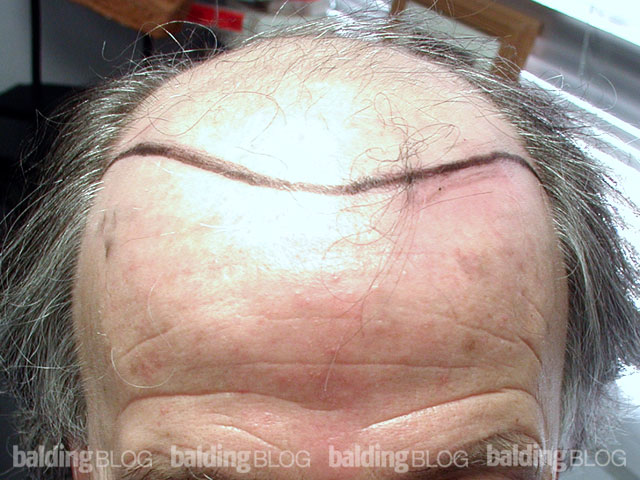
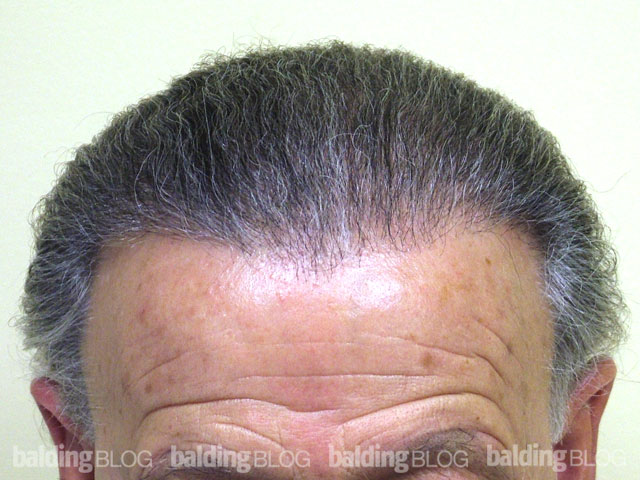
Please see our hundreds of before and after pictures for some examples (there are Norwood 6 cases in there) and learn about our concept of the Master Plan.

Is Hair Transplantation too Risky for Older Men?

Is hair transplantation only for men in their 20-40’s? I am in my 60’s and while I would like to not be bald anymore, I am worried that the surgery is too risky for someone my age.

Hair transplants, like all forms of cosmetic surgery, cover all ages. More and more men in their 60-80s are now coming in for hair transplants. They just don’t want to look old. I’ve posted these photos before, but they are worth pointing out again. Take a look at this 68 year old man:


He had a new lease on life. His wife, looking like she now had a younger man, had a face lift just to keep up the youthful appearance started by him.

Is Hair Transplantation a Slippery Slope?

hi there . my question is why every time i have had transplant work done it has caused the hair around the transplanted hair to permantly go to sleep or fall out. i have even met doctors over the years who stopped doing tranplants for this reason.it seems like a slippery slope getting transplants done. thanks

I do not understand what your situation is, so before I dive in, let me make some general observations and pass on particular messages that I feel are relevant.

  1. I don’t like the idea that you used the term ‘every time I had transplant work’. Why is there so many times? That is not the modern approach used today and something that I would not want to hitch my wagon to. Was your work started many years ago? How many procedures did you have?
  2. Hair loss in previously transplanted hair is very, very unusual. Generally its incidence is 1 in 500 people who may temporarily lose previously transplanted hair. For men, hair loss in non-transplanted hair often does not grow back if it is well along in its miniaturization process. In women, it usually grows back when it does happen and it is present in less than 10% of women transplanted.

What you are describing in non-transplanted hair is a well known phenomenon called shock loss after a transplant. In men, it only happens once, usually after the first transplant on young men not on the drug Propecia. This can be minimized by taking Propecia and it does not happen to all patients who undergo hair transplants, particularly men over 40. Hair loss may also have occurred even without a hair transplant if there is an accelerated phase of hair loss, or the hair transplant may have just accelerated it (again, more common in young men not on Propecia). It is very troubling to me that the doctors you met have stopped doing transplants for this reason, because it signifies that they do not know the intricacies and the physiology of the hair transplantation process. Or there is possibly other factors that you’re not mentioning.


2006-03-24 09:12:33Is Hair Transplantation a Slippery Slope?