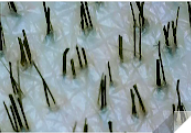
The miniaturization doesn’t exceed 20%, which is, therefore, by definition, normal or marginal. To be exact, repeat the photo with the hairs cut short against the scalp so that an accurate count can be made. Vary the location as well so we will be looking at more than one place. Also map it against a photo so I know where the photos is coming from.
Do I have Post Finasteride Syndrome?
The first week I took it I felt completely fine. The second week however, I experienced some ED, as well as less energy, but I chalked it up to not getting enough sleep or just overthinking it. 3rd week however was when I started seeing development of gyno and severe ED. This is ridiculous I only took it for 3 weeks.
I quit taking it right away, reported it took my doctor, who said it would go away on its own. 2 weeks later, I still feel the exact same effects, the gyno is still there, I have really bad ED, and really low energy all the time.
I literally only took it for 3 weeks, how do I have pfs already? Am I just fucked for life now, because of this? I honestly can’t live in this state in day to day life.
What am I supposed to do? The doctor I went to basically said, “Oh well, you’re fu***d” in his own words.
Honestly don;t want to continue living like this.
Sometimes it takes a few months for things to calm down and your sexual side effects to go away. Wait at least 3 months off of the drug. As far as breast lumps, that may not go away and you should see your family doctor about it if its doesn’t disappear. What your doctor told you is totally unprofessional and if he didn’t know what to do he should have sent you to someone who could help you. I hope that this posting gives you hope.
2021-09-08 01:33:572021-03-02 08:34:51Do I have Post Finasteride Syndrome?
Folliculitis can be a complication of a hair transplant? (photo)
You have a significant infection. If I were to see you, I would culture the wounds, drain all of the pustules and put you on an antibiotic immediately, adjusting it based upon the culture report and your response to it. I would also have you use warm wet compresses on it a few times a day to facilitate the pustules to drain.
2019-12-13 04:29:342019-12-11 09:09:21Folliculitis can be a complication of a hair transplant? (photo)
Do I have female genetic hair loss? (photo)
There is some miniaturization but it is around 20% which generally is not considered significant miniaturization. For a female, I would be interested in the views from both the back of the head and about one inch above the ears as FPHL has significant miniaturization above the ears as well as in the back of the head.
2021-03-25 02:36:562021-03-26 06:30:57Do I have female genetic hair loss? (photo)
Am I a good candidate for a hair transplant? (photo)
You have what appears to be diffuse thinning from the view in the photo below, but to make the diagnosis, you need a microscopic examination of the donor area to quantify the degree of miniaturization that is present in the donor area directly at the bottom of the scalp in the back of your head. Drs. Rassman and Bernstein first defined DUPA (Diffuse Unpatterned Alopecia), a rare condition in men, common in women. The only treatment for this is finasteride; it works in less than 50% of men. This diagnosis must be made with a hand microscope measuring the degree of miniaturization in the donor area in the back of the head.
Now about your question. You have a very, very small, and limited donor area based on the photo you sent me. The harvestable hairs, even if you don’t have DUPA (I suspect that a good hand microscope will show DUPA), you wouldn’t have enough hair to signifier impact your appearance. Beware of any doctor, anywhere, who would offer you a hair transplant. The results of a hair transplant will be a disaster for you. A dishonest doctor or ignorant illegal technician who does surgeries at a discounted rate may feel you are a good candidate because of the money they will make from you.

Do I have DUPA? (photos)
Yes, most of the hairs in the donor area shown are miniaturized but a few are thicker showing the comparison from normal to miniaturized hairs where the miniaturized hairs exceed 20% by a large margin. To demonstrate the normal hairs, I placed an arrow next to them and as you can see there are only 5 hairs that have a normal thickness, the rest of miniaturized. That is how the diagnosis is made. It is always better to evaluated the hairs when they are cut shorter than sent here by this patient so it is easier to count both miniaturized hairs and normal terminal hairs.
2020-02-14 03:33:462020-02-14 07:56:45Do I have DUPA? (photos)
Do I have DUPA? (photos)
These photos are better and I was able to zoom in on them. There is no significant miniaturization present. You have what appears to be a lower than average donor density, not miniaturization. To have DUPA (Diffuse Unpatterned Alopecia) there must be significantly more than 20% of the hairs that are miniaturized, which is not the case in your donor area as shown in the photo below, a zoomed in section of the photos you sent to me.
2020-02-06 07:19:322020-02-06 09:04:22Do I have DUPA? (photos)
Do I Have DUPA or Alopecia Areata?
29 years old, male. Around 1 1/2 year ago I started thinning all over, except for 3/4 of the neck area (the last inch), but even there i am sure it is somewhat thinner. I probably lost 50% of volume. I shed 50+ hairs just in the shower. We can call it DUPA. Blood analysis are ok: ferritin, diabetes, thyroid, hepathogram.
Now, the thing is that some months ago I had Exclamation-mark hairs. I would see that most of the shorter and thinner hairs in the shower were even thinner at the root (say 30 or 40% thinner). The Average hair was 3 or 4 cm long (1 inch and a half) and this tapered hairs 1 to 3 cm (0.5 to 1 inch). I thought it was just miniaturizating really fast. But now i know they can be a sign of alopecia areata. I don’t have them anymore. Now the roots are thicker than the distal end as it should be in a normal hair. They disappeared after a diet (no dairy, sugar, flour) or by coincidence. I thought I was improving because of that and because the dandruff decreased. But i still shed many hairs and I am still getting worse (maybe at a smaller rate, only maybe).
Is it just DUPA? Can I have DUPA with Tapering hairs? Could be areata? If not, what else should I check for? Considering that i dont have Tapering hairs anymore (maybe some long ones, but it is really not the same), would a scalp biopsy help to know?
Diffuse unpatterned alopecia (DUPA) and alopecia areata are both very rare in men, but I can not tell you what is going on without seeing you. An examination is necessary, so you should see a good dermatologist in your area who should be able to tell the difference.
I wish I could provide more info, but this isn’t something that can or should be diagnosed just based on your description.
Do I have DUPA (Diffuse Unpatterned Alopecia)? (Photo)
i’d really appreciate if you could have a glance at these pictures taken with a microscope to confirm whether i have dupa hair loss/miniaturization. pardon the oily hair and hair fragments (recent haircut) 🙂
There are 9 slightly miniaturized hairs (arrows point to them) out of a total 50 hair count. This is not DUPA as it requires substantially more than 20% of the hairs. Also it is important that these miniaturized hairs are usually part of a follicular unit with at least 2 normal terminal hairs, so your donor hair count may be just dropping slightly, something I see as boys become men, or as men get older.
2019-09-14 08:17:282019-09-14 09:49:25Do I have DUPA (Diffuse Unpatterned Alopecia)? (Photo)
Do I have DUPA?
Many men have written to me to ask me if they had Diffuse Unpatterned Alopecia (DUPA), which I defined in the literature with Dr. Bob Bernstein in 1996. This is a “female type of pattern” where the hair in the donor area has significant miniaturized hairs. In men, it is also called Senile Alopecia when appearing in aging men, but here, the hair is uniform in thickness, so miniaturization is not present. The basic premise in hair restoration surgery is that the donor area (a rim of hair about 2 1/2 inches above the ears and around the base of the skull) is privileged hair protected against the genetic of balding. The Norwood Classification shows this area in the Class 7 patterned patient.
The diagnosis is critical because the donor area is no longer protected from the balding process. We don’t believe that DUPA is necessarily inherited, but we don’t know. Sometimes, this donor area miniaturization will respond to finasteride but often does not. If any surgeon dares use this as a source of hair for a hair transplant, the hair transplant will fail, which is a classic malpractice, in my opinion. But for those impacted, controlling their hair loss becomes a real challenge. We have seen the existence of genetic patterned hair loss with DUPA also present, so these men are unfortunately double challenged.
This link shows a classic case of DUPA (https://baldingblog.com/do-i-have-dupa-photo/), so I ask all of my patients to get a hand microscope and cut the hair short in the area, just enough to use the hand microscope and get a good picture as shown in the above post.
Another man just wrote to me, got a hand microscope, and showed me photos of his donor area. I told him he didn’t have DUPA now, without a doubt. See the photos he sent me below. Very few miniaturized hairs are present, certainly not enough to reach the 20% threshold I use to diagnose DUPA.