Alopecia in African-American Women

I am a 22 year old African American female. I very curly, short, and extremely dry frizzy hair. Due to experimenting with different hairstyles I have managed to pull out some of my hair from the root and now I have bald spots all over my head, which i have fortunately managed to hide with my other hair. I have tried many produts to see if I could regain the hair lost in these particular areas, but nothing has worked thus far. My hair is also particularly thin around my forhead and basicly non-existent around the temples/edges of my head. I want my hair to be longer, thicker, more healthy all while still looking natural and not too “fake” What would be the best hair procedure for me to opt in my particular case and what are the estimated costs for this/these procedure(s)?

Note: Just so that you know the extent of my hair damage. It is so bad that I have had to resort to wearing hair weaves, wigs, and other hair pieces.

I would want to see you before rendering an opinion. Your history is one I hear with great frequency, but the cause of the hair loss needs to be determined before making any plan to fix it. Different diagnoses would include traction alopecia and a variety of autoimmune alopecias. You need to be careful with wigs, because they can induce traction alopecia, compounding your problem. If you are in the California or New York areas, you can meet with an NHI affliated doctor. If not, visit ISHRS.org to find a doctor specializing hair restoration in your area. Or you can find a local qualified Dermatologist to get the diagnosis you need.
Alopecia Areata Universalis

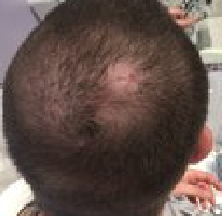
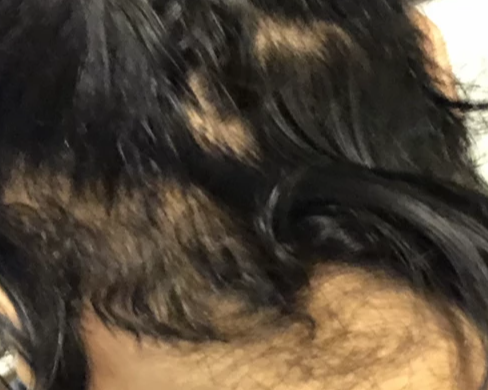
Im suffering with alopecia areata universalis. due to it i lost my hair totally on my scalp, eyebrows & eyelashes. Is hair transplantation possible for me? please give me a reply. thank you.

A hair transplant requires a sufficient amount of donor hair taken from the back of the scalp, to be moved to the balding area. Unfortunately if you do not have the donor hair to accomplish your goal, then hair transplantation is not an option. You can discuss your choices with a good dermatologist, and the National Alopecia Areata Foundation has a very extensive and informative website for those suffering with your condition.

I Have Alopecia Areata with Multiple Spots on My Face That Come and Go with Treatment.

Alopecia areata is not always curable. It can come and go with treatment, stopping while being treated and then returning as you seem to disclose. This is not atypical for this disease, and it is something that you may have to learn to live with. The beard area can be treated very nicely with scalp micropigmentation.


2018-07-19 05:49:31I Have Alopecia Areata with Multiple Spots on My Face That Come and Go with Treatment.

Alopecia Areata in Women

I had alopecia areata 7 yrs back. i am female -30. i had alopecia again after 2 and a half years. both the times it got cured by the use of minoxidil 2%. This time i have developed a bald patch at the hairline in the front and am having excessive hairfall all over my scalp. I count the strands. They vary fom 60 strands to 130 strands a day.There is excessive hairfall on the days i wash my hair. Also my eyebrow hair falls. What i have realized is that over these 7 years my hair has been becoming less dense and is not as thick as it used to be. My doctor has advised me to use minoxidil 2% all over the scalp [1 ml in the morning and 1 ml at night]. Also am applying Mintop on the bald patch at the hairline.

Will my hair ever be the way it was and will i ever get thickness in my hair? What do i do to arrest my current hairfall? Can my alopecia be cured permanently? India is not really that advanced. If i need to come to you i have no problem. Please help.

Alopecia Areata in some people comes and goes. After the first attack, if you are lucky enough to get the hair back, you get excited and think that it is over. In some people, one episode is all they get. In others, like you, repeated episodes are the pattern and then when the hair does come back, it is often a finer hair and often not all of it returns. The use of Minoxidil may have value and has little down side, as long as you do not develop any intolerable side effects.

Unfortunately, we do not really understand this disease, but there is a great deal of research going on that may point to better solutions in the future. I wish I could help you more.


2005-11-19 23:25:36Alopecia Areata in Women

Alopecia Areata in a hair transplant patient (with photos)

I have been transplanted twice. Both times, this bald spot, which was transplanted, didn’t seem to take the grafts and grow out like the rest of the hair.

You most likely have Alopecia Areata. This condition will cause the hair to fail to grow in an active area of the disease. I recommend that you see a dermatologist. He will look at it via microscopic examination and possibly find ‘exclamation hairs’. He will also perform a biopsy to confirm the diagnosis. This is a critical step for you because this disease can get worse.

aa in transplant

Alopecia Areata?

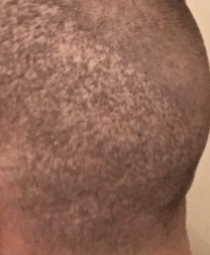
I went to the dermatologist to talk about my hairloss. Due to the how fast I lost my hair (almost 70% density in a year), the doctor did a hair biopsy and apparently the results show Alopecia Areata. I have been going back to the dermatologist once a month for the past 2 months for cortisone shots and have not seen any results. I am a bit skeptical about the Alopecia Areata diagnosis, mainly because their is typically a circular bald pattern associated with it and my hairloss isn’t like that.

The picture you show of the back of your scalp is typical of alopecia areata; however, the quality is poor and out of focus. With good photos, one should see on close examination Exclamation Mark hairs in and around the hair loss areas. This is sometimes a difficult problem to reverse. Because the quality of the photos are so poor, Don’t hang your hat on the diagnosis I gave you above until you either send me better photos or see a dermatologist

Alopecia and Pregnancy

Hello,
I got alopecia and I am 4 months pregnant. I have started using fluort lotion as it helped me 5 years back, but I worry if it will have side effects because I am pregnant now. Will it effect my baby’s growth? I am very worried. Please help me out.

I would be hesitent to use things that can be absorbed into your body (transepidermal absorption) as they may harm your baby. Hair loss in pregnancy is not uncommon, most of the time it will reverse after the baby is born (give it up to a year post partum). On occasion, pregnancy may precipitate the onset of female genetic balding, but until a year has passed after the baby is born, do not focus too much on that possibility. Good nutrition is critical both to the baby’s welfare and health, as well as your hair health.


2005-12-28 08:20:07Alopecia and Pregnancy

Almost All of My Hair Has Grown Back!

Hi Dr. Rassman,

At 21 I started losing my hair in the front of my head and on my crown. I ignored it for about a year and then at 22 I started taking finasteride this was about 8 months ago.

6 months into it I noticed no results but I believed my hair had stopped falling out; to try and maximize my results I started using minoxidil 5% on my scalp.

Suddenly about 2 weeks ago I noticed almost ALL of my hair had grown back and am experiancing almost zero hair loss. My question is do you think this is because the finasteride finally kicked in, or is it because I am using both finasteride and minoxidil?

(Just to clarify: I have been using finasteride for 8 months and minxodil for a little over 2 months)

I always tell people to go for a full 8-12 months on finasteride before drawing any conclusions. Likely, the impact of what you are reporting is the result of finasteride. Less chance it was minoxidil. If you have only been using the minoxidil for 2 months, you might try stopping it now, but if it should result in hair loss, then kick back in using it. You are a lucky and thoughtful man and you did the right thing.

On an unrelated note, this is the post #2,000 on BaldingBlog. Wow!

Almost a Month After Hair Transplant, My Hairs Look Broken

Hi Doc, I am about 3.5 weeks removed from a 1400 Strip Hair Transplant. Alot of my hairs have “shed” and some have “broken”. When I say broken, it appears that stubs are left in my head and I have alot of stubs, and sometimes the hair (with the black bulb at the end) comes out of my head (“shed”)… Is this normal for transplanted hairs to break, is it because they die early on? The broken hairs look like hair you would see from a haircut (no bulb ends), and the remaining part looks like stubble in the head.

These are questions that you should discuss with the doctor who did your transplant and something that you should have been made aware of. From your brief description, it seems you are shedding your transplanted hair. This is normal. If you still feel there is something else going on, you should follow up with your doctor. I am assuming that these broken hairs reflect the transplanted hairs, not the natural hair in the general area where the transplant was done.


2006-10-26 09:00:31Almost a Month After Hair Transplant, My Hairs Look Broken

I Had Almost 5000 Grafts and I Want to Know How Do I Fix My Donor Area (Photo)

The best and only way to repair this donor area is with Scalp Micropigmentation, which makes it look like you have hair where there is none. This technique does not add hair, but will accomplish the goal of scar coverage and camouflage. These photos suggest that you had too many grafts removed by the FUE based upon your donor density. The hair that was harvested exceeded the areas of “safe” donor hair that is considered permanent. Considering that you received 5,000 grafts, very few people can support this magnitude of harvesting without donor depletion. This problem was 100% predictable. Your surgeon should have known better and told you to expect this type of balding in the donor area, unless your surgeon was greedy about making money from you or just plain ignorant.

overharvested donor area