Finasteride Causes an Upregulation of Androgen Receptors? – Hair Loss Information – Balding Blog

hello doctor rassman
there was a study done where finasteride upregulates adrogen receptors in the prostate. here is the link- PubMed

is it possible that a user who takes finasteride for hairloss can have an upregulation of androgen receptors at scalp level? therefore causing more hairloss while on propecia? or propecia not working at all?

Block Quote

I am not a biochemist to give you a clear answer on how this study relates to hair loss. Of note, this was a very limited study in 47 cases in a cell line study.

The big picture here is that people take Propecia for the treatment of hair loss, and the studies of this drug have shown effectiveness for this. The research does not show that it produces hair loss.

Hair Loss InformationReCell Spray-On Skin in Hair Transplant Surgery? – Hair Loss Information – Balding Blog

Dr.Rassman/Dr.Pak,
Thought you might be interested in the following – ReCell Spray-On Skin

This technology was recently used to great effect here in the UK on a young child suffering from second-degree burns – Second Degree Burns Are Healed With ReCell Skin Spray

Do you think ReCell could be adapted for use in hair transplant surgery?

Block Quote

Interesting find, but scarring from hair transplant surgery has more to do with the tension created by the cut on the scalp (not a burn on the tissue or tissue damage). So I don’t think the product would have a great effect on hair transplant scars.

Why Do Scalp Pimples Occur After a Hair Transplant? – Hair Loss Information – Balding Blog

I had a hair transplant 2 months ago and have now developed pimples where they put the grafts. The doctor prescribed an antibiotic, but never explained the cause of the problem.

Block Quote

If you look at the anatomy of the hair follicle, you will see that this is a complex structure that contains skin, a hair shaft with a bulb, dermal papillae, outer root sheath, dermal fat, arteries and veins, nerves, muscles that hook up to the hair that makes it erect when you are cold or stimulated… and with regard to your question, the sebaceous gland.

Above: Schematic drawing of a two hair graft with all elements of the anatomy labeled (on left). The photo on the right shows an actual mirror image of this schematic drawing. Note the similarity between the diagram and the photograph.


After a hair transplant, everything you see here disappears, and when the new hairs finally grow, these structures are rebuilt by the body to complete the newly growing hair organ. The sebaceous gland may not die and often survives after the hair transplant. When that happens, it is still a functioning gland — and what do glands do? They put out sebum. If the gland survives the initial transplant, it will still be functioning, pumping out the sebum that normally came out through the pore in the skin that the hair exited from.

With the pore gone (because there is not hair to maintain it open), the glands secreting sebum has no where to go. It will be attacked by the body as a foreign body, and in this attack, it may be walled off from the surrounding fat, forming a cyst. Most often these cysts contain sterile sebum, but this is very irritating stuff and the scalp often does not like it. If the walling off is successful, you may never know it ever happened and the body will remove the sebum as it would remove any foreign body, but sometimes it can not wall it off successfully and instead propels it out of the body, breaking through the skin on occasion (forming what we often refer to as a zit or pimple).

With proper warm soaks, the body is encouraged to get a cyst near the surface of the skin to expel it and then when it breaks through, it often appears yellow and thick (occasionally tinged with blood). If you saw me in the office, I would probably drain it with a needle under sterile conditions and if there were many of them, I might put you on an antibiotic. When we culture the ones that look “mean” to my medical eye, the culture is often done, but rarely do they show any bacteria when the culture reports are returned to us from the laboratory.

There are other causes of this condition to include: People who pick on the hair graft area and cause folliculitis (common), remnants of the hair shaft from the transplant (common), autoimmune reaction short term (probably common), autoimmune reaction long term (rare), etc…

If they persist, you should see the doctor who did your hair transplant and let that doctor determine what is causing it, and this is especially important if the problem continues.

I’m Taking Iron Supplements, But After 3 Months My Hair Has Gotten Worse – Hair Loss Information – Balding Blog

(female)
I’m really hoping someone will be able to help me out. I am 24 years old. Over the past 8 months or so I have had a few medical problems ranging from headaches, joint pain and severe hair loss. I have seen my primary, who then referred me to a rheumatologist. She was concerned about my ANA but ruled out Lupus. She referred me to a dermatologist. He informed me that my iron absorption level was low, and put me on an iron supplement, which I have been taking for three months.

My hair has gotten worse. I use to have thick curly hair. I have such thin hair now that you can see my scalp no matter what I do. It is extremely depressing. I’m only 24 years old and I fear I am going to lose all my hair. I am married and have a 5 year old son and a full time job, so like any other person I have stress, but I am not so overcome with it that I feel that is the reason this is happening to me. I do not have a family history of hair loss. I don’t know what to do. I’m 24; I can’t believe I am going through this. Please help me.

Block Quote

The best help I can offer is to tell you to consider seeing a doctor for your issues, including your depression and stress.

With respect to your hair loss issues, I cannot diagnose you or even offer a treatment (since I have not examined you or know exactly what is going on). Iron deficiency is known to cause hair loss, but I couldn’t say if that’s the cause of your loss. Continue the iron supplements for a good year or so, as it does take time to reverse any deficiency.

Hair Loss InformationWill Finasteride Prevent Hair Loss from Accutane? – Hair Loss Information – Balding Blog

Two years ago I took accutane to deal with bad acne. During such time I ended up receding a lot around the temples – to the point of NW1.5ish – which certainly wouldn’t have normally happened – considering I was only 17 then.

To deal with the hair loss I’ve recently gone on Finasteride. However, my acne has also returned in a moderate form that like before, doesn’t respond to any creams. I know this second round will fix my skin once and for all, but I don’t want to lose any more hair.

Do you know if my taking Finasteride will somehow prevent hair loss from Accutane? The hair loss I suffered whilst on Accutane appeared to be TE as I was losing a lot more eyebrow, eyelash, and normal hair than normal – all with a white bulb at the end. I just want clear skin, and to maintain my hair. But my skin is so sensitive to acne creams thanks to Accutane, that I’m unable to treat it. It’s a real catch-22 and I’m afraid to go on Accutane again in case I go bald or something.

Block Quote

Propecia (finasteride) is used for the treatment of genetic hair loss, not for loss caused by other medications. I doubt that it will protect against possible hair loss caused by Accutane (isotretinoin).

FUE vs FUT – Which is Better? – Hair Loss Information – Balding Blog

ImageThere is a question arising out of the hair transplant community which is becoming polarized and lining up for a fight: Which is better, FUT (Follicular Unit Transplant with Strip) or FUE (Follicular Unit Extraction)? Some doctors have already specialized in performing FUE alone, so their opinion is already made up. Some doctors new to the business entered the FUE market having never done an FUT strip procedure. That means that the nuances of quality control have not been learned (tricks to prevent graft damage from manipulation and drying).

I have had the opportunity to speak with some of these new doctors and they reported a substantial failure rate in their initial patients, but with time, they learned how to prevent damage and minimize transection of the grafts, and their results progressively got better. Their decisions on becoming hair transplant surgeons were initially made from a business mindset, under the assumption that the market demand would be there as they learned the process. This assumption is what actually happened. They also made the assumptions that the FUE technique would eventually be as good as the FUT technique over time. Again, this was a business, not a medical decision, and only time will tell these doctors if the quality of their work has met the needs of the patients.
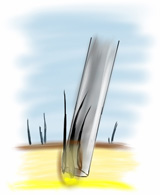
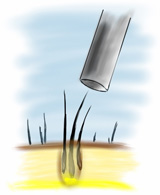
ImageThe long term results with FUE (particularly on donor area damage in extensive FUE grafting) is not yet in. When we introduced the FUE technique in 2002 at the international meeting and in the Journal of Dermatological Surgery, there was not too much of an initial reaction, because the doctors who tried it quickly failed to get good quality grafts out. I remember two doctors in particular (names withheld) — one called me the first day after I returned from the meeting and I spent an hour on the phone explaining the subtle nuances that made it work for us. He thanked me, then quickly announced his new “pioneering invention”, the FUE technique, both on his website and through various press releases. Clearly he did not have the time to do more than one procedure and I felt sorry for that patient, a victim of a doctor’s greed for fame and money.


Another doctor who came out and quickly started offering FUE was more subtle about it, and it took longer to establish a presence in the market. His initial work produced many failures, some of which I saw in consultations in my office, and much of it through emails with pictures I received from the victims. For some doctors, FUE is about money and not about patient welfare.
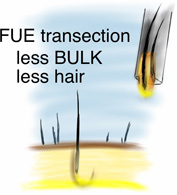
ImageI predict that the history of FUE will parallel the history of the FUT strip procedure, which we pioneered in the early 1990s. As the FUT strip surgery caught on and as more and more doctors offered the procedure, performing the surgery on patient after patient, they too found that the initial results produced a high failure and complication rate. It took years to learn (1) how to get growth, (2) how to increase the number of grafts extracted and implanted safely in one session, and (3) how to avoid the terrible scar and donor wound complications (the worst being gangrene of the donor area). These three “HOW TOs” are the same issues with FUE that we are now confronted with. Only time will tell us what results we will get and only doctors who do both procedures will be in the best position to judge this comparison today.

Dr. Robert Bernstein (who also co-authored our original work on FUE), has since purchased and installed an FUE robot (Artas® System), which puts him in a unique position to draw conclusions to the question, “Which is Better, FUE or FUT?” He wrote the following text, which I totally agree with:

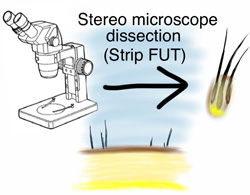
“I explain to patients that FUT (via strip) will give the best cosmetic results (more volume) since the grafts are of better quality (when using microscopic dissection, there is less transection and more surrounding tissue to protect the grafts) and better graft selection (the grafts can all be harvested from the mid-portion of the permanent zone) In contrast, in FUE you need approximately 5 times the area. Because of this large donor area requirement, some of the hair must be harvested from fringe areas and thus the hair will be less stable genetically. I relate that with subsequent FUT procedures we remove the first scar, but with subsequent FUE sessions we are adding additional scars, so over the long-term the cumulative scarring over large areas can present its own problems of visibility.”

“I explain that the main advantage of FUE is to have the option of wearing your hair very short (but not shaved). FUE is also appropriate for patients who are at risk for a widened donor scar (i.e., very athletic and muscular or with thin, tight scalps etc.). I relate to patients that, in my experience, Robotic FUE is superior to other FUE methods in that it is much more accurate and more consistent. It enables the doctor to extract grafts with less damage than with hand-held instruments or other automated devices.”

Block Quote

ImageDr. Bernstein, like the editors of this blog and other good doctors, focus on quality care, safety, integrity, and discussing a balanced view of the FUE vs FUT discussion with the patient. When presented to the patient considering this decision, we call this “informed consent” and it not only reflects basic courtesy and respect shown to the patient, it is a requirement of the laws of most states and countries.

The patient must be presented a balanced view of the risks vs rewards of any procedure offered and the alternatives available to him/her. There are many good doctors who share these views.

 

I’m Feeling Tingling in My Fingers After Using Generic Rogaine Foam – Hair Loss Information – Balding Blog

I’m a 44 year old male and have been using Rogaine foam for the past 3 months and at the begging of this month changed over to a Generic “Rite Aid” brand of the Foam Rogaine. After using it for a couple of weeks I noticed my finger tips started tingling and feeling numb. Maybe from working it into my head with my fingers? Has this ever happen to anyone and is this a possible side affect?

Block Quote

I don’t remember hearing this complaint before, but tingling hands are a rare known side effect of minoxidil. It could be a sign that too much medication is being absorbed in the body. Are you using the medication at the correct amount and only twice a day? The generic should be the same as the name brand (I wasn’t aware a generic foam was available yet).

Maybe you should also consider using disposable gloves to keep the Rogaine Foam (or generic) off of your fingers.

Levothyroxine and Finasteride? – Hair Loss Information – Balding Blog

Hello,

My endocrinologist diagnosed me hypothyroidism a couple of years ago and I’ve been taking levothyroxine every morning to treat it. Since last year my dermatologist prescribes me finasteride to treat MPB. I take both at the same time (first thing in the morning).

Is there any problem about taking them together (poor absortion, etc)?

Thanks.

Block Quote

There are no interactions I know of. Taking levothyroxine should not be an issue with finasteride, but ALWAYS let your doctor be aware of any medications that you are taking when being prescribed something new. You should be asking this to your prescribing doctor and the pharmacist who fills the prescription.

In the News – FDA Looks Into Fake Adderall Sold Online – Hair Loss Information – Balding Blog

Snippet from the article:

Beware of fake versions of ADHD medication Adderall that are being sold on the Internet, the U.S. Food and Drug Administration has warned.

The agency issued the warning Tuesday after receiving complaints from the manufacturer Teva Pharmaceutical Industries that the 30 mg tablets, which do not even resemble the authentic version, was being sold online under the company name, FDA spokesperson Shelly Burgess told ABC News.

Adderall is approved by the FDA to treat attention deficit hyperactivity disorders (ADHD) and narcolepsy.

Block Quote

Read the rest — Fake Adderall Sold Online Gets FDA’s Attention

While not hair loss related, this is something to remember if you decide to purchase prescription drugs from online pharmacies that don’t require a prescription.

Hair Loss InformationWhat Are My Options After 2 Failed Hair Transplants? – Hair Loss Information – Balding Blog

What are my options after 2 failed procedures?

I had hair transplant surgery around 2007 using strip form back of head method, by what I thought was a credible Dr. from reviews online, experience level etc…Paid alot of money for hundreds of graft and got very little result. In fact only a few strands grew in at the hairline and temples grew in. None of the grafts in the crown area, where he said he really “packed them in” grew. He kept saying “you had beautiful grafts” and seemed dumbfounded as to why they didn’t grow.

After the salesperson tried to convince me that there was something wrong with me, the Dr. finally admitted that it was a failed procedure and agreed to do another one at no cost, This time saying he was going to try less grafts in that area hoping for better blood circulation. Well that also yielded very little growth. Although after about a year and half, filled in a little,but very little. Which shows me that there was no scalp biopsy necessary as they initially tried to say there was something wrong with me. I did get some growth. If there was a problem with my scalp, wouldn’t I have gotten 0 growth??

Overall I consider my decision to be a poor one because now i cannot even shave my head or wear a low style because of this huge scar (even wider now from 2 procedures) on the back of my head.

So my question is a two part question. Is a future transplant out of the question for me or could it be that this Dr and staff blew it twice? It should be noted that I am of mixed race(black and white) 38 years old,(34 at time of procedures), with more of wave than a curl to my hair, not real kinky but thick and puffy and coarse when it grows long on back and sides. The Dr did say they had experience in afro american hair types and seemed very confident during consultation with my donor area and being able to handle my hair type

Any insight as to what might of went wrong? The balding area was pretty much completely bald so I am not seeing native area that has thinned out after surgery, but the area that never fully grew in after 2 procedures.

Also is it possible that 4-5 year later that some of those graft may still have ability to grow?? With the aid of a product like Nioxin??

Thanks in advance for your answers

Block Quote

That is one hell of a story! If that happened to one of my patients, I would want to get a biopsy of his scalp, looking for a disease like alopecia areata that would cause rejection of the hair grafts. Unfortunately, your story is far more common than our profession would care to admit. Doctors who lack competence often use salesmen to push hair transplants beyond their abilities to perform it well.

One of the reasons that I started BaldingBlog is to have a place to let people share their stories. Your situation is quite unfortunate. For those that are shopping around for a doctor, remember that it is critically important to have thorough research. I’ve written a “how to” guide of sorts for selecting your hair transplant doctor.

As for your options, I think you should see a doctor who specializes in fixing screw-ups. The grafts should be growing, and if there’s nothing there after 4 or 5 years, I wouldn’t expect them to suddenly appear. I would be happy to give you my opinion, but I would have to see you. I’m in Los Angeles… but as you are in the Northeastern United States, consider a visit to Dr. Robert Bernstein for an opinion. Best of luck to you.