
After 8 Years on Finasteride, Could I Be Developing Side Effects? – Hair Loss Information – Balding Blog

Hello Dr. Rassman. First, congratulations for your awesome blog.

I would like to ask you about finasteride side effects. I’ve been taking finasteride since I was 19 years old (I’m 27 now)and I never had problems with its side effects. But,suddenly, I believe that I started to feel some sides: shorter lasting erections and a mild testicular pain. But, I notice that I don’t feel these sides all the time. Sometimes I have great sexual relations, without any problem, and don’t feel any testicular pain. Is this possible to happen? Start to feel a side effects after a long time taking the medicine? Does retarded effects exist?

Block Quote

Yes, sometimes the side effects may come on as you age. You should see a urologist (to be safe) about the testicular pain and the erection problems, as it’s possible that what you’re experiencing is unrelated to the drug.
How Might a Doctor Evaluate My Hair Loss Properly? – Hair Loss Information – Balding Blog

Like a question you answered from another emailer, I’ve also self-prescribed finasteride for the past few months. I went to a doctor a year ago, and he took a 30 second look at my hair and told me that I should consider Propecia. I’m 20 years old and hair loss is worrying me so much. I think I’m losing hair and want to be safe rather than sorry but I know I should get a professional opinion. Can I get a little more information about what would a doctor be able to evaluate me for?

Block Quote

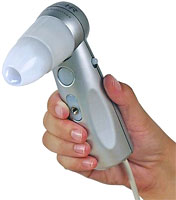
ProscopeWhen you visit us, we evaluate you as follows:

  1. Analysis of your hair bulk with a special measuring instrument will focus on the top and crown of your head to determine if there is any early, sub-clinical balding present. One part of your scalp will be compared to other parts of the scalp (the donor area) to determine if you lost any meaningful amount of hair bulk or are in the process of losing hair. This test is highly accurate for determining the degree of hair loss you have to date.
  2. Evaluation of hair for miniaturization is an important test, because hair loss in its earliest period will show decreased hair shaft thicknesses. This can be done throughout the scalp and is a good predictor for where you hair loss will stop, even though photos may indicate you’re at the end of your balding process.
  3. Hair density evaluation is critical, because you must know the supply of good hair and establish a good baseline. Hair transplantation is a supply/demand process and you most know what you can expect over the years in front of you. You would not want to run out of donor hair or start too early, as you may continue to bald, leaving you freaky looking, as so many patients have found themselves in this situation when planning was not done properly. We are all different and are born with different hair densities. Add to that the ethnic hair densities found in different people (Caucasians are born with an average 100,000 hairs, Asians with an average 80,000 hairs and Africans with an average 60,000 hairs). Within each ethnic group, variations in the number of birth hairs vary considerably, so these measurements will give you guidance as to what can be accomplished and more important, what can not be accomplished. As an example, for an African who has a very advanced balding process, he would run out of hair before he could fill in the bald area so he needs to know this right up front, not find out about it after he starts the transplant process. The same issues reflect all ethnic variances.
  4. Build a Master Plan for the present and the future, because hair loss is a progressive process. You must have a plan as to what you are going to do as you age and in the next 10-20 years, the progressive process should have slowed down substantially. The drug Propecia (finasteride) is generally safe and side effect free in 98% of people who take it. If you are really balding, there is no alternative way to hold on to your hair. Frankly, all of the other remedies out in the marketplace will not work as well as this drug, if they work at all.

BHT for African Americans – Hair Loss Information – Balding Blog

Dr. Rassman,

In many of your posts regarding body hair transplant, I see that you tend to discourage the use of body hair for transplants. Some of the reasons include the fact that body hair is curly and does not grow long enough. I am a black person who grows a short Afro. I have a bald spot of the right front side of my scalp which I have managed to concealed with my own pubic hair. It just so happens that my pubic hair is just as curly and has the same texture as my scalp hair. So what I do from time to time, is cut my public hair, wash it thoroughly and then get it entangled with my scalp hair in the balding area. The entangling is due to the curliness of the hair and it holds even in the wind.

So far no one seems to notice. In fact, when I first saw a hair loss doctor, he was amazed at how well I concealed my hair loss.

In any case, I think transplanting hair from the pubic area for African Americans may be a viable option since both the pubic and scalp hair in African Americans is curly and perhaps has the same texture in most African American(as is my case). In any, what is your take on this issue.

Block Quote

I have done a few pubic hair to scalp transplants and they work very well. I recall one African American fellow in particular and a few Caucasian patients that had this done over the past many years. The FUE technique may have a good role here.

I have also seen another person who used pubic hair to entangle with their afro to add bulk with the same observations you demonstrate. It’s certainly not for everybody, and I still say scalp hair works best.

Would Blood Donation Reduce Propecia’s Effectiveness? – Hair Loss Information – Balding Blog

First, a question regarding the mechanism of Propecia…would a frequent blood donor or a person who requires regular phlebotomy (such as for hemochromatosis) have any worries about reducing the effectiveness of Propecia? Given the slow-working nature of the drug, I wonder if blood loss would equate to a detrimental reduction of the drug in the system.

Also, a quick thought for the Propecia haters out there…if you’re an open person and willing to discuss your hair loss, talk to your follically challenged friends- I was amazed at the number of friends I have who have been using Propecia for years. You’re never going to know if you don’t ask- it’s not typically something a person advertises. Also, while I acknowledge the real side effects that are possible, I tend to believe that a lot of the horror stories are a psychosomatic effect from the anxiety of facing possible ED and other scary (but rare, and reversible) side effects. After the testimonials of friends, as well as all of the great information you so generously supply, I will be giving it a try, so long as the blood donation is not an issue.

Block Quote

BloodIf you have hemochromatisis, your doctor should have a say in any drug you take. There would be no impact from the frequent bleeding you need, but I would rather that you get an opinion from your doctor. Also, as far as I’m aware, those that take finasteride (Propecia) are not eligible for donating blood.
Thanks for your other comments, as advice from friends is often more effective and more informational than when I say those things.

Can I Use SMP to Make a Norwood 4 to a Norwood 2? – Hair Loss Information – Balding Blog

what if a person has a norwood 3 hairline and you guys already know it is going to go worse (the hairloss). can you perform SMP and change the NW4 to a NW2 or are you going to wait till he is completely bald and his hairloss has halted?

Block Quote

Scalp MicroPigmentation (SMP) should not be used to convert a Norwood class 4 to a Norwood class 2… unless you made the decision to shave your head for life. Hair transplants would accomplish what you are suggesting, not SMP.

The Donor Area and Many, Many FUEs – Hair Loss Information – Balding Blog

This post isn’t responding to a submitted question, but an observation we’ve been seeing more and more lately…

Donor area depletion is now becoming apparent in many patients who have had many FUEs done in the donor area. Just like strip surgeries, once hair is removed from the donor area, the donor area become thinner with each subsequent Follicular Unit Extraction (FUE) procedure. Those individuals who have had between 3000-6000 grafts extracted with FUE are now showing problems in the donor area where coverage of the back and side of the head is becoming a problem. Somehow doctors and patients thought that FUE was a free ride — no significant donor scar without a downside. But alas, there is no free ride. One does not get something for nothing.

I believe that many doctors do not understand what I wrote above, but they will be caught with their pants down when the patient finds that he has a donor area coverage problem that he never expected. With this assessment, I am referring to the doctors who do FUE right (with minimal transection damage), but I suspect that the number of good doctors who have mastered the technique and get transections in the 5% or less range are a minority of those offering the procedure.

Over and over again I say, “Let the Buyer Beware” and that still remains the Rassman dictum.

Are Sideburn Transplants Done? – Hair Loss Information – Balding Blog

I have lived my whole life without sideburns as I have never been able to grow them. Are sideburn transplants an option? Are they at all common where a doctor would be comfortable doing one? I would also be interested to know if you’ve done any and if there were any problems.

Thanks.

Also, any photos you have of clients before and after a sideburn transplant would be appreciated.

Block Quote

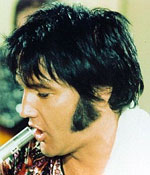
ElvisYes, sideburn transplants are commonly done by experienced hair transplant surgeons. We actually do this procedure on more women than men, because many women who have facelifts lose their sideburns and often have scars that need to be hidden with the transplants.

You can see some excellent photos in our hair restoration gallery.

(It should go without saying, but the photo at right of Elvis Presley is meant to show sideburns, not to suggest that he had transplants.)

Hair Loss InformationHow Do I Become a Hair Transplant Technician? – Hair Loss Information – Balding Blog

Dr. Rassman
I’ve been a licensed cosmetologist and cosmetology instructor for 20 years. I’ve witnessed all types of causes of hair loss from simple improper hair care, chemical damage, braids and hair extention damage, alopecia, medications, lupus,chemo and radiation.

I now find myself ready to embrace a higher level in my profession. I’m eager about becoming a trichologist and a hair transplant technician and was wondering if you had and advice on how and where I should start to embark on these two career paths. My passion and curiosity about the hair and scalp has got me wanting to absorb all I can so I may better service the public and feed my need for more knowledge. Any insight you have would be greatly appreciated.

Block Quote

The training of a hair transplant technician is done only by doctors who are looking for new people and are willing to take on a trainee. Most people come from a medical assistant school and most states certify MAs, although the doctor can do the training in specific cases.

You need to contact a hair transplant doctor in your area and ask if he/she is taking on new people. It is a great career and for those who master the technical skill, they are generally well paid.

If I Shave My Head, Could Parts Not Regrow? – Hair Loss Information – Balding Blog

Hi .. I searched your blog to find an answer to this one, but don’t think I did.

I’m a male, 40s, losing hair since about 19 and pattern has stabilized to a bit of hair left up front and decent growth on sides.

My question is this: If I chose to shave the remaining hair atop my head to evaluate the look, is there and chance what little is there would not grow back or grow back differently?

Thanks.

Block Quote

Shaving your head will not impact hair growth. The hairs that are miniaturized generally have a slow growth cycle and if the miniaturization is advanced and the hair already stopped growing, then you will see a bald area with no growth (not caused by the shave but by the advanced balding).

Hair Loss InformationCould SMP Cause Shock Loss? – Hair Loss Information – Balding Blog

Hello, I was hoping you could answer these two questions:

1. With the advent of the Scalp Micro-Pigmentation, have you had any patients experience “shock loss” following the procedure?
I’m seriously considering the procedure but am a bit wary that the trauma to the scalp caused by the needle will cause shock loss.

2. Drawing on your years of experience, have you noticed a certain threshold (or range) for transplanted grafts where a patient is more prone to experience shock loss?

i.e. Is a patient who receives 1500+ grafts in one session more susceptible to shock loss than a patient who has two transplant surgerys of 750 grafts each session, say, three or four months apart?

Thank you in advance for your help.

Best

Block Quote

We haven’t experienced “shock loss” per se in patients that had Scalp MicroPigmentation (SMP). One or two patients did report some hair loss initially, but it was not significant to be noticed. The risk is probably in the use of the anesthesia, rather than the SMP.

Dr. Pak’s mother had SMP done and did report hair loss the first few days, but it was insignificant. She had her procedure six months ago and other than the initial few days of hair loss, everything else stabilized.

Patients experience shock hair loss when their hair loss is ACTIVE and dramatic to begin with. In general, shock hair loss is more of a factor in men in their early 20’s (actively losing hair) and those who are not on Propecia. Your doctor should be able to better assess your risks of shock loss to the benefits of a procedure. The number of grafts you receive in a session is probably not related to the degree of shock loss.