
Hi Dr Rassman,
Fantastic site, and I’m really enjoying your cautious matter-of-fact coverage of the new A-Cell technology!
I’m a 28 year old male, slowly but surely experiencing diffused patterned alopecia. So far it’s not visible except when wet, but miniaturisation mapping shows I’m probably headed for a NW7.
I’m interested in whether you think it’s possible in theory for a surgeon to insert A-Cell treated hairs into the balding areas, thus gradually replacing the DHT-affected hair with permanent hair, and ensuring coverage “continuity”. Obviously this will depend on whether the A-Cell hair is in fact permanent.
Also, I believe you indicated in a previous post that finasteride is recommended to prevent shock loss. Do you believe this will be an ongoing necessity? i.e. assuming the new hairs take root and are unaffected by DHT, would a patient need to remain on finasteride indefinitely or only for the months following surgery?

Perhaps you need a good diagnosis of what you have. Do you have diffuse patterned alopecia (DPA) or androgenic alopecia (AGA)? I suppose you can have both, but that would be rare. It’s important to determine the proper diagnosis, because diffuse patterned or unpatterned alopecia is generally a contra-indication to a hair transplant surgery. The donor hair area is questionable in its permanence in those cases.
Thus, even ACell technology would fall into the same uncertainty. In other words, the hairs transplanted with ACell may not be permanent if the donor hair is not permanent. The technology is so new that I do not have an answer for you.
Finally, Propecia (finasteride 1mg) is recommended for men with androgenic alopecia (AGA). Patients who take Propecia need to take it indefinitely if they wish to slow down or keep the hairs that are at risk from falling out. Many doctors (including us) recommend Propecia to decrease the risk of shock loss. For practical reasons, patients who do not want to be taking Propecia indefinitely (but wish to decrease the risk of shock loss), usually take the medication for about one year. Once they stop taking the Propecia they risk the same ‘catch-up’ hair loss phenomenon. The main thing one needs to understand is that Propecia is an OPTIONAL medication and the only thing that we (doctors) can do is to recommend it.
 There are no studies that I am aware of that look at a relationship between hair texture and weather. I think it is more of something we take as common sense that when the weather is cold and dry, our hairs and skin may be affected.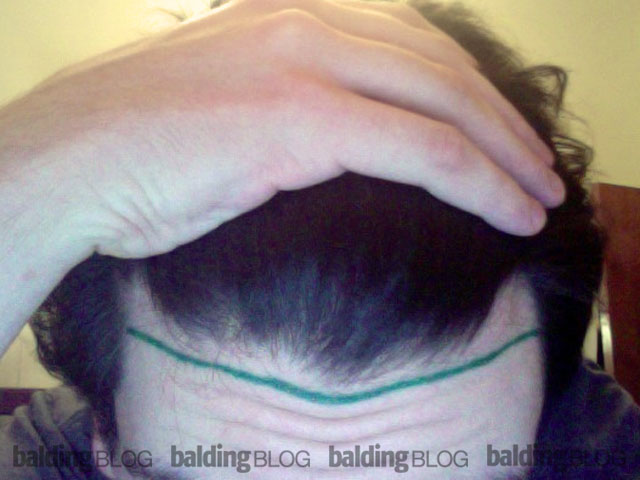
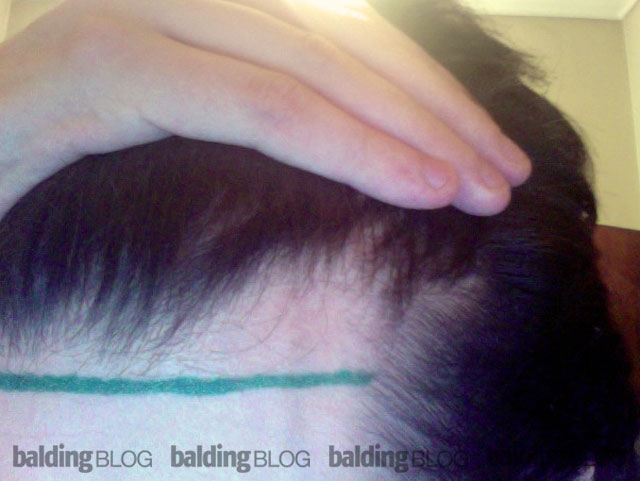
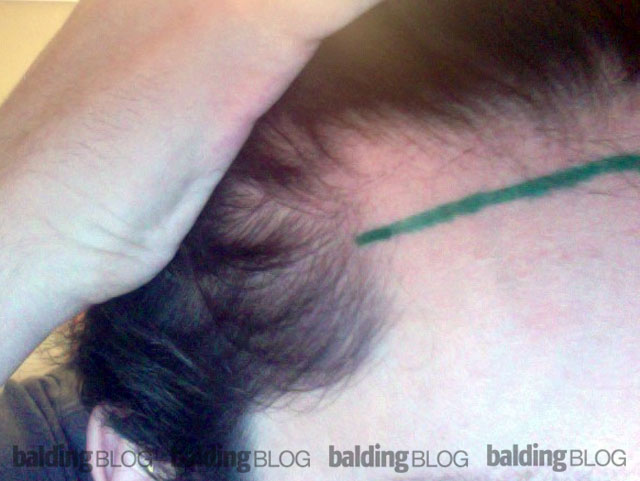
 Unfortunately, there’s no medication that can restore a hairline and surgery might be the only option. Hair transplants for the frontal hairline work well, even in African Americans. Unfortunately, many African American women I’ve seen with traction alopecia have lost much of their frontal hair, even the hair that goes into the temple peaks on the side, creating a concave look similar to a Norwood Class 4A pattern (see image at right). The problem is that the larger the area, the more hair it takes to get a thick result.