
I’ve Been Taking Propecia, But HairDX Said I Have a Low Risk for MPB – Hair Loss Information by Dr. William Rassman

Hello Dr.,

A little back-story: I’ve been on generic propecia (1.25mg) for the last 9 years. I am a 32 year old male. When i started taking it, I was a Norwood 1.5. Presently, my hairline is the same and i’m still a norwood 1.5. My father is not bald. However, my maternal grandfather was.

Unfortunately, for the last 2 years or so, i’ve noticed a severely lower libido. I suspect that it might be the finasteride, although i am not 100% certain.

Hoping to get off of finasteride by confirming whether i have (or will develop) MPB, i decided to take the HairDX genetic test. My results stated that i was: “Low Risk” (Negative for the “short” CAG allele; CAG >= 24)

In my report, it stated that a score greater than or equal to 24 had approximately a 60% chance of NOT developing male androgenetic alopecia.

Doctor, should i get off finasteride? In your view, am i reasonably safe from developing MPB? I would like to get my libido back. Do you think i need a miniaturization test to truly CONFIRM whether i am at a risk for MPB?

Any thoughts would be greatly appreciated, kind sir!

The HairDX genetic test for balding is not a simple yes/no test. It provides a percentage factor, which is why in my humble opinion, it only confuses patients (as it seems to have done for you).

So basically the HairDX test said you have a 40% chance of developing MPB… and now you’re asking me if that means you should stop taking Propecia. With all due respect, I am not your doctor. You must have a discussion with your prescribing physician before starting or stopping or changing your medication.

Having said that, there is no such thing as a Norwood 1.5 (which I guess means nearly a NW 2?), but for some men that could just be considered a mature hairline. In other words, it isn’t balding. Could it be that you didn’t need the medication to begin with? Or could it be that the medication halted the early loss from progressing? I do not know the reason for the utility of finasteride for a non-balding man, but I will defer that judgment to your doctor.

You took the medication for 9 years, and for 7 of those years you didn’t see any sexual side effects. The libido issue might be unrelated to the finasteride. For example, up to 25% of men in their 30s may experience erectile dysfunction. Lower libido can come with age, or it can also be a sign of other serious medical issues (not related to medication). See your doctor.


Balding Forum - Hair Loss Discussion

Paid advertisements (not an endorsement):


Dutasteride Phase 4 Study in South Korea – Hair Loss Information – Balding Blog

I’m 25 years old from Israel and I’m a big fan of your website and very impressed by the elaborate answers you give. As part of my research of treating my own hair loss, I read a lot about dutasteride (Avodart) and ran into this clinical trial.

It looks like GSK is doing the last phase before taking it out to the market as a hair loss product. What is your opinion about this study:

Avodart Phase 4 Protocol Summary

Block Quote

Thank you for bringing this to our attention. I really don’t have anything to add, as this Phase IV study just started in April and isn’t scheduled to end until 2013. There’s not much info available beyond what is listed on that summary page.

The US ClinicalTrials.gov glossary describes the four phases of clinical trials: “Phase I tests a new drug or treatment in a small group; Phase II expands the study to a larger group of people; Phase III expands the study to an even larger group of people; and Phase IV takes place after the drug or treatment has been licensed and marketed.

The glossary further defines Phase IV as: “Post-marketing studies to delineate additional information including the drug’s risks, benefits, and optimal use.

So while Phase IV trials are generally done after the drug is already approved by the FDA (at least in the US), perhaps things are different with the phases outlined by the Korea FDA. Searching the Korea FDA site isn’t proving too helpful. I do know that Avodart (dutasteride) isn’t approved for treating hair loss yet in the US, though. Any readers out there with some knowledge about the various clinical trial phases and how they might different by country, please feel free to set me straight in the comments section.

Direction of Hair Part – Hair Loss Information – Balding Blog

Hi, although my question is not really related to hair loss but you might know what I’m trying to figure out. Why is it that everybody’s hairline naturally goes one way or another. I only part my hair on the left side because that’s how it goes and looks better that way but if I try it on the right side, it just doesn’t look good and makes a weird wave look. But I’ve also noticed that some people can part their hair either way and look the same on each side. Any feedback is appreciated, thanks.

Block Quote

If you look and see which side your hair swirl is on, the part usually follows it. Some people have more than one swirl, so they can move their part from one side to the other. It’s just the way you were born.

Behaviorists are studying the hair swirl (also known as a whorl). A previous post about hair whorls can be seen here for our interest — Researcher Finds Link to Counter-Clockwise Hair Whorl and Sexual Preference?

Is Finasteride Making Me Out of Breath? – Hair Loss Information – Balding Blog

Hey guys. I have been taking proscar (in 1/4’s) for about 10 years but recently I’ve noticed a decline in its effectiveness. So I upped it to 1/3’s. I’ve been under a fair amount of pressure lately and I’m not sure if that is the cause but it seems like I’m always out of breath. I’ve read on various hypochondriac forums that it can be a side effect of the drug. Can you please set the record straight on this?

Thanks so much!

Block Quote

Shortness of breath is a rare, severe side effect of finasteride… so the hypochondriacs are correct. I don’t recall any of my patients reporting respiratory issues from the medication, but it is listed as a known side effect.

I hope you discussed changes in finasteride dosage with your prescribing doctor before you did the increase.

Minoxidil on Eyebrows? – Balding Blog

Hello Dr,
I used to have very thick eyebrows and due to over plucking for many years, one of them is incredibly sparse. I heard that using minoxidil daily will help to make them look fuller. My question is, are there any potential side effects? I have read online that using minoxidil can cause permanent hair on your forehead and face and other ghastly things, are these true? Also, if the treatment does work, will I have to continue using it forever? And is there a chance it will cause me to lose the hairs I currently have as well? Thank you for your time, it is greatly appreciated!

If you plucked your eyebrows and they are sparse, the hair missing from the overplucking probably will not return. Hair transplants work well to fill in the missing hair in the eyebrows.

Minoxidil will probably not help grow new hair at the eyebrows, but I suppose you can give it a shot. If it works, you will have to use it forever. Side effects would be the standard minoxidil risks found here.

There are other treatments available that may also be worth a shot, like a transparent gel with fibers to give the illusion of fullness, Latisse (the eyelash medication), and an eyebrow conditioner that may or may not do what it claims. Check out the write up at NY Times — After Overplucking, It’s Time to Call the Professionals.


Related Posts Plugin for WordPress, Blogger...

Balding Forum - Hair Loss Discussion

Hair Transplant Refund? – Hair Loss Information – Balding Blog

Dr.Rassman –
I have had a hair transplant at a clinic about two years ago and the results are horrible. I am aware that there is a consent form but is there grounds to ask for a refund?

Block Quote

RefundIf you have issues with your surgery results, the first thing to do is speak with the doctor who performed the surgery. Be frank and tell him/her what you want. It doesn’t hurt to ask, but full refunds are rarely given.
What is done is done and unfortunately there is no going back. Repairs might be possible, but a hair transplant is forever. That’s really the most important reason that every patient chooses the right doctor and does their research. A surgery on your body is not like buying a car. Do not go bargain hunting. Meet past patients to see the kind of results that the doctor does.

One other thing you can try — visit various forums and get in touch with other patients that have similar problems. You may even find you are not alone with that particular doctor. The collective experiences of patients such as yourself may be more valuable.

Hair Loss from STDs? – Hair Loss Information – Balding Blog

Hello doctor. I have a question concerning STDs (venerial disease) and hair loss. I hope this question does not sound absurd, but I am really unfamiliar with the connection between STDs and hair loss. Are there any STDs that can trigger or cause hair loss in a male?

Also, can herpes/crabs be passed onto the hair on your head? For example, if someone were to touch their vagina and then run her fingers through your hair, is it possible for someone to get an STD this way?

Again, I am sorry if this seems really absurd as I am not familiar with the possibilities of the transmission of STDs. Thank you very much.

Block Quote

CrabsDon’t they teach sexual education in high school? You will not get a sexually transmitted disease (STD) if you touch a vagina and then touch your head… perhaps unless you have a bleeding, open wound on your scalp. And even then it’s quite a stretch.

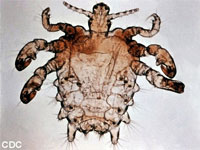
Syphilis can cause patchy hair loss in later stages, but by then you’re probably also going to experience several other warning signs. There’s no STD that causes male pattern baldness, though. Pubic lice (also known as crabs — see image at right) and herpes won’t cause hair loss.

If you think you might have an STD, I would think balding is the last thing you should worry about. Get yourself to a doctor!

I Cut My Proscar Into 10 Pieces – Hair Loss Information – Balding Blog

Hi,

Like a lot of other people taking finasteride, I have opted to cut Proscar into my daily amounts to save money. I began by taking 1/4 of a 5mg Proscar pill per day and then moved onto 1/5 per day – Both of which left me with some side effects.

Recently I have attempted to take 0.5mg per day, by way of cutting 5mg into 10 pieces. The pieces I am left with are all reasonably similar in size (for the exception of perhaps one piece, which may end up slightly lesser than the others).

My question is, should there be any problem with going about 0.5mg per day in this fashion? It’s likely of course that some days I may be getting slightly more or slightly less than 0.5mg, but should that slight possible variation effect my attempts at reducing DHT within my body?

Thanks.

Block Quote

ProscarWow, you’re the first person I’m aware of that can cut a Proscar pill into 10 pieces. Not that there is some sort of competition for these things, but the pill just seems too misshapen to be cut into 10 equal parts. I’d think a pill cutter might be too difficult to use for that, so perhaps you’re using a knife.

In any case, to answer your question… there is nothing wrong with what you are doing. If you are doing it to minimize the side effect risks, 0.5mg finasteride should still have some impact on DHT. If you’re doing it just to save costs, you should consider getting the generic 5mg finasteride since it’ll be cheaper than the name brand Proscar.

Propecia and Dry Eyes? – Hair Loss Information – Balding Blog

Dr. Rassman, have any of your patients ever complained of Propecia causing Dry Eyes? I’ve been experiencing severe dry eye for a while and until now I hadn’t really thought that cause might be the Propecia. My eye doctor wasn’t aware of that being a side affect but she was going to research it. I’m thinking about stopping it for a month or so to see if I notice any improvement.

Thank-you

Block Quote

Dry eyes is not an officially reported side effect, but I have heard other doctors in my field report rare occurrences of it. I would speak to your doctor and consider stopping the medication after weighing out the risks and benefits of your treatment (with your doctor).

Hair Loss InformationDr Farjo Discusses the ICX-TRC Cell Therapy Clinical Trial – Hair Loss Information – Balding Blog

The following post is by UK-based physician Dr. Bessam Farjo:


Written by:
Dr Bessam Farjo, United Kingdom
Dr Bessam Farjo
United Kingdom

I’m often asked about the ICX-TRC Cell Therapy Human Clinical Trial and whether or not it was successful. For those of you who don’t know, the trial was (in very simple terms) the development of a therapy whereby cells are sourced from an individual, multiplied, and then returned to that same individual. Take a look at the Farjo website for a more detailed account.

For anyone who has experienced any form of hair loss, the idea that your own existing hair follicles can be multiplied and re-implanted is a huge breakthrough.

Initial results were very encouraging, with an excellent percentage success rate seen within the test areas of the trial subjects.

Unfortunately, whilst the ICX-TRC trial results appeared positive, another unrelated Intercytex project was having less success. As a result of this and Intercytex being listed on the stock market (to make a long story short) the project’s funding was cut, putting an end to the activity – for the time being. The global credit crunch exacerbated matters further.

In 2010, the different divisions of the company were broken down and sold off to different interested parties. The ICX-TRC trial was acquired by Aderans Research (ARI) in the USA, who are continuing to do trials on this subject.

Cell therapy is still an exciting and promising area for the future; however it has proved to be a complicated study that still holds lots of unanswered questions. We’re still very much committed to the concept as well as other exciting areas, and hope to have the opportunity to discover the answers to some of these questions soon – watch this space!

Learn more about the author of this article, Dr. Bessam Farjo, on his BaldingBlog profile or at his website.