Hair Loss InformationI’m Too Embarrassed to Ask My Doctor for Propecia – Hair Loss Information – Balding Blog

Hi,

I’m really concerned about my hair loss. It is really beginning to consume my whole life and I feel so down about it. I want to get finasteride now before it really is too late to make a difference and at least conserve what I have. The only trouble is I live in a small town where everyone knows everyone and I’m way too embarrassed to go to my doctor,plus he might just tell me to forget it and get on with my life.

A consultant dermatologist is way too expensive for me. My only option other than those is online which I can afford but I cant be sure they’ll be real. I’m really getting to my wits end. Is there anywhere online that’s genuine and not a rip off. Any other suggestions? Thanks.

Block Quote

Sorry, but online pharmacies that don’t ask for a prescription are illegal and I’m not going to condone them here.

Anything discussed between you and your physician is private and confidential. They would be breaking a federal law and their Hippocratic Oath if they breach your privacy. It is much like the lawyer/client confidentiality. We are all professionals. Go see your doctor. Remember, the longer you wait to get your hair loss treatment started, the more hair you could lose. Catching the hair loss early is key.

Hair Loss InformationCan I Prevent Stress Hair Loss? – Hair Loss Information – Balding Blog

I am going through a divorce and heard that stress can cause hair loss but it will probably grow back when the stress subsides. Is this true? Is there anything that can be taken to prevent this?

Block Quote

Some people do lose hair all over the scalp due to extreme stress, but there’s no pill to take to treat or prevent this. Stress management is an art and a science. You should contact your family doctor if you believe that your stress is impacting you with hair loss.

Density and Hair Transplantation – Hair Loss Information – Balding Blog

I was reading this ‘Understanding Density’ article [PDF file] and it states that thinner ‘see-through’ hair has a density of about 20 cm2. It also says that areas with a pre-op density of 20-25 FU/cm2 could achieve a post-op density of 40-50 FU/cm2.

Then, in the ‘Determining Number of Follicular Units’ article [PDF file] on the same web page, it says that: with a pre-op density of 20 FU/cm2 and a transplant of 20-25 FU/cm2, a post-op density of 40-50 FU/cm2(20-25 FU/cm2 x 100 cm2 area) could be achieved with a total of 2000-2500 grafts.

I’ve had 2 transplants to the frontal half area as shown in the picture in the article, but I still have a ‘see-through’ appearance to some degree. My doctor has confirmed the 20-25 cm2 density was the goal, although it was never made clear to me that was his intention. Anyway, I’m assuming I have about the 20-25 cm2 density and I’d like to have another procedure to increase the density to 40-50 cm2. So, based on all this I’m estimating that I should get 2000-2500 grafts in my next procedure.

My question is: Do you agree with the info presented in these articles and do you think this is an accurate way to calculate how many grafts are needed? Also, are there methods/tools a doctor should be using to check scalp laxity and density to help with determining what can be harvested for another procedure?

Thanks

Block Quote

CalculatorA hair density of 30-50% can produce a good look depending upon the coarseness of your hair and the color contrast of your skin and hair color. I have never believed that a hair transplant should bring you to 70% of your original density. The difference between people, based upon color/contrast and the coarseness of the hair, can be dramatic. A return of 50% of the original density in a person with fine hair will have a more see-through look than a return of 25% of the original density if the hair is coarse. So you see how difficult it is for me to understand your situation as the blanks (color/contrast and coarseness) are not filled in for me to include in the assessment.

The calculations are easy. The original density in a person with “average” hair density is hair is 2.1 hairs per mm square. That amounts to 1250 hairs per square inch (or 650 follicular units per square inch). You need to know the area we are talking about to do the calculations correctly, yet that is not really the answer as the variables which are not included will dictate the presence of a see-through appearance.

Hair Loss InformationMexican Generic Propecia, Called Luxfil – Hair Loss Information – Balding Blog

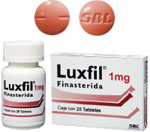
Sir: I have a prescription for Proscar, and have been using with great reults for many years. Recently, due to forgetting my proscar pills, I purchased 1mg Luxfil Brand Finasteride in Mexico (appeared to be a legitimate pharmacy). Bottle appears legitimate (based on online comparison photo), consisting of Lot #, expiration date, sealed top, cotton ball, etc. However, there are no markings whatsoever on the pills. When I look online for photos of how the pills should look, they look the same (orange in color), but it appears as if there should be some writing or mark on each pill. My question is: Do you have any familiarity with this brand of finasteride and should I be cautious since there are no markings on the pills?

Any thoughts will be appreciated, since this Luxfil is all I have until I return to the US. Thank you.

Block Quote

LuxfilThere are so many different generic brands of finasteride out there, but I’m not familiar with Luxfil. So I did some digging online and the best I could find was likely the same photo reference you found (see image at right).

The medication could be real, but you might wish to contact SBL Pharmaceuticals, the maker of Luxfil, to see if the lot # and dates match up to their records. SBL seems to be a fairly newer company with sales limited to Mexico and limited information available online, but their contact info is here.

Hair Loss InformationWhat’s the Connection Between the BaldingBlog Writers? – Hair Loss Information – Balding Blog

Hello, I would like to know often do the editors/writers of this blog actually meet in person, and if there is any other collaborative efforts they have. I am aware of the connection between Pak and Rassman.

Block Quote

Dr. Pak and I (Dr. Rassman) write the bulk of the posts here, probably split almost down the middle, and we work together at NHI.

Our newest contributor is Dr. Jino Kim, and he maintains the Korean version of BaldingBlog along with heading New Hair Institute in Seoul, Korea, where Dr. Pak recently visited to work with him.

Dr. Bessam Farjo is our UK-based contributor and provides his insight with some of the cloning related questions and other specific questions in areas of his interests.

Graying Body Hair – Hair Loss Information – Balding Blog

Hello Rassman – I have been following your site for sometime and I have a question about my hair loss. My hair(Asian) has been graying since I was 17 years old and I started using some hair colors as a result of which I believe I lost a lot of my hair. Now I am NW Class 5. I believe you always attribute hair loss to genetic reasons. Now I am 33 yrs old and I see that the hair on chest also started greying since 4-5 months. Isn’t it too early that I see the grey hair on my chest. Is that also related to genes. Is there any diet that I can follow to avoid this early graying on the body.

As always thanks for your attention to my question and I hope you can answer my question.

Block Quote

Graying scalp, body, pubic hairs are all due to genetics. Some people go gray in the 30s, some don’t gray until much later. There are no foods or medications proven to stop the graying process at this time, though there are products that claim to do this (like this one).

Breast Cancer, Hair Loss, and Dismissive Doctors – Hair Loss Information – Balding Blog

I am among the many young victims of breast cancer (37 y.o. with estrogen+ progesterone+ Stage III breast cancer) who has undergone 16 rounds of chemo, 6 surgeries (including oophorectomy), and 35+ radiation tx, plus am currently on aromatase inhibitors. I am treated at one of the top 10 facilities for cancer in the US, yet trying to get help for my slow growing Ludwig Type II hair while on aromatase inhibitors, esp. 2 years after chemo is proving more daunting. First, my oncologist revers me to dermatology, then dermatology refers me to endrocrinology, then endocrinology suggests I see a hair specialist doctor….but now I read in your archives to defer to the oncologist. It frustrates me that I am being punted around between medical specialties who don’t want to have any liability or necessarily want to work together to come up with a treatment plan for this pervasive side effect which many women in my position are experiencing. No one wants to touch this hair loss issue with breast cancer survivors.

I researched all the medical literature, and although there is plenty of information on observations of hair loss, there is nothing about the treatment of hair loss for those of us who are on either tamoxifen or aromatase inhibitors after breast cancer. I already started 12.5% Rogaine with Retin-A along with 5% minoxidil foam, Aminexil with Madecassoside, and washing with alternating 1-2% Nizoral. Propecia isn’t even an option. Also, I feel I’m relegated to wigs which you deem may accelerate hair loss (although if it not bonded or clipped to hair, I don’t know how that would be the case). Is there anyone in the San Francisco Bay Area that even has the breadth to tackle this problem?

Please tell me there at least some proprietary research out there that is addressing this issue on the horizon, because then I won’t be such a cynic about medicine. Clearly quality of life after cancer involves helping to alleviate hair loss as a result of aromatase inhibitors.


Block Quote

Pink ribbonI am truly sorry to learn of your frustration (we’ve all been in situations where we’re referred back and forth and feel like we’re getting nowhere), but the hair loss issue really isn’t specific to breast cancer survivors. Hair loss in all women is a very difficult issue to treat. There are many potential causes, and especially with your medical history, it can be hard to pinpoint the cause. The only FDA-approved medication available to women to treat hair loss is minoxidil (Rogaine), but you should be careful with taking 12.5% and 5% minoxidil foam at the same time so that you do not overdose yourself. Some women have had minor success with Propecia, but that would be taking the medication off-label and there are potential serious risks for women that use this medication (so just to be clear, I do not recommend that approach).

Unfortunately, there are very few options available to women that are losing their hair. For men, Propecia slows the process down, could reverse it, or even completely stabilizes it for years; hair transplantation just rearranges permanent hair from the back to the front. For women, the hair loss may be so diffuse that there is not much to rearrange and there is no specific area of permanent hair like is the case with men. Approximately 20% of women may be helped with hair transplantation, so each patient must be individually evaluated. With regard to your specific situation, I would be willing to see you since you are somewhat local (I do have an office in San Jose) and maybe I can add something to help you, such as the possible use of concealers like DermMatch or Toppik. Wigs might work in your case, but one must be careful that there isn’t traction on the existing weak hair or that’s when you might run into problems with further loss.

I don’t know of any proprietary research, and I wish I had a specialist in mind that I could point you to… but I’m posting your message in hopes that it reaches a wider audience that might be able to provide more insight or assistance. As much as I might want to have all the answers, I fully admit that’s not the case.


In the News – Viagra and Hearing Loss – Hair Loss Information – Balding Blog

In non-hair loss news:

Sure, Pfizer’s wonder pill has side effects such as headaches, facial flushing, upset stomach, erections lasting more than four hours, bluish or sudden loss of vision. There’s one more risk to the pill that grants erections: Hearing loss.

Research published this week in Archives of Otolaryngology-Head and Neck Surgery showed an association between long-term hearing loss and Viagra.

This side effect is already acknowledged by Viagra – especially after the U.S. Food and Drug Administration forced this labeling changes for oral erectile dysfunction medicines known as PDE5 inhibitors in 2007.

Block Quote

DeafRead the rest of the article — Viagra associated with hearing loss

Interesting. All medications carry some side effect risks, regardless of rarity… but there are some medications, like Viagra, where many of the side effects are well known. It got me to think about how many millions of people still take Viagra despite those side effect warnings, including sudden loss of vision and now apparently hearing loss. Yet the pills still sell incredibly well and men (even those without erectile dysfunction) are eager to take it!

And then think about all the men who worry about Propecia’s sexual side effects, which occur in 1 to 2% of men (which are reversible) and are afraid to even try it. I guess it is all about perspective. I suppose we’d rather be bald, blind, and deaf than to not have sex!

Digoxin and Hair Loss? – Hair Loss Information – Balding Blog

I have been taking digoxin for a short while and have noticed clumps of my hair in the bath drain plug, on my pillows and basically everywhere. I am extremely worried about this and would like to know if this is reversable? kind regards.

Block Quote

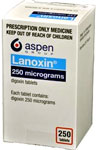
LanoxinDigoxin (also known by its brand name, Lanoxin) is a heart medication that shouldn’t cause hair loss as a side effect, but if adding this medication to your routine was the only thing that has changed prior to clumps of hair coming out, there might be something to it. That being said, I would discuss your hair loss issues with your prescribing doctor and explore the possibility of other undiagnosed conditions.

I couldn’t say if the loss is reversible without knowing why you’re losing hair. For men in general, hair loss occurs in specific “male patterns” and this is due to genetic balding.

In the News – Processed Meat Linked to Coronary Heart Disease – Hair Loss Information – Balding Blog

Not hair loss news, but interesting health stuff…

The first study to systematically separate out the effects of red unprocessed meat from processed-meat products has shown that eating the former is not associated with an increased risk of coronary heart disease or diabetes.

But eating 50 g of processed meat per day—the equivalent of one typical hot dog in the US, or two slices of deli meat—was associated with a 42% higher risk of CHD and a 19% increased risk of diabetes, say Dr Renata Micha (Harvard School of Public Health, Boston, MA) and colleagues in their paper published online May 17, 2010 in Circulation.

Block Quote

Hot dogRead more of the article at Processed meat, not red meat per se, linked to CHD, diabetes

This is good news for those of you who are meat eaters, but not permission to go overboard. The researchers believe that the increased salt and other preservatives in the processed meat could explain the added risks. So while sausages, salamis, and hot dogs are the foods to avoid, all meats do lead to higher incidences of some cancers (especially colorectal).