
Can’t I Have Body Hair Transplanted to Scalp If I Don’t Intend My Hair to Be Long? – Hair Loss Information – Balding Blog

Hi am 30 years old with a norwood 6 level of baldness. I currently shave my hair with a razor. As i have an extremely large amount of body hair and i guess limited donour hair on my head, is body to head transplant possible? Would it be possible for the transplant to cover the crown as well as the front of the head? What is meant by resting phase for hair and how does that vary from the head and the body? I dont intend on growing my hair long and i would like to keep it at a buzz cut so it would not matter if the transplanted hair was to go frizzy or curly. But i am concerned if there will be a noticeable difference between my current head hair and the transplanted hair. Would i still be able to razor my head after i had a hair transplant? would the be any scars or signs of a hair transplant?

Block Quote

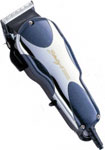
ClippersI don’t know why you’d want to just guess about the availability of your scalp donor hair. Have you been examined by a doctor? Body hair transplants (BHT) are technically possible, but they are not something I’d recommend for multiple reasons that I’ll try to explain simply. Body hair is not the same as scalp hair — it looks different, it feels different, it grows different. Even if the procedure is a technical success, it’s not going to give you natural looking results like you can achieve by using hair from the back of your head. Plus, I don’t know enough about your hair loss (donor, density, etc) to really be able to know if you’re even a candidate for any kind of hair transplant surgery.

As you seem to be aware, body hair does not grow at the same rate as scalp hair and about half of transplanted body hair is in a dormant state (see more on that here). Scarring in the recipient area depends on the skills of the surgeon and staff… but if you’re going to shave your head in the future why would you even want a hair transplant? Wouldn’t that be like getting a nose job right before you decide to take up boxing as a sport?

Less Propecia, Less Side Effects? – Hair Loss Information – Balding Blog

Dr. Rassman,

Thanks so much for this valuable site.

I am considering Propecia. It is the possible sides, not the $$$, that has me hesitating. I have done the research on Clinical Studies, Dr. Frankel’s article, your posts, etc. The data seems to indicate, and you’ve agreed that .5 mg is roughly 80% as effective for hair growth/retainment as a full 1mg. My question is, are the side effects proportionally decreased? Is there any data out there?

B/c of the efficacy of the .5mg dose, and because the decreased DHT/Serum levels appear to stay in the same range for almost 72 hours, my plan is .5mg Merck Propecia every other day, in order to decrease any chance at both short and long term side effects. Does this sound logical to you?

Block Quote

I really do not see your logic. I mostly see your fear… fear that the drug can give you side effects. Is it worth the risk (for you)? Maybe you should question taking it altogether. There is a phenomenon known as the placebo effect… and it goes both ways. If you are preoccupied that a drug will give you a side effect, then you will likely see that side effect because that is what you believe will happen. If you don’t try it you will never know if you will have a side effect.

I don’t know if there is statistical data available that shows decreased side effects with decreased dosing, but I’ve seen that to be the case if a patient has experienced side effects from the full dose. If you have genetic androgenic alopecia and Propecia is recommended by your physician, then I would start with the recommended dose. If you end up with a side effect then you can just as easily not take it and the side effects would be gone.

Shaving the Recipient Area to Prevent Shock Loss? – Hair Loss Information – Balding Blog

Hi Doc,

I have read places that shaving the recipient area before surgery prevents shock loss and has a higher graft success rate. Do you know if this is true or do doctors who require you to shave your head just want to make the surgery time shorter? Thanks!

Block Quote

It’s probably not true… and you probably learned it from a clinic where the doctor insists on shaving the head. At NHI, we only shave the area that we remove in the donor. The best way to prevent shock loss is to take finasteride before the hair transplant and stay on it for at least one year (better, lifetime). For an experienced doctor and staff, shaving the head is more of the doctor’s preference and doesn’t have much to do with growth / success rate.

Hair Loss InformationReader Says DHT is Overrated – Focus Should Be on IGF-1 – Hair Loss Information – Balding Blog

Hi Dr. Rassman

I always hear of people searching for unwarranted ways to lower DHT to combat MPB. Whether it be herbs, soy, or saw palmetto, there’s much focus on DHT levels as a marker for MPB. In fact, low DHT diets are all the rage on most balding forums. Perhaps rightly so, however we know the scalp’s sensitivity to DHT is a significantly more accurate marker of MPB and to my knowledge there’s no sure-fire way of calculating this. I say DHT is overrated, and a new focus should be pinpointed on IGF-1 / IGFBP-3 plasma levels.

Some quick definitions…

IGF-1: Insulin-like growth factor 1 (IGF-1), which was once called somatomedin C, is a polypeptide protein hormone similar in molecular structure to insulin. It plays an important role in childhood growth and continues to have anabolic effects in adults.

IGFBP-3: This gene is a member of the insulin-like growth factor binding protein (IGFBP) family and encodes a protein with an IGFBP domain and a thyroglobulin type-I domain. The protein forms a ternary complex insulin-like growth factor (IGF) I or II. In this form, it circulates in the plasma, prolonging the half-life of IGFs and altering their interaction with cell surface receptors.

The study below took 431 men (128 whom had vertex balding) and tested IGF-1 and IGFBP-3 levels in all of them.
-Those with vertex balding had high IGF-1 levels and low circulating levels of IGFBP-3.
-Those without vertex balding had significantly lower IGF-1 levels
(Low IGF-1 levels generally mean a high amount of circulating IGFBP-3 as they show a trend of being inversely significant in a number of other studies)

PubMed – J Am Acad Dermatol. 2000 Jun;42(6):1003-7.

Interestingly enough, in this study Finasteride signficantly increased IGFBP-3: PubMed – Cancer Res. 1998 Jan 15;58(2):215-8.

Perhaps IGF-1 and IGFBP-3 levels can be a highly accurate marker of vertex balding and finding ways to increase IGFBP-3 could serve as a powerful combatant.

I’d like to add that a low-glycemic diet and a diet low in saturated fat have all shown to increase circulating levels of IGFBP-3 as well as increase IGF-1.

Block Quote

Thanks for sending this. It’s beyond me, but I wanted to post it for those that had interest. Let the research begin!

Propecia and Oral Sex – Balding Blog

Hi Dr, I was reading a number of your responses to the queries posted here and was really pleasantly surprised by the straight ahead and honest answers you provide.

I have a query related to what precautions should be taken in one’s sex life when taking propecia, apart from avoiding potential pregnancy. Could the drug be potentially damaging to a man’s partner otherwise? ie during regular sexual intercourse? or, for instance, in oral sex?

I realize these questions may sound ridiculous to someone more informed in the actual working of the drug, but there is a certain amount of vagueness surrounding these issues with propecia that I think a lot of people would like to have clarified.

many thanks. all the best

SexIt’s not ridiculous to ask questions. If a pregnant woman gives oral sex to a man that has been taking Propecia, I would doubt that there was any side effect possible with this related to the drug (the same goes for sexual intercourse). Have fun and you can even return the favor, as there is no risk the other way around either.


For further confirmation, you can refer to a statement from the drug’s manufacturer (Merck) that I published a couple years ago related to this very topic — Propecia’s Effect on Sperm and Pregnancy.


Related Posts Plugin for WordPress, Blogger...

Balding Forum - Hair Loss Discussion

Hair Loss InformationCheap Hair Transplants Are Not Such a Good Deal After All? – Hair Loss Information – Balding Blog

MoneyI’ve been thinking about the case I wrote about last week — “How Many FUE Grafts Actually Grew?” — about how a patient (we’ll call him Mr. Smith) came to NHI after feeling royally screwed over by another clinic he went to for his follicular unit extraction (FUE) procedure. It’s quite an interesting case of being scammed by a doctor that advertised super low prices, so I really suggest you read it if you have the time. Even so, I want to talk a little about value in surgery…

If you run the numbers, you will see that the actual growth of hair was only 25% of what he got transplanted. There were two consequences of this:

  1. Of great importance is the loss of your finite (limited) supply of donor hair. In the case of Mr. Smith, his surgeon killed 3 out of 4 hairs that were transplanted. These hairs are forever lost to the patient. I also believe that there was damage produced to the donor area, evident by a thin see-through appearance. His donor supply is significantly worse off following his FUE procedure than if a scar formed from a strip surgery, which could have been easily hidden by surrounding hairs. FUE is not always the answer to harvesting hair without post-surgical consequences, as seen in Mr Smith’s case.
  2. Of lesser importance, the cost per graft was multiple times higher than what the patient thought. Let’s assume that Mr. Smith paid $5/graft. When measured against growth, his actual costs were $15/graft for the work that was done. The rate he paid had nothing to do with the value he actually received (in his end result), as he really was paying more for less. That’s quite a bit of money out of his pocket.

The lesson here is that experience in a hair transplant surgeon and his team is directly related to the actual costs when measured by the yield of what actually grew from the hair transplant. My advice to prospective patients is to change the way you look at value! In our practice, we allow prospective patients to meet our patients to see what type of results they got. As these Open House events are open to all patients (or future patients), anyone with results like shown in Mr. Smith’s example will be as evident as the nose on your face. This will help you in the education and selection process. This type of surgery is forever, and unfortunately some patients have to learn the hard way when they try to pinch pennies by going to a surgeon that has no business messing with your hair.

Transplanting Hair from a Donor Using Stem Cells for Anti-Rejection? – Hair Loss Information – Balding Blog

Again in the news this week has been the transplantation of a windpipe to a young boy from a donor. The have taken stem cells from the bone marrow of the child and coated it onto the windpipe. It is hoped that this will prevent the need for anti rejection drugs. Do you think it could be possible to try someting like this with donor hair follicle if they were coated with the recipients stem cells?

Stem cells give new windpipe to boy

Block Quote

We all want the future technologies to happen right now. This type of procedure is experimental (possibly the first of its kind?), and if this technology can be applied to hair, it would still be years away. This is interesting stuff though, and I do appreciate you sending the link.

I’m guessing the bone marrow stem cells were used here because if there are problems with the recovery there is still the option of using anti-rejection medications. A lifesaving procedure (windpipe transplant) is worth trying experimental technologies on, as health risks from anti-rejection medication make them not worth using in a cosmetic procedure (hair transplant).

Why Aren’t There Photos of Donor Scars? – Hair Loss Information – Balding Blog

Sir,

I’ve always wondered why photos of hair transplant procedures never include a section of the donor area (elapsed over healing period)? I considered the transplant option years ago but I became very uneasy about scarring at the donor area. I have not seen one photo regarding this part of the procedure at any of the more reputable transplant provider sites. Why? Thank you for your insight.

Block Quote

It’s true that we do not routinely take scar photos, but we have posted photos of scars in the past:

Typically, donor scar will vary in each individual. It can be fine as a pencil-line or thick like the width of your picky finger (rare). Most scars are about 2 to 3mm in width. If you ever had a cut that needed stitches, you can use that as a baseline comparison. Some people are bad healers, some doctors use scar-minimizing closure techniques… so there are factors that can make scarring more or less severe.

Huge Reduction in Body Hair Since Starting Propecia Years Ago – Hair Loss Information – Balding Blog

I am just following up on a recent post I read on your Blog – I am 44. I have been on Propecia for almost 4 years – starting off as a Norwood 2.5, I have probably progressed to a Norwood 3 over this time. My hairfall seems to be less than a few years back, so I am not going to risk getting off Propeica – it is probably doing some good.

My question however is about the impact on body hair – I have probably seen a 30-50% reduction in body hair over the 4 year period. Is this likely to be related to Propecia, or is their some other factor. (FYI I am a regular smoker and accept that this may be impacting the benefits of Propecia)

Block Quote

It very likely could be the Propecia is causing your reduction in body hair. People have reported body hair loss with Propecia, and one rare occasions I have heard it go the other way. I wish I’d experienced the loss of body hair when I was taking the medication, but I wasn’t that lucky. I’d expect most patients would prefer to have this side effect, particularly those with excessive hair in undesirable areas (back, shoulders).

In the News – Heart Disease and Dietary Fats – Hair Loss Information – Balding Blog

In non-hair-loss news, a new study on dietary fats shows what has been suspected for decades.

Snippet from the article:

Although for nearly 60 years people have been urged to decrease their consumption of saturated fats to prevent heart disease, until now there has been surprisingly little scientific evidence that doing so actually decreased the risk of coronary heart disease events. A new study by researchers at Harvard School of Public Health (HSPH) provides the first conclusive evidence from randomized clinical trials that people who replace saturated fat in their diet with polyunsaturated fat reduce their risk of coronary heart disease by 19%, compared with control groups of people who do not.

Block Quote

Read the full article — Replacing Saturated Fat With Polyunsaturated Fat May Cut Heart Disease Risk

Our younger readers think that their body is a castle capable of standing up against all diseases, so there is often little consideration for preventive diets that will preserve lifestyle. This reference just points out how simple a preventive diet can be. For further reading on the various fats, see Mayo Clinic.