If I Never Saw Regrowth and Hair Loss Continued, Can I Stop Minoxidil? – Hair Loss Information by Dr. William Rassman

How do you determine benefit from a treatment if there has never been regrowth and further loss? I’ve used 2% minoxidil once a day for many years with out regrowth and continued loss. I continued on the assumption the loss might have been worse without treatment. But that’s just a guess. How do I know if I’m just wasting time and money? Do you assume that after many years the hair is going to become minox dependent regardless what the seen results are and quiting is a bad idea?

This is the problem that many people have. If you stop the medication and nothing happens, then the medication was having no impact… but if you stop the medication and the existing miniaturized hairs were dependent upon the medication, then reactive hair loss from withdrawal will be the problem. Most of the time restarting the medication does not return you to same status as before you stopped the medication. It’s kind of a guess that you have to make.

Balding Forum - Hair Loss Discussion

Paid advertisements (not an endorsement):


Hair Loss InformationRevita Shampoo – Hair Loss Information – Balding Blog

Hello,

I am 25 years old and have a gradually receding hairline around the temples and thinning hair for about the past two years, but I’ve been wary of getting propecia because of the health risks, and I thought about Rogaine Foam, but I heard that it it smelled and led to shedding, among other things. Since I’m trying to hang on to everything I have left, I didn’t want to take the risk of incurring significant shedding with Rogaine, as well as no promise I’d grow any hair back around my temples or forehead, so I did nothing but occasionally browse message boards until I came across information on Revita. It seemed like just what I was looking for; a shampoo that would at least reduce hair loss/thining. Well, I started using Revita about 5 weeks ago, and the first time I used it, leaving it on my hair for 2.5 minutes, then approx. 4 minutes, and my hair seemed a little thinner, but shinier. The next day I got a haircut so my hair was a little shorter and I continued using Revita 5-6 days a week, for the prescribed times, and I’ve noticed I’ve shed a couple 1-4 hairs just about every time I use it. This has been exceedingly disturbing, but I’m not sure if it’s just something that has to happen before it starts working better . . . I don’t know.

My theory – the reason I’m still using it – is that the hairs that are shedding are the ones closet to my forehead and temples and these are the real light hairs that already seemed on the verge of falling off. So I’m thinking that maybe just keeping the shampoo in the hair for so long and then rinsing it out is causing the weaker hairs to come off b/c of the contact. I’m hoping it’s just the weak hairs that will shed and the healthier hairs will become even healthier. But so far, I’ve seen none of the benefits promised by the company.

Thank you very much

Block Quote

RevitaI need to make this very, very clear to everyone — there is no shampoo currently available on the market that can regrow your hair. None!

This Revita product contains ketoconazole, which is a volumizer and can increase the hair shaft diameter by about 7%. This increase in shaft diameter may look like you have more hair and in fact, considering that fullness is a result of numbers and thickness of hair, you will have more hair that produces more fullness. Any shampoo that uses ketoconazole will have the same effect. By keeping it on for a few minutes before washing it off, the ketoconazole probably does a better job with thickening the hair shaft.

For those keeping score, ketoconazole is the active ingredient in Nizoral, and is a commonly used antifungal medication and dandruff treatment.

Hair Loss InformationAfter 10 Years on Propecia, I Finally Started Shedding – Hair Loss Information – Balding Blog

Dr, I have been taking Propecia for 10 years. If the drug would indeed stop working, what exactly would happen? Would I have some form of telogen shed? Or would the loss be gradual? The reason that I ask is because I am going through a severe shedding phase that began in September of 2008 and it continues until now. I have indeed ordered the “generic” drug from overseas the past couple of years. Could the overseas drugs be bogus and this is the reason I began shedding again?

Block Quote

There’s two possible problems — the generic you bought overseas could be fake, or your finasteride dosage could just be starting to finally lose the fight to your genes. I often talk about a tug of war of sorts, where Propecia works on one side of the rope and your genes work against it. The genetic side appears to be slowly winning. Talk to your doctor about increasing your dosage to 2mg daily and see if that helps.

Whatever you do, do not stop the drug! You’ve taken the medication successfully for 10 years now, and it hasn’t stopped working for you… but if it’s not due to fake overseas medication, then it’s not slowing the hair loss as well as it was before. Stopping it completely will likely result in a massive catch-up hair loss situation occurring.

Hair Loss InformationWhy Isn’t Minoxidil an Oral Medication? – Hair Loss Information – Balding Blog

Why isn’t minoxidil taken orally? I’ve always been under the impression that drugs taken orally (like Propecia) get to the root of the problem as opposed to ones topically. For instance, if caffeine theoretically helped hair loss, I would think consuming caffeine would work better than putting caffeine on one’s head.

Block Quote

Minoxidil was originally used as an oral anti-hypertensive medication for the treatment of high blood pressure. It was unpredictable in its use so it was abandoned, but people taking it (women) would notice face and body hair appearing from the oral pills. That is why it is not used orally today, as it has a tendency to drop blood pressure. That even occurs when you apply it topically, as some of the medication is absorbed into the body after a skin application.

Hair Loss InformationInterview with Dr Rassman in Time Magazine – Hair Loss Information – Balding Blog

Snippet from article:

Hair loss affects more than 50 million Americans, 20 million of them women. With numbers like that, it’s not surprising that the people behind the bestselling Dummies Books series have taken note. Their comprehensive new book, Hair Loss & Replacement for Dummies, authored by four medical experts on hair loss, has just been published by Wiley. TIME senior reporter Andrea Sachs spoke with one of the authors, hair-transplant surgeon Dr. William Rassman in Los Angeles.

Block Quote

TimeHey, that’s me!

Read my new interview with Time Magazine at their website — Time.com. I’m glad I got the chance to get some publicity for my new book, Hair Loss & Replacement for Dummies (which you can buy online or in stores now *cough cough*). The interview was just posted on Time’s site, so feel free to post your thoughts about it here (after you read it, of course).

Read: Time.com Interview


Hair Loss InformationCan Hair Reverse Miniaturization During a Life Cycle? – Hair Loss Information – Balding Blog

You often talk of shedding and how in theory if miniaturized hairs are shedding after starting medication like Propecia it might be making way for new thicker hair. Is this the only way that reversing miniaturization can occur or can it happen within the same cycle? A reverse “exclamation point hair” I guess. Thin at the end and thick at the root.

Block Quote

Considering that most people have a hair cycle of 3 years and we see changes in miniaturization with medications in months, the answer is that changes do occur within cycles. I have the means to measure hair shaft thickness and maybe on a patient with an 8 month reversal of miniaturized hairs, I will measure the two ends of a single hair shaft.

Hair Loss InformationSodium Hydroxide is in My Shampoo! – Hair Loss Information – Balding Blog

I read that sodium hydroxide is one of the chemicals used for hair straightening, and it can burn the scalp if it comes in contact with it too long. I also noticed that sodium hydroxide is an ingredient in both my shampoo. Is this bad for my hair?

Block Quote

At the low concentrations, the sodium hydroxide should not hurt you or your hair (such as in shampoos)… but when you are using higher concentrations for straightening it, you must be careful.

Do Lasers Grow Hair or Remove Hair?! – Hair Loss Information by Dr. William Rassman

Hi Dr. Rassman & Staff. Great blog.

Anyway, here’s my question. On my morning drive into downtown Chicago, I invariably hear radio commercials for laser treatment to REMOVE “unwanted” hair. Yet, I also see promo’s for laser treatments to GROW hair. Well which is it … do lasers GROW or REMOVE hair?

Thanks.

HairyThe lasers which claim hair growth are a low level laser energy dosage that do not penetrate the skin… nor do they grow hair, in my opinion.
The lasers for hair removal are high energy lasers which focus the power to a very small area (the hairy area that you’d like de-haired) in bursts to be safe. They will penetrate the skin to get to the root of the hair follicle.

Both lasers work at different light frequencies.

Balding Forum - Hair Loss Discussion

Paid advertisements (not an endorsement):


Hair Loss InformationHow Did People Come Up with the Idea that Saw Palmetto Reduced DHT? – Hair Loss Information – Balding Blog

Okay, let’s say theoretically that saw palmetto does in fact help to block DHT. My question is, how the hell did they figure out that saw palmetto berries reduce DHT and not other berries out there such as cranberries and/or bilberries?

Block Quote

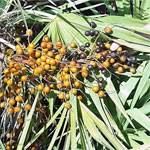
Saw palmettoSaw palmetto has been around for hundreds of years and has been used successfully for treating prostate enlargement. Native Americans used saw palmetto to relieve urinary symptoms in older men who had difficulty in urinating. It has been shown to reduce prostate size and it is used quite frequently in Europe.

There are many potential side effects of saw palmetto, including abdominal pain, diarrhea, nausea and vomiting, erectile dysfunction, breast tenderness and loss of libido. That is the connection that made people think that there is a DHT blockade in process, as so much seems to parallel finasteride’s side effects. Some think that since finasteride works for the prostate and hair, then if saw palmetto works for prostate issues it must also work for treating hair loss. Unfortunately, saw palmetto has never been studied in any well planned clinical endeavor for treating hair loss.

Hair Loss InformationMy Wife Has Alopecia – Will Our Children Have this Disease, Too? – Hair Loss Information – Balding Blog

Dear Sir, My wife is 1 month pregnant . She is alopecia patient & complete bald since at the age of 5 years old. Her 2 other sister are also bald and having the same disease. They all wear wigs.. But her parent is having full grown hair.

My worries is that will it affect our future children ? Will my future child inherit this disease from her mother. how can i be assure for that. What test can be done to confirm it. Please advice.

Regards

Block Quote

Alopecia totalis sounds like the diagnosis and in one form of inheritance, the problem starts appearing in the very young at between 3-4 years old. Once the process starts, all of the hair falls out within months. Angela Christiano, Ph.D., of Columbia University in New York researched this in a town in Pakistan where the population was inbred. She found that many of the children in that town lost their hair at ages 3-4 and it fell out in a distinct pattern. She took samples of their genes, and tested them at the university, finding a connection between their disease and some of the genetic patterns in our more common form of alopecia areata, a disease which she has. Your child may very well inherit the condition. See our previous post on this subject here.