
Surgical Hairline Lowering + Hairline Transplant? – Hair Loss Information by Dr. William Rassman

Dr. Rassman,

I recently read some posts regarding the surgical hairline lowering procedure vs. a hairline transplant. I was wondering whether it would be synergistic to do both?

If you are male (with a NW2 receded hairline due to MPB) with an inherited high hairline, wouldn’t it be better to get the surgical hairline lowering procedure done in addition to a hair transplant? Wouldn’t this conserve donor hair because you are essentially reducing the size of the forehead (less area to worry about transplanting hair follicles to…).

Thus, this would remedy the high forehead and restoration of the hairline, with enough donor hair in case of any future hair loss.

Hairline lowering procedures should only be done on women or on men who do not contain the balding genes. That means that men wanting this surgical option should be genetically tested first, perhaps using something like HairDX. For women who do not usually lose hair (as they do not have patterned baldness), the hairline lowering procedure has value since there is no significant danger of the hairline rising above the point of surgery.

The advantages of the surgical lowering procedure (like a brow lift in reverse) is that the results are basically instantaneous, a week or two after healing is complete. The hair was there prior to the surgery (just a few centimeters lower), so you do not have to wait for the hair to grow out like with a hair transplant. If you need more than one inch lowering, then the transplant option may be better. Some people with the hairline lowering procedure will develop a scar at the hairline and may require transplants to hide it.


Balding Forum - Hair Loss Discussion

Paid advertisements (not an endorsement):


Traction Alopecia from Scratching My Head? – Hair Loss Information by Dr. William Rassman

Hello. I have experienced thinning on my scalp and my transplant surgeon who did 2 of my eyebrow transplants & is now doing a third was going to put me on propecia, but I seriously doubt I have MPB. I think I have a bad case of traction alopecia because I believe I have sebhoraic dermatitis and in the past I used to scratch my head a lot and used a comb on it and I believe that is the cause of my recent thinning. it thinned at the time my scalp was extremely itchy and I have an intense itchiness in the thinning areas, however this was a few months ago. When i wet my hair it looks like it breaks into streaks. I read that you said that traction alopecia is reversible with most cases but since this was several months ago do you think there is still hope? How is traction alopecia reversed? I still have to see a dermatologist. My last question is, I have read that massaging your scalp with essential oils is good for your hair but I am afraid of massaging the thin areas since I don’t want to cause traction alopecia.

Seborrhea does not cause hair loss. Rubbing any oils into your scalp will only pull out the hairs that are already damaged from genetic causes. Once a person has real traction alopecia, is is usually permanent, but the pulled hair from one or two episodes of picking or scratching should reverse. Get a good doctor and establish a good working relationship with him/her.

Balding Forum - Hair Loss Discussion

Paid advertisements (not an endorsement):

Hair Loss InformationIs FUE the Best Choice for Someone That Has Had a Lot of Transplant Work Already? – Hair Loss Information – Balding Blog

I have followed this site for a few years now and I am so impressed. First off, your integrity seems to be apparent in how you run this site. There is none of the cheap salsmanship common to some of the hair replacement surgeons with whom I have spoken. You provide so much disclosure that it is obvious that you truly want educated patients. It seems to me that the medical hair replacement industry was crying for someone like you.

With that, I am happy to share with you my story and ask you my questions. I am a 45 yr old male who began losing his hair at 19. I was told early on by a few surgeons that I was an excellent candidate for hair transplantation because my donor hair was so good (it was rated a 9 out of a possible 10). I believe that I am a Norwood 6 but I know that I have long lost all the hair that I was to lose. I have had 13 hair transplant procedures with Dr. X [editor’s note: name removed] and 2 scalp reductions with another doctor. The procedures were performed between 1989 and 2001. In total, I had 1679 “large” grafts, 379 “medium” grafts, and 321 “single” grafts. My hair provides decent coverage for someone who by this time would have been left with only what I call “clown fringe” (I am sure the visual will resonate with you) but I do use a concealer (Fullmore) to hide some small patches of my crown which show, and some of the scarring. My goal is to surgically get more coverage – or at least more uniformity in my existing coverage – so that I can stop using the concealer. I would like a good evaluation on what surgical options may be open to me, as I have already had so much work already performed and donor hair is not so plentiful. These are my questions:

  1. Do you ever do any work in NYC/LI?
  2. If the answer to #1 is no, can you recommend any good and caring surgeons in the NY/LI area?
  3. It seems like FUE2 would be a natural choice for someone who has had so much work performed already and where so much donor hair might not be harvestable in one strip. Is this a correct assumption?
  4. Is it possible to do many smaller strips so as to increase yield for someone who has had so much work performed already? Does it matter from where the strips are taken? I think that I may have some donor hair on the high sides.
  5. I have not heard of too many people having as much work as I have had. Does the work I describe sound like it is so much? Are you aware of many people who have had more work?
  6. I have been using a concealer for 15 years – just during the week and just during the day. Are there any health affects of such prolonged use?
  7. How does the cost of the FUE2 compare with the normal strip method?

Any of these questions which you can answer would be appreciated.

Keep up the site.

Block Quote

  1. At the moment, I only have offices in California and do not plan on going to New York.
  2. Dr. Robert Bernstein is a caring and competent doctor with a Manhattan location.
  3. Follicular unit extraction (FUE) is less productive when donor densities are down from multiple surgeries and when there is lots of scarring.
  4. With regard to taking high strips, it is generally not a good idea as high strip scars tend to show and they may not be in the permanent zone, so the hair may not last your lifetime.
  5. I have seen many patients that have had more than a dozen surgeries plus scalp reductions. One patient I met had 27 procedures, of which I believe most were sham surgeries. Without seeing you, I can not comment on what you did and did not get.
  6. Your approach with the use of concealers is well defined in my new book, Hair Loss and Replacement For Dummies, for the readers who do not know much about them.
  7. FUE costs are high compared to the strip method, but more important, they may not be very productive. FUE costs roughly 2x the amount of strip procedures, per graft.

The problem with your situation is donor scarring and your donor area must be a mess. It’s difficult to make any real advisable points without first seeing what I’m dealing with, but you might be able to excise the highly scarred donor area (probably using a balloon expander) if that is bothersome to you. Good luck.

Hair Loss InformationHow Can I Detect Propecia Side Effects? – Hair Loss Information – Balding Blog

I’m going to start taking Propecia for hair loss. I’d like to be vigilant about identifying any side effects early on. It’s pretty easy to find a list of side effects, but I’m not sure how I’d go about detecting some of them.

Is there a comprehensive list of checks I can perform every week (or even every day) to make sure everything’s going ok? I suppose there’s a potential psychological effect of constantly
looking for side effects, but hopefully I can be objective about it.

Block Quote

The listing of rare, uncommon side effects of finasteride use is as follows:

  • Severe allergic reactions (rash; hives; itching; difficulty breathing; tightness in the chest; swelling of the mouth, face, lips, or tongue)
  • Breast enlargement, lumps, pain, or tenderness
  • Nipple discharge
  • Testicular pain

If you take the drug, the side effects will be evident within 2 weeks on average. Once you stop the medication, the side effects (except for breast issues) will be gone within that same 2 week period. I have seen the breast tenderness last a few months and often recommend that you see your doctor if it does not go away in a few weeks. You’ll be able to easily identify any of those side effects because they’ll be out of the norm. Most are uncommon though.

Could Side Effects Show Up Over a Year After Starting Propecia? – Hair Loss Information – Balding Blog

I have been on Propecia for around 15 months will no problems and good results – however I am very concerned that I may be experiencing side effects (maintenance of erection) !!!

Are side effects likely after such a prolonged period of use with no notable problems??? Or are side effects likely to show themselves within the first few months of being on the medication???

Block Quote

Side effects from Propecia like erectile dysfunction (ED) can appear over time, particularly if you are over 40 years old when ED is more common. I also have been told that libido or ED problems do show up late and I can not tell for sure if there is a cause and effect from the drug. The use of drugs like Viagra can help most people with these side effects and allows them to keep their hair. Check with your doctor and see if there are other causes of ED in your situation, as this may be caused by something other than Propecia.

Using Minoxidil After Hair Loss from Chemical Burn? – Hair Loss Information – Balding Blog

Hello Dr. Rassman,
about 3 weeks ago I had a procedure done called l’oreal x-tenso which is basically a hair relaxing (rebonding) treatment. The original goal was to grow my hair longer, which is normally not an easy thing given that my hair is normally very thick and wavy/curly. Anyway, a couple of weeks after the procedures I decided to get my hair cut and a couple of days after that my hair started to shed a lot and has continued to do so over the past week, although it seems that the shedding is somewhat decreaing over the last couple of days. I’ve seen 3 different trichologists here in London and they all seem to think that the chemical from the relaxer cause some bad breakage but that should reverse once new hair grows out. Instead they all seem to agree that I also exhibit signs of androgenetic alopecia. There is no history of hair loss on both side of my family, isn’t genetic baldness always hereditary? The trichologists that I have seen here in London are suggesting that I use different topical solutions, Minoxidil has also been suggested. If the hair loss is caused mainly by breakage and it is not a genetic condition, would it still be safe for me to use Minoxidil? Also, looking at my hair when it falls, some of it but not most of it, has the bulb attached. Is that a bad sign, i.e not simple breakage but damage to the follicle? I’m a 38 year old Italian male. Thanks in advance for your reply

Block Quote

Without seeing you there is little I can do or diagnose. Yes, genetic hair loss is hereditary. Minoxidil will grow hair even if you’re not losing it by genetic factors, but you shouldn’t use a medication that you don’t need, even if it is available over the counter. Stay with someone in your area that you trust. See a doctor and find out if what you’re seeing is genetics or a chemical problem.

If I Have No Facial Hair, Will I Have Less Scalp Hair Loss? – Hair Loss Information – Balding Blog

I know that DHT causes both hair loss and facial hair growth. I’m 17 with no facial hair-does that possibly indicate that I will experience lesser hair loss?

Block Quote

Your lack of facial hair doesn’t have anything to do with future scalp hair loss. Your facial hair will probably just grow in later than your peers. Wait it out (up to 5 years or so). I would expect that you still might also grow chest hair. I wish I went back in time when I had no body or beard hair. Consider yourself lucky.

Hepatitis B and Hair Loss – Hair Loss Information – Balding Blog

Doc,
A while ago I asked if a Heb B jab could cause hairloss (here)

You replied that it could in rare circumstances. What I wanted to ask is what kind of hairloss are we talking about? Would all the hair fall out because of alopecia? Or is it possible that the jab could kickstart male pattern baldness speeding up my hairloss or is that just impossible from a jab? Thank you for a very informative blog!

Block Quote

Diseases of any significance can bring on hair loss. For men who have genetic hair loss, a disease and the associated stress can make it worse. In women, it is even more the case, as the connection of diseases and hair loss is more common.

What Percentage of a Chance Do You Give Laser Treatment of Working? – Hair Loss Information – Balding Blog

Hi Doc,

I am going to be starting the LUCE lds 100 laser treatment soon. Ive been losing hair for about a yr and half. I am currently 22. From your experience, what chances do you see of the treatment working on me? I’ve been on propecia for 5 months. Thinning on my crown is noticeable if pointed out. And the temples have receded slightly.

Thank you

Block Quote

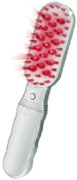
LaserIn my personal opinion, lasers do not work to regrow hair. I base this on my experience with seeing many patients who have tried all sorts of lasers (from the big ones in clinics to the handheld models), and I have not seen it work. As I’ve mentioned before, I had a medical grade laser in my office for a year and offered free treatment, of which some patients chose to take advantage. None objectively grew any hair unless they used some medication like finasteride or minoxidil. I recall one patient who spent nearly $5000 on such laser treatments with another doctor for over a year, and as much as he wished and hoped that his money wasn’t wasted, the laser simply didn’t work for him.

If you are balding, there is no simple cure. You wanted a statistical assessment, so I’ll say that my best guess is a 0% chance of laser treatment working to regrow your hair. There are medications and/or surgery to address it, but there are always limitations.

Taking Propecia for Over a Year – Should I Add Minoxidil? – Hair Loss Information – Balding Blog

I have a question about medication.

I am a 23 year old male who has been on Propecia for 1.5 years. I am in the very early stages of hair loss with just general thinning at the temples leading back. When I initially began the medication I felt a decreased sex-drive, so I decided to take 1mg every other day. Since then I have just had the same thinning with the miniaturized areas about the same or slightly thinner than two years ago. There was no reversal of miniaturized hairs.

I went to the doctor and he recommended I begin using Rogaine in addition. My question is: do you think changing the dose of Propecia might make a difference? When do you recommend using Minoxidil? Is there any reason not to use Minoxidil other than the fact that it is more difficult to use every day?

Thanks for your time.

Block Quote

The only time I’d say to not use minoxidil with Propecia would be when just starting treatment. If you use both at the start of your hair loss treatment, you won’t know which one is providing benefits and you’ll be stuck using both for life (unless you want to risk losing hair by stopping one). In your case, having taken Propecia for over a year, adding minoxidil shouldn’t be a problem. Some people do experience irritation from minoxidil, and I’ve heard from my patients that Rogaine Foam is easier to apply than the liquid.

Just because you didn’t see the miniaturization reverse with Propecia doesn’t mean it didn’t do anything for you — it could’ve very well just prevented further hair loss from occurring, stopping your loss where it was at. You could try taking just 0.5mg daily (instead of the recommended 1mg) if you experience a decreased sex drive, but check with your prescribing doctor before making any changes like that.