
Dr. Bill
I know that you’ve stated n previous blogs that you don’t think Propecia (finasteride) would be harmful or adversive to a man trying to conceive, but i recently came across an article on WebMD WebMD – Boosting Male Fertility where the doctor said just the opposite. I don’t mean to pit you against another doctor, but i felt like the conclusion may derive from the conflicting views. Thanks

 I’ve received a great number of emails about pregnancy and Propecia over the years since starting this site, and I’ve recently received a written response from Merck (the drug company that makes Propecia) on the matter which I would like to share with you. There is no doubt that Propecia, if it reached the baby, particularly in the first trimester, would have an impact on the baby and its sexual development. The main issue for young men who want to start a family may be simply: Can finasteride be transferred from the sperm of a man taking Propecia to the pregnant woman from sexual intercourse? Other issues reflect the impact on libido, erectile performance, and sperm count/motility/fertility in the young man taking Propecia. I wrote to Merck to get a better handle on these issue and here is what they wrote back to me —
—
Dear Doctor Rassman:
This is in response to your recent inquiry regarding PROPECIA (finasteride) and PROSCAR (finasteride). Your inquiry concerned the effect of PROPECIA on the morphology of sperm and on offspring born to partners of men receiving PROPECIA.
Available data indicate that the level of PROPECIA in the semen of a man taking PROPECIA does not pose a risk to an unborn child. Accordingly, a man can take PROPECIA while conceiving a child with his partner, or have sexual intercourse with his partner if she is already pregnant.
There is no evidence of influence on the gender of a child conceived while the male is taking PROPECIA. Finasteride 5 mg (PROSCAR) was first approved for the treatment of benign prostatic hypertrophy (BPH) in 1992, and to date, is marketed in over 100 countries. Finasteride 1 mg (PROPECIA) is approved in over 60 countries, and has been marketed in the U.S. since January 1998. There are over 16 million patient-treatment years of post-marketing experience exist for finasteride 5 mg and over 4 million patient-treatment years of post-marketing data for finasteride 1 mg.
Based on this extensive experience, no significant mechanism-based or non-mechanism-based teratologic effects have been observed in infants bom to women exposed to finasteride via semen during pregnancy.
In a study evaluating the effect of finasteride on semen parameters, 181 men, age 19 to 41 years, were randomized to receive either finasteride 1 mg or placebo for 48 weeks (four spermatogenic cycles). Of the 181 men randomized, 79 were included in a subset for collection and analysis of sequential semen samples. The results showed that, compared with placebo, finasteride 1 mg/day for 48 weeks did not affect sperm concentration, total sperm per ejaculate, the percentage of motile sperm or the percentage of sperm with normal morphology in ejaculated semen [1]. Published medical literature describing data from men with genetic Type 2 5a-reductase deficiency suggest that DHT did not appear to be important for spermatogenesis or the sperm maturation process. These men have lifelong suppression of DHT formation and those without anatomic abnormalities, such as cryptorchidism, may have normal spermatogenesis and are able to have healthy progeny [2]. The absence of any clinically relevant effects of finasteride 1 mg on semen parameters in this study, despite significant changes in serum DHT, supports the hypothesis that testosterone, and not DHT, is the primary androgen regulating spermatogenesis, sperm maturation, and seminal fluid production in the testis, epididymis, and seminal vesicle.
Glina et al. [3] described 3 men (ages 31,32, and 33 years) who showed a severe decrease in spermatogenesis during therapy with finasteride 1 mg/day for 6 months. Patients 1 and 2 were diagnosed with varicocele (attempting conception for 10 and 6 months, respectively) and Patient 3 was obese (attempting conception for 6 months). Seminal analysis was performed either once or twice during therapy with finasteride and again once or twice 3 to 4 months after therapy was discontinued. All 3 patients showed abnormal seminal patterns while using finasteride 1 mg. Alterations were completely reversed in Patients 1 and 2 and improved in Patient 3, three or four months after therapy discontinuation. The authors suggested that finasteride may not dramatically change spermatogenesis in healthy men. However, in patients with pre-existing risk factors for infertility, finasteride may amplify the problem.
The authors concluded that further studies are needed to evaluate the effect of finasteride on patients with fertility problems.
Lewis et al. [4] conducted a double-blind, placebo-controlled study of the effect of finasteride on semen production and sexual function in a total of 47 men, aged 30-50 years. The men were followed during 12 weeks of therapy with finasteride 5 mg daily (n=24) or placebo (n=23) and were reevaluated 12 weeks after the drug had been discontinued. Finasteride significantly reduced the volume of ejaculate by 0.5 mL (25%) and slightly increased the pH of the semen. No changes in sperm concentration, total sperm per ejaculation, motility, or morphology were observed. There were no effects of therapy on sexual function. There were no changes in the size of the testicles, the seminal vesicles, or the prostate in young men without BPH. The drug was well tolerated, and no significant toxicity was reported. It was concluded that finasteride finasteride appears to have no clinically significant effect on sexual function or semen production in young men.
The above information is supplied to you as a professional service in response to your specific request. Merck & Co., Inc. does not recommend the use of its products in any manner other than as described in the prescribing information. Enclosed for your convenience is prescribing information for PROPECIA and PROSCAR.
Sincerely,
Margaret Loveland, M.D.
Senior Director
Medical Services
—
I’ve also created a PDF file of the document that you can download here.
 I would suspect that regardless of the dose of the oral contraceptive, if a woman has a genetic predisposition for hair loss, then the medication would serve to increase the loss. Some medications may have more of an effect than others. On the other hand, Yaz claims to help with Premenstrual Dysphoric Disorder (PMDD), thus decreasing the chance of emotional and/or physical stress which can exacerbate hair loss. As with many medications, there needs to be a balancing act with regards to intended use and benefits versus side effects. With that being said, Yaz (drospirenone and ethinyl estradiol) is known to cause scalp hair loss as a rare side effect — see
  I have pretty much a receded hairline like Johnny Depp in the picture links below. I’m almost 22 and from that pic it looks more then a Norwood 2 scale. But if Johnny’s temples were so receded since like almost 20 years ago how come he can still have such great hair and no balding? Is it normal to have temples like him in those pics?
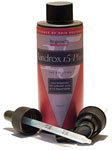 I have reviewed the product’s website. Xandrox15 Plus seems to have two known active ingredients: