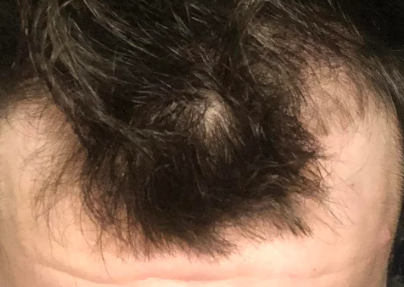
1 year after 3000 FUE graft surgery and I am unhappy (photo)
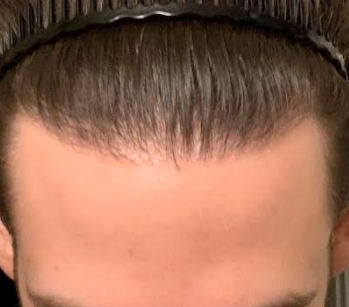
There are many comments I could make here. There are teams of technicians working on a case of your size and if any of them had less skills than others, the grafts placed by the less skilled technicians could have caused this problem. There are many technical nuances in a hair transplant and any of them could have caused this problem, so speaking with your doctor is a good idea, at the least to get the feedback you need.


2017-11-19 15:44:301 year after 3000 FUE graft surgery and I am unhappy (photo)
2011 ISHRS Meeting Review, Part 4 – Surgical Techniques

ISHRS 2011

Note: The annual meeting of hair surgeons was in held in Alaska this past week. The following review is very selective and is biased by the things that were interesting to me and what I (Dr. Rassman) thought could be interesting to the readers.

This is part 4. More to come…

***

 
Which is better: FUE or FUT (strip)?

    I (Dr. Rassman) moderated a panel of 6 doctors to debate the merits of follicular unit extraction (FUE) over the more traditional strip harvesting transplant procedure (FUT). I started the sessions showing a case of what I called “follicular holocaust”. It was a case of 6840 FUE grafts performed over two sessions. I showed that the failure was not only on the growth of the grafts, but also on the destruction of the donor area. In all recipient sites and donor sites, there was a loss of 26,000 hairs and a massive failure of the FUE procedure.

    The debate followed this foreboding case study with the following insights:

  1. FUE is gaining popularity and seems to be demanded more and more by prospective patients. The graphs showed that the number of FUE procedures will surpass the number of FUT procedures in the next few years.
  2. FUE is safe in the hands of good doctors. The group all agreed on this because they were amongst the best doctors offering FUE. My only comment is that I can’t imagine any doctor putting themselves in the “bad doctor” category as shown in my presentation of “follicular holocaust”.
  3. FUE graft damage is being reduced with building experience resulting in better growth.
  4. Dr. Bradley Wolf demonstrated a patient who had 1000 grafts on each side of his head (total 2000 grafts) after 7 months of growth. The two sides seemed to be about equal. The patient reported no significant pain with either procedure (done one day apart) and the scars in both sides healed with minimal scarring.
  5. Dr. Suddleson argued that FUT supplied as many grafts as are needed, while FUE was more limiting in a single session. He argued that many of the advocates of FUE routinely offered FUT to their patients and that the FUT was the gold standard by which FUE would be compared. He generated a laugh when he pointed out that at least one doctor promoting FUE on the panel had reported his excellent results on the FUT strip based procedures.


FUE and ethnicity

    I’m often asked if there a difference in FUE patient candidates based upon ethnicity. This question was raised and answered by a doctor from India who showed that there are clear differences in the Indian population based upon skin types and some geographical areas of India where the skin is much thicker than others with thinner skin. He believes that these differences clearly can impact the difficulties of FUE and the results of transplanted graft growth.

    Also of note — it seems that the incidence of balding in the Indian population of India is much higher (62%) in men between the ages of 21-61 years old, than in the Caucasian population from comparable studies done in other countries. The use of finasteride was found to be in the 1% range for these men, while the use of various snake oils seemed to dominate the treatments of many Indian men.

 
I’ve got much more to post, so check back next week for topics on finasteride, the Artas® FUE robot system, and minoxidil.

Balding Blog – 2014 – Hair Loss Information

We’re taking a few days off for the New Year holiday.

2015 marks the 10th year of Baldingblog with over 12,363 posts to date!
A special thanks goes out to all readers of this site with never ending hair loss questions.

We’ll be back in 2015!!!

Happy New Year

Zinc and Argenine for AGA and TE

https://pubmed.ncbi.nlm.nih.gov/33878855/

Conclusions: Based on our results, the combination of arginine and zinc tested in our study could represent a good therapeutic option for the treatment of AGA and TE and it might represent a valid alternative to finasteride.


2021-04-23 08:56:27Zinc and Argenine for AGA and TE

1 year finasteride question

Have you seen first sign of improvement on Finasteride after one year?

This is not uncommon. Sometimes just slowing the hair loss is hard to notice, but if, while taking finasteride, your biological hair loss activity slows down, then the finasteride may become more effective. This might explain why you see improvement appearing at one year after starting the drug. This drug, in sensitive men, can give reversal of hair loss especially in the young men under 25 or even 30. It works better in the crown than on the frontal areas.

2011 ISHRS Meeting Review, Part 5 – Finasteride

ISHRS 2011

Note: The annual meeting of hair surgeons was in held in Alaska this past week. The following review is very selective and is biased by the things that were interesting to me and what I (Dr. Rassman) thought could be interesting to the readers.

This is part 5. More to come…

***

 
Does finasteride (Propecia) impact the body’s inflammation response in hair loss?

    Dr. Marty Sawaya produced evidence that there is a connection between genetic hair loss and inflammation of the hair follicle. She believes that DHT may have a direct impact on the inflammatory process. With this insight, other potential treatments for genetic hair loss and other hair and skin disease may evolve.

 
Are finasteride’s sexual side effects overstated?

    Despite internet complaints to the contrary, there are no case reports of sexual dysfunction that remained after finasteride was stopped in those patients who reported sexual side effects. The medical literature shows that sexual dysfunction is present in 40+ percent of men over age 50, so it was difficult to assess the 2% occurrence of sexual side effects in a comparable population. Despite this, changes in warning labels have been mandated in the United Kingdom, Sweden and most recently the US.

    One joke on the floor I overheard was that based upon the internet reports, the average 50 year old had a better than 40% risk of sexual side effects, but that reduced to only 2% for those reporting side effects from Propecia, making Propecia less risky for those side effects.

Balding Blog – 2015 – Hair Loss Information

http://www.pressreleaserocket.net/the-aesthetic-surgery-journal-publishes-groundbreaking-study-on-nape-hair-for-fue-hair-transplantation/328237/

Taking neck hair, which is often finer than scalp hair, has problems with it. These problems include:

(1) more prominent scarring occurs in the neck and the neck area is very visible so such scars will be detectable as punctate scars

(2) neck hair is often not permanent hair as scalp hair is, so if one transplants the frontal hairline with these finer hairs, they may disappear with age.

This is a warning to those who see this press release. They must know the risks associated with a neck hair donor area.