Did Writer Dean Koontz Have a Hair Transplant?

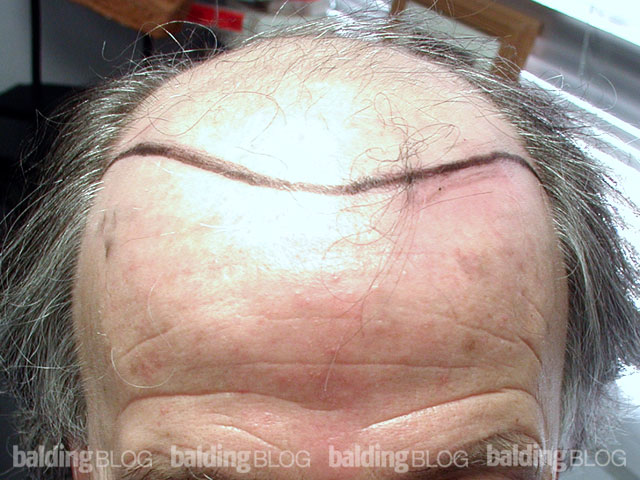
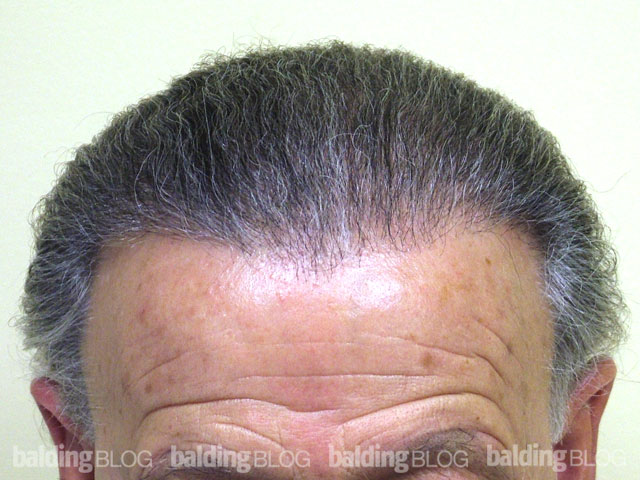
Hello Dr. Rassman! I am a big fan of horror writer Dean Koonz. According to his biography, he had a hair transplant because he was “tired of looking like G. Gordon Liddy.” His “before” picture is here and his “after” picture is here

I don’t know, I’m having trouble believing that those results are from a hair transplant. I’m thinking hairpiece but I thought I’d get an expert’s opinion. I see his picture on the book jacket every day and I can’t help but wonder!

Based on the photos you sent (which I’ve cropped and shown at right), author Dean Koontz’s hairstyle sure is shaped like a bad hairpiece… but that reflects personal taste and maybe it does the trick for him. I don’t know any details about his procedure so I couldn’t really guess as to what is actually going on there. Former Illinois state governor Rod Blagojevich has a similar look and I do not believe that he has a hairpiece.

In the years that I have been involved in hair treatment, I have seen everything imaginable with regard to what the consumer wants his look to be like. It is not unusual for balding men to have facial hair and when many of them get their hair back, the facial hair goes away. With regard to hair pieces, almost nothing shocks me anymore!


2009-06-09 14:12:09Did Writer Dean Koontz Have a Hair Transplant?

Did The Great Hairline / Thin Top Patient Take Propecia?

DR. R
did this patient you mentioned last week take propecia by any chance as well? I just want to know as to if he lost non transplant hair after the transplant through the years was it with or without propecia

So everyone is up to speed, the post from last month you’re referring to is here — Great Hairline, Thin Top and Crown, Low on Donor Hair

This patient did not take Propecia (finasteride) over the period of time we worked with him. Many people who are satisfied with their transplant results don’t “officially” recognize that they have a progressive process and in men like this, practicing denial as it goes on is common. In older men (like this man, over 40 years old), their decision to not take Propecia is common, as these men feel as if they beat the balding process and will not bald more over time. And in men over 40, this is not an unreasonable conclusion as the balding process often slows or stops on its own — but clearly this man lost his gamble as his balding pattern acted as if he was in his 20s, not 40s.

When I see a man under 35 years old losing hair, I stress the need for Propecia to guarantee, as much as possible, that the balding process has slowed or stopped. It is often a battle between us, as no one really wants to take the drug, especially with good transplant results. I can not stress the importance of staying on the drug to stop the type of changes that this man had and although there is no real guarantee, it is reasonable to take the drug for life.


2013-01-04 13:43:55Did The Great Hairline / Thin Top Patient Take Propecia?

Did you have permanent or temporary scalp micro pigmentation done?

I had a small thin spot on my crown that I’d like to darken with smp while I wait for possible results on finasteride. I was considering temporary smp. What do you recommend? I’m 25 with hairloss only in the crown, 6 months on fin. Thank you

We don’t do temporary SMP, but many people who had it grew their hair without it being detectable. We actually offer it for hair transplant patients who may not be as full as they want.


2020-12-03 10:29:58Did you have permanent or temporary scalp micro pigmentation done?

Did You Know That Alcoholics Die 7 Years Earlier

“Alcohol-dependent patients in general hospitals live significantly shorter than patients without alcohol dependency. According to a German-British study published in “European Psychiatry”, they die 7.6 years earlier on average. In addition, they suffer from several concomitant diseases.

alcohol

We often get question on if alcohol can cause hair loss. While alcoholism do not cause balding, it seems it causes an earlier death.
This was the result of analyzing 23,371 patients over 1.5 years with know alcohol dependency along with 233,710 patients without alcohol dependency. This, they said, can be reversed with appropriate treatment and cessation of the problem.

Did You Meet Dr Gho?

Doctor,
A few months back you had mentioned an upcoming trip to Europe. You also said that you planned to meet with Gho to discuss his technique or whatever. I am just following up to see if the visit ever materialized? Many people would appreciate a blog update on that situation. ALSO- many people would like you to be the first doctor to offer HST in the United States!

thanks for your time,
anonymous baldy

When I said “on my next trip to Amsterdam” I didn’t mean that I was planning on going there right away.

I was hoping to talk to Dr. Gho at the recent ISHRS meeting in Alaska, but he didn’t attend so we did not have an opportunity to meet to discuss what he was doing.

Diet and healthy hair (from webMD)

Diet and Healthy Hair

Medically Reviewed by Stephanie S. Gardner, MD on November 12, 2020

A healthy diet can help your hair stay strong and shiny. What you eat can also keep you from losing your locks. If you’re not getting certain nutrients from food, you might see the effects in your hair.Essential fatty acids, especially omega-3s, play a key role in the health of your skin, hair, and nails. You should eat some of these foods, which are rich in omega-3, every day:

  • Salmon, tuna, mackerel, and other fatty fish
  • Flaxseed oil, Flaxseeds, chia seeds, canola oil
  • Walnuts
  • Soy beans, tofu and cruciferous fruits and vegetables

Vitamins B6, B12, and folic acid are also important to your hair. Vegetarians and vegans often don’t get enough of them.

Foods with B6 include bananas, potatoes (both white and sweet), and spinach. Major sources of B12 include meat, poultry, fish, and dairy products.

You can get folic acid with plenty of fresh fruits and vegetables, especially citrus fruits and tomatoes. Whole-grain and fortified-grain products, beans, and lentils also have it.

Protein is also critical for keeping your hair healthy, but many people don’t get enough. Lean meats like fish and chicken, eggs, and soy products are good sources. Eat one serving every day.Because trace minerals like iron, magnesium, zinc, and biotin also affect hair, it’s a good idea to take a daily multivitamin.The right foods can be really good for your ‘do, but hair loss has many causes. Sometimes, genetic factors like male or female pattern baldness can play a role. Thyroid disease, anemia, autoimmune diseases, and hormone issues may also cause changes or loss of hair.

Did You Trademark the Term “Scalp MicroPigmentation”?

I know you have a scalpmicropigmentation.com site, but I saw other companies and websites on the Internet using SMP with a trademark sign or a registered sign. Did you invent SMP or are you using SMP without permission?

The technique of micropigmenting the scalp has been around for many years, but it has not been widely referred to as “Scalp MicroPigmentation” until a few years ago (since 2010). When we first entered the pigmentation market back in 2010, we tried to come up with various names for the process, such as scalp tattooing and scalp micro tattoo. Dr. Pak came up with the term “Scalp MicroPigmentation” in early 2011, which we abbreviated to SMP. We figured it was a good, catchy term and built our marketing based on this new naming.

We even hired a lawyer to file a U.S. Trademark with the Patent office, but the SMP trademark was rejected on the basis that it was a common descriptive term that was abbreviated. We do own the scalpmicropigmentation.com domain, but anyone can use the SMP terminology. Legally, you cannot place a trademark or registered sign after it. I realize other companies shamelessly do this, but that is false advertising and representation. It’s akin to putting a ™ or ® after the words “computer” or “automobile”. Anyone can use the the abbreviation “SMP” and it is not a brand.

In the end, we are happy that the terminology of “SMP” and “Scalp MicroPigmentation” caught on. If anything, it gives us passive exposure for the small investment we made on purchasing the domain name.

Difference Between Shampoos?

What kind of shampoo would you recommend and product to use. I use gillette and softee indian hemp hair & scalp treatment. But it doesn’t seem it’s helping at all. I looked on the internet found that Nisim can help keep your hair natural. What do you think?

It does not make a real difference. In my book, Hair Loss and Replacement for Dummies, I discuss the ingredients of various shampoos in detail. There are many good shampoos, but none of them will prevent hair loss. If a company makes that claim, they will be violating the FDA guidelines which define what can and can not be said. If they make false statements that can not be proven with appropriate FDA scientific studies, then their business will be shut down. But just because there are rules, it does not mean that companies will not misrepresent themselves.


2009-12-01 10:29:53Difference Between Shampoos?

Difference Between Norwood Class 7 Patients (with Photos)

Why is there such a difference between these two previous post’s photographs. They are both, by your report, Class 7 patients.

Norwood class 7 Thanks for asking this great, insightful question.

The rim of hair in a Class 7 balding pattern contains about 30,000-35,000 hairs. Considering that the normal total hair count of an adult is about 100,000 hairs, the only permanent hair that is never lost in any balding man, is the 3 inch high rim of hair schematically shown on the right (Norwood Class 7 pattern). The art of hair transplantation that I will show you below, reflects the way the surgeon redistributes these 30,000 (or less) hairs so that it looks like more than it is. The surgeon needs all of the help he/she can get from the characteristics of the hair on the patient’s head, including the quantity that can be safely moved.

The texture of the hair in these two patients is very different. The white/grey haired man (let’s call him ZU) has a hair shaft thickness that is easily three times the hair bulk (weight) as the blonde fellow (and for the sake of consistency, we’ll call him BF). The hair of ZU has a good character to it and holds a wave nicely, while BF has hair that lies limp and wimpy. Also, the donor supply of ZU is easily twice as good as BF and has a loose scalp which allows the surgeon to redistribute more hair from the permanent rim of hair around the sides and back. ZU received almost 10,000 grafts with easily 23,000 hairs in these grafts, while BF had only 4500 grafts (about 8,000 hairs). BF’s scalp was tight and his hair density was not as good as ZU. With that understanding, re-read the blog post titled Patient’s Guide — How Many Grafts Will I Need?, and it should be easy to see that we are not all created equal and the surgeon’s hands are ‘tied’ by patient’s hair characteristics (weight, texture, color, quantity) and therefore the hair transplant surgeon is not in control of every variable he/she needs. When putting the patient’s final results side-by-side, ZU has easily 8-9 times the amount of hair bulk (# of hairs and bulk) as BF. What is very important for you, the reader, to recognize here is that even BF is thrilled with his results. The thinly covered crown in BF (both men use a comb-back hair styling technique) is not of a concern for BF, because he looks at the man in the mirror and does not see his hair from behind. ZU also has a comb-back (which I showed in these photos by allowing the hair that is combed back to separate so you can see the scalp) with much better coverage of his crown area. ZU also had a considerable amount of hair transplanted into the crown, making his grooming easier and his crown looking fuller. From BF’s point of view, that man he sees in the mirror has a full head of groomable hair, just like ZU.

It is also important to note that these men started getting hair transplants at different points of their hair loss. ZU was already completely bald when he started getting transplants, where BF was thinning rapidly and on his way to being completely bald (it happened a few years before Propecia became available). So ZU had nothing on his scalp when we began transplanting his head, and BF eventually lost all of his natural hair up top (so what you see in the photos for both men is all transplanted hairs). If you took BF’s hair transplants away, he would look like ZU’s before photo.

This is reality and that is why I appreciated this question when it came in yesterday. People with a Class 7 balding pattern will never have enough hair to replace what was lost (and if any doctor said he/she can give such a person a full head of hair, well, he/she clearly is must be GOD). The key to a good hair transplant is the artistic hand of the surgeon and good styling from the patient, no matter what balding pattern exists.

ZU (before on left, after in middle, after crown on right — more photos here):


BF (before on left, after in middle, after crown on right):



2008-05-06 13:45:01Difference Between Norwood Class 7 Patients (with Photos)

Difference between Telogen Effluvium and diffuse thinning?

Telogen Effluvium is a short term process often related to stress and more common in women usually reversing within a year or less, while diffuse thinning from genetic causes last, are often slowly progressive and generally can get worse over time until your inherited balding pattern is achieved (often before the age of 40, but not always).


2020-12-13 22:32:33Difference between Telogen Effluvium and diffuse thinning?