Another Laser Hair Device Gets FDA Go Ahead

Hey doc, there is a new hair laser on the market. What do you think?
hairlaser

This space age design and the small case “i” in-front of the name does not add value. The FDA clearance means that it is safe. I really do not understand the FDA as effectiveness has not been proven in the one example mentioned in the article. I have not seen any definitive clinical research that proves that these lasers have any value at regrowing hair. Even the recent article in the Dermatology journal stated “further study is needed”.

Advisory Panel For FDA Recommends Restrictions To Doctors On The Use Of Testosterone

On September 17th, an Advisory Panel For FDA Recommends Restrictions To Doctors On The Use Of Testosterone on a vote of 20:1. Testosterone use has become more popular among American men and the question that is posed: Is it Safe? Men think that they have reduced testosterone and believe that it may be the cause of reduced sexual function. For these men, testosterone become the dream aphrodisiac to bring back their sexual performance and drive from their younger days. What most men do not realize is that decreased sexual function, from a physiological point of view is common in men over 40. Those with decreased sexual performance impacts (in general) 40% of men in their 40s, 50% in their 50s, 60% in their 60s and so on. Most of these men, especially those in their 40s and 50s have normal testosterone levels so added testosterone may have no know sexual benefit. Obviously from the vote, one panel member did not agree with the rest and this reflects uncertainty in the field. No one knows if the FDA will accept the panels recommendation.

LINK NY Times
LINK Urology Times
LINK FDA

Annual Medical Hair Meeting – Summary Of FUE Findings

Since we invented the FUE (Follicular Unit Extraction’s first scientific paper written in 2002 by Rassman, et. al.), the use of this technique has become more prevalent at each and every year’s convention. What is impressive, is the inroads many physicians have made using this technology in their practice. In 2011, the Artas® Robot was introduced into the hair transplant community and as of this date, 100 robots have been purchased by doctors from around the world. The FUE procedure has become more and more popular by patients wanting a hair transplant. Although we believe that the Strip graft procedure (Follicular unit transplantation) produces better grafts, the public seems to demand more and more FUE procedures and I would’s be surprised that the FUE might reflect between 30-40% of all hair transplant procedure across the world. For the new physician learning about hair transplantation, FUE requires less staff and when it is combined with the commercial ‘hair implanters’, the skills to produce quality work throughout the world seems to be a goal more easily achieved than with the traditional FUT (strip) procedure. There are three elements of the FUE that must be mastered, (1) the actual coring of the grafts from the back of the head with enough skill not to damage or transect these grafts while coring and removing them, and (2) the implantation process itself (carried out with the commercial ‘implanters’ or manual techniques like we use at the New Hair Institute, and (3) the many nuances for quality control that allows the grafts to survive the surgical procedure (drying of the grafts or damage to the grafts on handling and implantation).

One group of Indian doctors showed long hair FUE, just like we do. The ability to do this impressed us, as few doctors I am aware of, have developed the skills for this technique.

I was very impressed with the skills developed in various Asian countries (e.g. India, Thailand, China) where considerable numbers of patients with substandard work was performed in the past. Many videos were presented that showed that the skills for #1 and #2 were comparable to what we are doing at NHI. That was a pleasant surprise. Few of those doctors from third world countries could afford the high price of the Robot (more than $250.000) so the manual skills were essential to develop. I actually viewed more videos this year from India than any previous year.

On the negative side, complications of FUE abound with significant scarring in the donor area, far worse than I have seen before. Infections of the FUE donor area seemed more common than in my experience (where it is rare), and folliculitis of both FUE donor and recipient sites were reported as not uncommon. Clearly, there is more present in these surgeries than ‘meets the eye’ through the video offerings. Doctors clearly will show their best work for the videos. Time will tell just how well these cases turn out. Despite this statement, I believe that FUE will become more and more popular world-wide. We have already seen a significant growth in the FUEs in Europe as fewer and fewer doctors entering the business adopt the Strip technique.

Some doctors are combining both FUE and Strip surgery to increase the donor yield for a hair transplant. This makes sense if the doctors and their teams are skilled in both techniques, but it does push the envelope. I welcome comments from our readership.

Am I Balding?

Repeat From Archive


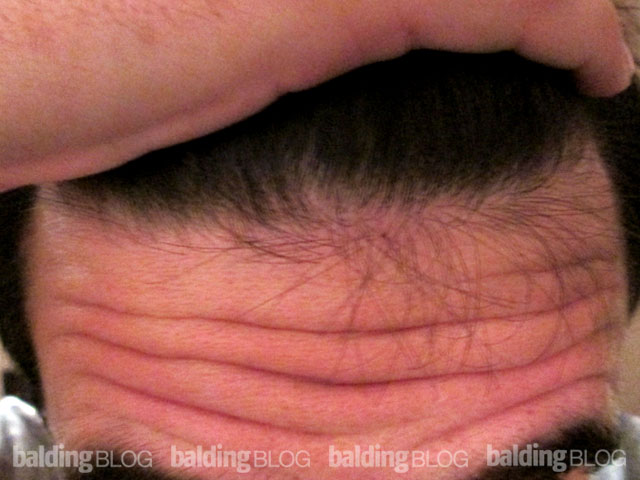
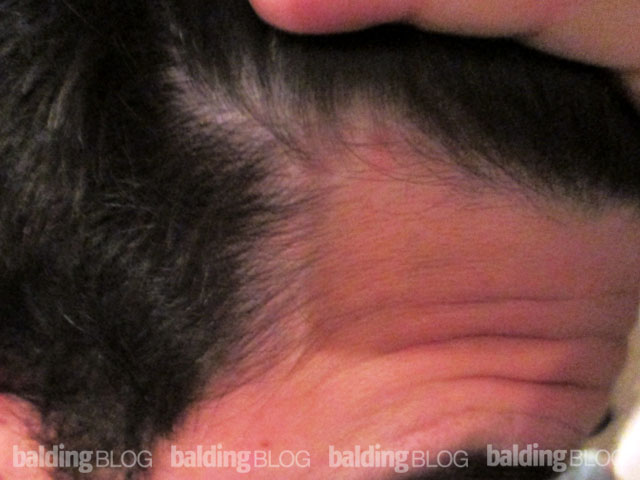
We have been getting a great number of questions about hairline hair loss. Basically the questions relate to the slow appearance of the mature male hairline. The pictures in this post show a young man in transition between his juvenile hairline and his mature hairline. Note that the corners are moving up and that there is some thinning of the leading edge of the hairline. What you see here is not balding, just maturing the hairline.

Please note that we do not generally diagnose hair line questions. However due to the increasing daily emails with photos of young men concerned about their hair line, we will soon be rolling out a new website where you can submit your photos and have others rate the hair loss. Stay tuned!

Can Food Increase DHT?

Can certain foods increase testosterone(dht)? In the last three months i have been consuming kefir mixed with acai. I have noticed that my hair loss has accelerated .Any correlation?

The Acai berry, from the Amazon Rainforest, is used as an anti-aging medication. Friendly bacteria in the intestines synthesize the majority of vitamin K in the intestine. The use of Acidophilus cultures in the form of yogurt or kefir serve as a food source and an anti-oxidant by some people who build muscle mass. I can not comment on the direct association of these medications with testosterone production, but these supplements are often taken with male hormones or other growth hormones which will then contribute to more DHT production and possibly more hair loss. Poor nutrition, will absolutely contribute to hair loss.

It has been long thought that we are a product of what we eat and what we eat will impact the overall personal state of our health. If you eat Broccoli, for example, the Vitamin B6 it contains will spur the tryptophan hydroxylase gene to produce L-tryptophan, an amino acid used in the synthesis of serotonin, a neurochemical mood stabilizer. Determining the effects of different nutrients on each gene variant is tricky and revolutionary because it would enable people to optimize their diet according to their particular genetics. High Blood Pressure, for example, has been linked to the antiotensinogen gene that increases a person’s sensitivity to salt. So the challenge for science it to identify which nutrients interact with genes and how they do so. Red wines (containing Resveratrol), grapes, berry and peanuts has been linked to some of the genes involved in longevity, but unfortunately, not proven in humans. The suggestion that red wine slows the aging process has been suggested by the French, who make the finest red wines. Should we believe them? Vitamin D, not only prevents rickets, but it may half the rate of certain cancers (colon cancer for example). But sunlight will do the same thing supplying high doses of Vitamin D.

Fergus Clydesdale, a food scientist at the University of Massachusetts predicts a day when we will visit an online supermarket, input a color coded genetic profile and buy one of 20 different lasagnas, all of which taste the same but each of which were made to fit a particular person’s health needs. In conclusion, your question was a good one and suggests that sometime in the future, I can be more precise in my answers as science and nutrition come more of age.

How Does Tattoo Removal Work?

The FDA regulates laser devices and the inks used to remove tattoos. Some Lasers have been cleared for use in tattoo removal.

The FDA has cleared several types of lasers as light-based, prescription devices for tattoo removal. A Massachusetts company recently received FDA clearance to market its laser workstation for the removal of tattoos and benign skin lesions. Baldingblog has mentioned, in a previous post, that 21% of people who have tattoos, regret having them done. As such, this 21% of those who have tattoos, are candidates for Laser Tattoo removal. Once the ink is placed in the dermis of the skin, these inks will mostly stay in place for a person’s lifetime. Tattoos are intended to be permanent.

The laser pulses a high-intensity laser energy pulse through the epidermis targeting the pigments below the epidermis. “The laser breaks the pigment into smaller particles, which may be metabolized or excreted by the body, or transported to and stored in lymph nodes or other tissues”, says FDA’s Mehmet Kosoglu, Ph.D.. “Lighter colors such as green, red, and yellow are the hardest colors to remove, while blue and black are the easiest.”

According to the American Academy of Dermatology, the procedure requires multiple treatments (typically six to ten) depending on a tattoo’s size, colors, and depth. and requires a few weeks of healing time between procedures.

In Scalp Micropigmentation, we use darker colors and when performed correctly, keep the volume of the ink small and placed in the upper dermis. If the ink would be placed too deep in the dermis, it would not be a dot, but rather a blob. Doing this correctly requires a specialized skill that takes many months to master. Unfortunately, the poorly done tattoos on the scalp, place the inks too deeply and a large volume is often used, making it more difficult to remove them. This material is summarized from an article which appears in the FDA’s Consumer Updates, January 30, 2013

Can Propecia Cause Problems With My Endocrine System

Dr.Rassman, I’m thinking of trying Propecia. In your medical opinion can taking it long term also decrease total testosterone and bioavialble testosterone? I’m worried about it causing problems to my endocrine system.

Propecia is used by millions of men everyday and there does not appear to be any issues with their endocrine system. Testosterone levels often rise when a person is on Propecia.

Can I Swim After I Have SMP?

Can I Swim After I Have SMP?

You have to wait about 3 days before you go swimming (ocean, lake); however, if there is chlorine in the water (typical swimming pool) you should wait at least 30 days to be sure there is no connection between the pigment and the water. When SMP is properly done, the pigment settles below the epidermis within 30 days, so the chlorine from the swimming pool can not reach the pigment. Chlorine can bleach the pigment and change its color. Ocean or lake water should be fine.

Could My Weightlifting 3 Times a Week Make Propecia Not Show Any Benefits?

Hi. I am 21 years old. About 9 months ago I noticed that my hair was thinning at the top. I consulted my GP and he said it was male pattern baldness. He prescribed propecia but after 7 months of taking it I experienced side effects and did not see any improvement. I lift weights for 30 mins 3 times a week and have a protein shake daily could this have any effect? Any advise would be greatly appreciated. many thanks

I doubt that there is any connection unless your protein shake has steroids in it.