SMP Scalp MicroPigmentation for Blondes? – Hair Loss Information – Balding Blog

Scalp Micro-Pigmentation for Blondes

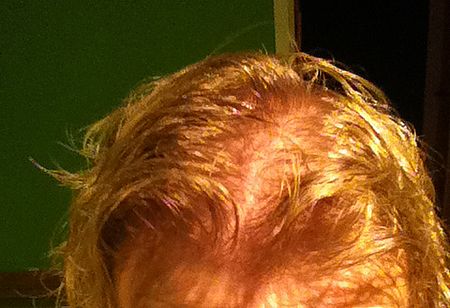
Hi Doc. I’m a blonde guy wondering about your Micro-Pigmentation. You can use this image of me if you want (it is my photo and it is of my head):
reader_blond

That photo was taken 9 months after a hair transplant. Obviously its still quite sparse in there. If the 5000 odd transplants don’t take would I be a candidate for Scalp Micro-Pigmentation?

If the grafts do take would, is dermtech or toppik better for a blonde male.

One more question. I have to ask. Like I said its been 9 months since my transplant and I’m not getting much growth. Is it common that people don’t get much growth until around the 9 – 12 month mark.

And are there cases where for some reason, (i.e physical chemistry), that maybe transplants and some people just won’t work? Because to be honest I feel jinxed right now…

Block Quote

Most blond people have a dark root color when the hair exits the scalp and then it is exposed to light, it turns blond. If the hair is shaved, it would show to be a dark grayish/ brown. To test this in response to this question, I cut some hair from my platinum blond wife and I saw that the hair exiting the skin was grey/brown. When it got to a length of 2mm, it turns her platinum blond.

Dermatch or Toppik in blond colors have not been well received by the patients who have used these products. With regard to your report of what sounds like a failed transplant, you need to get a second opinion. In general it takes about 6 to 12 months to see results after a hair transplant surgery.

Hair Loss InformationDHT Types, Finasteride (Propecia, Proscar) and Dutasteride (Avodart) and male pattern balding – Hair Loss Information – Balding Blog

Good day to you sir. I read in a previous post dated over a year ago that type II DHT is linked to hair loss, but type I DHT has not been linked/proven to cause hair loss. Is there any news/updates on the two types of DHT with the relation to hair loss? Thank you for your time!

Block Quote

Nothing has changed in recent times.
For clarification, Propecia is a brand name of a generic drug named finasteride in 1mg strength. Proscar is also a brand name of a generic drug named finasteride but in 5mg strength. Avodart is a brand name of a generic drug named dutasteride in 0.5mg strength.

Propecia is the only FDA approved oral medication for the treatment of Androgenic Alopecia (AGA) which is a genetic cause of Male Pattern Balding (MPB)
Avodart and Proscar is FDA approved for prostate condition known as benign prostatic hyperplasia.

Propecia and Proscar works by blocking an enzyme called 5?-reductase type II which ultimately reduce the DHT level.
Avodart works by blocking the same enzyme 5 alpha-reductase type II but it also blocks 5 alpha-reductase type I which ultimately reduce the DHT level.

You would think that if DHT is responsible for men’s genetic hair loss, that if you block DHT entirely and most efficiently (with Avordart) you would stop the hair loss. This is not the case! It has been found that blocking only the 5 alpha-reductase type II is what you need to treat male pattern hair loss. Blocking that extra type I enzyme with Avodart does not necessarily equate to better result in terms of treating hair loss.

But people don’t really pay attention to science and research. People generally look for the most extreme treatment and non-scientifically based Internet anecdotal reports. So people are using Avodart thinking it has DHT blockade than Propecia (finasteride). For this reason, many who have tried Propecia (finasteride), with no significant or dwindling results switching to Avodart thinking it will work “better”. They don’t realize or factor in their genetic predisposition. They also do not realize the possible long term and increased sexual side effects with Avodart.

In the end Avodart is still used by many for treating hair loss in men. But its true efficacy and advantage over Propecia is not completely clear.

Hair Loss InformationXELJANZ® (tofacitinib citrate) on curing balding? Alopecia Universalis Totalis – Hair Loss Information – Balding Blog

i would like to know your opinion on a medication called
tofacitinib citrate which was used to treat a man with alopecia
universalis, could this work for someone with DUPA seeing that DHT
might not play a part in this hair loss type?

Block Quote

tofacitinib

Tofacitinib is a medication to treat rheumatoid arthritis. There was a report by Yale University professor Brett A. King, M.D published in the Journal of Investigative Dermatology that the medication grew hair on an alopecia totalis/ universalis patient.

Alopecia Totalis or Alopecia Universalis is thought to be a condition where the patients own immune system attacks their own hair follicles which results in hair loss. It is hypothesized that the drug diminished or interfered with the immune system attacking the hair follicles. Tofacitinib is not approved for hair loss by the FDA. Tofacitinib will not likely work for genetic androgenic alopecia and there are many safety issues (i.e. infections) with the drug which must be considered.

FUE and Strip Donor Area Harvesting – Insights – Hair Loss Information – Balding Blog

Dr. Bill Reed, a hair transplant surgeon in San Diego, California, wrote the following piece in an email to a group of doctors. I asked him if he would allow me to share it with our readership, and he agreed.

“Hyperbole, some of you might assert. That may be but I can’t see the flaw in my logic so perhaps one of you can help me figure it out.

Assume that a strip harvest is a limited scalp reduction of the donor. Unlike FUE, a strip harvest removes the bald inter-follicular skin as well as the follicles. An FUE harvest takes only the follicle, more or less and does not do a scalp reduction to take out the virgin laxity to create a snug closure (the scalp reduction). If the end point of donor depletion is determined by removing as many follicles as possible to the point that it starts to look thin and “moth eaten”, (not factoring in how much more thin it will become with age, a point that Walter emphasizes), then the procedure that removes the bald inter follicular skin is obviously superior, i.e., the strip excision.

However, it is not that simple.

Dr. Beehner’s study on scalp reductions done in the 1990s showed a “stretch back” of 40% with vertex skin put on a comfortable tension as is done with the strip excision. In other words, 40% of the hairless, inter follicular skin that was removed is recreated by the stretch back. One is still 60% better off with respect to the density done with FUE which doesn’t remove any of the original virgin laxity.

Trying to create the most conservative estimate, factor in a 2mm scar which strip creates and FUE does not. That 2mm is 15% of the 1.5 cm width so back out 15% from 60% to get 45% superior density due to the “scalp reduction” of removing the bald inter follicular skin with a strip excision instead of merely taking the FUE punch. Although other factors, such as fiber diameter, color contrast, curl, contribute to the “moth eaten” end point, each patient’s end point when surgically removing hair is dictated by density. Even if stretch back is 100% with subsequent procedures (because the laxity of subsequent procedures is created by the stretch back of the previous procedure) there are still the lost follicles, the follicular holocaust, from FUE by not taking the initial virgin laxity. 45% superior density has to be equilibrated with FUE’s density before each has reached its end point. Strip’s superior density is equilibrated with that of FUE by offering up more grafts. 45% superior density after the first procedure translates into 3000 grafts x 0.45 or 1350 grafts.

I believe that this number is for the entire safe donor and relates to the end point of the entire safe donor from multiple procedures. FUE will be approaching its end point by harvesting the whole safe donor with each procedure; strip will be spreading outward to get to the margins of the safe donor. John Cole’s careful work determines that the safe donor is roughly 200 cm2 with a donor density of perhaps 80/cm2 or 16000 grafts. If one estimates that 50% can be harvested before looking thin (a dangerous oversimplification when applied to all patients), then there are 8000 grafts available for harvest. I believe the points I make suggest that with the strip harvest’s mini scalp reduction that removes the virgin laxity with the first procedure, the total number of grafts available with strip excision is 8000 plus 1350 or an extra 17%, a percentage higher than that from the multi-bladed knife that made Dr. Bob Limmer cry out and coin the term “follicular holocaust”!

The FUE genie is out of the bottle and there is no putting it back. Nor should it be stuffed back in as there are good indications for it, but if a patient may need to maximize his donor harvest over his lifetime, FUE appears to me not to be the method to maximize the patient’s limited donor resources. I believe a surgeon has to offer both strip and FUE to offer maximum benefit to his/her patients.”


Block Quote

Native Americans immune to DUPA like they are Male Pattern baldness? – Hair Loss Information – Balding Blog

Are native Americans immune to DUPA like they are Male Pattern
baldness?

seeing as full native Americans are immune to typical male pattern
baldness would this also apply to the other hair loss type ‘DUPA’ and
if so/not could this help us narrow down the list of possible causes
at the genetic level?

Block Quote

Not all Native Americans are immune to male pattern balding. Only a certain minority tribes, those whose ancestors came to North America over the Alaskan Bridge, appear not to have male pattern balding. Many Native Americans came to North America from the south and these men do have genetic balding. DUPA – Diffuse Un-Pattern Alopecia is not related to Male Pattern Balding (MPB) so I do not know how that would fit in to the Native American traits on balding. I think you are trying to find a common denominator but the cause and relationship of two separate type of balding does not fit.

The cause of male pattern balding is genetic.

General Questions on DHT Blocking Supplements Have Birth Defect Risks? – Hair Loss Information – Balding Blog

1- Does Propecia and DHT blocking drugs cause birth defects?
2- How about natural blockers? There are reports of at least 8 different foods or herbal supplements that are supposed to block DHT (soy, green tea, pumpkin seed oil, zinc, nettle root, emu oil, saw palmetto, pygeum extract).
3- If used regularly do the natural DHT blockers cause birth defects that can create ambiguous genetalia?
4- What about those substances that might have DHT blocking such as possibly drinking green tea or eating tofu or concentrated supplements such as saw palmetto, which is said to work the same way as finasteride.

Block Quote

1) The existing finasteride based DHT blocking drugs (including Avodart, dutasteride) are known to cause birth defects that can create ambiguous genitalia when women take the medication. When men take the medication it is not related to birth defects. If someone is still worried about this, you can stop taking the medication and it would be out the blood stream in 1 day or out of the system in 1 to 2 weeks. Many men still take Propecia while trying to conceive with their partner and have no issues.

2) If you believe the natural supplements really do block DHT, then it would work the same way with respect to birth defects. Only when women take it. It does not apply to men as stated above.

3) Again, the birth defect issue only apply to women who take the DHT blocker. From this article in the LA Times: “In the early 1970s, Dr. Julianne Imperato-McGinley, an endocrinologist at Cornell Medical College, traveled to a remote mountain village in the Dominican Republic to study a group of children with a unique condition.” DHT was identified as a cause of the problem of ambiguous genitalia. Of course, this led to the development of DHT blockers.

4) Again, see 1) 2) 3) If you really believe in the DHT blocking reports, then it applies. But I highly doubt drinking green tea or tofu will cause ambiguous genitalia. Use your judgement.

FUE Megasessions – Hair Loss Information – Balding Blog

Hi Dr. Rassman and Dr. Pak
I was just going through your web site and found that you performed a megasession April 2004 which transplanted 1901 follicular unit extraction grafts on a patient, and I was wondering if you have any updated photos or information on this patient so I could see the final results. And also how long did this procedure last?

Thanks for your time and keep up the great work!!

Block Quote

This is the patient you’re referring to — HERE

I only see the patients when they need to see me or if the results are less than expected as many of our patients reside out-of-town. I rarely have them return after the first 8 month period when I would like to assess their results. That was the last time I saw him but I spoke with him over the phone and he reported that the results looked great at 8 months.

We were not as efficient in performing FUE megasessions in 2004 when compared to today. Back then we needed a larger team of people to assist us with FUE and it often took 7 to 10 hours for an FUE of over 2000 grafts. Today we routinely perform 1500 graft FUE sessions and can harvest these grafts as fast as 1 to 2 hours (Each patient is different so the speed and efficiently varies because of the tissue make-up of each patient). Today, we do not need the large staffs we used to use when doing any hair transplant, either strip or FUE.

Not Hair Loss News- One gene discovery lead to a connection for three cancers – Hair Loss Information – Balding Blog

One gene, three types of cancer

APA
Jun 25, 2013

French scientists have discovered that a BAP1 gene mutation causes a predisposition to kidney cancer. The mutation has been known to play a role in eye cancer (retinoblastoma or uveal melanoma as well as in mesothelioma). The researchers at the Institute Curie’s department of genetics in Paris have published their findings in the “American Journal of Human Genetics”.

For the study, the scientists analyzed data from a family with a history of many unexplained cases of cancer. One family member who developed multiple instances of cancer was observed over an extended period of time; however, no change in genetic predisposition for that particular tumour was found.

The BAP1 mutation was only discovered after examining the genome. An analysis of kidney tumours confirmed the findings. The malignant cells contained only the mutated version of the gene.

In a cooperation with two other research teams, the scientists found 11 families with the BAP1 mutation. They were able to ascertain that six families showed an unusually high number of cases of kidney cancer. Of the nine persons to have developed kidney cancer, genetic analysis of four family members’ tumours showed the BAP1 gene to be inactive in malignant cells.

Block Quote

One day we will have identified the genes that cause a variety of cancers. We already have done this from Breast, Ovarian and Cervical cancers. Discoveries of genes that produce certain types of leukemia have treatments based upon genes that cause the disease. Today, we are seeing discoveries like this one and our future will hold the possibility that we can diagnose and treat these diseases early in their course and save lives. One day we will supply a drop of blood and hundreds of disease markers will be analyzed. That day is getting closer and closer.

Can Norlevo (Morning After Pill) Cause Hair Loss? – Hair Loss Information – Balding Blog

Hello.

I took Norlevo (morning after pill) 15 days ago and now I have noticed that my hair is falling out. How long will this last? Is there anyway to stop it?

Thank you.

Block Quote

The morning after pill is a hormone similar to what you find in a birth control pill. Birth control pills could possibly cause hair loss in rare instances. I can not tell you if that if your hair loss is related to the pill (Norlevo). It may be due to stress in general as well. You need to follow up with your doctor for an exam.