Worried About My Hairline, And I Don’t Have Local Access to a Hair Doctor (with Photos) – Hair Loss Information – Balding Blog

Hi,
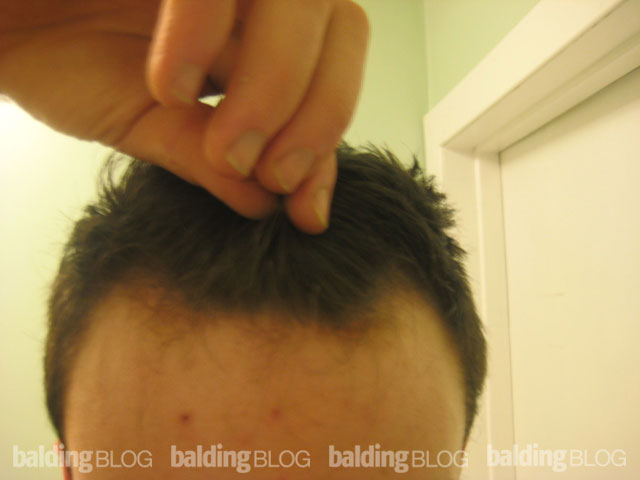
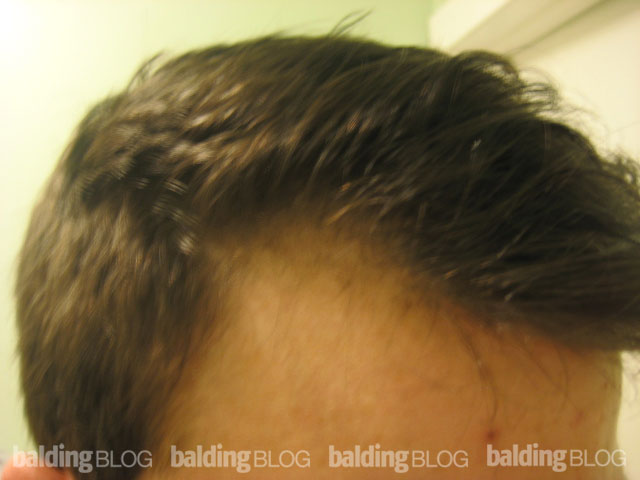
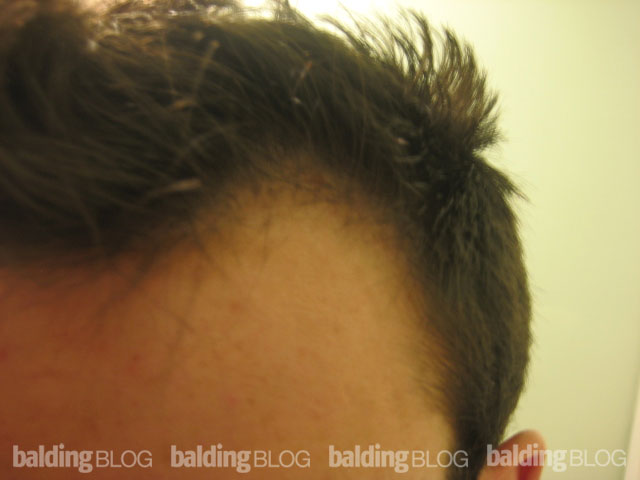
I would greatly appreciate some feedback regarding my frontal hairline. It appears that my corners have thinned/ receded during the last couple years. I am 23 years old male. I’m concerned about my hair line at the moment and questioning what would be an appropriate approach to take. Would Propecia and Rogaine be a smart idea? I currently live in an area which does not have local access to a physician regarding hair loss, although this is something I’m looking into. Thank you for your time and consideration.

Block Quote

Click the photos to enlarge:


It does appear that you are experiencing early hair loss with a Norwood class 3 pattern showing at this time. There is erosion of the corner hairline with thinning present. At your age, the best treatment would be finasteride (Propecia or the generic form of it) as it would be likely to stop the process. Your family doctor can prescribe finasteride 5mg to you and then you would cut them into quarters and take 1/4 per day.

Hair Loss InformationTrichotillomania-by-Proxy? – Hair Loss Information – Balding Blog

My neighbor is in his 50s with no known history of hair loss until about 5 years ago when he first noticed he was developing gray hair. He had his wife pull out every gray hair he could see daily, and it could’ve been as many as 20-30 hairs a day over the years! His daughter researched the condition of trichotillomania and does not feel he fits the diagnosis as the pulling was not done by him.

He claims he is not compelled or driven to have his hair plucked, and that as soon as he realized he was visibly thinning, he had his wife stop doing it. At that time he began to color his hair at the suggestion of his daughter. He states there has been no plucking for the past 2 years now and he has more hair on his head now than 2 years ago, when the plucking was stopped.

Block Quote

This sounds like maybe trichotillomania by proxy (like Münchausen syndrome by proxy, a well known phenomenon)… but I’m not sure that would fit either.

It usually takes quite a few “pulling sessions” to produce the traction required for permanent hair loss, often over years. So if his hair has regrown over the past 2 years, it sounds like he was lucky that the loss wasn’t permanent.

FUE: Graft Quality and Survival (Part 2 of 4) – Hair Loss Information – Balding Blog

This is part 2 of my series of posts about follicular unit extraction (FUE). I discussed the history of FUE yesterday in part 1.

When I made the decision to have another hair transplant procedure some 8 months ago, I asked Dr. Pak to do it with FUT (strip), not FUE, and the rationale for this is outlined below. I had no noticeable scar from this FUT, even though it was the third procedure I had at the exact same location. Before I get into the FUE in more depth, it is important to compare the FUT grafts with the FUE grafts:

Graft quality:
The FUT grafts are tightly controlled with regard to the quality of the graft, and the consistency is totally dependent upon the experience of the team and the quality controls put into place by the surgeon as the grafts are taken from the strip. The FUE graft quality is dependent on the wide variety of tissue connections and different types of collagen that surround the FUE graft. The grafts are cored with an instrument, never seeing the graft until it is removed. The surgeon who uses hand instruments and gets good at them, ‘feels’ the instrument as it works its way through the scalp. Everyone is different in regard to their tissue makeup so that every person reacts to the FUE coring differently. If a surgeon claims 2% damage straight across the board, he is selling himself, and in my opinion he is not telling the truth (see here and here).

The grafts are pulled from the extraction site once they are cored and this pulling is most often the cause of the denuded distal end of the FUE graft. Almost 100% of FUE grafts lose the fatty covering at the bottom of the graft, exposing the hair follicular bulb to the air around it (this is never present in FUT created grafts). This can be a problem because drying (the number one cause of graft death) is accelerated as the grafts are moved from the donor area to the bath they are stored in, and then from that bath into the recipient area. Meticulous attention to keeping the graft very moist and protecting it from the air in the room is critical to graft survival and this is probably the single largest cause of FUE failures once the graft has been removed from the donor site.


Graft survival:
The survival of the denuded graft may not be as great as the survival of the FUT manually dissected graft, and there are few scientific studies other than one by Dr. Bradley Wolfe (ISHRS Presentation in October 2012) that demonstrates in his hands on a side by side comparison in a single patient, that graft growth was essentially the same when FUT and FUE were compared.

The denuded graft has always bothered me and every technique gets it when performing an FUE no matter which surgeon does it, and there does not seem to be influence by the commercial instrumentation used. There is one exception to this — when we developed and tested the FUE2 technique and used subdermal tumescence simultaneous with the FUE technique. As you can see on this FUE2 page, the grafts have no denuded distal end. We have not commercialized this technique at this time and I am personally waiting to see if scientific studies being done now, will shed light on the importance of the denuded distal end for the FUE graft.

Part 3 tomorrow, where we look at surgical skills and robots.

If I Want to Have a Very Short Hair Style Forever, Can I Use BHT? – Hair Loss Information – Balding Blog

Happy New Yr Mr. Rassman.

Currently, I shave my sides with a trimmer to 0.25 number and keep the little existing hair on my scalp shaved at 0.5 number. This is because I dont have hair to show off anyways, so might as well give it a shaved look. Even though I have some donor area, I am sure it wont be enough for hair transplant to give it a long full hair appearance.

As an alternative, I would like to have a shaved look but without SMP / using chemicals. I would like to achieve this with BHT but I do see from your previous posts that you are not a big fan of BHT because of the different texture and the growth rate of hair.

So my idea is to use the body hair on the the top of the scalp. It may not grow in the same pace / texture with the rest of the existing hair but what if I want to keep shaving it (or trimming to 0.5 number). Will it help? My logic says if I am shaving it / trimming it, it would probably.

My concern is:
1) ARE THERE ever SCARS in the recipient area? This question is relevant here because I will be shaving / keeping my scalp hair very short (0.25 or 0.5 number on the trimmer)

2) In your experience, while transplanting hair (whether hair from back of the head or body hair) into the recipient area, can existing hair get damaged?

Thanks for all your good work, may the force be with you.

Block Quote

I will be direct to your questions.

1) Visible recipient site scars are rare if the instrument is very small and a slit is used. But with any surgery, there is a small (rare) risk of keloid and scarring.

2) Existing hair is rarely damaged, unless perhaps there is shock loss, which is typical of young men under the age of 30 who do not take the drug finasteride. (This is not an absolute rule as some men decline to take finasteride. It is a case by case basis.) In general, the younger they are, the greater the risk of shock loss.

FUE: History of Follicular Unit Extraction (Part 1 of 4) – Hair Loss Information – Balding Blog

I received a question from a patient after an extensive meeting (over an hour) about the options of FUE vs strip (FUT) procedures, and he asked which of the newer FUE systems was best. He was particularly confused by the promotions of the ARTAS and Neograft systems. That prompted me to start writing. I’ve split this post up into four parts and will post one per day. Let’s begin…

History of FUE:

I would consider myself an authority on FUT, the megasession (I published extensively on these procedures in 1993-1996), and I introduced Follicular Unit Extraction (FUE) to the medical community in a series of publications in well known journals. My experience with FUT and megasessions is large. Although the FUE technique was introduced by us in 2001 in a medical publication and in 2002 at the ISHRS world congress, I was developing FUE since 1995. On each and every patient, with their permission, I performed about 20 FUE within the strip area and got pretty good at doing them.

Back in 1995-1999, the problem I came up with was a lack of constancy in each patient’s extraction results. In some patients we were able to get 20 out of 20 perfect grafts and when that happened, we felt like masters of the FUE process. Sometimes, however, our success rate was less than half of our best results. I was humbled by the difficulty of the process. To address the problem, Dr. Pak and I developed many types of instruments and punches (between 1995-2000), some with controlled depth, some with larger and smaller diameters, some open on one side, some not circular, some with serrated edges, etc… We tried to correlate the quality of the results with the instrument design. We tried to correlate the quality of the results with the instrument design and there was clearly more value in some of the instruments over others. The serrated edge, in some of its iterations, seemed to produce the most consistent results in our hands. By 2000, we stabilized our technology with the serrated punch and continued to develop the FUE2 method which we successfully patented.


On a side note, this is how I developed my relationship with Dr. Jae Pak, who worked with me initially in the 90’s as a bio-mechanical engineer (before he became a physician). Working with Dr. Pak, we jointly developed the FUE process and the initial set of instruments used for it. If you visit my office and we have the time, we can show you the history in the hand units we made. Dr. Pak and I made all of our own instruments. You can also search on Google Patents and enter my name or Dr. Pak’s name (add hair to the search) for all the patents pertaining to hair transplant surgery (or see a list on my CV).

We tested drilling, vibration, and varying degrees of tumescence, and even patented a mechanical stabilizer to hold the skin tight as our attempt to come up with the consistent perfect graft. This stabilizer is used by the ARTAS System today. After the initial 2001 publication in a medical journal, I handed out a DVD to every physician in the audience (a few hundred doctors at the ISHRS) so that they could take it home, watch it, and try to learn from the video. Within a few days of the meeting, a surprising announcement by a doctor from Toronto was made telling the world of his new FUE invention. The doctor called me prior to his announcement, asking me all types of questions on how to do it, what punch to use, etc. I quickly became aware of the sleazy way he tried to get credit for something he did not pioneer. His goal was simple: to try to corner the FUE market before other doctors got into it.

Although other doctors did not make public announcements as this Toronto doctor did, many, many doctors started to offer FUE to their patients. I knew that those that marketed FUE in the 2001-2003 time frame really could not build expertise in this technology; nevertheless, selling it reflected potential money in their pockets. And indeed, I met many doctors who knew nothing about FUE over the years, who simply started doing it and practicing the procedure on new patients, not really helping many of them until they learned enough technique to produce actual value for the patients. I know this because many of those patients came to me to probe the failures of the procedure and to get my opinion on what they should do. Patients paid high fees for these doctors practicing on them.

If a doctor does not tell the patient about his/her level of experience, one should question the integrity of the doctor. FUE is both an art and technical challenge. I have become aware of dishonest doctors who just poke holes in the head, charge by the hole and hope that they get enough grafts out of the process to get growth. I have become an expert witness in litigations advocating on behalf of victimized patients. Today, some doctors take courses by the ISHRS, but courses alone do not impart the technical skills needed for FUE. Taking a fellowship with a doctor skilled in FUE will be the best guarantee of FUE competence.


I’ll post the next part of this series tomorrow.

Hair Loss InformationHow Long Until I Can Use a Sauna After a Hair Transplant? – Hair Loss Information – Balding Blog

Hi doctors,
How long after a hair transplant until I can use a steam room / sauna? And how about a tanning salon? Thanks

Block Quote

You should address any post operative questions with your doctor, as each doctor has their own recommendations. In general, most patients can resume normal activities in two to three weeks after a hair transplant surgery — including a sauna.

Tanning salons are not generally recommended for health benefits and high dose UV rays can potentially discolor skin during the healing process, which can take up to 6 months. This does not mean you have to keep out of the sun, just use a sun blocker.

Hairline Density – Hair Loss Information – Balding Blog

Hello Dr.Rassman and team. Just wanted to say you guys are doing an excellent job educating people like myself about hair loss and what available options are out there to cope with baldness.

I had a couple questions regarding hair density. Lets say for example two men have a hundred hairs on their hairline. Could one of the individuals hairline seem thinner then the others even though they have the same amount of hair at the hairline? As well, lets say one person has 50 hairs on their hairline and another has 100. Could the person with the 50 hairs still appear to be thicker hairline then the one with 100 hairs?

I understand it depends on hair type for example straight vs. curly hair. The curly hair would appear thicker even though there is less hair. But I want to know in individuals with black hair which is slightly wavy.

Thank you once again for your excellent work.

Block Quote

I think you answered your own question. Hair density is not just about numbers when it comes to the look of fullness. It all depends on skin to hair color contrast, hair style, length, diameter of the hair shafts, wave, and distribution.

Hair Loss InformationLegitimacy of Body Hair Transplantation? – Hair Loss Information – Balding Blog

Hey Dr Rassman, I noticed that Dr. Umar was considered for recommendation on the Hair Transplant Network. The site also featured patient examples of his FUE procedures which combined body hair harvested from numerous locations and scalp hair. The results look pretty impressive.

Has your stance changed at all in regards to the legitimacy of body hair in transplantation?

Block Quote

There are obviously differences of opinion here, but to be endorsed by a website that is supported by and paid for by the physician (the doctors pay a monthly fee to be on that site) does not make it a new standard.

Plain and simple — today, body hair transplantation (BHT) is not a Gold Standard in treatment for hair loss. Other doctors still have a right (as licensed physicians) to offer this. I do not believe in using body hair transplants for most cases, because I have seen many cases where after it is transplanted, the body hair still looks like body hair sitting on the scalp. The shaft thickness of body hair is thinner than scalp hair in most people, so on a value comparison between scalp and body hair, you are miles ahead with scalp hair transplants. BHT is best used when you are out of donor hair and the body hair can be placed as a fill-in to traditional transplanted areas.

Remember, the body hair has long telogen cycles and depending on which body part, the telogen cycle is often longer than the anagen cycle. That means the hair will not grow in these telogen cycles. Also, body hair does not usually grow long like scalp hair.

Hair Loss InformationWill Wearing Wigs Damage My Scalp for Future Hair Transplantation? – Hair Loss Information – Balding Blog

Hello.

I am 18 years old and by looking at my family history, I’ll start losing my hair between 20-22.

I have decided not to take propecia (I know the percentage of side effects is rather small, but I dont wanna risk any sexual side effects, and definitely not any brain fogs, as my brain is my main asset). I’ve contacted and visited a guy here in London, who’s wearing a hair system, and its actually not visible, even if you put your eyes like 2cm from the hairline. And you wear it 24/7, usually for a week.

Now, I would imagine wearing a hair system till like 30, so till in 12 years, and then go for an intelligent combination of treatments (hair cloning -replicel,aderans etc + body hair transplantation + several GHO sessions) to turn my NW6 to NW2.

THE QUESTION i’m asking is if like 6-7 years of wearing wigs, which include like putting glue on your scalp and cleaning it off with alcohol and putting it back on weekly, will damage my scalp skin and thus make a hair transplantation difficult.

Thanks. Please answer. Bye

Block Quote

You are getting way ahead of yourself here. You need to first get a diagnosis from a physician and then discuss your options in a Master Plan for treatment. If you are scared to take a medication due to potential side effects, that is up to you and your doctors to decide.

Finally, wearing hair systems long term can cause scalp irritation, scarring, and localized hair loss from traction alopecia. Many wig wearers have balding areas at points of attachment. Not to mention the expense of maintaining the hairpiece, which is something many people don’t consider.

Hair Loss InformationAny Bimatoprost Study Phase 2 Results Yet? – Hair Loss Information – Balding Blog

Doc

Have you heard anything or have any idea when the phase 2 bimatoprost studies will be out?

Happy new year to you and your staff.

Block Quote

You’re referring to the study comparing bimatoprost and minoxidil for use on the scalp, which completed the phase 2 a few months ago. The results haven’t been posted yet, as far as I can find.

Check it our at the ClinicalTrials.gov site — Safety and Efficacy Study of Bimatoprost in the Treatment of Men With Androgenic Alopecia.