
One aspect puzzles me. In FUT a strip is removed and closed so a part of the scalp vanishes and is replaced by a thin scar. The areas adjoining the scar retain their hair density and very often with trichophytic closure hair grows out of the scar, again with no reduction in density.
In FUE follicular units are harvested individually. No large scar is generated but hundreds (thousands?) of tiny ones. However (and this is my main point), donor area density is reduced because the scalp from where the hair is removed does not vanish and is essentially now a tiny bald spot.
Does this mean FUE thins out the donor area in return for not creating a long FUT scar? Is that the trade-off?

Thanks for asking, as this can be a bit abstract.
When you remove a strip of hair (say 1/2 inch wide by 4 inches long) you are effectively removing skin and pulling the scalp from top and bottom. This in effect stretches the scalp/skin along with the hairs. So if you have a very, very precise measuring tool of hair density before and after the surgery, then you will definitely see a decrease in hair density after the surgery… but this reduction in density is very low and not perceptible to the naked eye.
When follicular unit extraction (FUE) is performed, many hundreds and thousands of hairs are taken out (and never grow back on that spot) so it is easy to see how this would also reduce the donor density.
 First I though you were describing
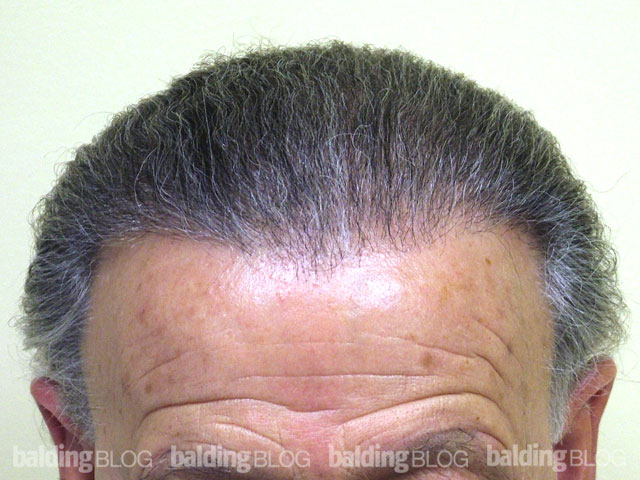
 “Thinning hair” means a person is losing hair (usually hair that is miniaturized – i.e. thinning of the hair shaft) and does not have as much hair bulk as they once had. “Miniaturization” of hair means that a person’s hair shaft is not as thick in one area when compared to another area as it should be in its normal/healthy state. It is normal to have around 10% of miniaturized hairs for people who are not balding that may reflect what we call vellus hairs, present in every follicular unit.