Blood Flow Stimulators and Hair Loss – Hair Loss Information by Dr. William Rassman

I have question(s) that are part product and part physics inquiry:

  1. I have used Nano shampoo for several years, and I’m not sure if its effective or not – any thoughts?
  2. If using a liquid topical (minoxidil, nioxin, etc) would it be best to apply the topical AFTER wetting your hair completely so that ones hairs do not absorb/wick the topical up onto the hairs, so the wet hair will minimize the ability of dry hair to draw/wick topical fluid away from the scalp?
  3. Are there any mild blood flow stimulators you would recommend similar to Retin-A though not as irritating/burning as you repeatedly advise you are not a fan of with Retin-A? Is this the same mechanism the product Procede uses?

(I’m hoping the creativity of my no.2 physics question makes my submission worthy of a response and/or post.)

Thank you!

Retin-A

  1. Probably not. No shampoo will cure balding or help with hair loss. Hair loss is genetic in 99% of men. You can use any shampoo you wish, but it will not help with hair loss.
  2. It is my understanding that the foam version of minoxidil works best with respect to absorption.
  3. Retin-A (tretinoin) does not work for treating hair loss. It is a mild acid that produces a skin irritation that some believe would help when used with minoxidil, because it might make the skin absorb the minoxidil better. There is no clinical evidence of this actually helping grow more hair. In my opinion, you are just irritating your skin. Procede contains thioglycolic acid, which you can learn more about at Wikipedia.

Minoxidil Dependence – Hair Loss Information by Dr. William Rassman

Dear Dr. Rassman,
How long does it take for minoxidil dependence to occur ( once use has been started)

I do not know the definite answer to this, as there are no studies published about it (to my knowledge). First, the hair must be responsive to minoxidil for it to become dependent upon it and that means that the hair is thin and not normal. This generally takes many months, to a point where the drug is making a difference.

If you put a non-balding person on minoxidil, I believe that the hair would not develop a dependence upon it.

Side Effects Only After Quitting Propecia? – Hair Loss Information by Dr. William Rassman

Is it possible to not have any side effects while taking Propoecia, but then expriencing them after quitting?

Propecia (finasteride 1mg) stays in your blood stream only for one day, which is why you need to take it daily. You weren’t clear as to what side effects you are experiencing after stopping Propecia. I would need more information from you to know where you are taking me.

Using Rogaine Foam for Man with Bell’s Palsy – Hair Loss Information by Dr. William Rassman

I was diagnosed with Bell’s Palsy last week. I’m pretty sure you have heard of it: http://en.wikipedia.org/wiki/Bell’s_palsy

Well, I have been using Rogaine Foam since July of 2007 and have started to get some amazing results. It however makes my face kind of puffy. Do you think that using the Rogaine Foam will mess up my chances of healing the nerves?

Serious question. I really don’t want to stop the Rogaine, though, but I will if I have to.

Let me know, please.

Thanks

Rogaine (minoxidil) should not affect the healing of the nerves. You should ask your doctor who is treating you for Bell’s palsy, as he/she should be involved with your medical care.

Rogaine vs Regaine – Hair Loss Information by Dr. William Rassman

What is the difference between Regaine and Rogaine where I can see that these two products have the same ingredients (Minoxidil 50 mg; propylene glycol; alcohol and purified water) are there any difference between this two products and which one do your recommend thanks for your time.

Rogaine / RegaineNo difference that I know of. Regaine is the name in the UK and Australian markets. Rogaine is the name in the US market (and possibly other markets). They even share a similar logo and packaging.

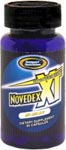
Estrogen Inhibitor Novedex XT and Hair Loss – Hair Loss Information – Balding Blog

Dear Doctor:

Let me first state that I have had an obsession with my hair loss for some time. I have been on Propecia, Avodart, Revivogen and may others in the hopes of saving or regrowing my hair. However, I am an extremely thin male (40 years old) with very little muscle mass. I am now getting quite flabby around the gut with pretty severe love handles. I am a gym rat, going to the gym at least 4 days a week doing both cardio and resistance training. My diet is extremely clean. I am attempting to increase muscle mass and decrease my abdominal fat, but have had zero results over the past 2 years. I have discovered a product by the name of Novedex XT, which is an estrogen inhibitor. From the research I have done and the people I have spoken to who use it, they say it is the best product they have ever tried to gain lean muscle mass. There is a pub med article on it as well.I wish I could provide the link, but it doesn’t point to the page. The bottom line is that Novedex XT increases Testosterone, free testosterone and DHT levels significantly. My question is this, would continuing to use Avodart reduce the chances of DHT related hair loss? I assume the DHT increases because estrogen is inhibited and both total and free testosterone is increased. This is not an anabolic steroid that uses some “unknown pathway” to convert to DHT. So, if I were to continue using Dutasteride, would this offset the DHT related hair loss? Here is the article from pubmed:

Willoughby DS, Wilborn C, Taylor L, Campbell W.
Department of Health, Human Performance, and Recreation, Baylor University, Waco, TX 76798-7313, USA.

This study examined the effects of an aromatase-inhibiting nutritional supplement on serum steroid hormones, body composition, and clinical safety markers. Sixteen eugonadal young men ingested either Novedex XT or a placebo daily for 8 wk, followed by a 3-wk washout period. Body composition was assessed and blood and urine samples obtained at weeks 0, 4, 8, and 11. Data were analyzed by 2-way repeated-measures ANOVA. Novedex XT resulted in average increases of 283%, 625%, 566%, and 438% for total testosterone (P=0.001), free testosterone (P=0.001), dihydrotestosterone (P=0.001), and the testosterone:estrogen ratio (P=0.001), respectively, whereas fat mass decreased 3.5% (P=0.026) during supplementation. No significant differences were observed in blood and urinary clinical safety markers or for any of the other serum hormones (P>0.05). This study indicates that Novedex XT significantly increases serum androgen levels and decreases fat mass.

PMID: 17460335 [PubMed – indexed for MEDLINE

Thanks!

Block Quote

NovedexI get questions like this all of the time. Playing with your hormones could very possibly do damage, as these are off label uses of these medications. You can not stop the negative effects of the hormone blockers with dutasteride or finasteride, but you trying to do it anyway. Maybe one day you will learn what you are doing to your body and realize that it can’t be good with estrogen blockers and pushing your testosterone high to get in shape and impact the blubber that you have around the middle. I don’t mean to sound rude, but why not do it the right way, which is a good exercise program with a professional trainer working with you on your routine and your diet?

I also gleam another question: Whether the estrogen inhibitor will increase DHT to the point that dutasteride is rendered ineffective. I don’t believe that is the way it works, as this is a competitive inhibition process between the drug and 5 alpha reductase. It will still compete effectively for the receptor.

Did Propecia Eliminate My Body Hair? – Balding Blog

I have been on Propecia for over a year. I think it stopped my hair loss and overall my hair appears thicker. I used to have to shave my knuckles and feet before I started the propecia as well as I always had hair coming out of my ears. I recently looked at my feet then my hands and all over my body and noticed that all the hair has vanished. I was just wondering if that was normal. I am relieved that I am not as hairy as I used to be but should I be concerned?

The finding you report is uncommon, though I have had quite a few emails about this phenomenon over the past month and others have periodically reported this side effect over time as well. It did not impact my ear, nose, or body hair, so that is a personal disappointment for me. I don’t see it as any cause for concern.


Related Posts Plugin for WordPress, Blogger...

Balding Forum - Hair Loss Discussion

Propecia and Frequent Urination – Hair Loss Information by Dr. William Rassman

My question concerns an unreported side effect of Propecia that has never been discussed on this website…I really feel alone on this one and am really depressed about my circumstance. I am 17 years old and recently started taking propecia for my hairloss, but had to stop because it causes me to constantly unrinate and gives me a burning sensation down there (which cannot be tolerated). My doctor told me to stop taking the medicine because of this, but now I am at a loss for what to do to stop my hairloss. Have you ever heard of this and what do you suggest I do so that I don’t lose my hair? Thank you so much for your response.

The usual report with some older men on Propecia is that their frequent urination (particularly at night) will decrease. This occurs because the prostate will frequently shrink on Propecia (finasteride 1mg) and in older men, swollen prostates cause urination problems.

From what you are describing, I would think that you have some other problem. First, you can stop taking the Propecia and see if your urination problem goes away. I would be surprised if it did. If I am correct, I would look for Chlamydia and other forms of prostatitis. Go back to your doctor after you stop taking the drug for a week, particularly if the problem persists.

Balding Forum - Hair Loss Discussion

Paid advertisements (not an endorsement):


Propecia Success Rates, Follow-Up – Hair Loss Information – Balding Blog

The writer of the piece below researched the value of Propecia for our review. If you choose not to go to the source, at least read what is written here.

Dr Rassman

Brilliant site. In response to a post dated April 16 (Propecia Success Rates), you asked your readers for a link related to the success rate of Propecia use. While the clinical studies supporting drug approval (links below) involved many endpoints and durations of observation (from 12 months to 5 years), the most dramatic evidence is at the 5-year assessment for men with vertex baldness:

“ An independent analysis of photographs (of the entire head)….. showed that at 5 years, 48% of men using Propecia had increased hair growth, 42% of men had no change (from pre-Propecia baseline photos), and 10% were rated as having lost hair. For placebo, 6% of men had increased hair growth, 19% of men had no change (from baseline photos), and 75% were rated as having lost hair.”

For your readers, the best link to summarize the clinical studies supporting regulatory approval in the US for any drug is at the FDA’s web site and will contain both the “Product Label” or “Summary Basis of Approval”. The Product Label is a brief summary similar to what is found in the package insert that comes with the medication, and the “Summary Basis of Approval” (also termed “Review”) is a detailed submission often involving thousands of pages. However, the “Medical Review” in the Summary Basis of Approval is a document that is well indexed and usually contains the clinical studies supporting safety and efficacy.

This information can be accessed without charge. For any drug, the link is Drugs@FDA. One can then choose the drug as listings are by alphabetical order and trade (brand) name. Once the drug is chosen, then choose the link with “Label Information.” For Propecia, therefore, the link that takes the reader to the “Review” from 1997 Drug Approval Package #020788.

For Propecia, three double-blind, placebo-controlled randomized studies of 12 months duration were conducted with 1879 men. The two main endpoints were hair count by photography of selected areas and patient self-assessment. Secondary endpoints were investigator ratings and ratings of photographs (by independent counters). Main results were as follows:

Combined data from Study 1 and 2 in men with vertex baldness (number of men = 1533): At 12 months, there was a 107-hair difference within a 1-inch diameter circle compared with those in the placebo group. An extension study showed that the hair count was maintained for up to 2 years in men taking Propecia, compared with the placebo group (38-hair placebo-adjusted difference at 2 years). Related to the figures your poster of April 17 noted, at 12 months, the investigators rated 65% of men treated with Propecia as having increase growth compared with 37% in the placebo group. At 2 years, the same investigators rated 80% of men using Propecia (compared with 47% of men using placebo) as having increased growth. These figures were 77% (Propecia) and 15% (placebo) at 5 years.

An independent analysis of photographs of the entire head (without reader knowledge of treatment assignment of person is photo) showed that at 12 months approximately 50% of men treated with Propecia (compared with 7% using placebo) had increased growth. At 5 years, 48% of men using Propecia had increased hair growth, 42% of men had no change (from pre-Propecia baseline photos), and 10% were rated as having lost hair. For placebo, 6% of men had increased hair growth, 19% of men had no change (from baseline photos), and 75% were rated as having lost hair.

Additional data including info on Study 3 (hair loss in anterior mid-scalp with or without vertex baldness) can also be evaluated.

Block Quote

This is a scholar’s view of the long term studies on Propecia, as published. This writer’s review from a practical view shows that the drug Propecia works for hair retention. I have never understood the focus on unproven alternatives by much of the balding male population who read this blog and write to me. Rather than get predictable hair retention, men seem to be willing to take ‘things’ that have not been shown to have hair retention value and during the period that they take these compounds, they are losing hair that will never grow back.

So where Propecia seems to hold the ‘status quo’ for years, too many men seem to be willing to accept progressive balding when psychologically, they obsess over their hair loss. And far too many men believe what they see on television or the Internet and don’t think that pictures of hair growth they’re shown may be fraudulent.

Miniaturized Hair – Does it Mean the Hairs are Thinner or The Entire Head of Hair is Less Full? – Hair Loss Information – Balding Blog

You really spend a lot of time working on this site. So I’ll be brief.

On March 22nd 2007 you had a post of a man that was trying to keeping his hair full (Trying to Keep Looking Full). You stated that he had 50% miniaturization of his hair. Does 50% miniaturization mean that 50% of the hair on the crown of his head has miniaturized and 50% is normal? Or does that mean the hair strands themselves are 50% thinner then when he was younger?

Also, I just started 1/4 tablet of Finasteride two weeks ago. I’m almost 25 and my crown has started to miniaturize. I know it’s too early to see positive results. But is it too early to see shedding? I ask because I’ve noticed a few shorter hairs in my hand after I run gel through my hair. The hairs are about an inch or so shorter then the rest on my head.

Thanks!

Block Quote

Hair that is miniaturized comes in all sizes and the thinner it gets, the more advanced the miniaturization is. When hair miniaturizes, it often is less long as the hair growth slows down. More advanced miniaturization will stunt the hair growth almost completely, a stage before it falls out. This is why I near-constantly write about getting a good baseline on your miniaturization with a series of measurements so you know where you are starting from. This way you can see numbers and the visual effects of the hair loss process. I hope this clears up any possible confusion.

I’m assuming that when you say you’re taking 1/4 tablet of finasteride, you mean 1/4 of the 5mg finasteride (which is Proscar or generic Proscar). Otherwise, I do not understand why you are taking 1/4 pill of the 1mg finasteride Propecia pill. There is no reason to reduce your dose from the recommended 1mg hair loss treatment, unless you’re one of the unlucky few that are experiencing side effects.