
First of all I want to thank you for this great site.
In Dec. of 2006 I went to a T.P. doctor, mainly to get a prescription for propecia and to hear what he had to say about how good of a candidate I would be for a hair transplant. I found out at that time that he still used the mini & micro minigraft procedure, with magnification and backlighting.(no steroscopic microscope). In Dec. 2007 I was looking at his web site,and to his credit, is now doing follicular unit grafting using stereoscopic microscopes.
My question is this,how difficult is it for his staff to learn to use microscopes and to be cutting in follicular units instead of minigrafts? I guess what I really want to know is how much time should I give them, to learn the “new” procedure before I go back for another consultation?
Do you have any photos that show the difference between minigrafting and folicular unit graphing on the scalp?
Thanks again.
P.S. How much does a stereoscopic microscope cost? This doctor has been doing hair transplants for 14 years and is now just getting some.They must cost alot!

Cost for hair transplant at New Hair Institute… as low as $5 per graft.
Cost of microscope at a local scientific store… around $500.
Cost of a well done follicular unit hair transplant… priceless.
The difference between minigraft and follicular unit transplantation is small, but can be significant when you look closely at the growing hair. Minigrafts and micrografts transplant skin between the hair follicles and this skin can produce changes in the scalp at the point the hair exits the skin. There may be cobblestoning from the transplanted skin. Follicular unit transplantation only transplants the natural occurring units of hair as they exit the scalp and most of the skin edge is removed so that the point of exit of the hair is normal.
More importantly, the difference when using a microscope for dissection is that you do not waste good follicular units since you can see minute details (under the microscope).
For more details, read our published articles on the subject:
- Follicular Unit Transplantation
- Follicular Unit Transplantation Megasessions
- The Aesthetics of Follicular Transplantation
- Follicular Transplantation: Patient Evaluation and Surgical Planning?
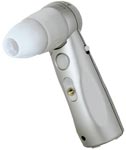 You can use a video microscope and look at your own hair. These run about $200-400 or so and are often sold online (price varies per vendor and tool used). I like the
 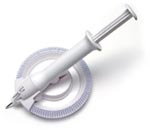 Practically speaking, the Carousel and Choi implanter are similar in that both make a recipient site directly into intact skin and then place a follicular unit into such sites. Mechanically speaking, the way they place the follicular unit in the site is different. The main limitation of the Choi implanter is that you have to load one follicular unit at a time, make the site with the implanter, place the FU in the site and load it back again before you can continue. For the Choi, a single hair graft is pulled into the instrument by a hair (being backed in). The advantage of the Carousel implanter is that it holds 100 follicular units, making the process smoother. The discussion is moot, however, because the Carousel is not currently on the market and can not therefore be used by any surgeon.
 At least a few times each week I get emails asking what to do after a surgical procedure was done (not by me), many times with complications. People contemplating surgery should have doctor/patient communication on the top of the list for doctor’s qualities. Having a doctor who is technically competent, but can not support you emotionally, intellectually, or practically, is really of no value.
 I can’t force doctors to use microscopic evaluation of the scalp to determine degrees of miniaturization, but the mapping is certainly the best way to determine degrees of hair loss, rather than having your doctor essentially just eyeballing the problem. Perhaps you could/should print out our this page —
 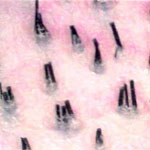 “Graft” can be defined as: living tissue surgically transplanted from its normal location in one part of the body into another part of the body in the same individual (an autotransplant, like hair or bone marrow transplants) or from one individual to another individual (like a kidney or heart transplant) and is expected to grow and function normally in its new location.