What about using body hair for a hair transplant?

I’m a black male with curly hair that I keep cut very short, I was wondering if I get a hair transplant would I be able to use chest/stomach(I have a lot) hairs as donor hairs since I’m never gonna try to grow my hair out past 5-10 mm?

Chest and abdominal hair is not same character of scalp hair and add to that it only grows out a short time (6 months) and then goes into sleep mode (telogen for 6 months) so the value is not really there and the length is limited as well. Scalp hair grows out for a few years and allows the full character of your hair to show. Unless you don’t have any scalp hair, I would recommend a scalp donor source for the hair transplant, not the chest or abdomen. Beard hair is a reasonable alternative option if you don’t have scalp hair as beard hair grows out for a few years and has a strong character to it, but it shouldn’t be used on the frontal hairline.


2021-05-12 14:11:52What about using body hair for a hair transplant?

Have We Focused Too Much On The Harmful Effects Of Sunlight? – It May Prolong Your Life

It seems that there is some secret to actual exposure to sunlight that supplements of Vitamin D does not give you. “In a study of 30,000 Swedish women recruited in 1990 and questioned about their sun-seeking behavior found that the more they had sunbathed, the less likely they were to have died 20 years later. In fact those who did the most sunbathing were hlf as likely to be dead as those who had avoid the sun entirely” said Rishard Weller in New Scientist June 13.

“Other research backs this up. Another Scandinavian study of 40,000 women found that those who went on the most sunbathing holidays were least likely to have died 15 years later…. We have been so distracted by what we see – skin cancer – and have forgotten what maters most. Vitamin D is often used as a euphemism for “healthy sunlight”, but an increasing number of supplementation studies show that the benefits of sunlight cannot all be put down ti it. ”

It also seems that people with pale skin and sun exposure get the worst cancers of the skin such as melanomas, while those with tan skin, get less aggressive skin cancers.

What can I do about my hair loss?

What I’m doing right now is a comb over with buzzed sides. I have no balding, just thinning behind my hairline as far back as the crown. Kind of a pompadour deal. I keep reading that the comb over is a cardinal sin, but TBH it looks pretty good on me and people don’t seem to notice.

You have an unusual pattern of thinning. This might best be treated with minoxidil and/or finasteride for a year or two. See a specialist in the field of hair restoration for good advice and the preparation of a good personalized Master Plan for your short and long term hair loss


2019-04-08 12:43:38What can I do about my hair loss?

Head is Sensitive After Wearing a Beanie

I just realized recently that after wearing a beanie (all types…polyester, cotton etc.) for a long period, my head becomes all sensitive. My brother experienced this too…and hypothesized that because the hair follicle is ‘pushed’ into one direction for so long, it becomes sensitive. It made me think…perhaps they (hair follicles) are really fragile? But then I think…this never happens when I wear a regular hat…do you have any idea why this happens?

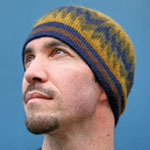
BeanieMany of the Jewish faith wear yarmulkes, and the Pope wears a zucchetto (both are skullcaps), and they keep it on most of the time. These are loose fitting and non-constricting. If your beanie is tight, then maybe it is putting pressure on the peripheral nerves and causing your problem. I do not believe that there is any connection to the fabric, because you have used caps with different fabrics and still experience the same reaction. I don’t really have an answer for you, unfortunately, except for the too tight explanation, but you know how tight it is on your head. Covering part or all of the head is essentially the same, whether with a skullcap, beanie, or even a baseball cap.

What do I do about my balding?

From this single photo, I don’t think that you are balding. Your hairline is a V-shape, typical of a mature male hairline. The fact that you have a widow’s peak indicates the location of your juvenile hairline at the tip of the widow’s peak. What you have drawn is a female-shaped hairline. Get an expert to do the hairline for you. If you are planning a hair transplant, then you will have to live with this hairline for the rest of your life. Really want to do this?

[If you have any questions, you can reach me at williamrassman33@gmail.com]

What Doctors Don’t Want You to Know About FUE

Follicular Unit Extraction (FUE) has been in vogue with hair transplantation surgeons in recent years. It is an elegant approach where one follicular unit is taken from a patient’s donor area, one at a time. There are no scalpels or the traditional linear scar. An FUE procedure requires a special 0.7 to 1 mm diameter tool that is used to harvest each hair follicle. All incisions and cuts leave a scar, but an FUE scar is barely visible to the naked eye because each FUE scar shrinks to less than 0.5mm.

There are many variables that contribute to the success or failure of an FUE. As one can imagine, harvesting a single hair follicle one at a time can be extremely tedious and fatiguing to the surgeon if he/she had to do it several hundred times for each procedure. More importantly, negotiating a 0.7 to 1 mm diameter tool to perfectly encompass a hair follicle is technically challenging even under magnification and requires a very steady hand and much experience doing it. Of course, one might ask how a doctor gets that experience and what the cost is to the patients from which that experience comes from.

There are also uncontrollable patient dependent physiologic variables as well, including:

  1. Hair characteristics such as color and thickness
  2. Skin characteristics such as hydration level, elasticity, degree of fatty tissue content
  3. Idiopathic variables (the unknown)

All the above variables contribute to what is called a transection rate. A transection of a hair follicle means that a portion or even the entire hair follicle was cut along its body and could be damaged, which may jeopardize its viability. A complete transected hair follicle will not grow hair when it is implanted.

A “successful” extraction of one hair follicle with the current FUE technique is a very relative term. To better illustrate this point we must understand the anatomy of a follicular unit with respect to the transection rate. One follicular unit can be a group of one, two, three, or four hairs. One patient may have a predominance of two-hair-grouped follicles and the other four-hair-grouped follicles. For example, when a surgeon extracts a four-hair-grouped follicle with an FUE technique and transects half the follicle, only two hairs will grow and the remaining two may be killed off, lost in never-never land. The way some doctors count, this is widely considered a successful FUE effort (not by me, of course), because this means only 50% of hair was harvested and 50% is lost forever! To make matters worse, the patients may be fully charged ($$) for that follicle even with the transection as long a one hair is viable (a shady process to say the least). What is even worse than that is that in a complete transection, that follicle is likely dead forever and even if the doctor did not charge for the complete transaction (as he/she should not charge for it) it would be considered by me to be negative value, reducing the person’s donor hair forever. One may argue that acceptable transection rate for a “successful” FUE is 10% or less, but this is not advertised and most patients (the consumers) do not have a clear understanding of this fact. Nothing in real life is 100%. Even the traditional hair transplant surgery with the donor strip incision has a 2 to 5% transection rate. From a historical point of view, it is interesting to note that New Hair Institute (NHI) was well aware of the possibility of transection rates in excess of 10% as early as 1997 before FUE was in vogue and four years prior to the landmark article published by Rassman, et. al. In conjunction with Dr. Jae Pak (with his mechanical engineering background) the two designed and built a prototype computerized video Follicular Extraction (FLEX) device which was patented by Dr. William Rassman (U.S. Patent 6,572,625). Even that device did not achieve did not consistently achieve the ideal ‘less than 10% transection’ in all patients and FUE can not match the 2 to 5% transection rate of the traditional donor strip incision. The transection rate by our NHI surgeons are still well within the 10% range for FUE and we make no pretenses that it is better than that routinely. Because of inherent limitations of FUE and uncontrollable patient variations, any claims of transection rate of less than 10% should be viewed as highly suspect. The automated process covered by the patent technology (above) is not commercially available… yet!

With the current state of technology, a surgeon may perfect his FUE technique, but the inherent patient variability will keep the FUE transection rate higher than the traditional donor strip incision technique. An informed patient should know the risks and benefits of any surgical procedure. The FUE procedure with its virtually non detectable scarring is an attractive alternative to the traditional donor strip incision and may be good when the amount of hair needed is small because the balding area being treated is not great, but its inherent transection potential may be a deterrent for the very bald patients who want the most hair possible from their donor site.

More information on the FUE technique:

Does this Article Link Finasteride to Mental Side Effects?

Hi doctor, what do you think of this article? https://www.reuters.com/investigates/special-report/usa-courts-secrecy-propecia/

TLDR: The article indicates that Merck appears to have lied about side mental effects of this drug.

I have read the article previously. There is nothing to link finasteride to the change in behavior with absolute certainty. This type of change can happen in mental illness as well. This man should have stopped taking the drug with these side effects. His doctors should have been involved in his management. Many possible things could have happened that may have altered this person’s course.

UPDATE: There are two more studies that are concerning about post-finasteride syndrome and the mental side effects can be found here:

  • https://www.ncbi.nlm.nih.gov/pubmed/32033719: The article states: “Also, increased depression, anxiety and suicidal ideation in a subset of men treated with these drugs were commonly reported in a number of studies”
  • https://www.ncbi.nlm.nih.gov/pubmed/31935720: CONCLUSION: Men under the age of 40 who use finasteride for alopecia are at risk for suicide if they develop persistent sexual adverse effects and insomnia. Further research is needed to establish whether finasteride has a causal relationship to suicide.


2020-02-19 08:33:11Does this Article Link Finasteride to Mental Side Effects?

What happens to miniaturized hairs?

21M, been on finasteride for 3 months now, experienced huge shedding of around 150 hairs per day during the first month. It gradually stopped and now I shed less than 10 strands during a shower. Tried combing my hair onto a white cloth and found a lot of miniscule strands less than 1 cm long. I have pretty thick hair N1 but was receding a bit at the hairline.

Hair becomes miniaturized in the balding process and as it miniaturizes, its growth often slows down. Sooner or later the hair will fall out and the stem cells that were there, will die. We don’t know exactly when these stem cells die out so if the balding is recent, these stem cells can kick into action if they are stimulated properly with possibly microneedling or some new drugs that may yet come to market.

Higher Strength Minoxidil

I got a prescription for Avodart here in the states.I will start today.I have read on the internet that there is a 12.5% minoxidil lotion and a 15% minoxidil cream that are better than the 5% you can buy over the counter.I want to start a new hairloss program but i want to make sure that im doing the best possible treatment for my hair.Are these stronger creams better or should i use the over the counter 5%.I have been depressed but i can not give up on my hairloss.Your input on this email will be very helpful!

You can try higher strength minoxidil, but just be wary of the drug’s side effects like dizziness or skin irritation. I have no particular experience with 15% minoxidil, but if you want to try it, I have not heard anyone saying it is bad.


2005-11-15 15:11:34Higher Strength Minoxidil