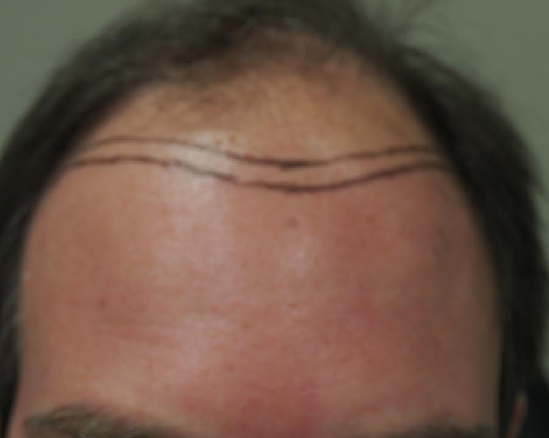
Is FUE Worth Doing?

If you are considering putting hair back where you lost it by having a hair transplant, the big decision is to take the step of finding a caring, competent doctor working with an experienced team, followed by scheduling a hair transplant. For most men, scheduling a hair transplant is the greatest step, in other words, to fix a problem with a surgical solution.

Fortunately, the hair transplant procedure has been made absolutely undetectable today, contrary to the 1990s, when everyone could see a hair transplanted patient and know it was not normal. Today, normalcy is the rule in the hands of an excellent hair transplant surgeon who has developed an excellent surgical team that has been fine-tuned over many years.

Most cosmetic surgeries only require the skills of a single surgeon, but all hair transplant surgeries require the skills of a great surgeon who built a great team to work with. A great surgeon with a poor team will produce poor results. A bad surgeon with a great team will also produce poor results. Why am I saying this when everyone thinks that the surgeon is the key to a good hair transplant? It is because a good hair transplant requires a skilled surgical team that understands quality control systems, similar to great manufacturing operations. When the team produces 2,000 grafts, it is a team effort that works under strict quality systems rules.

Once you take the plunge in deciding if you should go for a hair transplant, the next step is to find the best doctor with the best team that knows how to work together. Then, you need to decide if you should want a strip surgery (FUT) or FUE.

The FUT procedure (Follicular Unit Transplant) harvests a batch of hair by cutting a strip from the back of the head. The strip of hair is then dissected into their natural family groups with a large team of technicians working with high powered microscopes. Both I and my wife and daughter-in-law had strip surgeries, and we have undetectable scars.

On the other hand, the FUE procedure (Follicular Unit Excision) is a hair transplant procedure that harvests the hair follicles in singular hair groupings. FUE is a great procedure that I pioneered. But contrary to most young men’s belief that FUE is better than a strip procedure (FUT) because it does not scar, this is not the case. Many doctors would like you to believe that FUE is a scarless surgery, but take a look at the type of scars a large FUE session can create. Scars are a complication when FUE is performed on a person with low donor density and is unable to support a large number of FUE grafts. Many patients found out the hard way by getting 3,000-6,000 FUE grafts without having an assessment of their donor density performed prior to their surgery. As a result, over-harvesting has become far more common than you might expect. I love doing FUE and half of all of the surgeries we do today are FUE hair transplants, but for those of you who are reading this post, please note that anything done well in moderation may be good/ . Likewise, FUE done in moderations is a great surgical hair transplant procedure. However, when done in excess, the patient pays the price with ugly scarring that may never have been anticipated. Certainly, the unfortunate man in the photo below had no idea that his FUE was a massively scar-producing surgery because his doctor over-harvested grafts.


2018-06-22 11:39:06Is FUE Worth Doing?
5 Months After My Transplant, Nothing Has Grown In and Now I’m Losing Hair All Over!

Hi Dr. Rassman,

I find your blog to be incredibly informative and helpful to those with concerns after their hair transplants. I decided to undergo a transplant exactly 5 months ago as preventative maintenance. 1,700 grafts to fill-in the thinning top portion of my head. I still have hair on my head, but under direct light you could visibly see through to my scalp. I followed my doctor’s instructions and had no major issues after the surgery.

At 5 months, the incision scar is still pink and I have occasional pimples on the top of my head (with what seems to be a noticeable increase in grease on my head). Also, after the surgery I had shock fallout. But it seems that ever since my surgery for the last five months my shedding has been consistently increased. Not just from the top of my head, but all over (sides and back). I have yet to see any growth from the grafts. But I have noticed white streaks in my hair. I have pitch black hair, and there are now random strips of white developing throughout my hair (I had never had white hair before the surgery). Is it possible that the shock of surgery would cause some of my hairs to begin to turn white?

And I’m also concerned at this point that my grafts will not grow in and that I will continue to get thinner and thinner since my fallout has increased. Thank you for your input and advice.

In my practice, we never recommend a hair transplant surgery for “preventive maintenance”, mainly because most patients would not likely see much of a result as they continue to bald and run the risk of being worse off. There is also a good possibility that the surgically induced hair loss might make it look worse, something we call “shock loss”.

If you are really losing hair on the sides, maybe something else is going on like diffuse unpatterned alopecia (DUPA). Shock loss doesn’t usually cause hair to fall out from the back and sides of the head. White hair does appear with stress on some people, but I really do not understand the cause. It sounds like you need a good doctor to talk with and be examined by. Perhaps the surgeon that did your transplant would be a place to start.

In general it takes about 6 to 8 months before you can see results and I tell my patients that most people can see 80% of the impact from a hair transplant in 8 months. You should notice growth beginning about now and see improvement in the next 3 months. If you are young and had the transplant without taking the drug finasteride, and assuming that your preventive hair transplants were not really needed, then you will most likely not have as much hair as you did before the transplant (based upon what you are saying here). Hopefully though, over the next 3 months you’ll see some gains.

Is Male Pattern Baldness Not Genetic At All?

There was a study done by a Cornell University professor named T. Collin Campbell in conjunction with Oxford University entitled “The China Study”. It’s an entire book, but basically he says genes are expressed by nutrition, and many of his arguments revolve around animal based protein v. plant based protein and cholesterol, cancer, heart disease — not necessarily balding. But this peaked my curiosity. Can male pattern baldness not be genetic at all but instead the balding aspect is expressed by some type of diet balding men eat whether that diet is heavy in red meat or whatever?

I have been aware of this thesis for some time and one has to give it credibility. There is no doubt that diet does play an important role in one’s health. It is classic “nature versus nurture” type of argument, but things are not so simple. I did not read The China Study book, so I really cannot comment on that, but with respect to balding, although it is genetic, diet may very well influence the ‘expression’ of the process. Some people ascribe diet as a cause of the racial differences in balding when comparing Asians (in Asia) with Caucasians in America, but the science for this is clearly not available.

5 months on finasteride (photos)

Is my donor area over-harvested? (photo)

I am now 5 months since my surgery and I think that the surgeon went high on my donor area and may have over-harvested in this area as I can not see-through my scalp when I cut my hair short.

Your donor area may very well be over-harvested and the area on the left side looks lighter than the permanent zone below it. The harvested area appears above the permanent hair zone so speak with your surgeon about your concerns.


2020-07-11 22:16:10Is my donor area over-harvested? (photo)

Is penis shrinkage real?

I just wanted to ask if it is true that finasteride can cause penile shrinkage? My girl friend has been complaining that my hog is too large and I was wondering if taking it might at least diminish the girth.

I have a problem with this claim. You know when you are not sexually excited, you go swimming, you are out in the cold, the penis often smallest shrinks down. Try going for a a swim you you will see that it shrinks. Worrying about it I am sure doesn’t help. I don’t believe that having a large penis is an indication for taking finasteride which I don’t believe shrinks the penis.

6 Months After Fue Transplant-Not what I Want!

June 10th marks 6 months since my 1200 FUE graft HT on my temples (lowered hairline as well slightly). The transplant hair is growing in slowly but surely. Unfortunately, I have significant shock loss on my native hair surrounding the transplant hair. Much of this has not grown back yet. Specifically, I have shock loss in the front hairline area and behind my right temple where grafts were placed.

I met with my doc last month, and she boosted me from Fin to Dut to help with growth (I have no sides from either-yay!) She also remained steadfast that all my shock loss hair will grow back, it just takes time. However, part of me wonders if I should really believe her, if she thinks it will really grow back or if she is just saying that.

Finasteride is best taken before the hair transplant as it often prevents the loss of the native hair. Unfortunately, after you lose your native hair and then take finasteride, the effect is heavily muted. I always offer my patients finasteride before I do a hair transplant to avoid this problem. You should wait a full 8 months to see the results of the transplant and then reassess your situation.