Doctor Told Me to Use Protopic for My Alopecia

Hello, I have alopecia and i lose my hair and eyebrows. Also I am losing my body hair. My dermatologist told me to try protopic once a day. Some scattered white hair in my head is growing. Also told me to take rogaine pills. I didn’t start this yet. What do you suggest for me. I really need your advice.

Protopic is a prescription medication which you can read about at Drugs.com. This medication can be dangerous and must be prescribed by doctors who are experienced in its use. Some cancers can be induced at the skin level by this drug. For our readers, you should know that this is not a medication to get for treating hair loss.

I believe you’re describing alopecia totalis (see NAAF), but it is not really clear where you are in the disease progression. Also, your doctor likely mentioned Rogaine (minoxidil) topical — not pills. Do not take minoxidil pills to treat hair loss.

Radiation Therapy in Youth Caused Current-Day Hair Loss?

Greetings,
I just learned that my husband had been diagnosed as a child with cancer in one of his testicles. He underwent radiation and had lost hair on his head. Could this radiation have caused some permanent hair loss on his head? He is bald at the crown.
Thank you for you time

It is not clear if he received radiation to the head. Assuming that his radiation was more in the groin, then I doubt that it is producing hair loss. He needs to get a working diagnosis with mapping of his scalp for miniaturization. Treating the balding crown has some good solutions for him but first he needs to get a working diagnosis.


2006-02-16 15:33:54Radiation Therapy in Youth Caused Current-Day Hair Loss?

Does 2mg Finasteride Help Once 1mg Finasteride Effectiveness Levels Out?

Hello Doctor,

Firstly I’d like to thank you very much for maintaining such a very informative blog.

I have read that in cases where 1mg finasteride has lost its “effectiveness” in patients over the years you have prescribed 2mg instead of avodart. In the majority of these cases do you see a halt to hair loss, or no change from 1mg. Thanks for your time.

I haven’t seen much difference in results for those men that take 2mg finasteride from the start compared to those that take the recommended 1mg. I’m still not clear if it helps to take 2mg when 1mg seems to not be as effective as it once was (generally after years of taking it). I occasionally do advocate the double dose for those situations, but there isn’t actual evidence that this helps. There’s been only a small handful of patients that I’ve recommended this to within the past year, too soon to get a follow-up. In other words, there is no objective data on the results of changing the dose.


2010-02-04 08:52:22Does 2mg Finasteride Help Once 1mg Finasteride Effectiveness Levels Out?

Reader Checks in with His Thoughts on the Latest LaserComb Study

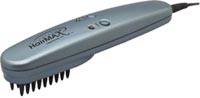
LasercombI reached out to a reader/writer/commenter that has previously sent in some great insights about FDA trials to get his thoughts on the latest Lexington HairMax LaserComb study that was released (read the abstract of the study here). He wrote back with a great overview, and although lengthy, it’s a worthy read for those interested.

Here’s his reply —

—————-

    Dr Rassman

    I am a physician-scientist (MD-PhD) with long-standing experience in the clinical development of drugs, trial designs, and interaction with drug regulatory agencies, and am also an avid reader of baldingblog. As such, I have been critical of Lexington in the past for failure to release clinical trial data in a peer-reviewed journal and in a timely fashion. I have also mentioned that their responses on your blog to questions by your readers (and information posted on their own web site) appear more likely written by marketers than scientists.

    I am presently reviewing for your readers the recently published article that summarizes the clinical study supporting the safety and efficacy of the HairMax LaserComb (Leavitt M, Charles G, Heyman E. Clinical Drug Investigation. 29(5):283-292, 2009).


    In brief, the study enrolled 123 adult male volunteers at 4 participating sites in the United States. These subjects had a diagnosis of current androgenic balding, were between Norwood-Hamilton 2a and V classification, did not have any systemic diseases that could affect hair growth, and were not on any alopecia-related medicine for at least 6 months before study entry (or transplantation at any time). Each subject was randomized in a 2: 1 ratio into one of 2 treatment groups: LaserComb (72 subjects) or a sham device (40 subjects), the latter which emitted incandescent light only (a form of placebo group). The primary efficacy measure included change from baseline to week 26 in hairs identified via digital image and computer-aided counts over an approximately 3 cm vertex area. These assessments were done in a blinded fashion (by an individual who did not know the treatment assignment of the patient). Safety endpoints consisted of standard safety indices evaluated at all visits. Subjects were asked to use their device 3 times weekly on non-concurrent days for 26 weeks. Study visits beyond screening and baseline were at 8 (safety evaluation only), 16 (safety evaluation only), and 26 months.

    The mean age of subjects was 47.9 years. After 26 weeks, the average hair count was 120.7 /cm2 for the LaserComb group and 122.9/cm2 for the sham group. The average change from baseline (primary endpoint) was 17.3 /cm2 for the LaserComb group and -8.9 /cm2 for the sham group; these differences of a placebo-substracted change of about 26 hairs/cm2 were statistically significant. Subjects in the LaserComb group reported more growth at Week 26 (compared with baseline) than those in the sham device group. In contrast, there were no differences in investigator assessment of hair growth between the 2 groups. The LaserComb was generally well tolerated and there were no significant adverse events.

    Impression:

    The basic study design was well done. It contained proper entry criteria for subjects, blinded randomization of patients to treatment groups, reasonable measures of efficacy, and blinded assessment of efficacy. Hair counts/cm2 from baseline to week 26 showed a mean (placebo-subtracted) statistically significant improvement in the vertex of around 26 hairs for the LaserComb group. How clinically meaningful these changes are can best be answered by an experienced hair specialist; of note, 64% of patients receiving LaserComb and 46% of those receiving placebo (sham treatment) rated themselves as having at least minimal growth from baseline to Week 26.

    Given that placebo effects exist in these types of studies, having patients blinded to their treatment assignment is necessary. Yet, patients were able to take their device home and I wonder if there are ways to determine whether the device emits laser vs. incandescent light bulb. A minor point but I would have designed the trial to have patients receive their treatment as an outpatient at the site center. The knowledge of treatment assignment by the subject would not have been expected to influence the blinded reviewer of the hairs related to the primary endpoint, but could influence self-rating and self-satisfaction, and be one explanation for the discrepancy between subject and investigators assessment of hair growth.

    My major study concern is the statistical treatment of patients who withdrew or were withdrawn from the study. The efficacy table has a footnote that properly states that subjects who terminate the study prematurely will have their last study visit value carried forward (i.e. if the subject had a change of -8 hairs at Week 8 when they terminated, this becomes the Week 26 value). Yet, the text (page 288) notes that “ten subjects in the HairMax LaserComb group who terminated prematurely were not included in the primary analysis of efficacy, and one…subject in the sham device group who terminated prematurely was not included.” As a reviewer, I would not recommend publication of the paper unless more information is provided about this latter issue. With only 72 patients in the LaserComb group, dismissal of 10 could have dramatic effects on outcome if those patients withdrew because of ineffectiveness or other reasons. Such withdrawal could dramatically affect the study. If such patients were “lost to follow-up”, proper analysis would still be to assign a last value score, even if this last value was at baseline. It is difficult to understand how some additional patients described on page 288 (lost-to-follow-up, noncompliant, withdrew for reasons not stated) were also handled statistically, especially in light of the statement in the statistical methods section that “the last value was carried forward for subjects who terminated prematurely.” The only apparently logical way a subject would not “be included in the efficacy analysis” is if they had no baseline assessment; otherwise, such subjects would have had their baseline value “carried forward” (i.e. no change).

Does Blood Flow Cause Hair Loss?

So just a quick question Parents both have full heads of hair and only 1 great grandfather died bald. I lead a pretty sedentary lifestyle and am probably even on the obese side. Does any of this have an effect on hair? I’ve been for a couple months now and it wasn’t until today that it finally started to affect my hairline. Fullness is basically gone. Will working out help?

The scalp has a very rich blood flow. Hair loss is not caused by inadequate blood flow. Hair loss is genetic. As the hair is lost, the body diverts the blood away from the hair as the hair volume reduces. We know this because when we put hair transplants into a bald area that had reduced its blood supply, the blood supply returns proportional to the hair we put back in.


2020-01-28 07:57:37Does Blood Flow Cause Hair Loss?

Receding at 15?

Yeah I’m not dealing with this. Life already sucks to go through right now. I’m not sure which treatment I want to do. Surgery is too expensive. The libido sides from finasteride and minoxidil aren’t really an issue for me but it’s still a bit iffy. What do you suggest is the best course of action? I’m already not a looker

I doubt that your hairline is receding. Sometimes the mature hairline appears at your age and that maybe all it is. Send me photos and I will give you an opinion but be sure that your photo has your full face with your eyebrows lifted so that the forehead creases. A mature hairline is one finger breadth above the highest crease of the furrowed brow., see here: https://baldingblog.com/mature-hairline-photo/


2020-07-03 11:16:37Receding at 15?

Does Drug-Induced Hair Loss Fall Out the Same Way as MPB?

Dear Doctors:

I am a 22 year old male with mildly active Crohn’s Disease and in the next few weeks I hope to be going on Humira. I know that both the disease and the Humira can cause hair loss.

My question is this: Does hair loss from drugs and disease miniaturize and fall out in the same fashion as MPB? I would like to know if there is a difference, because if it’s the disease/drugs, I can’t do anything about it and no need to waste money on it either. Thanks for reading.

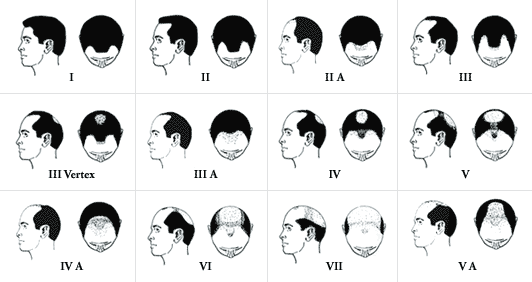
The biggest difference is that in male pattern baldness, there is a pattern to the hair loss, as seen in the Norwood classification chart (see below). Drug induced hair loss is usually generalized loss all over the head without a pattern.

Norwood chart


What Are These Red Marks on My Skin After My Hair Transplant?

These are scabs (crusts) from the recipient site grafts. They should have been washed off within the first day and the following day after the surgery.

Now, you must wait 12 days to remove them. You should leave shampoo on the area for 10 minutes then gently rub it with your fingertips. As the scabs loosen, they will come off slowly. Repeat this twice a day until they come off. Don’t pick them off.


2018-11-01 06:46:05What Are These Red Marks on My Skin After My Hair Transplant?

Does Finasteride Change a Woman’s Cycle?

Will taking finesteride alone cause changes in a woman’s cycle. I recently stopped birth control pills and continued the finesteride but have noticed some changes.

Thanks

Finasteride is NOT approved or recommended for women, especially those who are of childbearing age. Even more importantly, finasteride can potentially cause birth defects if you were to stop your birth control and become pregnant. You need to speak with your doctor and address your issues. I can’t imagine why any doctor would prescribe this medication to you at your age.

Since there have been no studies (that I know of) in women of child bearing age, I would not know how it would affect the woman’s cycle. There was a small study on finasteride in women experiencing postmenopausal hair loss, but this is clearly not the case for you.

Regenix

Dr.Rassman,
Have you heard about this hairloss product called Regenix? The actor Matthew McConaughey was on the David Letterman show and he said that he was losing his hair until he used Regenix, and now he has as good a hairline as when he was 18. What do you think?

Regenix has been around for years and they can make the hair thicker appearing (therefore fuller) with many of the things they use. The change that our actor shows suggests that either he has an unusually good result from Propecia or he had a good hair transplant surgeon in conjunction with what Regenix is doing. Two pictures of him on the web (see links below), show what appears to be a remarkable turn-around. I tend to be skeptical in believing everything I see or read about celebrities. If Matthew should read this blog, please come in for a private consultation. I will not post about the visit, I promise.

Here are links to two photos that display the dramatic change in Mr. McConaughey’s hairline: