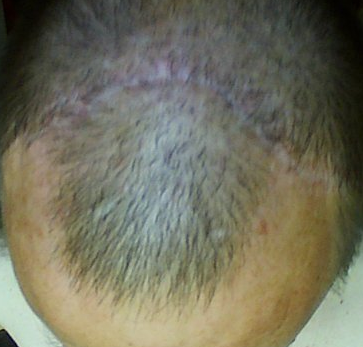
Dr. Gho’s Method for Hair Regeneration/Cloning

A reader send this posst to me:
Subject: New data on Dr Gho’s stem cell method

Message Body:
In 2012, you suggested the circumstances for making an exhaustive documentation on Dr. Gho’s ‘stem cell method’. The idea was to count the number or percentage of transplanted hairs that actually grew, along with investigating the donor.

Fine, but what then? Who validates it? Who can say whether such an effort is scientific or not. And what about credibility?

A sizeable study of such sort was made very recently, with photos. See it here:
https://www.baldtruthtalk.com/threads/26632-HASCI-analysis-w-photos-results

There is nothing here that looks lkike science to me. This is the problem I have had with Dr. Gho’s research.


Scabs After Hair Transplant (with Photos)

So I think I am finally ready to have a procedure, on average, how long does it take for the scabbing to go away? I do not want to go back to work before it does.

The last two patients done this past week had no scabs when they left surgery or on the days following surgery. This is what we expect in over 90% of patients and most can go out into the real world without a hat on. Some people keep the scabs longer. The length of time relates to the:

  1. size of the wound (the smaller the wound the shorter the scab period)
  2. washing skills
  3. patient variables

Two of these are in control of the doctor and the patient, while the third is not controlled be addressing #1 and #2 alone.

Update: Here are 2 photos of a patient — the photo on the left was taken under an hour after the surgery of 1500 grafts was complete; the photo on the right was taken 11 days after surgery. This is the typical post-operative appearance of our patient surgeries. Click to enlarge.


Dr Rassman’s Donor Area

What was the shape of your donor area and what is the appearance after the surgery and healing? Does it look a little funny with the hair being a lot thinner in the back?

Below is a photo of my donor area. The scar is barely 2mm high and never visible unless you are looking for it, very close, and very carefully. Much of the ‘white’ you see in glare from the room lighting. If you look at the left part of the wound, you will see what the scar looks like without the lighting distortion. Click the image to enlarge.

Oh… by the way, the hand holding my hair up in the back of my head is not mine. My fingernails are not quite as nice.


2006-08-04 15:43:38Dr Rassman’s Donor Area

Scalp Laxity and Hair Transplants

Wonderful blog you have up here, Dr. Rassman. I just wanted to know how scalp laxity affects a person who is willing to get a hair transplant. If i have a very loose scalp, how will it benefit me when i am getting a hair transplant procedure done?

Increased scalp laxity will allow the surgeon to harvest more hair in one surgery. It is like pinching a part of your skin. The more you can pinch your scalp (skin), the more hair comes with it.

DUPA and Body Hair Transplants?

Are people with DUPA candidates for a body hair transplant?

Body hair transplants (BHT) are not considered a standard method of hair transplantation and may not give you a normal amount of bulk. I realize some doctors perform BHT with success (depending on how you define it), but the visual appearance of the hair that grows is clearly not normal. Body hair simply does not grow like scalp hair and is not the same texture.

In my opinion, even if you are desperate for hair, I would be cautious with this approach and demand to see patients who have had it done before you agree to such a radical approach to your DUPA problem. Any surgery can make the situation worse, and that risk is real.


2010-12-14 12:22:03DUPA and Body Hair Transplants?

Scalp MicroPigmentation SMP Pigments and MRI

Hypothetical question: would it be safe for someone who had SMP done to undergo an MRI test? I thought most tattoo inks contain metal and thus, anyone with a tattoo could not get an MRI test. Just wondering if this also applies to SMP?

SMP is a form of tattoo. Tattoo pigment or SMP pigments may contain iron oxide. Iron oxide can theoretically interfere with MRI tests.

Dutasteride or Finasteride, what should I do?

I’m 20 years old and I’ve noticed the corners of my hair falling a bit, nothing serious but I plan to keep it that way. As soon as I noticed some unusual hair fall I did immense research and came upon these drugs and decided to pull the trigger.

Anyways, I’ve used Finasteride for about a month and got heavy sides upon the first week. I’ve been diagnosed with Major Depression my entire life and don’t take antidepressants but, damn. I had so many suicidal thoughts the first week. I had little to no boners, trouble sleeping and loss of appetite, I even had really bad nightmares. So, a month passes and I push through (probably a bad thing) but I run out of Finasteride because I bought one box of Propecia (thankfully). So, I go back to the pharmacy hoping to get more and they say they ran out. I don’t take any DHT blockers for another month or so, little to no hairloss. I go back and ask a for Propecia and they still don’t have it. I eye a box of AvoDart which is Dutasteride (0.5 mg) and buy it immediately. So far, I’m 15 days in with little to no sides, no improvements but I’m only half a month in. My main concern; is my body immune to Dutasteride? With Finasteride, I got a reaction albeit a negative one from my body but that somewhat confirmed that the drug is working. With Dut I’m half a month in with no sides and I don’t know if I should be concerned or not.

You should get a HAIRCHECK test ( https://baldingblog.com/haircheck-test-how-it-is-done-video/ ) and then once you establish metrics on your hair, if you are balding and it is proved by such measurements, then finasteride is the drug to use not the non-approved Dutaasteride.


2020-07-21 13:36:05Dutasteride or Finasteride, what should I do?

Scalp scar from forehead lift

This man had a forehead lift and was left with a scar that runs ear-to-ear.

His scar can be concealed with Scalp MicroPigmentation. A hair transplant would work well to address the frontal recession of his hairline.


forehead lift scar

Eating Chocolate Reduces Heart Attacks and Stroke Risks by 25%

Eating chocolate may stave off cardiovascular disease
APAJun 18, 2015648 views

British study finds that regular consumption of chocolate could reduce risk of heart disease and stroke….
Scientists at the University of Aberdeen analysed data of 21,000 participants in the EPIC Norfolk study as well as literature covering chocolate and heart disease. Average chocolate consumption came to seven grams per day, consumption ranging from no chocolate at all (around 20 per cent) to 100 grams per day. 14 per cent of the participants experienced heart disease or stroke during the 12 years the study ran…. Those with the highest daily consumption still showed a 23 per cent reduced risk of stroke. These results held true not only for dark chocolate but also for milk chocolate.

That will be good news for many of our readers who are lovers of chocolate.

Scarless Healing from New Drug Called Juvista?

Hello Again Mr.& Dr.Rassman

We’re all in here thanking you for your salvation blog as am now going thru it on a daily basis.

I’ve this Revolutionary News for you which might be the long awaited Deliverence to many of us who have had Traditional Strip HT & left with a linear thin scar(hopefully) in the back making us feel so confined. Have you ever heard of a new innovative drug being developed by ”Renovo plc.” so called ”Juvista”, as mentioned it’s now in the PhaseII clinical trial & might see the light in the few coming years. It’s basically used during the surgery by being injected to the wound edges while suturing(i think) which will later lead to an almost scareless healing (GOD I HOPE THIS GONNA HAPPEN), please comment.

Juvista consists of recombinant TGFβ3. TGFβ3 is present at high levels in developing embryonic skin and in embryonic wounds that heal with no scar, but by contrast, is present at low levels in adult wounds that scar. Since the FDA has not approved of this drug yet and it still is in clinical trials, I will not comment much until further studies have been published. To get this drug to be approved by the FDA may take many years. In the mean time, please take a look at Techniques to Minimize Donor Area Scarring, which shows the modern techniques employed today (deep fascia closure and trichophytic incisions).

You can read more about Juvista here.


2006-04-17 15:02:25Scarless Healing from New Drug Called Juvista?