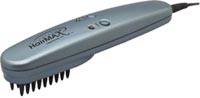
 I reached out to a reader/writer/commenter that has previously sent in some great insights about FDA trials to get his thoughts on the latest Lexington HairMax LaserComb study that was released (read the abstract of the study here). He wrote back with a great overview, and although lengthy, it’s a worthy read for those interested.
Here’s his reply —
—————-
Dr Rassman
I am a physician-scientist (MD-PhD) with long-standing experience in the clinical development of drugs, trial designs, and interaction with drug regulatory agencies, and am also an avid reader of baldingblog. As such, I have been critical of Lexington in the past for failure to release clinical trial data in a peer-reviewed journal and in a timely fashion. I have also mentioned that their responses on your blog to questions by your readers (and information posted on their own web site) appear more likely written by marketers than scientists.
I am presently reviewing for your readers the recently published article that summarizes the clinical study supporting the safety and efficacy of the HairMax LaserComb (Leavitt M, Charles G, Heyman E. Clinical Drug Investigation. 29(5):283-292, 2009).
In brief, the study enrolled 123 adult male volunteers at 4 participating sites in the United States. These subjects had a diagnosis of current androgenic balding, were between Norwood-Hamilton 2a and V classification, did not have any systemic diseases that could affect hair growth, and were not on any alopecia-related medicine for at least 6 months before study entry (or transplantation at any time). Each subject was randomized in a 2: 1 ratio into one of 2 treatment groups: LaserComb (72 subjects) or a sham device (40 subjects), the latter which emitted incandescent light only (a form of placebo group). The primary efficacy measure included change from baseline to week 26 in hairs identified via digital image and computer-aided counts over an approximately 3 cm vertex area. These assessments were done in a blinded fashion (by an individual who did not know the treatment assignment of the patient). Safety endpoints consisted of standard safety indices evaluated at all visits. Subjects were asked to use their device 3 times weekly on non-concurrent days for 26 weeks. Study visits beyond screening and baseline were at 8 (safety evaluation only), 16 (safety evaluation only), and 26 months.
The mean age of subjects was 47.9 years. After 26 weeks, the average hair count was 120.7 /cm2 for the LaserComb group and 122.9/cm2 for the sham group. The average change from baseline (primary endpoint) was 17.3 /cm2 for the LaserComb group and -8.9 /cm2 for the sham group; these differences of a placebo-substracted change of about 26 hairs/cm2 were statistically significant. Subjects in the LaserComb group reported more growth at Week 26 (compared with baseline) than those in the sham device group. In contrast, there were no differences in investigator assessment of hair growth between the 2 groups. The LaserComb was generally well tolerated and there were no significant adverse events.
Impression:
The basic study design was well done. It contained proper entry criteria for subjects, blinded randomization of patients to treatment groups, reasonable measures of efficacy, and blinded assessment of efficacy. Hair counts/cm2 from baseline to week 26 showed a mean (placebo-subtracted) statistically significant improvement in the vertex of around 26 hairs for the LaserComb group. How clinically meaningful these changes are can best be answered by an experienced hair specialist; of note, 64% of patients receiving LaserComb and 46% of those receiving placebo (sham treatment) rated themselves as having at least minimal growth from baseline to Week 26.
Given that placebo effects exist in these types of studies, having patients blinded to their treatment assignment is necessary. Yet, patients were able to take their device home and I wonder if there are ways to determine whether the device emits laser vs. incandescent light bulb. A minor point but I would have designed the trial to have patients receive their treatment as an outpatient at the site center. The knowledge of treatment assignment by the subject would not have been expected to influence the blinded reviewer of the hairs related to the primary endpoint, but could influence self-rating and self-satisfaction, and be one explanation for the discrepancy between subject and investigators assessment of hair growth.
My major study concern is the statistical treatment of patients who withdrew or were withdrawn from the study. The efficacy table has a footnote that properly states that subjects who terminate the study prematurely will have their last study visit value carried forward (i.e. if the subject had a change of -8 hairs at Week 8 when they terminated, this becomes the Week 26 value). Yet, the text (page 288) notes that “ten subjects in the HairMax LaserComb group who terminated prematurely were not included in the primary analysis of efficacy, and one…subject in the sham device group who terminated prematurely was not included.†As a reviewer, I would not recommend publication of the paper unless more information is provided about this latter issue. With only 72 patients in the LaserComb group, dismissal of 10 could have dramatic effects on outcome if those patients withdrew because of ineffectiveness or other reasons. Such withdrawal could dramatically affect the study. If such patients were “lost to follow-upâ€, proper analysis would still be to assign a last value score, even if this last value was at baseline. It is difficult to understand how some additional patients described on page 288 (lost-to-follow-up, noncompliant, withdrew for reasons not stated) were also handled statistically, especially in light of the statement in the statistical methods section that “the last value was carried forward for subjects who terminated prematurely.†The only apparently logical way a subject would not “be included in the efficacy analysis†is if they had no baseline assessment; otherwise, such subjects would have had their baseline value “carried forward†(i.e. no change).

 Dutasteride (marketed as Avodart) is being used by many men, prescribed by some doctors to treat hair loss despite the absence of FDA clearance. In the phase 3 dutasteride study done in Korea, there was no mention of sperm or sterility. This is a concern to me, and I do not believe that this drug will be approved for treating hair loss until issues like that are studied further. That’s my opinion, and I’m sure I’ll get plenty of emails from people telling me how I’m wrong or I’m narrow minded about this medication. Ultimately, going to market is in the hands of the drug company that manufactures it. I am reluctant to prescribe dutasteride, because without clinical clearance from the FDA, I do not know the risk of sterility for those taking the drug for their MPB treatment.