Norwood Class 3A Patient — 10 Days After Surgery (with Photos)

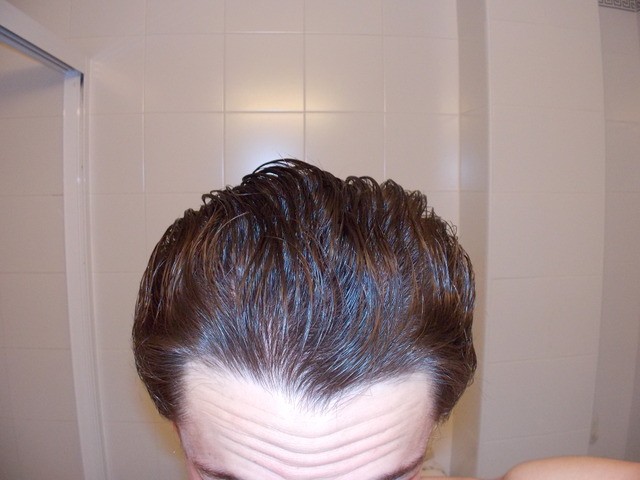
This Norwood Class 3A patient came in for a check-up 10 days after his hair transplant procedure of 2,000 grafts. The scabs are gone and the recipient area is very clean with no visible redness. I wanted to show this patient because I’m constantly asked, “What will I look like after surgery?” — and with proper washing techniques, this is a typical result. Please click the photos to enlarge.

10 days after hair transplant surgery:


Before:


Not Hair Loss News – Exercise Slows Dementia and Alzheimer’s Disease

At the Alzheimer’s Association International Conference (AAIC) 2014, it was reported that use of computer activities and exercise reduces cognitive decline associated with Dmentia and Alzheimer’s Disease. At the Mayo Clinic, 1830 people at risk for Cognitive Decline were were studied in different groups, with a control group and a group that participated in a variety of exercise routines from mild to advanced. The patients were studied for 2.3 years.

“Any level of physical activity in midlife may help keep cognitive decline and dementia in late life at bay, new research suggests.”

The range of exercises include: “mild exercise was defined as leisurely walking. Moderate exercise included engaging in activities such as brisk walking, cycling, and swimming, and vigorous exercise included participating in activities such as mountain biking and downhill skiing.”

There is definitely protective effects from exercise, even as simple as taking your dog on a brisk walk. “The investigators found that only moderate midlife physical exercise was significantly associated with a decreased risk for incident dementia”.

I summarize these important reports, because we all have parents and family that need to avoid the inactive lifestyle and we have a responsibility to them to see that they stay healthy and mentally active so we can enjoy their senior years with them.


2014-07-24 08:11:31Not Hair Loss News – Exercise Slows Dementia and Alzheimer’s Disease

Can You Take Finasteride Propecia for Diffuse Patterned Alopecia (DPA)?

1. Have DPA young patients (Early 20´s) more oportunities with finasteride in comparasion with a MBP who have a normal patron (NW 6).
2. Have you ever seen a early 20´s with DPA who have a good response to finasteride for a long time (10 years)?

I am a 21 years old and I have taken finasteride since I was 18 years.. My dermatologist prescribed it to me.

Here you have photos of mine when I start the treatment (2012) and now
(2014).

You have my permission to publicly use it.
dpa

Diffuse Pattern Alopecia (DPA) is basically the same as Male Pattern Balding otherwise known as Androgenic Alopecia. DPA, as the term implies, shows up as diffuse hair loss that occur in a “pattern” such as you see in male pattern balding but the permanent zone on the back and side of your head not impacted.

Finasteride (Propecia) is used for the treatment of this condition (DPA, AGA, MPB – they are all the same).

There is another condition called Diffuse Unpatterned Alopecia (DUPA), which may be genetic, but does not respond to the drug finasteride (Propecia). DUPA is uncommon; however, it is critical to have your doctor make this diagnosis before being considered a candidate for hair transplant or medication. These DUPA male patients often get a failure of the transplant, even if on the drug finasteride.

I cannot make a diagnosis with your photo and this blog is not a place for making diagnosis. I also cannot predict what will happen in 10 years. I am not a fortune teller. I have seen men in their early 20’s start finasteride for male pattern balding and has kept most of their hair. I have also seen them lose their hair rapidly despite being on finasteride as their genetic predisposition overtook the drugs ability to slow things down. It doesn’t mean that the drug didn’t work.

Not Hair Loss News – Tylenol Poisoning

Snippet from the article:

During the last decade, more than 1,500 Americans died after accidentally taking too much of a drug renowned for its safety: acetaminophen, one of the nation’s most popular pain relievers. Acetaminophen – the active ingredient in Tylenol – is considered safe when taken at recommended doses. Tens of millions of people use it weekly with no ill effect. But in larger amounts, especially in combination with alcohol, the drug can damage or even destroy the liver.

Davy Baumle, a slender 12-year-old who loved to ride his dirt bike through the woods of southern Illinois, died from acetaminophen poisoning. So did tiny five-month-old Brianna Hutto. So did Marcus Trunk, a strapping 23-year-old construction worker from Philadelphia.

The toll does not have to be so high.

The U.S. Food and Drug Administration has long been aware of studies showing the risks of acetaminophen – in particular, that the margin between the amount that helps and the amount that can cause serious harm is smaller than for other pain relievers. So, too, has McNeil Consumer Healthcare, the unit of Johnson & Johnson that has built Tylenol into a billion-dollar brand and the leader in acetaminophen sales.

Read the rest — Use Only as Directed

This is a really informative and lengthy article you should read if you have some spare time. In a nutshell, the article says — the FDA isn’t perfect, around 150 people die every year from Tylenol misuse, and restrictions exist in many countries that aim to prevent overdose.

Can’t Doctors Remove Old Hair Plugs One By One?

Hi Doctor. Thank you for having this great site!!

About 25years ago I had a HT using the hobby drill method. Now I have 3 rows of white plugs. I am like most of the others on this site and want to shave my head. I was wondering if you have ever considered a procedure to re-drill the plugs and suture them closed similar to the way you show it being done to patients for the top of their heads. I have spoken to other doctors and they want to cut the entire area out and suture it closed. They also state that it would take two or three procedures. Why can’t someone just re-drill and suture shut the area?

We have done what you described — taking each of the old style hair plugs out one-by-one and suturing each wound closed. We have also cut out the entire row and sutured it all closed. And we’ve even done a combination of both. Here’s a step-by-step story of the process one man took to repair his pluggy hairline. It took multiple surgeries to complete his repair, with the first procedure being a removal of a row of plugs, and the second procedure being individual removal of some of the remaining plugs.

My point is, everybody is different and every treatment plan for each individual is unique. In the end, find the doctor that you trust and ask to see some before after results of these repair procedures. You may even ask to speak to their former patients or meet them. Good luck.

Nourkrin, Hair Loss and Hair Regrowth?

Iam a young 50 year old female apart from my hair, which really depresses me. For the last 4 months I have been using Follicle Nutrient Supplement, but it doesn’t appear to be making any difference. I have been to the doctor who suggested Regaine, but I have read about Nourkin and wondered what you thought on this. I will try anything.

I have written much about naturopathic medications that have no science behind them. Their claims are:

  1. Natural protein and mineral food supplement.
  2. Clinically proven to reduce thinning hair (proven by whom and where is the proof?)
  3. Improves the strength of existing hair and promotes the growth of new hair. (Can the hair lift weights that prove it is stronger? Where did the company prove that there is growth of new hair and on who?)

The Nourkrin site claims, “The key ingredient in Nourkrin is a protein compound of marine extracts. This is blended with an organic, soluble silica and vitamin C, making a unique hair recovery programme.

Ugh.

Enough on this product. There are so many of these types of products that just have no scientific proof to back up their statements, and the makers prey on those like you that will try anything. I hate to be so bold, but you need to be smarter about this and stop chasing these products that may not work. Get your hair evaluated by a medical doctor. Women with hair loss often have a medical condition causing it.


2007-10-17 10:33:48Nourkrin, Hair Loss and Hair Regrowth?

Off Topic – Heart Disease Contributors

Dr. Rassman,

Off topic, but as a former doctor working in the heart field and as a doctor who worked in the cardiac field what do you think are the biggest contributors to heart disease? Is there any one variable (e.g., high cholesterol, smoking, diabetes) that is most dangerous?

This is not a simple answer for a blog post. I will give a cursory answer to it nonetheless in the hope that what I have to say will help someone and possibly could even save a life. Apologies to those that come here for hair related posts, but this isn’t one of them.

Putting aside congenital heart disease, the things that are most dangerous for developing heart and vascular disease are the lifestyles and diets we have. There’s no one factor that I would be willing to pinpoint. What I tell people who ask heart related questions is that we are dealt a set of genetic cards… and if we win, it reflects the way we play those cards. If we keep ourselves healthy (good diet, exercise, no poisons in our system like cigarette smoking or excessive alcohol) we will live longer.

Some people are genetically programmed for high cholesterol and high body fats, so we must take control of those bad cards by going that extra mile. For example, the vegetarian who eats fruits and vegetables daily will have a lower cholesterol and lower body fat than the meat eater who sucks in daily milkshakes instead of water and consumes excessive calories with Big Macs a few times each week. Even the insulin dependent diabetic can improve his card deck with a good exercise program and controlled diet under good medical supervision. I’m not blowing any minds by saying this, I realize, but perhaps there’s one person out there that it’ll click with.

Just remember, life is fragile and you never realize it until you are given the bad news (like a cancer that you ignored when you notice rectal bleeding over the past few years or develop chest pain with your first heart attack). Those of you who think that your body is impenetrable, waking up with chest pain may indicate that you could be too late.

Change of Weather Means a Change of Hair Texture?

Hello doctor,

My question is regarding weather and hairloss. I know in canada it gets really cold sometimes even -50, and i believe it effects my hair. I find my hair thinner and more brittle during winter and it becomes more straighter then usual (i have wavy air by the way and i would be a good candidate for a HT because i know i have frontal thinning but because of my wavy hair it covers the balding up) but during the summer it feels thicker and more brighter and wavier. I was just wondering if there are any studies showing weather and hair loss and texture or if its just a myth.

If it is just a myth then why am i experiencing all these hair characteristics during winter. I personally believe hair thins out during winter and becomes thicker during summer.

Thanks for your time. All the best.

Cold weatherThere are no studies that I am aware of that look at a relationship between hair texture and weather. I think it is more of something we take as common sense that when the weather is cold and dry, our hairs and skin may be affected.

If your hair is dry in the winter months, then try using moisturizing shampoo. If your skin is dry and lips are chapped in the winter months (like many people) use moisturizing lotions and lip balm (Chapstick, for example). I don’t know if there is study that looks at dry skin and chapped lips in the winter/cold months, but I don’t think you need a study to prove that point either.

Scientifically, in cold months, the humidity in the air is much lower than warm summer months. That contributes to dry skin, chapped lips, and texture changes of your hair. There have been reports over the years from readers about thinning hair at different seasons, but I’ve got no medical reason for this.