L’Oreal Studies 14ft 9in Length of Hair

A woman with one of the most extraordinary heads of hair in the world has agreed to donate some of her locks for intensive studies by hair researchers.

Hair typically grows to a maximum length of 5ft. But Dae Yu Quin, 41, a Chinese woman from Shanghai, has hair that trails behind her at 14ft 9in.

The article was published last November, but it just came to my attention and may be of interest to the blog readers…

Am I Balding? I Am 17 Years Old. Should I Take Finasteride?

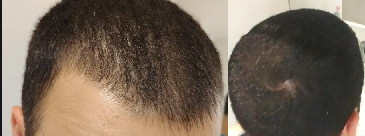
Your photos show a maturing hairline, not balding. If you want to find out if you have hair loss behind the hairline, then get a HAIR CHECK test (https://baldingblog.com/haircheck-test-how-it-is-done-and-what-its-value/), and then you will know for sure. The age of 17 is not too young to get finasteride if the HAIR CHECK test showed hair loss behind the hairline.


2020-05-18 11:42:45Am I Balding? I Am 17 Years Old. Should I Take Finasteride?

Losing Hair is Like ‘Dying a Slow Death’!

I have been gradually losing hair for the past 4 years. I don’t think I lose more than the “normal” 100 hairs per day, but the consistent shedding has definitely led to a receding hairline and a significant difference in density on top versus the sides and back. As I continue to shed on a daily basis, I worry and stress about getting to a point where my hair loss becomes very noticeable. It’s like dying a slow and painful death.

Is there any way to tell whether my hair loss will stop/plateau, or is it a foregone conclusion that I will eventually lose it all?

Hair deathYou aren’t the first person to use the analogy comparing hair loss to death. For many men, their hair is part of their identity.
As for being able to tell whether your hair loss will stop, well, this is what I’ve been referring to as miniaturization mapping. You use a microscope to examine your scalp… then do it again in 6-12 months to see how the loss is progressing. A physician should be able to tell from there where your hair loss will end. Taking medication like Propecia could likely help halt your loss at this point (if you are male), but this needs to be prescribed by a physician and with all of this information you should be able to develop a Master Plan with your doctor for your future hair loss possibilities.

Am I really balding?

Did my dermatologist prescribe Finasteride too liberally ? Context : 27 y/o. Father and his 4 brothers have full heads of hair. Mother’s side : 3 out of 4 bald uncles. They were bald in their early twenties. I went to the derm two weeks ago. He didn’t look closely at me or do a hair count. He was like “yep, looks like MPB alright” and gave me a prescription for Fin (1mg). First pic is Aug 2017. Rest of the pics are from the last 2-3 months.

I would have performed a HAIRCHECK and a miniaturization study before committing you to a lifetime of finasteride. Too many men go on the drug not knowing for sure if they are balding. I like to make the diagnosis with instruments first, then use these instruments to establish a ‘metric’ which I can follow yearly to see the effectiveness of the finasteride yearly. That is the value I believe doctors should add to this treatment process.

question balding

I Lost More Hair Than I Got from My Hair Transplant a Year Ago (Photo)

What can I do about this? I am 21 and thought that the hair transplant would solve my problem.

Your doctor should have never done a hair transplant on you, a 21-year-old male. Your balding is progressive, and as you get older, it will get worse. You developed shock loss over the past year, accelerating the hair loss that was going on at the time of the hair transplants. I will not do a hair transplant on a patient under 25 unless circumstances are highly unusual. Your doctor is guilty of malpractice and greed because he put your money in front of your welfare.

Aminogen and Hair Loss?

Can the enzyme aminogen cause hair loss?

Thank you!!!!!!!!

There is no information on any connection. It appears that Aminogen is made from whey and it a nutritional supplement.


2009-04-16 16:07:03Aminogen and Hair Loss?

Low Feritin Levels

I’ve had issues with hair loss cause my ferritin was very low. I know that you ferritin levels need to be around 70 for regrowth. I’ve been taking iron supplement and now my levels are currently at 66 and my question is how long does it take for for your hair to regrow again after raising your ferritin levels and what can I do to make sure my ferritin

It might take a year to see the value of correction

Make sure that your surgery is actually being done by a licensed MD with an active medical license (from Reddit)

If the woman actually doing the FUE in this video is not a DOCTOR, then the surgeon and his organization has broken the law in all States in the US and in most European and South American countries. I am not saying that this is the case here, but I am surprised to see the plastic surgeon who is discussing the surgery, was not the person performing the FUE (time 2:54-4:00 minutes). Sometimes doctors who don’t know how to do modern hair transplant surgery bring in teams of technicians to do the actual surgery for them (the FUE part of the surgery and even creating the recipient sites where the grafts are placed). This would not be proper, safe or legal.
As a side issue, I noted that the doctor is not using a mask yet talking to the audience directly over the patient. When a person speaks, they OFTEN (almost always) propel saliva. In this case, the ‘plastic surgeon’ had to be propelling his saliva on the patient exposing the patient to potential infections (he should have warn a surgical mask and known better).
If you suspect that the surgery you are having done is not being performed by the doctor who you believed was supposed to be doing the surgery, then it might be appropriate to ask the State Board of Medical Examiners in your state of country to check the situation out. In the surgery in this video, I would expect that the women who performed the FUE to be a licensed MD possibly working with the doctor. If that was NOT the case then she would be practicing surgery without a license, see the statement from the State of California in this issue here: https://baldingblog.com/decision-from-the-california-medical-board-only-doctors-can-perform-a-hair-transplant/ ).
I would suggest that you watch this very informative very short video on this subject here: https://baldingblog.com/warning-watch-his-very-short-video-if-you-are-thinking-about-getting-a-hair-transplant/ The warning is simple: Make sure that you have a real, licensed doctor trained in the field of hair transplantation PERFORMING your surgery. Many doctors do this just for the money and leave the operating room once the patient is sedated. The patient’s welfare is then in the hands of a team of technicians overseeing the surgery who are not trained for emergencies or for things that go wrong. I have reported one death in California from a hair transplant ( https://baldingblog.com/hair-transplants-by-john-lord/) which is a warning that without a competent doctor in the operating room you are risking your life if anything goes wrong. The man who died (that I referred to) was young with 2 small children.

3rd Treatment of Neograft hair transplant If you are interested in seeing the results from tressless


2019-11-05 13:36:01Make sure that your surgery is actually being done by a licensed MD with an active medical license (from Reddit)

An Answer to a Patient’s Questions

Dear Dr. Rassman,
Thanks for taking the time the other day to visit with me and also for the very informative follow-up letter and your recommended plan for my hair transplantation. Over the last two months I have been seriously looking into the hair restoration field and have read three credible books and studied every web site of every accredited hair doctor. I also consulted with doctors that I felt were very respected in hair restoration. My conclusion is that I need to stay on Propecia consistently to preserve the hair I have right now and use the follicular unit transplantation (FUT) technique exclusively, to replace the lost hair.

But I am confused by the number of grafts recommended. So far, I have heard various numbers ranging from 1,000 to 3,000. After visiting with you and hearing your recommendation of 2500 grafts, I wrote back to a very reputable doctor who had recommended a session of 1,500 grafts and told him that another clinic had recommended 2,500 grafts. He then told me that 1) each person has very limited donor supply and one must plan a session based on future hair loss, and 2) the survival rate of transplanted grafts deteriorates as the number of them placed close to each other is increased, as is done in megasessions. He told me that other clinics have no guarantee or refund policy if the hair follicles don’t grow back, so they just transplant as many as possible, even if not safe for the patient.

So my questions are:

  1. What does ‘limited donor supply’ mean in my case? You saw my hair, how many good donor grafts in total do you think I have for now and the future? What would it be if Propecia did not work and I continued to lose hair?
  2. Have you seen any side effects with larger sessions such as more noticeable scar in the donor area, loss of transplanted grafts, excessive swelling of the forehead or longer recovery periods?
  3. Do you or can you guarantee a certain survival rate for the transplanted grafts?

I appreciate the time you have taken to help me with my hair loss problem. I guess I can’t help it, I am a natural engineer, and this being the most important decision I probably ever make I have just been researching the hell out of it! I am confident, however, that I am talking to the best source there is out there.

Part of what is important about being a doctor is the concept of mutual respect. The person who wrote the email to me on this blog, is analytical and clearly fully aware of the subject material. Good communication produces respect so a doctor should spend an appropriate amount of time and focused attention to address your concerns at the interview and in followup to that interview. I would welcome a call from you to elaborate on this blog answer.

  1. Some people do not have the donor supply and when that will be an issue, I tell them. The amount of donor hair is a calculation of density in the donor area plus laxity of the skin. Finally, the size of the bald area and the final worst case pattern must be taken into account. As measurement is critical to this process, one must make direct measurements of the density in the donor area. I was the first to publish on the measurement of the donor supply and the instrument I invented to do this is now used by every competent doctor in this industry. There are no other instruments that are used for hair measurements that do not fall under my U.S. Patent. The average patient has about 6,000-12,000 grafts to move but the wide spread reflects the many variables discussed above.
  2. If you come to our free open house events, you will meet people who had thousands of grafts and see for yourself what happens. The key to understand the safety of large sessions is to meet directly with many people who had them. I would not be doing large sessions if they were not as good or better than multiple smaller sessions. With good decision making by the doctor, large sessions should not scar more than multiple smaller sessions but there may be a cost for aggressive decisions in large session transplantation if the doctor is not experienced in such procedures.
  3. This type of complaint usually reflects the act of denial which most people exercise when they forget what they looked like ‘before’ the started the hair restoration process. Sometimes, people continue to loose hair and think that the new hair loss reflects a transplant failure when it really reflects the unpleasant idea that balding continues. To address the growth of the transplanted hair, wWe guarantee our work. Anything that does not grow, we will replace at no charge. This almost never happens, so I rarely discuss it unless asked.