https://www.ncbi.nlm.nih.gov/pmc/articles/PMC5028441/
2021-06-14 02:43:192021-01-12 09:44:20Minoxidil reported to cause visual problems
https://www.ncbi.nlm.nih.gov/pmc/articles/PMC5028441/
2021-06-14 02:43:192021-01-12 09:44:20Minoxidil reported to cause visual problems
There is an herb called black cohosh in my DHT blocker blend. I researched it and it seems to increase blood flow in the pelvic region, but no one has pinpointed exactly the mechanism of action is or what the hell it really does, or if there are side effects. I saw a study that it might block DHT. My question is this, if we’re going the natural route for hair loss, would we be better served eating foods that are considered staples in our diets (fish, rice, potato, chickpeas, vegetables, fruits, soy, and so forth) or consuming supplementary herbs? Would these herbs REALLY make a difference?
The best natural treatment for hair loss is take what you want (dietary staples or herbs) and then, assuming you have genetic hair loss, watch as the hair loss continues. In other words, there are no natural cures for hair loss, but there are a lot of places that will try to sell them to you anyway. No amount of vitamins or herbs will bring your hair back.
2009-03-31 10:32:162009-03-26 14:39:31Better for Treating Hair Loss — Eating Dietary Staples or Herbal Supplements?
hi dr rassman
i just had a question regarding asymetrical hairlines. if as a young child 12 or so you had a natural non symmetrical hairline and as time went on and your hairline matured, would it be possible to misdiagnose the patient as having androgenetic alopecia due to the unsymmetrical patterns produced by this condition?thank you for your time
Early balding should show signs of miniaturization if your hair loss is genetic. Either see a doctor or take charge of your diagnosis by mapping your scalp. The choice is yours.
People with asymmetrical hairlines will develop maturing hairlines that may even out the symmetry (or they may not). Balding occurs in those with the genetic propensity for it, whether the hairline is symmetrical or asymmetrical.
As hair in the maturing hairline undergoes apoptosis (cell death, possibly because the number of hair cycles in the juvenile hairline may be limited and reached), it could just fall out without going through miniaturization. It could be an incremental fall-out, starting close to the leading edge of the hairline and then working its way back. I don’t get the opportunity to study the young man who matures his hairline and then keeps everything else without signs of balding, other than in my nephew as I watched his maturing hairline appear without miniaturization. One case study does not tell us the answers, so I look at these comments as academic.
2009-04-28 15:33:322009-04-28 14:55:41Misdiagnosing MPB Due to Unsymmetrical Hairline Maturing?
These are comments taken from a group of doctors who are concerned about patients who are sucked into ‘Black Market’ clinics or Black Market treatment.
“Black Market Hair Transplant” is companies making deceiving marketing such that the customer is offered a service/product that does not offer the benefits that are claimed.
Examples are: technicians doing surgery when it is marketed as the doctor doing it, artificial hair fibres that may have devastating complications which the patient is not made aware of, an FUE robot that claims to not have the disadvantage of human error while doing a much worse job than the average surgeon, LLT that claims to treat male pattern hair loss, PRP that claims to treat male pattern hair loss, PRP that claims to improve surgical results, the manual FUE punch marketed as less damaging to the tissue, FUE marketed as a scarless procedure, an FUE punch marketed as offering zero transections, an FUE machine marketed as the best option while the patient not being aware that the technicians are going to do the job etc.
Since regulations and even ethical standards vary significantly across the globe, it is okay to market anything that is legal within its region, provided that the customer knows what they are getting. If the patient knows for the price he is paying, he can only have technicians doing the surgery and this is what he wants then it is fine. On the other hand, if the patient is told the doctor will do the procedure and the patient is sedated during the surgery so he doesn’t see that the work is done by techs, then this is not okay.
If the patient is told that PRP is not an alternative to the traditional treatment of androgenic alopecia and that there may be some temporary benefits, then it is okay. However, if he is told that he doesn’t need to take medication and he can get his problem treated in a natural way, then this is not okay.
If the clinic says that the doctor prefers the manual punch then this is okay. On the contrary, if they tell the patient that they use a manual punch to prevent the damage that occurs with the micromotor, then this is not okay.
2019-01-29 05:01:232019-02-20 06:48:30Black Market Clinics, Doctors, and Procedures
 I want to respond to some questions and comments I’ve received about our previous post about the ACell study we’re starting. The presentation at the ISHRS meeting was clear that the use of the ACell matrix with plucked hairs can stimulate growth. The process of doing this may not be as simple as it appears to be for many physicians.
First of all, the plucked hairs are usually a single hair with minimal tissue to protect it from harm when they are handled and/or exposed to the air during the transfer process. The surgeons who offer this have to be skilled to manage one-hair grafts without killing them. The application of the ACell Matrix has may nuances associated with it, so the doctors who “experiment” with this technique must build a process that works over and over again. It is also important to understand that the newly formed follicles will contain tissue from the donor area (the plucked hair) and tissue from the recipient area (the part of the follicle induced by the hair/ACell/tissue interaction). Since some of the follicle is derived the recipient area, we can’t be sure that it will cycle as a normal hair or even be totally permanent.
Over the years we have developed many processes that have led to many of today’s standards in hair transplantation, such as FUE, FUT, megasessions, and dense packing. We have consistently published our work in peer reviewed medical journals and have brought science to the world of clinical hair transplantation, advancing the standard of care over and over again. Our team (Dr. Jae Pak and myself in LA, Dr. Robert Bernstein and Dr. Eric Schweiger in NY) have put our heads together to build a process that, we believe, will afford our patients the best opportunity to benefit from the hair multiplication process and help the industry command the process better and with more certainty.
We are not of the belief that what we are doing with regard to hair multiplication is for everyone, or that everyone should rush into the process before the results of our work (and that of others) are completed. For select patients who are interested in participating in clinical trials or being treated outside the studies at this time, we would be happy to evaluate you to discuss this during a consultation. Remember, this process may not be for everyone at this time.
My brother and I have a bet; he says that the antioxidant properties of Blueberries have been shown to slow hair loss, I say he’s crazy. Who’s right?
Could a Blueberry topical be on the way?
This is probably more of a business question, than a medical one. Would people buy a blueberry topical for hair loss? I suspect with good marketing, a well done informercial, and a bit of a larcenous tendency from the promoter, it might sell and work as well as many of the potions and lotions out there on the market today.
There are many berries and other foods that have antioxidant properties, but there is no proof to my knowledge that these antioxidant properties will help solve the hair loss problem. In fact, considering that hair loss is an affliction of young men (young men are impacted proportionally worse than older men), free radicals which build up in our body as we grow older, should be less of a problem for the young man. Free radicals are atoms or groups of atoms with an odd (unpaired) number of electrons and can be formed when oxygen interacts with certain molecules. Once formed, these highly reactive radicals can start a chain reaction, like dominoes. It is believed that their chief danger comes from the damage they can do when they react with important cellular components such as DNA, or the cell membrane. Cells may function poorly or die if this occurs. To prevent free radical damage the body has an internal defense system of antioxidants that clean up our waste as it builds.
Antioxidants are molecules which are believed to ‘safely’ interact with free radicals and terminate the chain reaction before vital molecules and/of cells are damaged. Although there are several enzyme systems within the body that scavenge free radicals, the principle micronutrient (vitamin) antioxidants are vitamin E, beta-carotene, and vitamin C. Additionally, selenium, a trace metal that is required for proper function of one of the body’s antioxidant enzyme systems, is sometimes included in this category. The body cannot manufacture these micronutrients so they must be supplied in the diet and good diets usually solve this problem.
Antioxidants are intimately involved in the prevention of cellular damage — the common pathway for cancer, aging, and a variety of diseases. The scientific community has begun to unveil some of the mysteries surrounding this topic, and the media has begun whetting our thirst for knowledge. Athletes have a keen interest because of health concerns and the prospect of enhanced performance and/or recovery from exercise. The 18 year old who loses his hair is not aging in the sense we think when we talk about a 90 year old. These young men are the least impacted by the toxic effect of free radicals.
i would like information on moustache restoration as mine is thin
The use of hair transplants for the moustache is relatively easy to do technically, but may be more difficult from a planning point of view. The hair usually would come from the back of the head and you therefore must be reasonably sure that the character of your hair from the back of the head will look like your existing moustache. If you have a coarse, brown haired moustache and fine, blonde hair in the back of your head, a transplant using scalp hair might not be the right decision. To get around this, one could use pubic hair which is more coarse than a fine character scalp hair transplant. Get an expert to find out what is reasonable.
2006-05-17 15:33:132006-05-17 15:50:13Moustache Restoration?
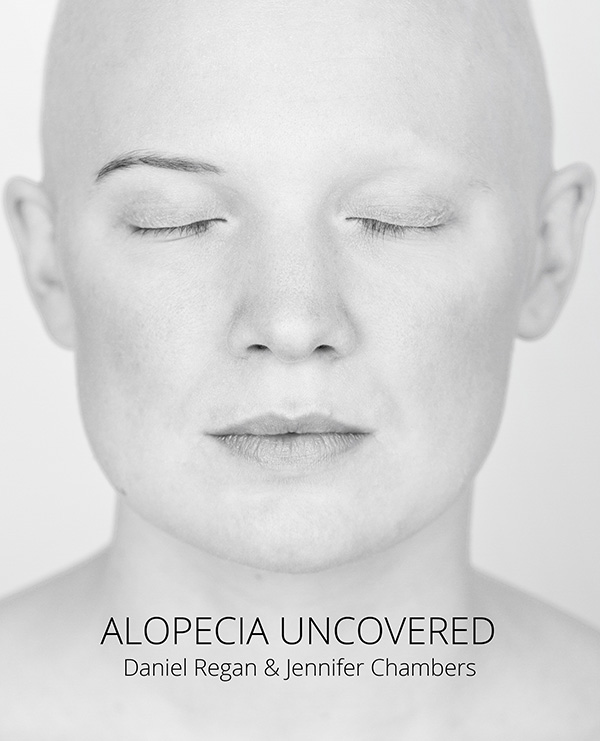
The following was sent to us from the author of the book.
Alopecia Uncovered is a fine art photography book that explores the therapeutic potential of the portrait through a series of arresting black and white images, essays and journeys of those affected by the condition.
Daniel Regan’s Alopecia Project, in which he invited sufferers to be photographed as and how they wished to be represented, was shot over a three year period. For some of his subjects it involved baring all and showing their natural selves, whilst others wished to retain their eyelashes or eyebrows. However the true message of this project is that it’s OK being you, but most importantly being the you that you choose.
Now combined with analytical texts by art psychotherapist Jennifer Chambers, Alopecia Uncovered encapsulates the emotional difficulties of sufferers by allowing subjects to reclaim their sense of self by confronting these images of themselves. This book investigates issues of self-esteem, fractured identities and perceptions of illness, illustrated through the use of empowering yet vulnerable photography that challenges the social constructs of beauty.
2014-12-15 07:13:432014-12-11 09:10:26Book On Hair Loss Photos: “Alopecia Uncovered”
I am 26 years old and had a hair transplant last week and my surgeon recommended that I take Propecia to prevent shock loss. I am afraid to do this because I heard that I won’t get erections on this drug. Is this true?
The risks of ED with finasteride is 3-4% while the risks for young men in their 20s for shock loss after a hair transplant is probably 90%. You should have been on the drug before your surgery. Now it is completely your call.
So I have been taking Finasteride 1mg daily and minoxidil 1ml twice a day for the past 2 months now. I thought I was experiencing brain fog as a side effect for awhile and denied it for a bit. I go to look up what brain fog is and it has more to do with confusion. What I’m experiencing feels more like an irl motion blur of sorts and as far as I know I’m experiencing no forms of confusion (or more than regular at least as I have adhd to begin with). Can this be classified as brain fog? Can this be caused by Finasteride or minoxidil? It seems to start every time I get to work and lasts for 3-5 hours and it’s really not that bad but its noticeable.
2020-03-13 04:00:592020-03-13 08:51:37Brain Fog on Finasteride and Minoxidil