If Propecia Only Holds Hair for X Years, Why Even Take It Before a Transplant? – Hair Loss Information by Dr. William Rassman

You have stated many times that Propecia usually slows down the balding process, but does not stop it completely.

Let’s say someone has started thinning in areas that Propecia typically works on. How long can the average person expect to keep that hair assuming the drug works?

If Propecia works for five years and then all of that hair falls out soon after, does it really matter if someone is on the drug before they get a transplant? The hair will just fall out anyways.

Thanks for your time.

Yes, nothing stops hair loss completely. But I would like to answer your question with another question — Wouldn’t you want to keep your existing hair as long as possible along with the transplanted hair?

Taking Propecia before a hair transplant also protects against shock loss, which is additional thinning that occurs following the surgery.

I’ve had some patients that have taken Propecia for over a decade still with great results, yet I’ve also seen patients with hair loss progressing again after just a few years on the drug. As for the average person and what they can expect, the numbers are available at the Propecia site here.


Balding Forum - Hair Loss Discussion

Paid advertisements (not an endorsement):


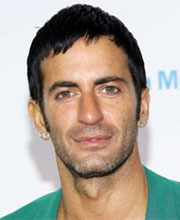
Fashion Designer Marc Jacobs Says His Hair Transplant Hurt! – Balding Blog

Is a hair transplant really as painful as Marc Jacobs suggests?

The article says: “Jacobs said the transplant was excruciating, remembering, ‘I couldn’t sleep on my side, and I couldn’t put my head back.’ He said it hurt more than his tattoos but that it was definitely worth it. Ouch.”

Marc Jacobs Dishes On Painful Hair Transplant: ‘I Couldn’t Put My Head Back’

Marc JacobsThere is some level of pain involved, as let’s not fool ourselves into thinking this isn’t a surgical procedure we’re talking about. That being said, everyone will have a different idea of what is painful and what is just annoying. I’ve previously written about what pain patients can expect from a hair transplant — Pain with a Hair Transplant.

During the surgery itself, some patients find the initial injections more annoying than painful… and once those injections numb the area, you certainly shouldn’t feel any pain during the hair transplant procedure. After the surgery, depending on the type of procedure that was done, you might have to sleep on your side instead of on your back.

It’s impossible to say whether you’ll find a hair transplant to be as painful as Marc Jacobs says, but as physicians we definitely try to minimize pain (and annoyance) as much as we can. Remember though, pain is temporary… hair transplants are forever.


Related Posts Plugin for WordPress, Blogger...

Balding Forum - Hair Loss Discussion

Paid advertisements (not an endorsement):


Hair Restoration and Hair Styling Business Idea – Balding Blog

Dear Dr. Rassman,

first of all, what a fantastic blog! And what a distinguished hair transplant surgeon you are. Once I decide that I need a hair transplant, I will come to your office and would request you to personally do it.

In the meantime, I have one suggestion of something that I think is missing in the hair restoration / hair style business, and I just wanted to share this with you as an inspiration, maybe it is something you might want to try.

On the one hand, there are hair transplant surgeons like yourself, who can map out my scalp, do a master plan, do surgery. Then, there are hair stylists who can discuss with me hair styles etc. What I think is missing is marrying the two, in terms of a consultation. I would immediately pay $200 if I could come in and have a conversation with yourself or one of the other doctors in your office, and an expert hair stylist, discussing what kind of looks a combination of say hair transplant surgery, Toppik, and hair styling could do. I have never seen anyone approach this subject from this angle, and I am thinking esp in LA there might demand for such a wholistic approach in terms of consultation.

Thanks, and keep up the great work!

There are many clinics who have your sense of business idea. We as physicians do consult our patients regarding different types of hair styles and adjunct products, such as Toppik or DermMatch, to enhance the look of the hair transplants or hair style in general.

It would be great if we can partner with a celebrity hair stylist as well and the opportunity remains open. On occasion, we have patients come into the office with their stylists for advice, and there have been some particularly helpful discussions.


Related Posts Plugin for WordPress, Blogger...

Balding Forum - Hair Loss Discussion

Dr Jino Kim and NHI Korea – Balding Blog

Dear Doctors at BladingBlog.com,

I am in Asia and I would to do find a very good FUE doctor in Asia who is specialized in both hair and eyebrow transplant. I came across your blog and found Dr. Jino Kim, and also I have visted his Korean blog too (though I don’t understand Korean but I have checked out the before and after photos there).

Since Dr. Jino Kim is running his hair clinic also under the name New Hair Institute, I wonder if Dr. Kim was also trained under either/both doctors (Dr. Rassman and Dr. Pak) at the New Hair Institue in the US?

Would you please tell me if Dr. Jino Kim is specialized in FUT or FUE and is he also specialized in eyebrow transplant (other than hair transplant, because in his Korean blog I only see a few photos of eyebrow transplant).

Thanks.

Dr. Jino Kim in South Korea has been trained by us and is endorsed by us. He is part of our New Hair Institute in Korea and Dr. Pak visits his clinic every year to make sure the quality is on par with NHI in the US. With regard to the techniques that office uses, they do perform the FUT (strip) and FUE techniques, plus eyebrow transplants. You can contact Dr. Kim at BaldingBlog Korea for further information.


Related Posts Plugin for WordPress, Blogger...

Balding Forum - Hair Loss Discussion

Paid advertisements (not an endorsement):


Dissolving Finasteride in Ethanol? – Balding Blog

Sherman Frankel suggests (here) that Proscar can be dissolved in ethanol if someone using finasteride for hair loss wanted more precise dosage. I have read this on the website HairlossTalk.com as well. Currently I am using Proscar 1 mg a day with no side effects but I am concerned that my dosages are not as precise as they could be. Also if I ever wanted to wean off the drug when I stop using it I could never cut the Proscar tablet smaller than 0.5 mg.

Do you have thoughts about dissolving Proscar in hard alcohol for consistent dosage? My pharmacist and doctor do not know the answer.

Seriously, is cutting a pill in quarters that hard?! It does not have to be an exact science as long as you take it everyday.

I do not see anything wrong with dissolving the pill in ethanol, but I would think it would be more of a hassle… unless you are looking for a reason to take a shot with your medication. Plus the article you referenced discusses dissolving finasteride so that you can take 0.2mg daily instead of the recommended 1mg dose.


Related Posts Plugin for WordPress, Blogger...

Balding Forum - Hair Loss Discussion

Best Hair Characteristics for a Fuller Looking Hair Transplant? – Hair Loss Information by Dr. William Rassman

Hair characteristics plays a big role in the final appears of a hair transplant, but does any characteristics have more of an advantage than the other? If there were two men who had the same amount of grafts transplanted; one with relatively fine blond hair (that closely matches his skin shade) and another man with relatively course dark hair (that drastically contrasts his skin shade),who do think would have a fuller appears?

There are general rules I use to determine what a person will look like so I can help set expectations with my patients. Amongst the rules are:

  1. People with blonde hair and white skin, people with brown hair and brown skin, and people with dark skin and dark hair do well — in other words, less contrast between skin and hair color.
  2. Coarse hair works better than fine hair on a per hair basis, because coarse hair has more bulk to it
  3. Curly hair is better than straight hair as it wants to cover the scalp. With the African hair type, the hair that ‘mats’ covers bests
  4. The density of the hair will tell me much about how much hair can be moved. The more hair in the smallest area is obviously better
  5. The size of the balding or thinning area when compared with the donor supply tells me much about supply and demand

To assess the various elements, a very complex multivariate analysis would have to be done to really answer your question above, but the general answer is that in my hands (for example) it is experience and my artistic abilities that allows me to help you set expectations. Ask you doctor about your characteristics.


Balding Forum - Hair Loss Discussion

Paid advertisements (not an endorsement):


Hair Loss InformationYou Can’t Compare Cloning Advances Today with Promises Made Decades Ago – Hair Loss Information – Balding Blog

Hey Doc. Thanks again for your blog. Last night I was pondering the future and was wondering whether or not you could help me with something that has been niggling away at me for a couple of weeks now.

Can you please give us a history on the failed ideas and companies that made promises for a hair loss cure 20 – 50 years ago. Just the ones that had any scientific merit would suffice, well of course the others might provide some good comic relief so its your call ;)

My own thoughts are as follows, food for thought?

It is my understanding that the failed promises of 50 years ago did not include stem cell research, regenerative medicine, and whatever modern approach to ‘hair cloning’, companies like Histogen and Aderans use today. They simply could not have had today’s recent scientific break through technology to back them up.

In which case what where the promises back in the day? Or were the doctors of 50 years ago merely just saying that ‘there will be a cure in 3-5 years’ to spread hope. Very kind of them.

What about Propecia people may say? I agree that Propecia has been around for a long time but that was an accidental find by researchers hunting out a cure for mens prostate problems. In other words exactly like your recent article on how researchers discovered they could change human cells from one type of cell to a skin cell complete with hair follicles. In that article you state why would they change their research. Well I’d say for exactly the same reason that Propecia did when they accidentally became a billion dollar company.

Today we see companies like Histogen, Aderans, and a few others that are actually showing positive results and backing them up with photographs. If they are legitimate images then the future looks promising. By promising who couldn’t do with just a little more transplant hair – maybe if we’re lucky Histogen will be able to simply increase the yield in our donor areas. That alone would be fantastic.

50 years ago things were different. Nobody had heard of, or at least practised, things like Nano Technology or Stem Cell research. I wasn’t even born. We didn’t have cellphones and the US military were not growing peoples limbs back!

With all the modern changes going on I’m just not sure if it is helpful to compare today’s tech with the tech of 50 years ago. All I hear is that 20-50 years ago they promised us that there will be a cure in 3-5 years. Well what were they promising – I’d love to know :)

Yours with love to all my balding brethren.

Block Quote

In regards to the accidental stem cell follicle discovery, I suppose it depends on the priorities of the researchers on whether they want to switch gears or start another study. It could be that the news of their accidental discovery was made public to garner interest in the project and to take on investors. I’m just guessing here, though.

Propecia is made by Merck, a large pharmaceutical company that didn’t become a billion dollar company by accident and makes more medication than just Propecia… but I see what you’re getting at and agree that money talks.

I do thank you for the input, but I am not a cloning expert nor a historian on cloning of hair. I could spend weeks or more researching the paths taken in hair loss cures over the past 50 years, and while it would likely make for interesting reading, it is beyond my scope at this time. What I do know is that doctors have been stating and vaguely projecting that cloning of hair is on the horizon within most of our lifetimes. I certainly hope that is the case, but the timelines have been moving with such frequency that it’s easy for people to grow skeptical until there’s an actual working model in place.

In the News – Alopecia Areata and Stress – Hair Loss Information – Balding Blog

Snippet from the article written by Dr. Maria Hordinsky, a dermatologist from the University of Minnesota:

Stress has been cited frequently as a factor in autoimmune diseases, including alopecia areata. Yet experimental evidence to decisively link stress and alopecia has been lacking.

It is easy to link alopecia with stress, as many but not all patients associate stressful events with the development of hair loss. Moreover, there are a lot of nerves in and around hair follicles. The actions of these nerves, as well as various nervous system products called neuropeptides, could affect the hair growth cycle.

Block Quote

Read the full text at NY Times — Can Stress Cause Hair Loss?

I have seen a few cases of surgical stress induced alopecia areata. One patient that comes to mind had a hair transplant surgery just before the alopecia areata appeared and it was active for about 6 months.

I Was a Norwood 6 for 20 Years, Medication Brought It All Back – Hair Loss Information – Balding Blog

I lost all my hair in the pattern of NW 6 at 28 yrs old. Not a hair in sight, smooth as a babies bottom. It remained that way for 20 yrs. After which i used minoxidil 5% and Finasteride 1 mg I regained full coverage including the hair line.

So i don’t agree with the Doc’s Statement that hair follicles die. They are just being kept in a resting phase by dht.

Block Quote

Thanks for the comment and sharing your experience. The experience is certainly very, very rare. I’d love to see before and after photos, as I’ve never seen a patient have such a result from medication after being completely bald for decades.

I’ve Been Taking Propecia, But HairDX Said I Have a Low Risk for MPB – Hair Loss Information by Dr. William Rassman

Hello Dr.,

A little back-story: I’ve been on generic propecia (1.25mg) for the last 9 years. I am a 32 year old male. When i started taking it, I was a Norwood 1.5. Presently, my hairline is the same and i’m still a norwood 1.5. My father is not bald. However, my maternal grandfather was.

Unfortunately, for the last 2 years or so, i’ve noticed a severely lower libido. I suspect that it might be the finasteride, although i am not 100% certain.

Hoping to get off of finasteride by confirming whether i have (or will develop) MPB, i decided to take the HairDX genetic test. My results stated that i was: “Low Risk” (Negative for the “short” CAG allele; CAG >= 24)

In my report, it stated that a score greater than or equal to 24 had approximately a 60% chance of NOT developing male androgenetic alopecia.

Doctor, should i get off finasteride? In your view, am i reasonably safe from developing MPB? I would like to get my libido back. Do you think i need a miniaturization test to truly CONFIRM whether i am at a risk for MPB?

Any thoughts would be greatly appreciated, kind sir!

The HairDX genetic test for balding is not a simple yes/no test. It provides a percentage factor, which is why in my humble opinion, it only confuses patients (as it seems to have done for you).

So basically the HairDX test said you have a 40% chance of developing MPB… and now you’re asking me if that means you should stop taking Propecia. With all due respect, I am not your doctor. You must have a discussion with your prescribing physician before starting or stopping or changing your medication.

Having said that, there is no such thing as a Norwood 1.5 (which I guess means nearly a NW 2?), but for some men that could just be considered a mature hairline. In other words, it isn’t balding. Could it be that you didn’t need the medication to begin with? Or could it be that the medication halted the early loss from progressing? I do not know the reason for the utility of finasteride for a non-balding man, but I will defer that judgment to your doctor.

You took the medication for 9 years, and for 7 of those years you didn’t see any sexual side effects. The libido issue might be unrelated to the finasteride. For example, up to 25% of men in their 30s may experience erectile dysfunction. Lower libido can come with age, or it can also be a sign of other serious medical issues (not related to medication). See your doctor.


Balding Forum - Hair Loss Discussion

Paid advertisements (not an endorsement):