
Hi Dr. Rassman,
It has been exactly 6 weeks today post off, for a FEU of 2000graphs. Now I had experienced a some shock loss after my operation for a while, still have but has been minimized a little, but with that being said most of the hairs that were transplanted have no ’shed’. Infact they are still in tract but the only problem is that they are not growing. I was told by my doctor that all the transplanted hair would fall off within the first month. Should I be worried? Does this mean the procedure is working slower on me?Thanks
Your doctor advised you correctly — they will shed sooner or later. I have seen some hairs remain up to a year and the hair transplants grew around them. If you pull on those short hairs, they usually come right out with no traction on them, because they are not attached to a bulb or to the underlying tissue, and have no muscle attachment on them. The shock loss you are talking about is independent of the short hairs that remain.


Paid advertisements (not an endorsement):
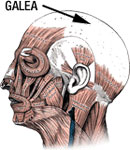 The galeatomy has been around for years. For those of you who do not know, above the skull lies the periosteum (the living membrane above the bone) and then the galea. Above the galea lies the scalp, which is very mobile (try to move your scalp around and you will see just how mobile it is). The scalp has a clear blood supply coming from the front, sides, and back of your head. The blood supply lies above the galea, so cutting the galea makes no sense. It is not easy to get to the galea unless you cut open the scalp. We have done galeatomies years ago with scalp reductions and today’s hairline lowering procedures, and brow lifts will frequently dissect the galea as part of the mobilization of the scalp. As working below the galea is relatively bloodless, it is a terrific surgical plane to work in. Cutting the galea will not increase the blood supply to the scalp, but will just produce morbidity if it is done in isolation of some good surgical reason to do it.

