
Hello, I’m a 21 year old male who started using Rogaine at the age of 19. I was worried I was losing my hair because it is very prevalent in my mom’s family. After using Rogaine for over two years I decided to stop because of the irritation it was causing on my scalp. I stopped late last January and for the first three months I did not notice my hair count change at all, but in about the past three weeks my hair has been falling out by the handfulls. If this continues much longer I may be left with no hair at all. I have been using Rogaine again now for about a week and will continue, but do you think I will be able to get back in the large amount of hair I lost that was apparently dependent on Rogaine? Will reintroducing Rogaine to the follicles bring my hair back to what it was? thank you!
The only two FDA approved products approved for male pattern hair loss are topical minoxidil (Rogaine) and oral finasteride (Propecia). They both have limitations and work primarily by slowing hair loss than growing new hair. Only a small minority of men with genetic hair loss will experience great amounts of hair regrowth with minoxidil, while Propecia will show more predictable results in someone of your age. In your case, your genetic destiny may be catching up to you. It is doubtful that restarting Rogaine will regrow your hair, but Propecia, on the other hand, may reverse recent hair loss. Both drugs may slow the process of hair loss, but if you are genetically balding, Propecia attacks the cause of the hair loss and therefore is far superior. Get your diagnosis by mapping out your hair for miniaturization and with good measurement, you will be smarter about what is causing your hair loss and what benefits you may or may not get from doing whatever you choose to do.
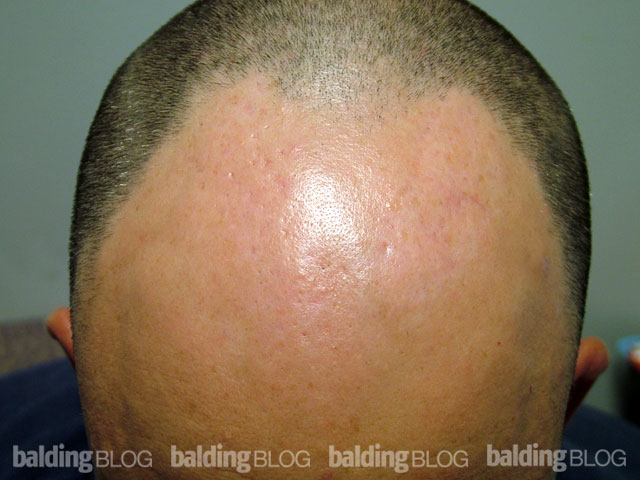
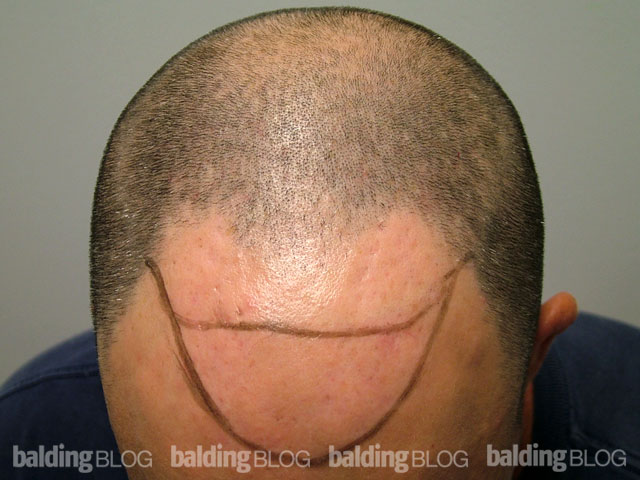
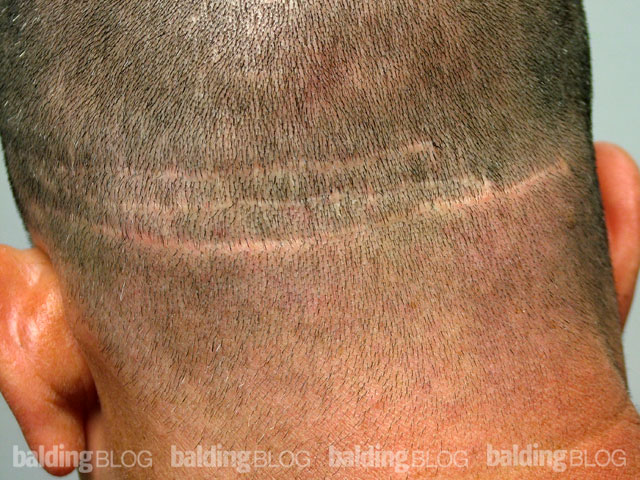



 It sounds like you experienced shock loss and if this is in the miniaturized hair, the hair may not come back. Treating thinning with transplants is not something I do often. In many people with miniaturized hair, transplanting into that ‘unhealthy’ hair does little to really increase the fullness. I believe that for most people like you, any benefit you will get in the long term may be lost in the short term, making transplants a poor decision. I would think that Propecia should have been used in advance of your hair transplant procedure just to minimize this risk. The transplants done may offset the hair loss and the Propecia may bring some of the hair back. Only time will tell. Once the glass of milk falls and the milk spills out, it may be impossible to bring it back.
 These reference sites are what they are and say what they say. I have looked up finasteride on the United States Patent office website and found issued Method patents for finasteride — #5,571,817, granted November 1996 “Methods of treating androgenic alopecia with finasteride” and #5,567,708, granted October 1996 “Methods of treating androgenic alopecia with finasteride”. Clearly, this is a treatment method for hair loss defined for this drug and if these publication dates hold, they would be good for 17 years from the date of issue (for patents filed at that time), but as a method patent they may have limited value. In March 1999, Merck received patent #5,886,184 for the process of manufacture of finasteride and it may be this process that is the enforcing patent, as I understand that method patents can not be enforced in providing a service related process for healthcare in the United States. Another process patent for manufacture was published in November 1995 again following the 17 year rule.