Hair Loss InformationTechniques to Minimize Donor Area Scarring – Hair Loss Information – Balding Blog

All skin incisions produce scars, including those made by the best surgeons. Traditional hair transplant donor scars have a width of 1-3mm in 95% of patients and 2-3% of patients may see their scars even wider. The key to minimizing scar visibility is to directly address the factors contributing to a widened scar, like the healing characteristics of head tissues and collagen. Fortunately, the New Hair Institute (NHI) uses many surgical techniques to minimize scarring and scar widening.

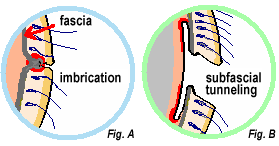
Figure A and Figure B

Fascial Closure Technique: A fascial closure can be utilized to reduce wound tension when two skin edges are brought together, therefore reducing the likelihood of scar stretching. Before exterior sutures or staples are placed, we imbricate (or overlap) the underlying fascia, which is the fibrous tissue network located between the skin and the underlying structure of muscle and bone beneath the skin. (Fig. A) A more complex fascial closure is made when tunnels are created below the fascia to further reduce tension upon closure. (Fig. B) The final sutures or staples on the skin are not shown in the diagrams.

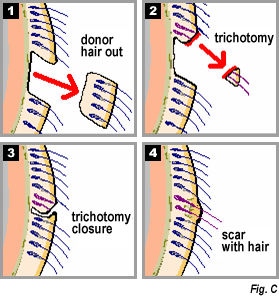
Figure C

Trichophytic Closure Technique: A trichophytic closure, “hair loving” in Latin, promotes hair growth directly through a healing wound. For many years plastic surgeons have used this technique while repairing hairlines during brow lifts or in conjunction with face lifts. A small piece of one wound edge, as well as the corresponding hair, is removed. When the wound heals and a scar is formed, the buried and partially cut hair follicles will begin to grow through the scar. (Fig. C) Since hair follicles cut in this manner resume growth, there is no unnecessary follicle waste. When scars are wider than the 2 to 3mm range, this closure technique is less effective, because it typically promotes hair follicle growth only within a 2 to 3mm width where the trichotomy was done.

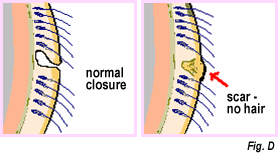
Figure D

However, both of these techniques do not account for patient variability. The physiology of wound healing and scar formation is a very complex matter with numerous books devoted to the topic. Some patients heal with a virtually undetectable scar, less than 1mm, without any special closures while others form a wider scar despite fascial and trichophytic closures. Scars within the 2-3mm range are widely accepted since surrounding hair growth usually disguises any scar formation and few of my patients ever complain of a 2-3mm scar (Fig. D) that they can not see.

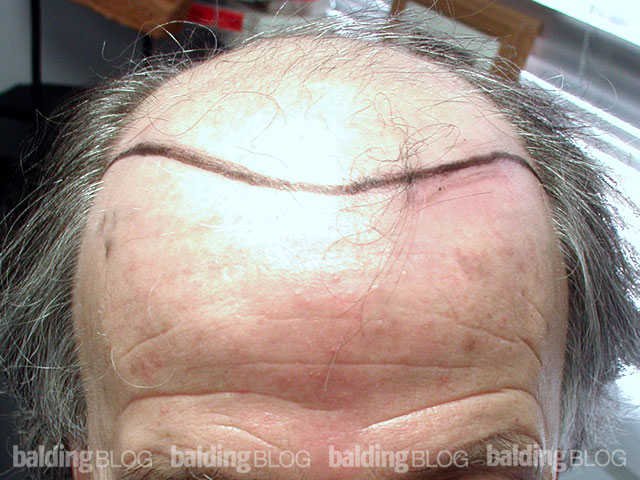
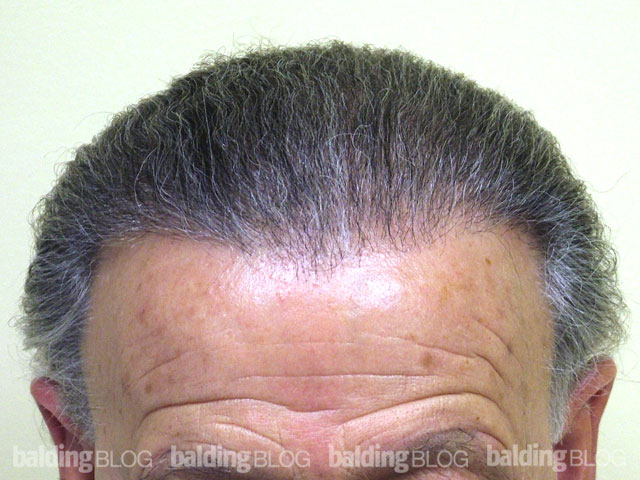
Update: Please see Trichophytic Closure Photos

Illustrations by Jae P. Pak, M.D.

Female Hair Loss After Anorexia and Bulimia – Hair Loss Information – Balding Blog

My hair was quite thick when i was younger but I suffered in the past of anorexia and bulimia and my hair got thinner. It has been now less than a year that i am cured but noticed that my hairloss has increased. Is there anything that you can recommend and will my hair get back to its original condition.

Block Quote

First, hair loss comes from many causes so you need to have a complete medical work-up to separate the real diseases that cause hair loss from the genetic programming that we inherit from our family lines. There are many ‘medical’ causes for hair loss and maybe you have one of them, such as hypothyroidism, eczema, alopecia, dieting, malnutrition, autoimmune, drugs, infection, genetics, etc.

  1. Hormone levels for DHEAS, Testosterone, Androstenedione, Prolactin, Follicular Stimulating Hormone, and Leutinizing Hormone
  2. Serum Iron, Serum Ferritin, TIBC (Total Iron Binding capacity)
  3. Thyroid Stimulating Hormone (TSH)
  4. VDRL
  5. Complete Blood Count (CBC) to rule out anemia

A good doctor is your first step. The problem with women’s hair loss is that when it occurs, it may precipitate genetic hair loss, the thinning of which may not be reversible. In your particular case, it is possible that your experience with anorexia and bulimia earlier may have ‘triggered’ the genetic process (if you have it). Get your tests done and communicate with your doctor, bonding with him/her so that your problem is theirs as well and be sure that you do not have a precipitating cause of the hair loss.

I Took Out My Hair Braids, And Now It Is Thinning – Hair Loss Information – Balding Blog

Hi doctor,
I am a 24 year old black man with no real history of baldness in my family, For the past year I have watched my hair shed every since I took the braids I had in my hair for 2 years, I have been going to see a doctor about this for the past year and in doing so they’ve checked my blood and have not found anything abonormal but I am really worried. I work fulltime, I also go to collage fulltime, getting ready to have a baby and get married, I also eat lots of fast foods. my hair never did anything like this pior to me growing braids, can you help me by giving me so advice on how to prevent my hair from continuing to shed and give me an Idea as to what may be causeing this. Thnks and hope to here from you soon

Block Quote

There may be two different things going on here:

  1. Putting your hair in braids for 2 years may have caused traction alopecia if they were tight.
  2. You may have a component of male pattern hair loss (even without a family history).
  3. Or you may have a combination of both 1 and 2.

Bald Spot on Side of Head – Hair Loss Information – Balding Blog

My husband and I just realize that on the side of his head he has a bald spot. Its not big, its about less than half an inch. We are both worried and we dont know what might have caused it. He does smoke cigarettes about four to five times a day, could that be the cause? if you can help me by maybe telling me what could be happening I would appreciate it. Thank you very much.

Block Quote

He should see a dermatologist. I am assuming that he does not use a wig/hair system. Traction alocecia is a common causes of this with wigs. I am also assuming that he is not a hair picker; trichotillomania is not an uncommon finding and is an easily diagnosis with hair mapping for miniaturization. The diagnosis of trichotillomania appears with stubs of healthy ‘terminal’ hairs indicative of the picking problem. Highest on the list might be conditions like Alopecia Areata.

My Hair Is My Beauty and I’m Running Out Of It – Hair Loss Information – Balding Blog

I am a 21 year old African American female who has been dealing with Seborrheic Dermatitis and eczema since the age of fourteen. I have used everything from Mycolog, Desonide lotion to Selenium sulfide based shampoos. Now don’t get me wrong the do relieve me from the itching and greasy scaling of the skin. However in 2004 I noticed that the back region of my hair was thinning out. Also the right side had become infected due to constant scratching and became inflammed. About 2 weeks later the hair in that surrounding area started to fall out. I decided to do a biopsy so they could see exactly what was going on and hopefully remove the extra skin. I was later told that it was growing so I could either leave it in the state it was right now or try again. I chose to wait because it has really been frustrating for me and I didn’t want to make it worse than it already was. The only thing that bothers me is that I’m a young adult and I hide because of my appearance. It’s just a well known fact that a woman’s hair is her beauty and I’m running out of it. I just need some help and guidance and was wondering if you would point me the right direction. I was wondering will my hair ever grow back and how will I restore so it doesn’t happen again.

Block Quote

It seems you are being followed by medical doctors for the cause of your hair loss. If there is an infection on your scalp complicated by your dermatitis and eczema, most medical doctors are well trained to address your problems. I realize hair loss can be a devastating experience for both men and women, but it is my opinion to treat the underlying medical condition and your hair should return once you get your medical problem solved.

Propecia Questions, Part 2 – Hair Loss Information by Dr. William Rassman

Note: This is continued from part 1 that was posted yesterday …

6. I often hear you and others say that stopping Propecia will bring the user to his baseline ‘hair level’ had Propecia never been taken in the first place. This to me seems reasonable, and reassuring. However, I remain a bit skeptical because there is no conceivable way to test that claim. What if hair follicles lose some of their resistance to DHT, simply because they no longer have to deal with it? Is it possible that stopping the drug will make things worse than they would have been? The old “Use it or lose it” saying applies. And this concern carries over to using Minox as well. In case I’m not explaining myself properly, here’s a scenario to illustrate:
Step 1: DHT reaches hair ‘A’.
Step 2: Hair ‘A’ is not adversely affected by DHT.
Step 3: Start using Propecia (presumably to help hairs OTHER than ‘A’).
Step 4: Hair ‘A’ no longer has to ‘fight’ DHT.
Step 5: Stop using Propecia and DHT comes back.
Step 6: Hair ‘A’ is not “prepared” for the DHT onslaught (use it or lose it).
Step 7: Hair ‘A’ is destroyed. Hair ‘A’ would have been fine if Propecia was never used.

How could you say Hair ‘A’ was fine to begin with? The answer is not as simple as A+B=C There are many documented cases where people who gained hair from using Propecia, lost the gained hair when they stopped using Propecia.

7. Propecia has only been around since 1998, Proscar since 1992. So nobody has been on Propecia for more than 8 years. I’m wondering how many people will actually be able to maintain lifetime use of this drug. Unforeseen developments happen in people’s lives all the time, and this should be a pivotal consideration in deciding to go on the drug. Will some situation arise in life that will prevent me from continuing to use Propecia? It’s entirely possible. In your experience, are people able to maintain their use of Propecia, or do you find that people go off the drug at some point?

First, I agree being compliant with any drug therapy for life may be hard. It is definitely something you should consider before starting any elective drug therapy. Likewise, male pattern baldness is also for life. Furthermore, hair transplant is also for life. As you may be aware, these are non frivolous considerations. It is something you and your hair transplant doctor need to consider in making a “Master Plan” for your hair loss.

Second, Proscar is actually protective for prostate cancer.

8. I’ve read your comments in other threads that if a person does not trust the company or the FDA then he should not use their product. This sentiment is all fine and dandy, but things are ne’er so black & white. For instance, recent developments involving Merck & its drug Vioxx cast doubt on the trustworthiness of Merck. And yet that doesn’t mean that Propecia doesn’t work or that its true side-effects have been concealed. Basically I don’t see your point about trustworthiness. Companies have a mandate to increase profits. Sometimes that may lead them to be unscrupulous. Other times they may not need to resort to that. All we can do is ask people in the field, people like yourself, to give us first-hand accounts that will inform our own decisions.

I recommend Propecia to most of my patients with male pattern baldness because I have seen its results first hand. I also recommend Advil for most of my patients with simple arthritis pain.

9. Now, with regards to Minoxidil. I think the general consensus is that Minoxidil plays second fiddle to Propecia when it comes to effectivness. My question is, do you think that Minoxidil is good purely for maintenance, i.e. to prevent further hair loss? Or does the 3-15% statistic that you’ve quoted before apply again? My feeling is that if I go on Minoxidil, eventually I’ll move on to Propecia, so why even bother with Minox in the first place? And there’s something disconcerting about the scientific community not knowing how Minox really works.

You seem to know the answer to this question already!

10. Are Minox & Propecia useful for people who experience what I would call ‘age balding’? That is, people who simply lose a little bit of hair every year throughout their life as part of the regular aging process. Skin doesn’t stay pristine, bones & ligaments don’t either, so should people who don’t experience classic MPB go on these drugs simply to have a fuller head of hair with time? I’ve seen pictures of you (a very handsome man I might add, hehe), and while you’re not bald, I’m sure your hair count is not what it was at 16. Nor do you seem to be suffering from classic MPB. Would you have gone on Propecia or Minox back then to stay looking younger longer?

I am on Propecia now and have been for many years. With regard to your fountain of youth, sorry but there is no such fountain available yet.

11. Personally, I’ve had good hair all my life. Recently, my hairline has matured, and is beginning to look much like my older brother’s. He’s 38, and has a full head of hair, with a widow’s peak (I have one too) and with a slight dracula syndrome (dracula hair with the triangle pattern) whereby there is some degree of temporal hair loss, what is normally termed devil’s horns. When my brother was younger, his hairline was much like mine (although apart from hair, our faces look quite different so I don’t know about relying on my brother’s genetics). He had a widow’s peak with no devil’s horns. I now have progressed to the stage of a low frontal hairline with devil’s horns on the sides just like my brother, maybe a little worse. I can also see the miniaturized hair on the skin where the horns are. If my hair were to stabilize here and progress the way my brother’s hair has, I’d be satisfied. But I don’t want to take chances. Am I wise to embark on this lifelong journey of drugs to prevent the possibility of further loss? I am now at a point where I feel that taking the drugs might restore some of the miniaturized hair, bringing me closer to my freakishly low teenage hairline. But am I being greedy here? These are questions I need to ask of myself, but it’s always good to benefit from the wisdom of others. I’m 23 years old. I do shed quite a bit, and I always have. But I’ve always seen that as a consequence of having a large hair count to begin with. Still, vain as it may be (and I wish I could get past the vanity), I want my hair looking good for as long as possible. But if my hair is not destined to get worse than it presently is, going on drugs would be a waste of money and time. Also, my hair itches often at the sites of hair loss. Moreover I don’t like washing my hair a lot, and I worry that Minox won’t be effective on an oily scalp. I like my scalp to be a little oily for styling purposes so I’ll shower every other day, or every other 2 days (I wash my body daily however). I’m looking for your advice, what you would do if you were in my shoes.

At 23 years old, you may be at the beginning stage of losing your hair. You need a good hair transplant doctor to evaluate the miniaturization process and map your hair loss. If your doctor recommends it, you should then be using any possible Propecia treatment. But with respect to your teenage hairline, I doubt Propecia can restore that.

12. What is the significance of shedding hair with the white bulb at the base, versus shedding hair without the white bulb? Just a general hair question.

The presence of a ‘white’ bulb at the end shows some mucus associated with the hair that you are looking at. Generally the presence of a complete hair follicle with or without a white mucus bulb is of little significance, provided that there are few. There is a specific test that determines to which degree hairs will come out when pulled upon. Normally, only a few hairs will come out of a group of hairs that are pulled upon. What a pull test will show is that if a large percentage of hairs that are pulled upon come out, then some disease process may be going on.

I hope that everything was answered to your satisfaction. If you have more questions, please feel free to comment or contact me.

I Had Side Effects When I Stopped Taking Propecia – Hair Loss Information by Dr. William Rassman

I was wondering how common it really is for someone to have substantial sexual side effects from Propecia. I am a young (22 year old) man who recently had erectile dysfunction and pain probems for a month or so which seemed to begin shortly AFTER I stopped taking propecia (I ran out). My urologist said to stop taking propecia because that might’ve caused them, even though I thought there might have been other causes, and even though they started once I was already done with or just ending propecia. And sure enough, the problems slowly went away. I would like to know if you think it was the propecia that caused the problem because I’ve heard the chances of sexual side effects are slim, like 2%. But I was considering taking propecia again because I know it helped me, and I now know that any problems would be reversible if I discontinued use. But my gut feeling is that it was the propecia and I shouldn’t even bother with it again, which is unfortunate. What do you think?

I tell patients that 1 in 100 men will experience a decrease in sex drive. However, I often find men are very prone to the power of suggestion, especially when it involves their manhood. For example, if there is a mention of decrease in sex drive, they may have a decrease in sex drive because they will be too worried and too obsessed about it. That being said, it is my opinion that pre-exisitng sexual dysfuction may sometimes unmask itself with a drug like Propecia. Some sexual dysfunction is present in 20% of men in their 20s, 30% in their 30s, 40% in their 40s, and so on.

Your story is unclear and it raises a red flag for me. Why is a 22 year old seeing a urologist? Did you see the urologist before or after you started taking Propecia? Do you have an underlying urological problem? Your erectile dysfuction may or may not be related to Propecia and its manifistation may have just been conincidental. There is really no way to tell. You should follow-up with your doctor to explore other possible medical causes of erectile dysfuction.

Appearex – Hair Loss Information by Dr. William Rassman

Hi,
I’m a 40 year old female experiencing severe hair loss. I’ve had problems with hair loss for the past 13 years but last summer I went to a local salon to have the graying covered with some highlights. Whatever she used burned it because after that the hair strands are very thin and dry. I use alot of conditioner and it doesn’t help. I noticed that when after she washed the hair that it was severly tangled which resulted in her having to cut 3 inches from it to get the knots out from the burning. My hair was at that time past my knees with very few split ends. It is now around knee length and I keep it pulled up in a clasp. I have enclosed some photos to show the hairline-thinning-damage. I’ve been prescribed (Appearex) and don’t know much about it. Does this product actually help the hair as it states on the box that it’s a nail product? I have taken Lupron injections in the past and not sure if those created some of the hair loss but the problem is getting much worse and I don’t have a clue what to do about it. Thank you for taking the time to help others, and any advice you could give would be greatly appreciated.

Appearex is a dietary supplement. Its generic name is biotin. Biotin is a water-soluble vitamin component of the vitamin B complex. As an essential nutrient, biotin acts as a coenzyme for the body’s carboxylation reactions and is a factor in maintaining healthy muscle, hair, nails, and skin. If you are Vitamin B complex deficient, then this may help your problem, but few Americans have such Vitamin problems with any reasonable American diet.

Because dietary supplements are essentially unregulated in the United States, you can not be sure what you are getting when you buy an over the counter supplement product. There are many preparations on the market (prepared or manufactured with different techniques that are not fully disclosed or regulated with different additives). With different preparations, the same supplement may not have the same effects or equal potencies. Because there is no regulation, the efficacy or the validity of such ingredients cannot be guaranteed. That is why you sometimes hear it is a “buyer beware” market.

There are many causes for hair loss. You should be evaluated by a medical doctor to rule out a medical cause for hair loss. If you are still not satisfied, you should see a hair transplant doctor to map your hair for miniaturization and a possible pattern for your hair loss.

Balding Forum - Hair Loss Discussion

Paid advertisements (not an endorsement):


How Many Donor Grafts Does an Average Person Have? – Hair Loss Information – Balding Blog

Dear Dr. Rassman,

I have been researching Male Pattern Baldness and Hairloss for about 7 years.I am 28 and a Norwood 4. My question concerns how much donor supply the average person has over their lifetime to transplant to balding areas.

I know that currently some clinics have performed, 6,000 and 7,000 strip/graft procedures in a session and that even more has been transplanted over several sessions. How much donor hair does the average person have ? It would seem that the average would have to be well over 10,000 and close to 12,000.

Thanks for taking the time to answer my question.

Block Quote

The answer to this question relates to a few things:

  1. Your donor density (average is 2 hairs/mm2)
  2. The laxity of your scalp (looser scalps should supply more donor hair)
  3. The balding pattern (Class 7 patients lose up to 70% of all of their hair so if this is a possible balding pattern then 1/3rd of the remaining hair number may be the maximum donor supply available to you over your lifetime)

The degree of scarring and how your body handles the movement of large amounts of donor hair may be the determining factor on your overall supply. Generally, a person may easily get 5-7,000 grafts (10,000-14,000 hairs) and that number can be pushed upward with good healing, minimal scarring, return of scalp laxity and good donor densities. On the high end, I have transplanted up to 25,000 hairs in some people (10,000+ grafts) with unusually good healing and a good scalp laxity.

Patient ZU is in his mid 60’s and had multiple procedures totalling 6,036 follicular unit grafts transplanted. The “after” photo on the right shows the results after only 6,036 grafts, but he actually had another procedure after this, bringing the total up to 8,300. Once I have photos of the results of his last procedure, I’ll post them. In the meantime, please see the photos below and click them to see full size.


Will Propecia Thicken the Hairline?, Follow-Up – Hair Loss Information by Dr. William Rassman

I sent you the question which you titled “Will Propecia Thicken the Hairline“.

I don’t have a good digital camera so I’m unable to take reliable pictures for you but I think I can help color the situation with more detail. As I mentioned earlier I’m 25 years old and have a Norwood 1.5 – 2 hairline with thinning in the area around the hairline of 2 -3 cm. The worst area is due north of my temples and isn’t a usually area to lose if your hairline is just maturing. My father is a Norwood 5 and has been since his mid 30’s. The thinning the crown area and diffuse thinning in the hairline indicate to me that I will progress like my father considering my age. I’ve been on propecia for 7 months and it has stopped my hairloss in the vertex and possible slowed the thinning in the front, although as you know it’s difficult to assess even if you are going to a doctor regularly. Taken that propecia is effective in me is it reasonable to think that I will keep the hair behind my hairline given that it hasn’t been significantly effected my MPB? I don’t expect propecia will help thicken the hair in the hairline as it hasn’t done so yet but would it be acceptable to expect I will keep most of the hair that hasn’t been effected my MPB yet? I hope there is more clarity here.

There are no guarantees that Propecia will stop the progression of hair loss. In fact, the studies on the medication show that the loss continues, starting possibly at a higher level of growth on the curves accounting for hair gains seen. Please refer to this graph (click it to see full size), which was made available by Propecia’s manufacturer, Merck. Note that the green curve (those on Propecia) has a less significant downward slope than the gray curve (the control group). This suggests to me that beyond the 5th year that the hair counts will not be droping as fast in the treated group (I wish the actual data had been made available to me).

Balding Forum - Hair Loss Discussion

Paid advertisements (not an endorsement):