
Lowering a Woman’s Hairline by Using Hair Transplants (with Photos)

This woman was born with a high hairline, which appears more common in women than in men. These women see it in their early teens and they have few alternatives to surgery. There are two approaches to the surgery:

  1. A hair transplant, which is performed like a typical man’s hair transplant when his hairline rises either by a high maturing hairline or just genetic balding (which almost always starts in the front).
  2. A surgical hairline lowering procedure (like a reverse brow lift) commonly done by plastic surgeons. The advantage of the hairline lowering procedure is that the results are instantaneous and once the swelling has gone away, the hairline is located in its new position. On occasion, a scar forms at the leading edge requiring a limited hair transplant to hide it.

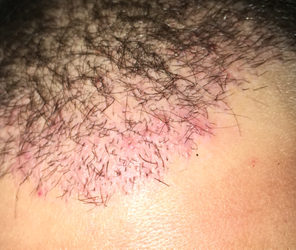
The patient shown below opted for the 1st method (transplant) and had 1432 grafts about 18 months ago. She is quite pleased with the results of a single transplant session (performed by Dr. Jae Pak). Sometimes when a person has very fine dark hair and white skin, a second session is required to obtain the desired results. Click the photos below to enlarge.

After hair transplant of 1432 grafts


Before


2009-04-30 09:53:38Lowering a Woman’s Hairline by Using Hair Transplants (with Photos)
Low Laser Light Therapy for Hair Loss

I have heard reports of using unusual wave lengths of light to stimulate hair growth for MPB. Is there any documented results on this work? Is there any application in stimulating growth in newly transplanted hair?

I have been doing the Laser Light Therapy for the past 4 months with No positive results yet, if fact it seems to have made my hair loss worse. Do you have any data on this therapy?

I have been bombarded with questions about Low Laser Light Therapy (LLLT) for hair growth stimulation since I started writing the BaldingBlog. The above are just two recent examples which reflect the wide variations in questions, one of which was already answered in a previous entry. To address these questions, I have prepared and will continue to prepare more updated information on the laser’s mechanisms of action and benefits as understood by the medical, scientific and commercial establishment. This summary should serve to supply an overview of the subject on LLLT. Until a well controlled FDA quality study is in our hands, we will not be able to judge with any degree of certainty whether or not the laser will become an important part of today’s hair loss treatment armamentarium. The wide enthusiasm for the technology in the United States today has been preceded in Europe for many years. I expect to review the European and American literature sometime in the next month or so.

Please read the new Low Laser Light Therapy page at newhair.com for more information.

With regard to the second person’s question: the laser should not cause hair loss, so I would expect that this person is going through a rapid loss period that is coincidental to the laser treatment, or has some medical cause of hair loss that needs proper medical assessment. It is important to seek the help of a competent doctor when something like this occurs.

Low Iron and B12 Causing Miniaturization?

Hi,
First I would like to thank you for providing this site, it has help me a great deal. Here is my question. I am a 31 year old female suffering from hair loss, and as of yet I do not know the definite cause. My question is concerning all that I have read about the possibility of vitamin deficiency causing hair loss in women. My doctor runs routine bloodwork every year, and for approximately the past 10 years I have had low iron, low B12, and my last set of tests, last year, did show that I also have an overactive thyroid. Throughout this time I have never taken the supplements that were advised by my doctor, I am now regretting that, and have since started. Now to the question, with being low in iron and b12 for so long cause miniaturization? I have miniaturization hairs throught my entire head, and very thin on the crown, and this is why I am questioning the effects of vitamins and hair loss. From what I have read miniaturization and thinning at the crown usually indicates AGA, however I did read once that low iron could mimic AGA with miniaturization. And I am hoping that this hair loss that I have is from low vitamins for a long period of time, and not AGA.
Thank you so much in advance.

Yes, low iron and B12 can cause hair loss. Get a good doctor to take charge of you, as that is the best approach to the problem.


2006-01-11 22:42:49Low Iron and B12 Causing Miniaturization?

Low Feritin Levels

I’ve had issues with hair loss cause my ferritin was very low. I know that you ferritin levels need to be around 70 for regrowth. I’ve been taking iron supplement and now my levels are currently at 66 and my question is how long does it take for for your hair to regrow again after raising your ferritin levels and what can I do to make sure my ferritin

It might take a year to see the value of correction

Low Carb Diet and Hair Loss?

Will low carb diets (or no carb diets for that matter) cause hairloss in males with MPB?

Unless you are not meeting your daily nutritional needs, a low carb diet will likely cause weight loss, not hair loss.

Low Blood Pressure from Finasteride?

I’m currently taking fin 1mg with great results of hair retention. Do you think cutting to 0.5 or 0.25 mg will still maintain efficacy? I am getting moderates amounts of hypotension and dizziness when I stand ok and wanted to see if reducing dose would help.

Finasteride doesn’t produce low blood pressure. I suggest that you see your doctor.


2019-12-05 15:58:15Low Blood Pressure from Finasteride?

“I love the idea of wearing a laser hat and growing my hair, does it work”?

LLLT is an option that really does not do much although because so many people use it and are vested in the effort, the reports are not very accurate. I studied patients with LLLT treatments in two forms. The first was an expensive LLLT machine which I offered at no charge to my patients but required them to submit to photography follow-up. The second modality was a Laser Hat. I also required them to submit to photography follow-up. All of the follow-up showed me no a single result that was objective by good photography. Some patients thought that they were better, but things like hair length and products used on the hair change your view of your own hair.


2018-01-08 01:49:18“I love the idea of wearing a laser hat and growing my hair, does it work”?

I love my hair transplant, but what about next year, will I?

The real issue is that hair loss is a progressive process in men. You need to find out what your eventual balding pattern is now and what it might be, how fast your hair loss is moving to more balding and then build a Master Plan with a doctor like me, who cares about you (not your money) and is willing to invest the time to follow you as your situation progresses, maybe to a hair transplant eventually. I turn down a lot of young men, because they are not ready yet (pattern not right or they are too young) and just work with them. That is why I am successful and have such a great relationship with my patients. I believe that I defined first class hair transplants as far back as 1991. You did not state your age, but if you are 21, then you may be in trouble because you could be chasing the hair loss every year with more and more hair transplants, not good

i love my transplant


Loupe Magnification for Diagnosing Miniaturization

Dr. This is a quote from an e-mail I recived back from another doctor when asking about testing for minaturization. He said, “I use what is called ‘loupe’ magnification which can easily detect hairs which are ‘miniaturizing’.”

Is this the same as what you do or is this something different?

I use a densitometer apparatus or a magnifying video camera to map my patient’s head with magnification at 20-50 times normal. I believe this is important and easier to use with reasonable accuracy. However, if the hair doc which you mentioned used magnifying “loupe” to map his patient’s with accuracy and quantifies the degree of miniaturization by the location in the various areas of the scalp, then I will not argue the point. There are many correct roads to take.


2006-02-13 10:33:49Loupe Magnification for Diagnosing Miniaturization