If you take Saw Palmetto with no sexual side effects, does that mean Finasteride is safer?

My doctor prescribed me saw palmetto before all the exams hormonal sperm ecc before starting fin …I started saw palmetto which lowers dht by 35% What i feel Is improved erection quality, my Dick Is hard as steel, more libido, and i experience getting hard during the day … Does this mean that if i use fin, probably i will feel the same ? Or even better?

Saw Palmetto is a weak DHT blocker while finasteride is a stronger one. I would expect that some people taking Saw Palmetto without sexual side effects might be better on finasteride.


2020-11-04 08:41:09If you take Saw Palmetto with no sexual side effects, does that mean Finasteride is safer?

If You Take Finasteride, Does It Let You Go Up One Norwood Class Each Decade?

I hope this is not a stupid question. I know in a perfect world no man would ever go bald and we would all have perfect hair. But, since its not the case and I know most men have some degree of hair loss as they age.

My question is regarding men who started balding when they were 18, but with the aide of finasteride it has been a really really slow balding process. Do you usually notice that these men, once they are in their 30’s, they are a norwood 2-2a and then when they are in theirs 40’s they are a norwood 3-3a and then in their 50’s they are a 5-5a and then 60’s either a 6 or 7?

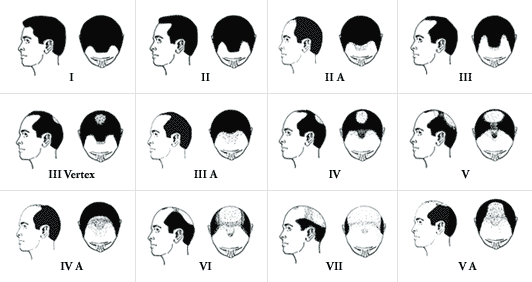
It’s not a stupid question, but I think you’re confused about what the Norwood classifications are for. The Norwood chart (see below) classifies the final patterns of balding. By final, it generally means that there is no going back. Of interest, the patients with the most advanced pattern of balding (class 7) usually get there in their 20s and rarely show up becoming a Class 7 at the age of 60. Norwood classes are not a guideline for balding by age or decade.

Finasteride can slow the balding process and in very young men without advanced balding, it may reverse crown loss and occasionally even frontal loss (as it did in my son). The projections you did in your question is the work of a dreamer.

Norwood chart


2014-03-13 13:23:03If You Take Finasteride, Does It Let You Go Up One Norwood Class Each Decade?

If You Don’t Have Hair Loss, Will You Never Have BPH?

Does those who haven’t balding issue will then never experimented BPH issue (Enlarged Prostate Symptom) ?

since both have the same cause ?

thanks

The connection between prostate hypertrophy and balding does not appear connected. There is, however, an association between early genetic balding and prostate cancer (see here.

If You Discover Unpatterened Miniaturization In the Donor Area, Is That DUPA?

When through densitometry you discover diffuse unpatterned miniaturization, even in the donor area in male patients, do you immediately diagnose it as DUPA or do you recommend that they rule out other causes of the miniaturization? If so, which specific tests would you recommend?

I read somewhere that a doctor told someone that low DHEA levels could cause hair miniaturization, is this true? Should someone with these symptoms get their DHEA levels checked?

DUPA (Diffuse Unpatterned Alopecia) requires extensive assessment of the donor area, which will be heavily impacted by miniaturization on such an assessment. It’s not a quick diagnosis.

I can not comment on DHEA levels and its association with DUPA, though I have written about DHEA before here.

If Transplant Techniques Were Better Years Ago, Would Some People Even Need SMP Today?

Hi Doc. I was just reading your recent article “Hair Transplants with Scalp Micro-Pigmentation (with Photos)” and was wondering whether or not the patient would be in the same position now if you knew the hair transplant techniques back then, that you know now.

Is it possible that with ultra refined techniques the transplanted hairs would have been transplanted more evenly around the head meaning that Scalp Micro-Pigmentation would not have been necessary.

Best

The simple answer to your question is: Yes! Many people with advanced balding patterns just don’t have enough donor hair to cover the entire balding pattern, so SMP (scalpmicropigmentation) solves this problem.

I hear ultra refined technique used sometimes but it is more of a term described in forums such as Hair Transplant Network. That terminology is just semantics. The GOLD STANDARD in hair transplant surgery is transplanting one follicular unit at a time. It doesn’t matter what you call it. AT NHI we have being doing this since we opened in the early 1990’s and have pioneered and published on this technique (HERE).

To be clear, no matter how perfect the technique (you can use ultra refined technique if you would like), you have a LIMITED and FINITE supply of donor hair. So no matter how refined, you can never have the fullness of someone who is not bald. Hair transplant is great at providing a non balding look and creating a solid non-receding frame to your face. But hair transplant is in essence moving hairs around from one place to another.

Scalp Micropigmentation (SMP) is not perfect since it is not hair. However, (like Toppik and DermMatch and other concealers) it reduces the contrast between hair and scalp providing the look of fullness that a hair transplant may not provide. It also provides an EVEN appearance when you shave your scalp. More importantly, SMP provides any hair transplant patient an option to SHAVE their scalp and disguise the donor scar. Even for people with FUE surgery, there is a scar in the form of DOTS. SMP can also blend in these FUE dots.

SMP is a great adjunct to hair transplant.

Hair Transplant Result

Shaved after Hair Transplant (no SMP)

SMP after Hair Transplant


2014-08-15 11:42:36If Transplant Techniques Were Better Years Ago, Would Some People Even Need SMP Today?

If There’s No Growth a Year After My Hair Transplant, Should I Just Get Another One?

sir,

i would like to know that if hair don’t grow as expected after 1 year of transplantation then what should we do? can we go for 2nd surgery? what could be reason for that?some white marks are still there. how can i get rid of them? is it possible that after transplantaion some hair root was not fixed properly? i removed some of them on 4th day. could it be reason? plz help me.

FailHair transplantation that failed is a subject you should discuss with the doctor who performed it. This doctor should give you a reasonable opinion as to why the failure occurred. When a hair transplant is unsuccessful, it is almost always caused by technical failures of the surgeon and his team. On rare occasions, the patient can have some disease like alopecia areata, but that should be evident to any educated doctor (which means the surgery is unnecessary and should not be done). As for removing grafts, perhaps you just got rid of scabs. I don’t know.
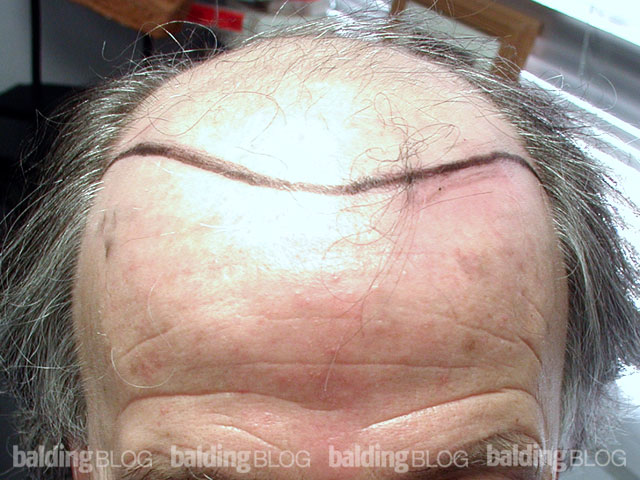
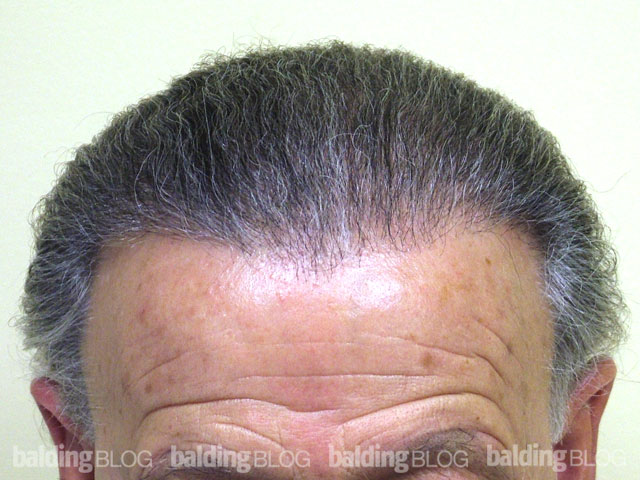
If your doctor does not give you a logical explanation, go get a second opinion and certainly do not go back to the doctor whose failed transplant was not a good experience. Why would you consider going back to the surgeon that has wronged you? You have a limited amount of donor hair, not to mention the value of your time, money, and confidence.

Here are some recent posts we’ve made about hair transplant failures that you might find interesting:

If the Average Person Has 10k Grafts Available, Why Are Most Patients Given Less?

I’ve read time and time again the average person has 7000-10,000 grafts available to transplant. If this is true why isnt there anyone on your website (Newhair.com) who is even up tp 7000 grafts?? Obviously some of the patients dont need anymore grafts but i’ve found a few pictures of your patients that have had 2000 to 3000 grafts transplanted that still have somewhat of a see through look. Why don’t these patients get more grafts transplanted? Would you say a lot of these patients are content with what they have?

I also have a random question. After the grafts are extracted from the back of the head and ready to return to the top of the head. How many grafts do you think two technicians put in on average per half an hr? A couple hundred per Technician???

Even if what you area reading is true about 7,000 to 10,000 grafts being available, it is up to the patient to want to have a hair transplant and use those grafts wisely. The Master Plan may include saving the remaining hairs for possible further hair loss. It may be a see-through look for you, but have you considered that the patient with 3000 grafts is happy with their results?

That being said, here’s a patient that has been presented on this site multiple times and had close to 10,000 grafts transplanted. He wasn’t going to be losing more hair, as his pattern was quite advanced already.

Patient ZU’s before and after (click to enlarge):


The speed of transplanting hair varies with each technician, along with the instruments and techniques used in the surgery. In other words, all clinics and doctors vary in technique (despite what they advertise). An average surgery of 2000 grafts can take 5 to 6 hours, so you can do the math backwards if you wish.

If Testosterone Peaks In My 20s, Why Am I Now Losing Hair at 40?

My question is about the link between DHT, testosterone, aging and hair loss.

If DHT levels are related to testosterone levels, and testosterone peaks at about age 18-22, how do we explain a hairline that does not even begin to recede until age 40? Does DHT increase with age? Do follicles become more sensitive to DHT with age? Is hair loss that begins at an older age caused by something other than DHT?

I will be turning 40. Up until about 1.5 years ago, my hair was very full – no signs of loss at all. Since then, it has gradually receded above the temples and it feels a little thinner on top. I’m not interested in Rogaine or Propecia, but I would like to understand what’s happening.

If you are losing hair (in a pattern), you probably have genetic balding. It generally happens in the early 20’s to the 30’s, but there are always exceptions to the rule (and it can happen in your 40’s and 50’s). In my opinion, it does not have to correlate with the levels of DHT, because it is programmed in your genes… and your genes will express your balding pattern as it was programmed to do. You can have very high levels of DHT and never go bald if you do not have the genes. Or you can have very low levels of DHT and still go bald because you do have the genes.

In the end, the best treatment for genetic balding in men is finasteride tablets daily to slow or stop the loss as long as possible (for those men with the genes for balding, so that DHT can be minimized). If you are not interested in the medical option (Rogaine/Propecia), then the surgical option would be hair transplants to address the corner recession.

If Someone Keeps a Norwood 0 past 25, Does That Mean They Will Take Longer to Reach a Mature Hairline ?

I have a friend who still have a a norwood 0 at 26 his hair is almost full grey but is better to have grey hair than no hair. My father is 56 still have NW0 only now it starting the thinning of the crow area. I unfortunately receive the genetic hair from my mother side and I am already on 1 or 2 on the scale) And going bald is inevitalble ? every man become bald when they become older like at 60-70 ?
Yes, the slower the appearance of balding, the less you may bald (that is if you are going to bald at all). My Grandfather on my mother’s side died at 102 with his 5 year old hairline still present.


2019-11-06 12:54:04If Someone Keeps a Norwood 0 past 25, Does That Mean They Will Take Longer to Reach a Mature Hairline ?

If Rogaine / Regaine Is Working, Would I Still See Daily Hair Loss?

Hello Doctor Rassman

I have a few question, I hope you can help. I have been on Regaine for 3 months and half now,my doctor has recommended me to use it after checking my scalp, he said im suffering from MPB. I have not seen much improvments or results, I still have a good hair density though..my hair line is still fine but its kind of receding.

At first and as stated on the regaine web site I knew that hair loss should be stopped by the 6th week of use, otherwise it may not be working. I still see hair loss every day and my doctor who prescribed me the regaine believes and as he told me on our last meeting that im seeing results and should keep on it. I dont know, Im confused.. my doctor believes I should not stop because its working and losing some hair everyday is normal and doesnt mean its not working. Therefore I have the following questions:

do you have any suggestions about my condition doctor??
do you really think I should not stop and keep on it??
and do you think losing some hair everyday is normal even if regaine is really working??

Bye

Unfortunately, I do not have suggestions about your condition, because I have not examined you and I do not know the condition of your hair or the miniaturization state. If you are already under the care of a physician, you need to see your doctor and ask him/her these questions. You need a Master Plan to understand what is happening to you and where you are in the process. This plan will take into account the way you respond to the medications and what medications to use.

So if you’re looking for me to give you direction, I really can’t tell you to stop taking it or even to continue taking it, because I have not examined you to know if there are improvements or not. You should never stop or start any medication without consulting your prescribing doctor. What I can tell you is that you will likely continue to lose hair if you have male pattern baldness (MPB). You can slow it down with drugs such as finasteride (Propecia) or topical minoxidil (Rogaine — now marketed in the UK as Regaine), but to see any results, you need to continue using it at least 8 to 12 months so you can not tell where you are in the hair loss process.


2007-11-28 14:31:35If Rogaine / Regaine Is Working, Would I Still See Daily Hair Loss?