
If Exercise Increases Testosterone, Wouldn’t it Also Increase DHT and Hair Loss?

I noticed your recent post about protein powders and how they have no effect on DHT and hair loss. I’ve seen some posts on your site, but I feel that exercise and supplements (other than steroids which obviously impact hair loss) have not been adequately addressed.

For example, many studies indicate that creatine increases testosterone and DHT. Also, generally speaking, exercising increases testosterone levels. Therefore, wouldn’t exercise and working out increase DHT and therefore hair loss? Also, maybe we can get a more straight forward answer on certain common supplements such as Creatine and Glucosamine. Thanks

I do not believe that working out will increase hair loss, but the straight forward answer is that we don’t know for sure. If you search the web, many talk about creatine and how it may relate to increased DHT, and ultimately hair loss. I do not know of any well constructed, reliable, or definitive studies about it, though.

In the world of genetic male pattern hair loss, the keyword is genetic. I suppose there are extraneous things you can do or take (anabolic steroids – a drug/hormone – not a supplement) to make the genetic trait worse or accelerate it. But in the end, even if you don’t do anything, but you have the genes for it, you will lose hair.

If taking creatine or glucosamine or other supplements worries you, then consider not taking them. Prioritize your goals. If you are taking these supplements to enhance your workout and gain muscle etc, nothing beats actually working out (an extra day per week or an extra 10 minutes in the gym is better than any supplements in my personal opinion).
If Every Male in My Family Lost Hair in Their 50s, Will I Follow Their Rate of Loss?

first i would like to say that i greatly appreciate your website and the time you put into it.

does the rate and age at which a male starts to bald corespond to the rate and age at which other men in their family start to bald? in other words, my dad and every guy on his side of the family and on my moms side of the family started going bald in their early 50s. does this mean that i will also start balding in my early 50s. also is it possible for me to start balding at the crown eventhough everyone in my family has never shown signs of baldness in that area?

i have been reading that scientists in britain have said that weightlifting can increase the rate of the male pattern baldness? is there any truth to this? do aerobic exercise reduce testosterone levels in your body?

thanks for your time

There is no way to be definitive in answering the question. Many people do follow their family patterns of hair loss. You may or may not. I do not believe that exercise increases hair loss unless you are taking exogenous steroids.


2008-11-17 13:48:56If Every Male in My Family Lost Hair in Their 50s, Will I Follow Their Rate of Loss?

If ACell Could Possibly Give You Unlimited Donor Hair, How Isn’t It a Cure?

I have a few questions about ACell…first of I know it’s in early stages and a lot needs to be done but it it works I want to know this…

  1. From my understanding it will involve plucking hairs from the donor hair putting into the top and then wait a few months for new hairs to sprout from the plucked areas to keep transplanting?
  2. If that is the case how is not a cure where you once said somewhere? If plucking out hairs and they keep regrowing won’t you have an unlimited donor supply!?

Yes, the hair is plucked from a donor area and placed in a bald area. It is not a cure, because you are still genetically bald. You just added hair to look non-bald. If that was the definition of cure, then Propecia and hair transplant surgery could be considered a cure. If you are referring to the “theoretical” unlimited donor hair supply as a cure, then I suppose that would fit. But theory and practicality (of multiple surgeries) does not always work out in the real world.

There are a lot of unanswered questions here. I do not have all the answers, and the proliferation of information on the Internet makes it difficult to keep ahead. In other words, we are BEGINNING our clinical study. We can all speculate what the study will show, but as far as we are concerned, it is all hopes and dreams at this point. We promise we will keep you all up to date.


2010-12-09 12:20:34If ACell Could Possibly Give You Unlimited Donor Hair, How Isn’t It a Cure?

If a Transplant Was Successful, Could Some Grafts Be Rejected Years Later?

Dr Rassman

Assume one has a successful transplant. Is it possible for some of the yielded grafts to die or be rejected some time (even years) after the operation? I am not talking about hair loss, nor about grafts that are genetically doomed. I am talking about healthy grafts, from a safe zone, that are transplanted and bloom normally but after some time die. If it is possible what would the chances be and why would it happen?

If the transplanted hair grafts have successfully taken and have grown hair, they should last as long as the hairs from the donor area. Over many years some donor hairs may eventually fall out and die (senile alopecia) or experience a temporary hair loss (telogen effluvium/ stress related hair loss). If something like that would occur, then the transplanted hair will experience this same fate.

With respect to graft rejection, it is highly unlikely to happen since the transplanted hairs are your own (autologous graft). Your body will not reject the material from your own body in normal circumstances. Over the past 22 years, I have seen a few patients that reported loss of donor hair at about 5 years post transplant. I have no explanation for this, but the incidence is far less than 1% in my estimate.

If a Natural Hair Loss Cure Existed, Would You Even Tell Us?

If you knew that natural cures to hairloss existed, you wouldn’t be holding back on us just to get a few more bucks, would you?

Also, it’s been one year exactly since I stopped my 58 days on Propecia, and I still have these mental side effects of stumbling over words/lack of fluidity when speaking/lack of wit and smoothness. The only other thing in the world this could be would be the high soy diet I put myself on for hairloss measures a few weeks after I started Propecia, and right before I felt my first side effects. I’ve seen a thyroid doctor (who said everything at Whole Foods was a fraud), a neurologist, and a psychiatrist (the latter just for kicks really), and apparently I’m the foremost expert in soy isoflavones and their effect on the thyroid. Just because someone has a medical degree doesn’t mean they’re knowledgeable in every arena. I still never had any sexual or physical side effects, and my wit is still present when I type or write, so something is only affecting my speech, which lends me to believe it really has to do with the physical properties of the thyroid and perhaps the larynx. Any thoughts?

Would I hold back the cure for balding if I had it? The answer to that is… absolutely NO. I obviously spend all of this time answering questions on this site just so I can squeeze money out of you, telling you there’s no cure when secretly I’ve been hiding it in my wall safe. Did you catch the sarcasm there? If you truly think a natural cure for hair loss is out there, by all means keep rubbing onions on your head and coffee in your eyes… or whatever the “cure of the day” might be.

I can not tie the speech/voice problems you have with the drug Propecia. What you said about soy is interesting and noted. There have been some patient reports that finasteride may have caused some impact on brain function but, I suspect, that would be extremely rare and not proven in the medical literature.


2009-07-28 19:20:59If a Natural Hair Loss Cure Existed, Would You Even Tell Us?

Ibuprofen to Prevent Shock Loss?

Since shock loss is caused by inflamation and swelling, do you think ibuprofen (600 – 800 mg doses) could be as effective at preventing shock loss as propecia?

Do you think that there is any adverse interaction between ibuprofen and propecia? Thanks.

There is no connection between ibuprofen and preventing shock loss after hair transplantation. To my knowledge there is no connection between Propecia and ibuprofen either.


2007-10-11 09:36:45Ibuprofen to Prevent Shock Loss?

I Would Like to Know What Type of Balding Do I Have

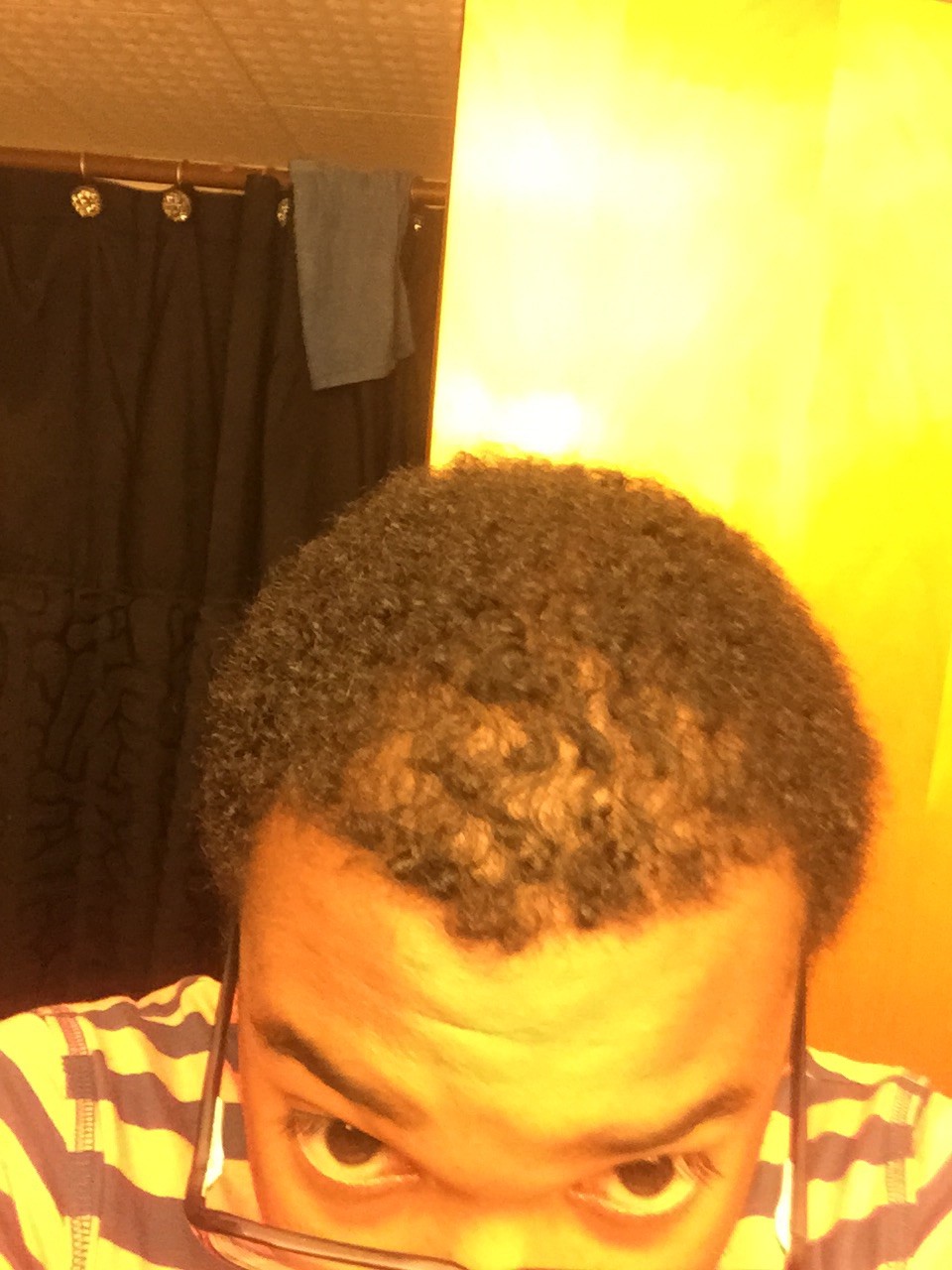
Hello I am a 22-year-old male . I would like to know what type of Balding do I have . I notice little spot At first then started to get thin.

Then My hair in the the Front started to shed But my hairline is not receiving and my hair is not thinning In the back .can someone tell me what’s wrong so I can get help our treatment for it

image

A doctor usually needs to examine a patient, diagnose a problem (of why you are losing your hair or much more more hair loss you may have in the future), then needs to understand your goals and expectations before giving you options or a treatment plan.

You show early sign of hair loss that suggest you have genetic male pattern balding. If you are concerned you should see a doctor for treatment options.


2015-09-13 13:53:31I Would Like to Know What Type of Balding Do I Have

I would like to ask men who had their hair transplants if they regretted it of if they really liked it?

In the 27 years I have been doing hair transplants and as the pioneer of FUE, I have transformed many, many men. Men need to feel young, and there is no single thing that a man can do that make him look young if he is balding than to get hair on his head. We have Open house events every month and our patients come in to talk about their experience and even better, their decision to do a hair transplant. The story is consistent, rather than worry every day when they look in the mirror, they get their hair back and then forget that they ever lost it.


2019-03-26 18:15:41I would like to ask men who had their hair transplants if they regretted it of if they really liked it?

I Wonder If My Forelock Will Remain

I wonder how persistent the forelock is. My father – 55 now, has a receded hairline (V) shaped. It has thinned in the frontal region in recent years, but no real crown thinning.

My question: I’m 24, and already have a deep V shaped hairline, but I wonder how permanent it will remain? Or, whether the forelock can be expected to disappear as well.

Also, what extend does baldness proceed? Who makes it to a norwood 7 pattern?

You need a good diagnosis, including miniaturization mapping and a solid measurement of the hair bulk in the top and crown of your head. The same can be done for the forelock to let you know if you are actually losing hair in the forelock now. As a generality, if the forelock remains strong by the time you are 30 years old, then you may keep it into the years to come. As for percentages of men that make it to the advanced balding stages, see here.

At 24 years old, you need good metrics that should be repeated every year, and with what you report (your deep V hairline) you should consider finasteride. Talk to your doctor, as it is a prescription medication.