
The donor area in the average Caucasian male has ~12,500 Follicular Units of which possibly up to 60% can be taken for hair transplants. For FUE without becoming over-harvested, about half of this amount (30% or 3,750 grafts) can be taken with FUE to be safe. The thickness of the hair shaft (fine, medium or coarse) alter this number (lowers if for fine hair and increases it for coarse hair). The question to ask, is how much hair do I have to leave behind to keep my donor area LOOKING healthy and full enough not to reveal that I was transplanted.
How Many FUE Sessions Can Be Done Into a Scar?
i recently have had some fue into a scar in my hairline. It has been 6 months and approximately 60 % of the hair has grown back. I plan on doing another fue procedure in 6 months from now. My question is how many transplants can be done into a scar? I am not sure if the density of hair in the scar will ever match the density of my surrounding hair but i will try.
There is no specific limit to an FUE (follicular unit extraction) session, other than the supply of hair you have left (and the skills of the doctor / surgical staff). As long as there is enough supply and an area (such as your scar) that require more hair, you can have the FUE procedure. As a rule of thumb after only 6 months out, you may not have all the transplanted hairs grown out (some may still be dormant). I would wait at least 10 months before having another procedure in the same area.
2007-08-02 13:33:332007-08-02 13:33:41How Many FUE Sessions Can Be Done Into a Scar?
How many FUE grafts are too many?
If I was to get a hair transplant but my hairloss progressed to the point I had to shave my head how visible would the scarring be at the back? Would I have visible white dots on the back of my head or do they fade
Scarring from FUE is inevitable; however, the amount of scar may not be enough to see it or make the donor area see-through. The scarring that you can see or the see-through donor area is the result of too many FUE grafts being harvested. If you think about the average donor supply having 12,000 follicular units (grafts in a surgical sense), then if you remove only 3000 of them, you are only removing 25% of the total donor supply. In a medium weight hair, that can be tolerated provided that the punch size used is not too large. But if you extract 6,000 FUE with FUE, then the numbers reduce by 50% and problems may arise, especially if your hair is fine in character.
How Many FUE Grafts Actually Grew? (with Photos)
A man came to see me last week with a problem following his hair transplant at another clinic over a year ago. The surgeon told him that 6600 grafts were transplanted (in three sessions) using the follicular unit extraction (FUE) technique, which he guaranteed has a yield of over 90%. The patient wanted to know if his surgery actually reflected 6600 grafts, so at the patient’s request, we counted the actual grafts that grew. We divided up his head into 1cm square units and then counted the individual grafts inside those squares. The count yielded 2092 grafts of which approximately 50% had only one-hair and 50% had two-hairs, totaling approximately 3100 individual hairs. The hairs did not look very healthy, but the patient had fine hair in his donor area, so I suspect that the fullness reflected the low volume of each hair that survived.
I actually had the opportunity to measure his density before he decided to have his surgery with another doctor. His initial preoperative donor density measured 2.4 hairs per mm square. In my experience this type of donor density usually yielded about 15% one-hair grafts, 65% two-hair grafts, and the rest would be three-hair grafts. Estimating the hair count from the 6600 grafts he expected to grow, he should have had hair growth that would reflect (1) approximately 3960 hairs from three-hair grafts (20% of the 6600 grafts), (2) 8580 hairs from two-hair grafts (65% of the 6600 grafts) and (3) 990 single hairs (reflecting 15% from one-hair grafts)… for a total of 13,530 hairs that would have grown from a 100% successful harvest. Estimating an FUE yield of 90% (a reasonable estimate for FUE and his surgeon’s guarantee of that amount) from a projected successful hair count from the 6600 grafts, I would reduce that count to 12,204 hairs (90% of the 13,500 hairs estimated above). He should compare the actual hair count we obtained in the counting process of approximately 3100 hairs which reflects a loss of 9104 hairs. The hair count therefore reflected a substantial reduction in the hair yield of those grafts that grew when compared to what should have grown. When one would count the grafts that did not grow, the death rate of the hairs was almost three times what did grow.
Where did those missing hairs go? I suspect that they were killed at the time of the FUE either through drying of the grafts during placement, trauma from the technicians placing the grafts, or transection of the grafts (a common problem in those surgeons who really do not have mastery of the FUE technique).
Below left: Lines drawn to divide the area for the graft count; Below right: Sparse donor area. Click photos to enlarge:
This patient shows that he probably did have an attempted harvest of 6600 grafts, as his donor area is very sparse and very see through (which is very unusual for a person with his original density). The problem is, almost his entire donor supply was wiped out. He is no longer a hair transplant patient candidate for additional transplants, even if that surgeon agreed to do the surgery at no charge to that patient. Short of cloning hair, he has no real options… and as we all know, cloning isn’t close to being available.
I have made many posts discussing the false/misleading promotion of a surgeon’s skills with the FUE technique. The surgeon that did this terrible work has a worldwide reputation claiming expertise with FUE. Problems like this not only occur with the FUE technique, but in traditional strip harvesting where the surgeon does not get graft growth. Look through some of the past posts about this type of failure and you will see that this particular patient’s experience is unfortunately far from unique. Then to add to the current problems with inexperienced surgeons, there are new FUE systems/tools coming available that are promoted to allow any surgeon to perform this artistic procedure without any prior experience in the field. Things like this, combined with the false advertising and cut-throat pricing, has turned the hair transplant business into a frequent scam, where doctors promise the balding man a world of hair that can’t be delivered at the expense of many, many balding victims. I feel like I’m just repeating myself, but I really can’t say this enough — hair transplantation is a cosmetic procedure on your scalp! It is right there for everyone to see! If funds are tight, you might want to just hold off until you have the money to have the procedure done correctly by a competent, experienced surgeon… otherwise, you’re running the risk of major permanent problems in the future. This isn’t buying a car. You can’t turn around and sell it if you don’t like it. Hair transplantation is for life.
How Many Days of Forgetting to Take Propecia Will It Take Before I See Catch-Up Hair Loss?
I have been on propecia about 6 years. Over the past 5 months I have probably missed 7-10 days a month. The past month I have noticed alot of shedding and am concerned I am experiencing catch up hairloss. Have I missed enough days that this could be the case? If this is the case, will I recede the point of never having started propecia or to the point of when I first began treatment. If the former is the case, should I quit treatment and accept my fate? Thanks.
I wouldn’t worry about missing a few days of the medication. It generally takes weeks or months of consistently not taking Propecia for catch-up hair loss to be evident. There is tissue fixation at least for a week, if not more. Talk with you doctor regarding your medication and clinical decisions.
How Many Years Can I Take Finasteride Safely?
I see a whole lot of success stories from people who have been on it for 9 months to a year or so. Can anyone who’s been on it for years tell me about sides or anything? I’m worried about developing sides after 2 years or so into it.
I have thousands of men on finasteride for more than 10 years. Few report side effects and most see stabilization of their hair loss.
2020-03-16 04:00:122020-03-16 08:02:04How Many Years Can I Take Finasteride Safely?
How many grafts do I need? I’m 23 years old (photo)
I think that 23 years of age is too early because your final balding pattern doesn’t usually show up until you are 25-26 years of age, and even at 26, it may not show up. When I do a hair transplant, I prefer men over 25. The number of grafts depends on four factors: (1) the size of the area being transplanted, (2) the location of the transplant (frontal hairline or not?), (3) your donor density, and (4) your hair mass per unit hair. With that, I can build a personalized Master Plan for any patient, which will consider what might happen to them as they continue to bald (as every man who is balding does).
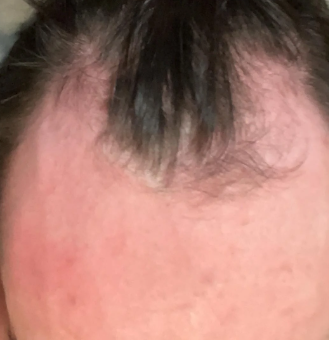
How Long Would Any Medication Take to Cause Hair Loss?
If a medication is the cause of your hair loss, how long does it usually take before it happens, days, weeks, months? Thank you
It can be days, weeks, or months. People react differently.
Keep in mind that the cause of hair loss due to a certain medication use is usually the very last on the list of many other more common causes for hair loss.
How long will microneedling results last
What are the chances the regrowth I have from microneedling my scalp is “permanent”. I have diffuse thinning and microneedling has given me regrowth without any topicals.
I am fairly certain that these new hairs will not be permanent. They may last as long as a single hair cycle which is usually 2-3 years for the average young male. This is an educated guess, of course.
2020-09-03 03:58:022020-09-02 08:59:37How long will microneedling results last
How long will microneedling hair last?
I’m a 30 year old guy with diffuse thinning hair. I started to take finasteride about 3 years ago and to be honest I’m not certain if it did anything for me as I didn’t have any regrowth during that time. However I’ve been able to greatly regrow a lot of my hair through microneedling over the last 2 years. I wanted to get your take on wether the hair I regrew with microneedling could be permanent? I reduced my finasteride dosage from 7 mg per week to about 3mg per week about 6 months ago and haven’t lost any ground. Your educated guess? Thank you!
I don’t believe that anyone knows for sure about how long microneedling induced hair will last. I am guessing it will last about one hair cycle (Max) which in a young man could be 3 years.
2021-09-10 01:13:562021-08-16 19:18:52How long will microneedling hair last?