Dr. Rassman, What Do You Need to Finally Accept PRP?

Dr. Rassman,

I understand your skepticism and reluctance to accept or recommend PRP on the scalp. I was wondering though, what would it take to establish a definitive verdict in regard to effectiveness (or lack thereof) of PRP? There have been some very promising sounding testimonials and pictures that some doctors have produced. But nothing that I guess would qualify as a comprehensive medical study.

I would need a well-controlled scientific study and if it proved to have value, I would likely become a convert. I generally keep an open mind about new techniques and love to see things progress as long as they’re safe and effective. The last thing I want to do is give false hope and waste anyone’s time or money.

Dr. Rassman talks about hairline and the good and bad about hairlines (video)

Dr. William Rassman discusses how to and how not to design a hairline. As a consumer, you must know what to expect and this short video covers what you need to know about what a hair transplant must look like so it is undetectable. Dr. Rassman pulled some photos from his files to show some of the things that have gone wrong with transplants performed by physicians or illegal technicians who don’t know the basics of the art and science of FUE or FUT. Be careful, as there are many illegal hair transplant clinics worldwide who care about making money and are not capable of focusing on natural results. here: https://youtu.be/qvr951TNlaM


2019-10-02 13:22:11Dr. Rassman talks about hairline and the good and bad about hairlines (video)

Dr. Rassman Speaks About The Tedium Of Doing FUE Manually At The Artas User Conference

There is little doubt that the ARTAS robotic System is less stressful for the surgeon than than the manual Folliclar Unit Extraction (FUE). Some of our patients are driven by the technology as we have seen some of them ask for the ARTAS robotic system. We offer both the manual and the ARTAS FUE for our patients at the exact same price of $8/graft at this time. From a quality perspective, both techniques are identical. We have been doing FUE since the mid-1990s, so we are pretty good at it. The manual FUE in Dr. Pak’s hands is a faster procedure when compared to the ARTAS system making for a shorter surgery.

Please comment in our comment section and ask more questions about these two FUE procedures. If we are doing an ARTAS FUE on the day you visit us, ask if you can see it in action and if the patient agrees to allow visitors, we will let you observe the ARTAS in action. For more about the ARTAS robotic system go here: https://newhair.com/procedures/fue/fue-artas-robot-robotic-fue-surgery/

Dr Rassman on The Great American Dream Vote

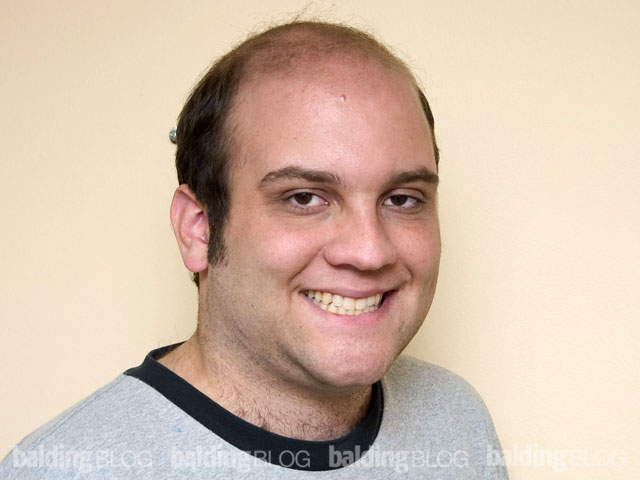
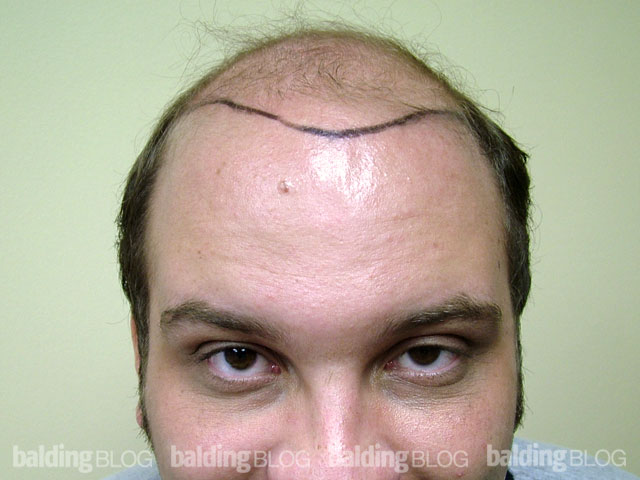
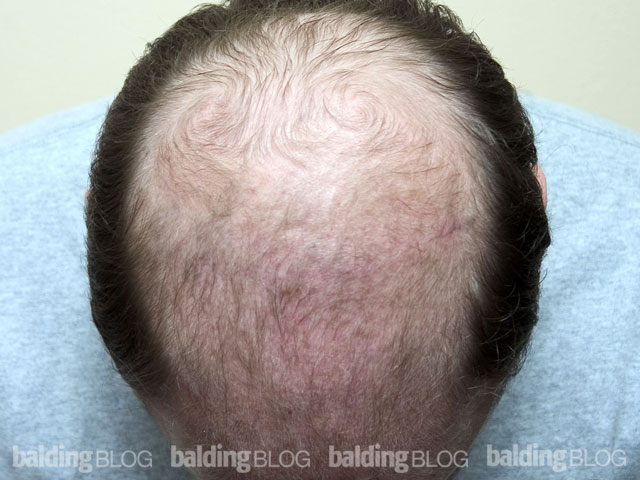
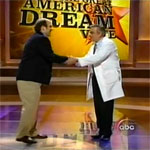
Dr Rassman on The Great American Dream VoteI received quite a few emails today from readers of Balding Blog that saw me on the new Great American Dream Vote television show last night on ABC. Thanks for writing in to let me know you saw the program. I was only on there for a few moments as part of the prize package for the dream winner named Russ, but it was a fun experience. Russ is a very nice 22 year old college student with significant hair loss — Norwood Class 6/7 balding pattern (Class 7 is the worst with only a 3 inch rim of normal hair around the side and back of the head and Russ is already close to that pattern).

The basic idea of the show is that a number of everyday folks are selected to go up on stage to tell the audience what their dream is (from opening a flower shop to opening a dog rescue shelter to having a full head of hair) — and eventually the contestants are narrowed down to only 2. Those 2 contestants are then voted for by the home audience by a toll-free phone number, and the person with the highest amounts of votes gets their wish. Young Russ was chosen! He will receive hair transplant surgery at the New Hair Institute, as well as a bevy of other prizes (of which I have nothing to do with)! He’s been quite overwhelmed by all the attention he’s received and has headed back home to get back to his schooling. He’ll be back out to my Los Angeles office very soon to have his procedure performed, and I’ll be sure to post photos of his results as the updates are sent to my office. In the meantime, here are some photos I took at his consultation that really show off how much work he needs. Click the photos to enlarge.

Dr Rassman Can’t Say Anything Bad About Merck, Propecia, or the FDA?

Comment in response to Finasteride Induced Depression?:

I found that reply highly inadequate. It seems Rassman, as valuable a resource as he is, can say nothing bad about Propecia (or Merck or the FDA). The sensible reaction to a study that shows a statistical difference in depressive symptoms among finasteride consumers ought to be a warning to depression sufferers. I find it peculiar for a man with a scientific background to (rightly) show severe skepticism toward alternative approaches to hair loss, but to conspicuously lack such skepticism about a drug whose only safety guarantee comes from a manufacturer-funded study from a corporation that has been shown to suffer from sponsorship bias. It’s unfortunate. More could be said beyond “this problem is rare [evidence?] and this drug is totally elective.” It’s the equivalent of, You don’t like it? Don’t take it! That option is obvious. Dr. Rassman should instead state the plain truth: The health consequences of long-term finasteride use (including irreversible biological changes) are uncertain, because that cannot be established by such minimal clinical study, and therefore taking the drug is a gamble.

Read the referenced study about finasteride and depression and you’ll find very clearly that it states, “In conclusion, this preliminary study suggests that finasteride might induce depressive symptoms. Although our data suggest a slight change, the side effect should be considered specially when the medication is prescribed for patients, who are more susceptible for it.”

If someone is going to get worked up about what could amount to nothing, simply not taking the medication would be the only logical solution. I don’t know what more I can tell you. Propecia is not a lifesaving drug and taking it is completely elective. I don’t downplay possible side effects, but the fact is, they are very rare in my practice. I have seen some cases of increased depression in previously depressed people, and changes in feelings or the way they think have also been noted. And of the few patients that have reported these side effects, all have elected to stop taking the medication for a month or so to see if the problem subsides. The drug has been available to the public for over a dozen years, so there is a massive number of patients taking it all over the world. The US FDA requires that drug companies report new side effects as they are reported by prescribing physicians.

It’s unfortunate that you feel the need to try to discredit me, but I’ve already written in the past about how the FDA isn’t perfect, I’ve got nothing to gain by kissing up to Merck, and common sense should tell you that some degree of gambling is involved when you take any drug. As I’ve said in the past, everyone can react differently to medication. With that in mind, Merck makes the only FDA approved oral hair loss treatment, and if it seems like I’m talking that medication up quite a bit, its because I’ve seen it work wonders and continue to see it daily in my patients.

Dr Gho’s Recently Published Partial Follicular Unit Extraction Study

What are your thoughts on Dr. Gho’s partial extraction stuff? There’s a new study in the Journal of Dermatological Treatment:

Link: Donor hair follicle preservation by partial follicular unit extraction.

We are aware of this and I believe I’ve commented on partial unit extraction before. Similar work has been done by others with very different results, so I am a little skeptical. First of all, only five individuals were used in the study and between 100-150 grafts were harvested. The results look very promising, but I do not understand how you can achieve a success rate over 100% (104.1%) like is mentioned in the results.

It is also difficult to understand how one could keep track of where the 100 to 150 grafts were harvested from to see if they regrew hair. Think about this. Unless you make a clear mark (like a circular tattoo) around where you harvested the grafts, how can you say the hairs grew back? In the end, with all due respect to Dr Gho, I remain a bit of a skeptic.

Dr. Gho’s Method for Hair Regeneration/Cloning

A reader send this posst to me:
Subject: New data on Dr Gho’s stem cell method

Message Body:
In 2012, you suggested the circumstances for making an exhaustive documentation on Dr. Gho’s ‘stem cell method’. The idea was to count the number or percentage of transplanted hairs that actually grew, along with investigating the donor.

Fine, but what then? Who validates it? Who can say whether such an effort is scientific or not. And what about credibility?

A sizeable study of such sort was made very recently, with photos. See it here:
https://www.baldtruthtalk.com/threads/26632-HASCI-analysis-w-photos-results

There is nothing here that looks lkike science to me. This is the problem I have had with Dr. Gho’s research.