Can You Use Rogaine for African American Hair

I am an African American woman and have braided hair…is it safe to use Rogaine on my scalp???

If you are losing hair, it would be advisable to find the cause for the hair loss before seeking treatment. Rogaine is a medication to grow hair. It does not matter if you are African American, a woman, or have braided hair. If you are concerned about hair loss, treatment options, or side effects associated with medications, please see a doctor.

Can You Use Leg or Body Hair for Eyebrow Transplants?

Can You Use Leg or Body Hair for Eyebrow Transplants? I understand that if you use head hair for eyebrow transplants, the hair will keep growing longer than the other hairs on the eyebrow and I don’t like cutting my eyebrows.

leg-hair

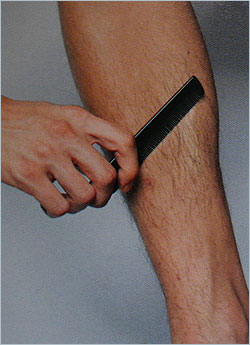
Leg hair has a different hair cycle than head hair. Some body hair has 70% of its life cycle in telogen (sleep) and does not appear on the recipient area transplanted therefore but 30% of the time. So a successful eyebrow transplant with body hair, will keep to its growth cycle. It will disappoint the recipient as only about 70% of the hair will grow at any one time, even if it was successfully transplanted. There is no way to stop head hair moved into the eyebrow from growing. I generally joke to my patients that they can grow a pony tail from an eyebrow transplant. So basically, you will have to cut these hairs twice a week or so, and when you cut them, they must be cut on an angle making the tip look sharp.

Can You Transplant the Widow’s Peak?

I want to have a widow’s peak like I did when I was younger. Can you transplant a widow’s peak?

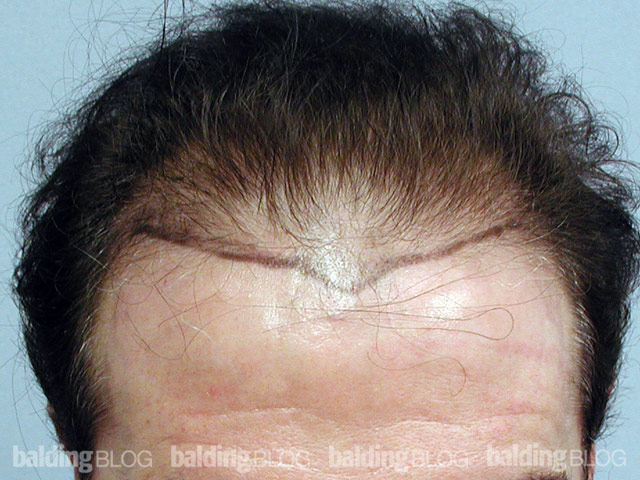
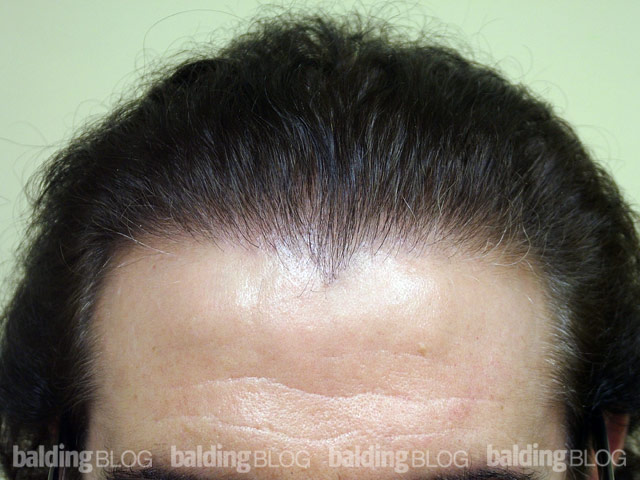
Yes, you can transplant the widow’s peak. People have different types of widow’s peaks, with some having different directions. Any of them can be made. Here’s a widow’s peak that is 100% man made, along with the entire frontal hairline. The “before” photo is on the left, followed by the “after” on the right. The “after” photo was taken after two sessions totalling 3,702 grafts. Click the images below to enlarge.


This patient is also featured on the NHI website:

Can you thicken miniaturized hairs?

I had diffuse thinning for 2 years, and now my hair is suddenly regrowing, will miniaturized hairs on right side of my hairline get thicker?

Miniaturization in genetic hair loss reflects an early stage of hair loss. Miniaturized hairs can be seen in various stages of miniaturization. For example your normal hair shaft is 70 microns in thickness, a miniaturized hair could be any thickness less than 50-60 microns on any particular individual. So in the earliest stage of hair loss, it might be 50 microns in thickness and over time come down to 40, then 30, then 20 microns and at some point it might just be like a tread with almost no thickness to it at all. All of these are miniaturized hairs. When people take the drug finasteride, it often reverses the degree of miniaturization such that a 30 micron hair thickness which is less than 50% of its original value, may thicken to 90% or at times 100% of its original value. That is why I like finasteride as it works both to reverse miniaturization and to stop the hairs from both miniaturizing and falling out directly (another manifestation of hair loss).


2020-07-10 07:23:34Can you thicken miniaturized hairs?

Can You Take Finasteride Propecia for Diffuse Patterned Alopecia (DPA)?

1. Have DPA young patients (Early 20´s) more oportunities with finasteride in comparasion with a MBP who have a normal patron (NW 6).
2. Have you ever seen a early 20´s with DPA who have a good response to finasteride for a long time (10 years)?

I am a 21 years old and I have taken finasteride since I was 18 years.. My dermatologist prescribed it to me.

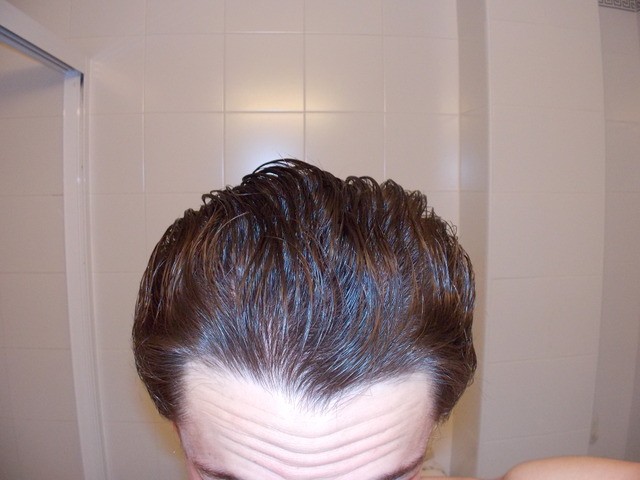
Here you have photos of mine when I start the treatment (2012) and now
(2014).

You have my permission to publicly use it.
dpa

Diffuse Pattern Alopecia (DPA) is basically the same as Male Pattern Balding otherwise known as Androgenic Alopecia. DPA, as the term implies, shows up as diffuse hair loss that occur in a “pattern” such as you see in male pattern balding but the permanent zone on the back and side of your head not impacted.

Finasteride (Propecia) is used for the treatment of this condition (DPA, AGA, MPB – they are all the same).

There is another condition called Diffuse Unpatterned Alopecia (DUPA), which may be genetic, but does not respond to the drug finasteride (Propecia). DUPA is uncommon; however, it is critical to have your doctor make this diagnosis before being considered a candidate for hair transplant or medication. These DUPA male patients often get a failure of the transplant, even if on the drug finasteride.

I cannot make a diagnosis with your photo and this blog is not a place for making diagnosis. I also cannot predict what will happen in 10 years. I am not a fortune teller. I have seen men in their early 20’s start finasteride for male pattern balding and has kept most of their hair. I have also seen them lose their hair rapidly despite being on finasteride as their genetic predisposition overtook the drugs ability to slow things down. It doesn’t mean that the drug didn’t work.

Can you predict a final hair loss pattern?

Is it true that a trained doctor or professional can predict an someone final hair loss pattern?

Not 100%, however using family history, timing your appearance of balding (when you started), how fast it is moving, miniaturization analysis and most important if you have a significant amount of hair get a HAIRCHECK test (https://baldingblog.com/haircheck-test-how-it-is-done-video/), then I might be reasonably confident I could advise you on your final balding pattern, especially if you are over 25 years of age.


2020-03-27 09:52:12Can you predict a final hair loss pattern?