At 22, I think I am developing a Class 6 pattern of balding

Say I‘m 22 now and my final pattern is NW6 which I will reach by the time I turn 30. I am NW 2 now and my hair loss is not aggressive, medium I would say. Can I maintain the hair for long? If the final pattern is that severe?

The only possibility is the drug finasteride, but I don’t know if you can stop the pattern from developing but you can probably slow down its onset. Get a doctor who specializes in hair restoration like me, who can measure your balding accurately, your donor resources and then follow you as your hair loss situation may or may not change under treat,emt


2019-04-08 13:16:25At 22, I think I am developing a Class 6 pattern of balding

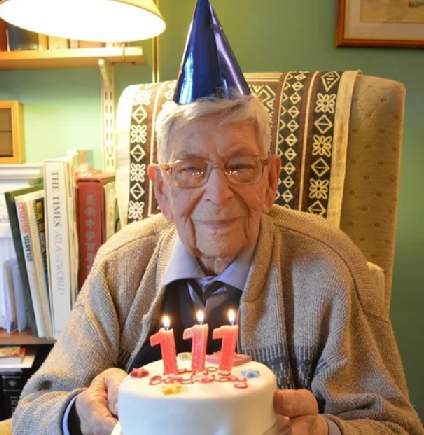
At 111, he had hair (photo)

The oldest man in the world, 111-year-old Bob Weighton. A genetic freak for aging and hair. Just look at that density!

My maternal grandfather died at 102 and he had more hair than Bob Weighton because he never lost his juvenile hairline (like Bill Clinton). The other pictures is his birthday cake, but just three candles?

I Have Asymmetrical Receding Hairline

I share this because I think Im a pretty good example of aysmmetircal receding of the hairline. I am a 27 year old (half Italian half English caucasian male) and my right corner of my hairline began to slowly recede exactly two years ago.

The left is still more or less compltely in tact ( I know it will catch up in time)

My father is 49 and he has the same hairline as this guy images (but short hair not long)

No hair loss at the crown (or negligible) and heavily receded hairline, but overall a decent amount for a near 50 year old. It is thinning more the last few years though. I think he said he started balding at 27.

His father has slightly more hair than him, basically a near full head of hair at 75. My mother´s father has a Norwood at 75. There are no complete baldies in my family.

I guess I would like this to be a ‘mature’ hairline but Im not sure that exists anywhere other than in moviestars and this will continue to receded.

As I said, my left side is totally fine, my right side has receded an inch or so and in that space where the hairline was is some minituarisewd hair. Behind it the hair appears fine and not miniturarised. Very thick hair overall.

Thoughts?

It’s quite simple. We are all built differently! In fact we are not quite symmetrical as you may think. Some have uneven length arms, uneven shoe sizes, uneven smiles, etc. Hair line and recession is not immune to such asymmetry. On a positive note (if you want to call it positive) the other side will likely catch up with the receding side with time.

Asymmetrical beard and hairline

I seem to have less hair on the right side of my face in relation to the left side, but yet nobody else in my family has this issue. What is usually the cause of this and is a hair transplant the only solution?

Some men develop asymmetrical beard growth. If you are just starting growing your beard in the past year, don’t worry. Also the transition from a juvenile hairline to a mature hairline is also often asymmetrical as well.

Astressin-B

Does anyone think the new drug called astressin-B has any possible benefits to regrow hair? I am surprised no one has asked any question about the new finding made last month. Researchers claim that mice grew hair when injected with the drug astressin-B, how far is this true and how long would it take for the treatment to be available.

Thanks

Actually, we did write about this last month.

Quick recap — researchers discovered that a compound (astressin-B) that blocks the action of a stress hormone called corticotrophin-releasing factor (CRF) was able to regrow hair in genetically altered mice. There isn’t enough information available to discuss anything beyond what was published. It is all hopeful, but the FDA process will take years before safety and effectiveness is proven in humans.

Is there an association between finasteride and Peyronies disease (Penis curve when erect)?

Peyronies disease from tressless

There are many people with such deformities. The association with finasteride has not been shown as one on one. Despite this, there are many claims that the two are related and the courts are full of men with such complaints. The prevalence of Peyronies disease is 1.5-6.5% (1.5% in young men and more common in older men as high as 6.5%) and this has nothing to do with the drug finasteride. Pictures of this condition can be found here: https://peyronies-disease-help.com/pictures-peyronies-disease-penile-curvature/

Association Between Early MPB and Prostate Cancer?

Snippet from the abstract:

Results: Our study revealed that patients with prostate cancer were twice as likely to have androgenic alopecia at age 20 [odds ratio (OR) 2.01, P = 0.0285]. The pattern of hair loss was not a predictive factor for the development of cancer. There was no association between early-onset alopecia and an earlier diagnosis of prostate cancer or with the development of more aggressive tumors.

Conclusions: This study shows an association between early-onset androgenic alopecia and the development of prostate cancer. Whether this population can benefit from routine prostate cancer screening or systematic use of 5-alpha reductase inhibitors as primary prevention remains to be determined.

Read the rest — Male pattern baldness and the risk of prostate cancer

I was recently asked by a reader of this site about a link between developing early genetic balding and having prostate cancer somewhere down the road, so I researched it a little and found the above article. I don’t think we wrote about it before, but this study was published in the Annals of Oncology a little over a year ago.

The MPB / prostate cancer connection seems to be present, but what to do about it, if anything, remains to be seen. The suggestion that the 5 alpha reductase inhibitors like finasteride, may have a role in reducing the risk for prostate cancer, but that process is not well understood and the long term risks of such drugs are presently under a cloud of controversy.

There were 669 patient studied, of which 388 had a history of prostate cancer. There was no association on the degree of balding, just the presence of genetic balding patterns earlier in life. Men under the age of 30 and those who have developed vertex (crown) balding seem to have a higher prostate cancer risk. The study was taken in many countries and each patient answered questionnaires, from which the data was extracted.

Aspirin reduces the effectiveness of minoxidil

https://pubmed.ncbi.nlm.nih.gov/30226287/

Low-dose daily aspirin reduces topical minoxidil efficacy in androgenetic alopecia patients

Affiliations

Abstract

Topical minoxidil is the only US FDA approved OTC drug for the treatment of androgenetic alopecia (AGA). Minoxidil is a pro-drug converted into its active form, minoxidil sulfate, by the sulfotransferase enzymes in the outer root sheath of hair follicles. Previously, we demonstrated that sulfotransferase activity in hair follicles predicts response to topical minoxidil in the treatment of AGA. In the human liver, sulfotransferase activity is significantly inhibited by salicylic acid. Low-dose OTC aspirin (75-81 mg), a derivative of salicylic acid, is used by millions of people daily for the prevention of coronary heart disease and cancer. It is not known whether oral aspirin inhibits sulfotransferase activity in hair follicles, potentially affecting minoxidil response in AGA patients. In the present study, we determined the follicular sulfotransferase enzymatic activity following 14 days of oral aspirin administration. In our cohort of 24 subjects, 50% were initially predicted to be responders to minoxidil. However, following 14 days of aspirin administration, only 27% of the subjects were predicted to respond to topical minoxidil. To the best of our knowledge, this is the first study to report the effect of low-dose daily aspirin use on the efficacy of topical minoxidil.

Keywords: alopecia; aspirin; minoxidil.


2020-11-13 06:21:36Aspirin reduces the effectiveness of minoxidil

Aspirin and Prostate Cancer

Below is a medical publication which shows that aspirin or similar nonsteroidal anti-inflammatory drugs taken daily reduce cancer of the prostate risks in elderly men. If it does that on elderly men, think of the great value it would have for younger men who take it for a longer period of time. The link between daily aspirin for prevention of colon cancer and heart attacks have been well documented and generally recommended for all men who do not have a bleeding disorder or specific contra-indications. The saying that ‘An Apple A Day Keeps The Doctor Away’ might be changed to ‘An Aspirin A Day Keeps The Doctor Away’.

ARTICLE: Cancer J. 2006 Mar-Apr;12(2):130-5. Association between nonsteroidal anti-inflammatory drugs and prostate cancer occurrence. Dasgupta K, Di Cesar D, Ghosn J, Rajan R, Mahmud S, Rahme E., Research Institute, Department of Clinical Epidemiology, McGill University Health Centre, Montreal, Canada; Department of Medicine, McGill University, Montreal, Canada.

Prostate cancer is the most common malignancy among men in Western nations. Previous studies indicate that nonsteroidal anti-inflammatory drugs have an inhibitory effect on prostate cancer cells. We evaluated the association between frequent use of nonsteroidal anti-inflammatory drugs and prostate cancer occurrence.

METHODS

We conducted a nested case-control study using medical administrative databases. All men older than 65 years of age who had filled at least one prescription for nonselective nonsteroidal anti-inflammatory drugs, cyclooxygenase-2 inhibitors (coxibs), aspirin, or acetaminophen between January 1999 and December 2002 were eligible. Among this group, we identified men who underwent prostate biopsy between January 2000 and June 2002 and did not have a diagnosis of any cancer in the preceding 2-year period. Cases were those with a diagnosis of prostate cancer. Controls were those who did not receive a diagnosis of any cancer. Logistic regression models were used to determine associations between prostate cancer occurrence and frequent exposure (more than 4 months) to nonsteroidal anti-inflammatory drugs/cyclooxygenase-2 inhibitors or aspirin during the prior 2 years in comparison with no exposure to any of these drugs, adjusting for age and prior finasteride use.

RESULTS

We identified 2025 cases and 2150 controls. Older men were at greater risk for developing prostate cancer. Exposure to nonsteroidal anti-inflammatory drugs/cyclooxygenase-2 inhibitors was associated with a reduced likelihood of prostate cancer (odds ratio [OR], 0.71; 95% confidence interval [CI], 0.58-0.86) as was exposure to aspirin (OR, 0.84; 95% CI, 0.74-0.96).

DISCUSSION

Our results suggest that among men 65 years of age or older, frequent use of nonsteroidal anti-inflammatory drugs/cyclooxygenase-2 inhibitors and use of aspirin are associated with a reduced risk of prostate cancer.


2006-05-10 14:42:36Aspirin and Prostate Cancer