Scalp MicroPigment SMP Review of Hair Transplant Scar

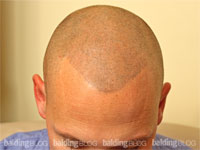
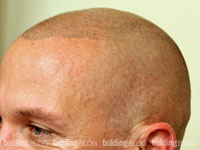
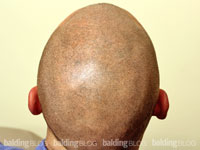
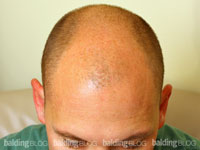
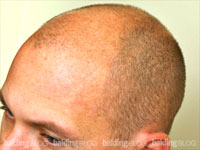
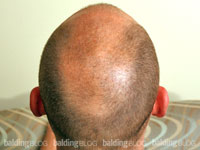
This is a review of a patient who was happy with his hair transplant results but his linear hair transplant scar bothered him when he wore his hair short.
We kept his hair long (not shaved) and performed the SMP procedure under local anesthesia. The following results were immediately after the first session. He will need a follow up session for better blending.


2014-09-16 14:06:30Scalp MicroPigment SMP Review of Hair Transplant Scar

Scalp Micro-Pigmentation Use in Covering Scars (with Photos)

This is a typical patient with a series of scars, some from a hair transplant (the large smiley scar). This man elected to cut his hair very short and get pigmentation into the scar. Although an additional session would be a good idea to camouflage the scar better, he stopped at what you see below (on the right). Now if he grows his hair out, the scar should be close to invisible. The red ‘blotch’ you see on the back of his head has been with him most of his life.

The photo on the left is before SMP; The photo on the right is after SMP. Click to enlarge:


Scalp micro pigmentation quality and recommendation

I can’t comment about Europe, but we are the best traditional Scalp Micropigmentation in California here: https://scalpmicropigmentation.com/ . I just published an article about a Scalp Micropigmentation breakthrough with a new system which we just started using and are the first in North America to have it:

“We introduced a new needleless microjet injector that uses laser pulse energy to inject tattoo pigments for Scalp Micropigmentation (SMP) directly through the skin without a needle”. It also has the advantage of a one-pass use, which means that when the pigments are deposited, it is permanent and doesn’t have to be repeated.

It has the advantage of an almost painless experience, eliminating the need for anesthesia.that has no needles and does not require anesthesia. Right now, there is not much availability of this technology but I am sure it will change soon. We are offering it to a limited number of people.


2019-08-16 11:31:57Scalp micro pigmentation quality and recommendation

Scalp Micro-Pigmentation — An Alternative to Hair Transplantation

New Hair Institute is pleased to introduce a new service we’re offering —

Scalp Micro-Pigmentation (SMP)

Like any tattoo process, the technique involves placing a special pigment into the skin of the scalp to mimic ‘hair follicles’ almost to the size of a closely cropped head of hair. Think 5 o’clock shadow or stubble. We have been using Scalp Micro-Pigmentation (SMP) for two purposes:

  1. As an alternative style for making a balding person look full headed with the placement of pigment into the scalp (example below)
  2. To camouflage the scars from a strip procedure or anywhere on the scalp. Almost any size scar can be treated with SMP (example will be posted in the coming weeks).

So what does it look like?

NW7This patient came in for a hair transplant consultation. He likes his hair cut close, so follicular unit extraction (FUE) would have been a reasonable way to get there without a detectable linear scar that traditional strip surgery would inevitably produce. The problem for him is that he needed somewhere between 4000-6000 grafts to cover the balding area. We routinely offer up to 1500 FUE grafts per session and recommend the strip technique for larger sessions. That means that he could have been looking at 2-5 FUE surgeries to obtain the final look he wanted and as he continued to bald, he might run out of donor hair before completing the final look he wanted. This patient was heading towards a Norwood class 7 pattern, and eventually he might need 6000-8000 grafts to follow the hair loss he would experience over time when/if his Propecia would stop producing the benefits he is now getting from the drug. As hair transplantation is a supply/demand process, would he have enough hair to complete the entire transplant process to a fully evolved Class 7 pattern? I doubt that he would.

The pictures below tell the rest of the story. He came in with his balding pattern and left the same day with a completely different look, certainly not a balding look.

AFTER SMP:


BEFORE:


I want to emphasize that this patient will have to maintain this short-clipped look unless he elects to have a hair transplant. The upside of this technique beyond what you see is the low maintenance he will have, just trimming his head about every other day. If he is against medication use (like Propecia) this style allows that choice, but as balding progresses as it inevitably will, touch-ups of the SMP technique will be needed. The downside of this is that the pigment is considered permanent, so the style must be acceptable for him and it is a lifetime decision.

This patient elected to do the process under local anesthesia to subdue whatever pain might be there during the procedure, but like any cosmetic tattoo procedure, it can be done without anesthesia. He may require one or two touch-ups to the look that he now has, as the pigment tends to fade a bit after the first session, but he does not have to look at repetitive surgeries into his future.

He’s been thrilled with the initial results. His overall comments to me reflected upon the freedom that his new look gives him and how much he loved rubbing his bald head. No more styling gels and repetitive worries about going bald have made him a happy man. He also knows that when hair cloning or hair multiplication become available (fingers crossed), he can just add the value these breakthroughs will give him, and maybe get him the hair that he wanted at some appropriate time in the future.

Over the next few months, we’ll show more of the work we have been doing with Scalp Micro-Pigmentation (SMP). Contact my office at 800-NEW-HAIR (or 310-553-9113) for pricing and availability.


Update: I answered a bunch of questions posed by our readers in the comments below.

Scalp Laxity Exercises Before Hair Transplant Surgery?

I have had several HT procedures. The latest was in March 06 and had HT’s placed on the frontal part of my scalp. They have not yet began growing. I know this because I can’t see any new hairs growing on my hairline. How long does it take for hair to grow after you have had three to four in that particular area? Can I do or take something to start making them grow? I looked on the Hasson and Wong website and they recommend doing Scalp Laxity exercises to give skin more flexibility prior to surgury. If you do these a few months after you have a HT in prep for another HT will this cause the scar to stretch? Will this improve blood flow to the scar for possible better HT’s into the scar in the future?
Thank you Dr.

Hair transplants always take up to 5 or 6 months to start growing. Previous hair transplants will not affect the start-up phase. Some doctors believe that minoxidil helps get the hair growing faster. I have tried minoxidil on one side of the head on a number of patients and did not see a difference in the rate of growth.

There is an exercise to increase the scalp laxity. It generally will take a month to get some gain from such exercises. Scalp exercises after the first 3-4 months of a previous surgery should not cause the scars to increase in size, nor will it increase the blood supply.


2006-09-11 09:27:16Scalp Laxity Exercises Before Hair Transplant Surgery?

Scalp Laxity and Hair Transplants

Wonderful blog you have up here, Dr. Rassman. I just wanted to know how scalp laxity affects a person who is willing to get a hair transplant. If i have a very loose scalp, how will it benefit me when i am getting a hair transplant procedure done?

Increased scalp laxity will allow the surgeon to harvest more hair in one surgery. It is like pinching a part of your skin. The more you can pinch your scalp (skin), the more hair comes with it.

Scalp Lacerations Required Staples — Will Hair Regrow There?

About a month ago, I sustained two lacerations to the scalp on the back of my head. They were closed with seven staples. The area was not shaved at the emergency room. The largest of these lacerations is about 20 mm long and 1 mm wide. However, the resulting bald area exceeds the wound width by approximately 5 mm (making the width of the bald area 6 mm). I know no hair will grow again within the wound parameters. So I ask you:

1.) Is the prognosis good for full hair regrowth outside the wound?
2.) How many weeks (or months) must pass before I could justifiably believe there would be no more significant hair regrowth?
3.) What are the potential surgical corrective measures (e.g. cutting open the scar and running hair from one hair bearing edge up through the scar tissue)?

Hair loss with laceration repairs is common around the wound. The size of the bald area will vary depending upon the direction of the wound. The scars will be less significant in the normal Langer lines direction (see here).

The regrowth will usually occur within the first 4 months or so and any hair that has not grown in 6 months may probably reflect some permanent hair loss. Scars from scalp lacerations that form are not easily amenable to excision, as they tend to recur (I am assuming that the scars were properly closed and that there were no unusual circumstances present at the time of the closure, such as dirt in the wound).


2011-03-29 15:21:05Scalp Lacerations Required Staples — Will Hair Regrow There?

Scalp Lacerations – Follow-Up

This is a follow-up to our post from earlier this month: Scalp Lacerations Required Staples — Will Hair Regrow There?

Thank you for responding so concisely to my query regarding hair regrowth surrounding a scalp laceration closed with staples.

The orientation of the wounds seems to be almost perfectly aligned with the Langer lines (the wounds are located upon the occipital protuberance and are titled stightly from being perfectly horizontal). From your commentary, I find this encouraging.

Also, to remove the guess work of assumption, the wounds were stapled about 1 hour after initial injury, the wounds were created by the fist of a criminal assailant, and no infection has henceforth appeared. I even went so far as to have the staples removed by a plastic surgeon so as to avoid further damage caused by clumsiness.

I gather, from your comment, excision is contra-recommended. How many follicular hair units am I looking at to fill the described area via hair transplant if there is not satisfactory hair regrowth?

The size of the wound and the character of your hair will dictate the number of grafts. If the infrastructure of the skin is intact, one session should be adequate, but if there is no infrastructure (can feel the skull) then sometimes two smaller sessions are needed.

There is no substitute for a direct examination, which then relies on the judgment of the surgeon and his/her experience.

Scalp Is Itching, But Not Inflamed or Red

Doc,

I am 23 and for the past three years I have experienced an itchy scalp and hair loss. About a year ago I went to the doctor and he said to use anti-dandruff shampoo. However this has done nothing to cure the itchiness of the scalp, which seems to be associated with hairloss, with both becoming more intense over the last six months. It seems to be rapid thinning across the crown and top midline where prior it was a slow receeding hairline. My question is why the sudden change from a slow receeding hairline to rapid hairloss and why the itchiness that is associated with the hairloss, knowing that my scalp is not red or inflamed. Sometimes it feels like a crawling sensation across the scalp.Also, I am thinking of taking propecia to slow the hair loss. Is this wise? What should I know before starting?

Dry scalp tends to cause an itchy scalp. The more you scratch or think about your scalp, the more you will scratch your scalp. Excessive scratching can cause hair loss if it pulls the hair as you scratch (called trichotillomania). I am not certain if there is a true relationship between itchy scalp and hair loss. I believe taking Propecia would help with Male Pattern Baldness (MPB), but as I have said many times on this blog, you need to have a diagnosis first. Propecia could either regrow hair, stop the hair loss, or slow down the process of hair loss in someone with real male genetic hair loss.

Scalp Flap Experience

I am a patient of yours and I read a previous blog question and response from you the other day where you worked the problem out with the patient. I came to you 13 years ago with a problem that others could not help me with. After I explained the problem to you (which you listened carefully) I went into my solution. Although I prefer you not to use my name, you might want to tell your audience my story. I have been forever in your debt and grateful.

I remember you very well. You came to me after having done two flap procedures where sections of your scalp were moved from the back and sides of your head to cover the front (like a banana peel). This was an operation invented by a man from Argentina (Jury Flap) that was popular amongst certain surgeons in the late 1980s. This left the patient with an unnatural hair line, hair lying in the wrong direction and a hair line that (on my particular patient in question) was located far too high. You had gaps in many areas of your frontal hairline and there was no hair behind the flaps, leaving you bald in the mid-head. The donor area was depleted of substantial amounts of good movable hair so the supply was very limited and you lost much of your native neck hair as a result of the stress of the procedure.

I remember our first conversation and what you told me. You said (out of context): “I have been thinking about this problem for a few years now. I have met with doctor after doctor and when I finally figured out a way to manage the problem, none of the doctors who I visited would do what I asked them to do.” You went on to explain that your hair had a very strong wave and character to it (Italian hair of medium weight) and that if some hair was placed in front of these flaps, far in front of the flaps, then you could style your hair with a comb-back and a pompadour (like Elvis but much more subtle) and an angled combing style would hide your problem. You told me that you used gels and blow drying to achieve your looks; and you were convinced that this solution could solve your problem if I could find enough hair to transplant. After the first surgery (which was experimental on my part) and the ensuing 12 months it took for the hair to grow out to a good styling length, the results were fantastic. Your creative styling did wonders for the 600 grafts we put into your frontal hairline area. The good news was that we performed four surgeries over the 8 years we worked on you and you got enough hair to address, not only the frontal defects, but also the balding in your neck hair, which was a complication of the flap procedure. Today, you still must spend a few minutes every morning styling your hair, but even my eye can not pick out any defect on you- you looked great when last we met for dinner at one of your restaurants! Thanks for allowing me to share your experience.