FUE question about framing my face

How far can I move my hairline down with FUE. I want to change the way I look and I was told that I need a lot of FUE grafts to get where I want to be.

There is no limit to how far you can bring your hairline down, the issue is to bring it down so that it improves your appearance and it is always normal. You need to work with an experienced hair transplant surgeon who can help you do this. FUE is now available in many surgeons hands, but make sure that they are experienced in it by asking to meet with some of their patients who had it done. We offer this every month at a monthly open house event were former patients can discuss the nuances of the hair transplant process as they experienced it. Here is an example of a perfect hairline that I created: https://baldingblog.com/norwood-class-7-pattern-patient-received-11000-grafts-plus-smp/


2019-02-01 15:26:47FUE question about framing my face
How does my FUE recipient area look? (photos)

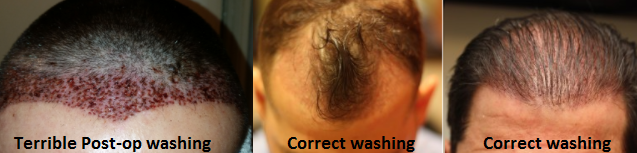
You have excessive crusting as a result of poor post-operative washing techniques, or absence of them. An FUE is treated just like a regular hair transplant with regard to the recipient area, but the donor area has open wounds which require daily washing with soap and water. Within 3 days of surgery, you can resume full activities, heavy exercises if you wish. The recipient area requires daily washes as well to keep the recipient area free of crusts. I generally recommend the use of a sponge and supply my patient with a surgical sponge to fill with soapy water and press on the recipient area daily. By repeating this daily, all crusts can be washed off without any fear of losing grafts. IF any crust are present, use a Q tip and dip it into soapy water, and roll it on the crusts and that will lift them off without dislodging them, but never rub them, just roll the Q tip on the recipient crust. I like to see no evidence of any crusting in the recipient area and the crusts from the donor area gone in 7-10 days with daily washing much like the two patients on the right.

I don’t like the idea of anyone removing grafts that have scabs on them because we have published a paper in a formal medical journal, that when a person pulls off a scab (crust) from a recipient area in less than 12 days, the risk of losing the graft is very high. Put a shampoo on your head and let it sit for 10-15 minutes, then gently work the crusts with your fingers. This will take days to get the crust off so that you do not disturb the grafts. See the medical paper we wrote in a major journal below in the web reference that proves my point. Look at the two patients on the right, both one day after FUE sessions and both clean without crusts.

poor and good wash

FUE Questions

Hi,
I am seriously thinking of having a FUE procedure during the next 2-4 months. I’ll appreciate if you can please help me with the following info.
1. How do i know if i am a suitable candidate for FUE?
2. How long do i have to wait after the test to have the procedure?
3. how long do i have to wait after the surgery, before i can go about my business?
4. I see that you have a special offer going on now, what is the final per graft price after taking into account the travel reinbursement and your offfer?

There are many things to consider before deciding on any hair restoration procedure. I’ll answer your questions on FUE (Follicular Unit Extraction) first…

  1. At NHI we use the FOX™ test to determine if you are a candidate for FUE. The FOX test lets us know how easily viable grafts can be extracted. If there is a high percentage of viable grafts, you would be ‘FOX positive’.
  2. The FOX test can be performed any time before surgery. There is no waiting period once you have had the test.
  3. Patients have different tolerances for surgery. Many patients go back to work the next day, others wait a day or two. As long as you follow the post operative instructions, you can resume your daily routine as soon as you are ready.
  4. The 2005 summer special fee applies only to traditional strip surgery. Travel expense reimbursement is up to 5% of the cost of the surgery.

Some of the other considerations to keep in mind are FUE is a good choice for patients who:

  • Need a small amount of grafts
  • Do not have an advanced balding pattern
  • Those who want to wear their hair very short
  • Those who have a very low donor supply, a scarred donor area, or very tight scalps
  • Patients who tend to heal with wide scars
  • Athletes who must resume full activity soon after the procedure

BUT, most importantly, continue to research, make sure all of your questions get answered, insist on seeing patient results in person, and make sure that you choose a doctor who has your best interests in mind.

FUE Review of a Patient at NHI with Photos- Click See Up Close Hair Line Results

FUE review at New Hair Institute

FUE review at New Hair Institute


FUE review at New Hair Institute

Click on photo for LARGER SIZE

FUE review at New Hair Institute

Click on photo for LARGER SIZE

This patient is not going bald. He may be classified as a Norwood 2 or as having a mature hair line. He had the surgery because he did not like his raised corner hair line. He wanted a lower, relatively straight juvenile hair line (he once had). He was old enough (over 30 years old) where chances of him losing more hair or shock hair loss was minimal. He understood this is a cosmetic procedure and was made aware he may need more than one surgery to achieve the density he was looking for.

He chose the FUE method of graft harvesting since he wanted the flexibility to keep his hair buzzed or kept short.

The total number of grafts he received was 1600 grafts. He had two separate FUE procedures of 800 grafts with each surgery spaced out about 1 year apart. The final result you see is after 2 years. If you click on the photos for a close up ZOOM you can see that the density achieved was close to normal (non-balding) hair density. The reason he needed TWO (2) separate surgeries was because you cannot fit 1600 grafts in such a tight space. Each graft can be about the size of a rice grain. After the hairs have grown out, you can fit another graft in between the spaces.

He occasionally attends our monthly Open House events if anyone would like to meet him in person.

FUE Scars and a Bad, Immoral Doctor who sold him lies, promises and bad surgery

For this man’s doctor, each patient was about money, i.e. how much money he could extract from every patient. Many young men fall victims to such doctor behavior as this man did. The doctor told him that the 3000 grafts he was going to perform would not produce any scarring. This man only had a very small bald area in the two corners which could have easily be fixed with 500 grafts per side, but the doctor and his salesman told him he needed 3000 grafts (at least 2000 which were unnecessary). Many of the grafts in these two balding corners did not grow, but the doctor got his money, nevertheless, a lot of money. After the grafts grew in poorly, this man was stuck with white scars from the FUE which he was told was a scarless surgery (not true). He wanted to keep his hair short, but because of the scars, he could not. There are many things about this man’s terrible experience that bothers me: (1) he could not really afford the $30,000 he spent on these grafts (he overpaid even for a good surgery and went into debt to get it), (2) the grafts were taken from his neck area (which is not permanent hair so some of the hair that did grow will not be permanent), (3) he was lied to by the doctor and the doctor’s slick salesman about almost everything relating to the transplant and oversold the number of grafts by 2000 grafts, and (4) he was left with bothersome scars (which I fixed for him with Scalp Micropigmentation) at still another cost he should not have had. The first four pictures are of his ‘scarless surgery’. The second pictures were taken after we repaired the scars with Scalp Micropigmentation.
The patient does have recourse against this doctors by: (1) demanding his money back with the threat of legal action if he does not get his money back (I often help such patients find an attorney who will help them), (2) he can take his complaint to the medical board (in California, the medical boards license the doctors and they must investigate all such claims and if the doctor is found guilty, he could lose his license to practice medicine). I always agree to supply testimony for such patients to assist them to get justice for complaints either in court or for the medical boards. I am even more angry than this man because these slimy doctors give my profession a bad name and harm people. Doctors should be above this type of behavior.

FUE Scars, How do I fix these? (photo)

These scars reflect that your surgeon used a large punch and took it from a location that is not permanent hair. This is best treated with Scalp Micropigmentation?


2021-09-10 09:33:16FUE Scars, How do I fix these? (photo)

FUE Scars

Do FUE procedures form scars?

Yes, there are scars anytime the body is invaded by the surgeon, or any time you cut yourself. The scars come about when the edges attempt to close the gap. The FUE scars are circular, so the size of the scar somewhat reflects the size of the wound. To answer the question appropriately, let’s talk basic math and then convert the math to logic.

The chart here shows the size of the cutting punch and compares the size of the wound that is created. The scar reflects the size of the wound.


Diameter Area % change from smallest wound size
0.75mm 0.44mm square (baseline)
0.9mm 0.64mm square 44 % larger than 0.75
1.0mm 0.79mm square 78% larger than 0.75
1.5mm 1.77mm square 300% larger than 0.75


The reality of these number are that the 0.75mm leaves almost no scar, because the edges co-apt and there is minimal secondary healing as the scar fills from below as the side skin grows over it. With all of the wounds from strip harvesting, the scars are long and the wound is much larger. Such ‘line’ wounds can be seen when the scalp is shaved.

The 0.75mm wounds are impractical, but the 0.9mm wounds are the standard used in my practice. So in answer to your question; scars are related to the size of each wound. The smaller the wound for FUE (for example), the smaller the instrument used by the surgeon, the smaller and less noticeable will be the wounds in their final healing phase. Please see this previous post, Size of FUE Procedure, for discussion on actual yield rates. If only a needle is used (like the one you get with a flu shot) I sincerly doubt that you will ever find the scar with the naked eye.

I had FUE 1 month ago and now have a tender hairline

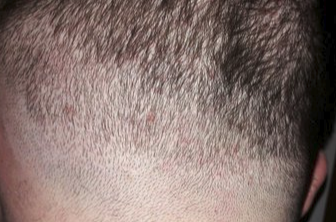
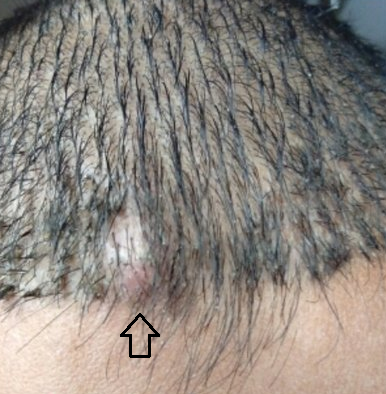
What you have appears to be an infected hair follicle cyst which we often call a boil. You should see your doctor and he most likely will drain it and relieve your pain.

boil


2017-09-15 13:46:33I had FUE 1 month ago and now have a tender hairline