Androgen Receptors, DHT, And Balding – Hair Loss Information – Balding Blog

Do you agree that in some persons, despite having DHT levels high since 16, but balding only started in 40’s, a plausible explanation would be that their androgenetic receptors was closed and only opened years later ?

Some people keep hair thick, strong hair, but suddenly after 38 years old or 40 years old, start to get miniaturization and became bald in 10 years. If they had androgenetic receptors open since the 17, they would have a balding progression since that age, and not suddenly start at 37 or 40, when DHT levels are not high as in 20 years old. Some doctors say androgenetic receptor have a date to open, genetically programmed. Otherwise balding would start in 15 years old. Some kids of 12 years old have balding, like some small crown loss. It’s rare, but there are. I suppose their receptors were prematurely open and even the pre-teen DHT levels were enough to start balding.

Block Quote

I don’t know. We can all theorize. Every hair has a biologic clock with regard to genetic hair loss. Medicine is not an exact science. My explanation has been rather simple. It’s genetics! If you have genetic hair loss, you could have started the balding process late in life. Ultimately, it doesn’t matter what receptors open or close or what your DHT levels are. It might be interesting to study, but I’m not sure that these things make a difference in the grand scheme of treating your hair loss.

Some people smoke all their lives and never get lung cancer. Some people live to be 114 years old (my great grandmother) without hair loss. Some people go bald at 40 or 50 years old. It’s the mystery of life. I haven’t figured it out yet.

Hair Loss InformationIs 6000 grafts in one session better than 3000 grafts in two sessions? – Hair Loss Information – Balding Blog

I just met with a Asian man with very low density, even for an Asian. He was considering the different harvesting techniques FUE vs strip surgery. He met with other doctors who represented that they could transplant 4000-5000 grafts in a single strip session and 3000 FUEs in a single FUE session. This poor man was confused when I suggested that his yield would be less than 2000 grafts with a strip surgery.

There is a great deal of hype on the Internet that people need to have a single large session of 6,000 grafts to get coverage and that is preferable to 3000 grafts in each of two sessions. I would agree if I did not know better. First let me state my qualifications for what I am about to say. I was the first doctor in the world to do 2000 grafts, then 3000 grafts than 4000 grafts in a single session back in 1992-4 and I have been doing larger sessions longer than anyone in the world starting back in 1992. I was using follicular units in large sessions before most of the doctors heard of the follicular unit, let alone the megasession. That would make me an expert on the subject of large sessions hair transplants and I doubt that anyone would challenge my expertise (see references below from prior to 1995). Add to that the fact that I practically invented the large session of small grafts. You may not know my training in surgery, but I am a board certified general surgeon who did everything from war surgery (in the Vietnam war) to extensive trauma, vascular and cancer surgery. That would make me more than qualified to perform a large session harvesting technique for modern hair transplantation.

Of course, if I could harvest 6000 grafts in a single session safely, I would do it more often. I have always had the supportive staff to carry out this type of surgery. But as safety is my guide in all circumstances, my judgments tell me often that taking out a strip which would yield 12,000 hairs (6,000 grafts) is often dangerous and would put the patient at risk to develop some complication. Please note that I clarified that a 6,000 graft harvest should yield about 12,000 hairs, so if a 6,000 graft harvest yielded substantially less than 12,000 hairs, then I might start thinking that smaller grafts were produced by sub-dividing follicular units which is a sin in my ‘ethical’ book. What makes it a sin is that as the fees are directly related to graft counts, sub-dividing follicular units as a routine accomplish two things (1) it raises the surgeon’s fee, and (2) they damage follicular units which tends to produce decreased hair survival.

A hair is not a hair. Fine hair has low bulk and when someone states that they can completely cover a bald man’s head with 6,000 fine hair grafts referencing a ‘gorilla’ result, they are just plain lying. Dr. Feelgood may market his god-like qualities, but Dr. Feelgood just ‘ain’t’ god.

I get rattled when someone tells me through the various internet forums that I should have given someone 6,000 grafts to manage his bald head and that if it was done by Dr. Feelgood, everyone knows that Dr. Feelgood always achieves high graft counts (no mention of the hair count of course). I would ask two questions, (1) what are the hair counts in such large sessions as a matter of routine, and (2) what do the donor wounds look like as a matter of routine. I know more than most what is possible and what is safe, and I know what is not. I use my judgment to ascertain safety and I really don’t believe for one minute that Dr. Feelgood would get 6,000 grafts (12,000 hairs) when I could only get 3,000 grafts (6,000 hairs), never, never, never. If a graft count in the 5000-6000 range is possible, I do them with the agreement of my patient.

The forum chat ‘folks’ who are not knowledgeable about the subtleties of a safe strip harvest and who believe in the marketing hype of some of the internet doctors can talk from their ‘armchair’ all they want. Either my patients are not typical and have tighter scalps and lower densities than Dr. Feelgood’s patients, or some of the doctors who claim these high numbers routinely are either lying to push up the numbers and claim a ‘mighty’ superman deed rewarded (of course) by making more money, or I am a monkey’s uncle.

Published References from prior to 1995 when almost every hair transplant doctor in the field was doing small sessions of large plugs:
# Rassman, W.R.; Bernstein, R.M. One of our greatest problems – lowballing! Hair Transplant Forum. 2(6); 1992.
# Rassman, W.R.; Pomerantz, M.A. The Art and Science of Minigrafting. International Journal of Aesthetic and Restorative Surgery. 1(1): 27-36; 1993.
# Rassman, W.R. A buyers guide to hair transplantation. Los Angeles, CA: NHI; 1993.
# Rassman, W.R. The minigrafts’ revolution, can we keep up ethically? Publication Journal of Cosmetic Surgery.
# Rassman, W.R. Everything you wanted to know about hair transplantation but were afraid to ask. Los Angeles, CA: NHI; 1993.
# Rassman, W.R. The fast track option: a common sense approach to hair transplantation. Los Angeles, CA: NHI; 1994.
# Rassman, W.R. Megasessions: Dense Packing. Hair Transplant Forum 4(3); 1994
# Rassman, W.R Concern about quality. Hair Transplant Forum 4(4); 1994
# Bernstein, R.M.; Rassman, W.R.; Szaniawski, W.; Halperin, A. Follicular transplantation. International Journal of Aesthetic and Restorative Surgery. 3:119-32; 1995.
# Rassman, W.R.; Carson, S. Micrografting in extensive quantities, the ideal hair restoration procedure. Publication to Journal of Dermatology, Surgery and Oncology, 1995
# Rassman, W.R. Follicular Unit Transplantation Megassessions, Hair Transplant Forum Intl. 5(5); 1995

Not Hair Loss News – Testosterone Products Double the Risk of Heart Attacks – Hair Loss Information – Balding Blog

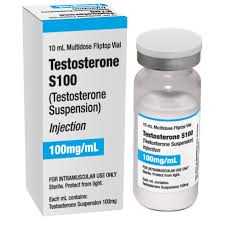
“Testosterone replacements can increase the risk of serious heart and blood vessel problems, Health Canada says.”

Block Quote

testosterone
The article is to the point and lists all of the common products that can kill you silently. I see patients every week who are taking testosterone supplements for a variety of reasons including: They test their testosterone levels and find it on the low side, they are weight lifters and think that they will be able to lift more weight, or they have erectile dysfunction and think that testosterone will cause them to have better sexual performance.

Remember Jim Fixx, the famous author of The Complete Book of Running who in his mid-thirties was 220 lbs and smoked 2 packs of cigarettes per day. He pioneered the role of exercise in keeping healthy, but died at the age of 52 of heart disease while Jack LaLanne, who died at the age of 96, added good healthy eating to his daily exercise routine. Women were complacent for years believing that their hormones protected them from heart disease (although some did take testosterone for better sexual performance), but for women who do not practice good eating and exercise, found that they were not immune from heart disease and may even be more prone to sudden death from heart attacks. Ask yourself, if you don’t believe in diet and daily good exercise routines, are you ready to die for that belief? As a side note to this article, when you take testosterone, it will accelerate any genetic male pattern balding that you might have.

Hair Loss InformationSMP – Scalp MicroPigmentation To a Horrible Plug Hair Transplant Scar Recreating Hair Line and Temples – Hair Loss Information – Balding Blog

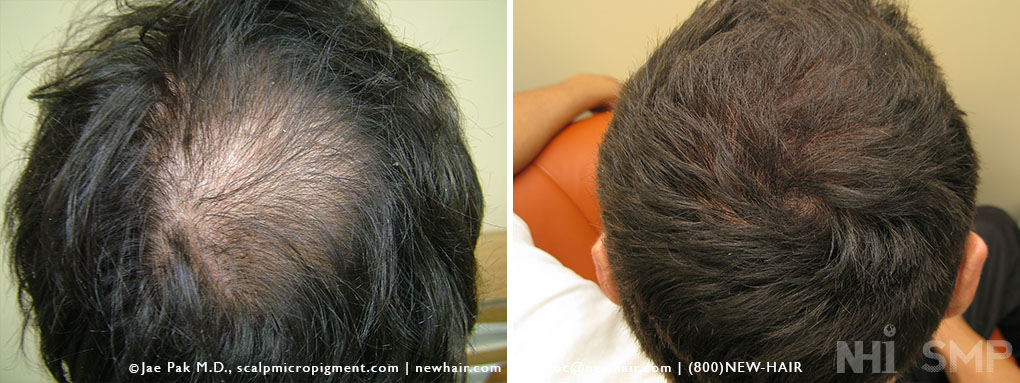
This patient was a victim of a bad surgery and old plug scars. He didn’t have enough hairs to cover the plugs or enough transplanted hairs to cover the top. He was out of options other than wearing hats or a hair piece. SMP helped him with creating a hair line and hiding most of his scars. The photos were taken a few minutes after the SMP so it still looks a bit red.
Hair line and temples are very important part of creating a natural looking hair line. There is no standard “template” you can use. Everyone’s hair line and individual goals are different. Dr. Pak’s artistic background helped create a new hair line. Dr. Pak actually does most of his hair lines free hand much like his portrait sketches. This prevents the all too common helmet head or lego head.
lego_head_smp

SMP to scar plugs by New Hair Institute: Note soft natural hair line and temple. The redness will go away in 2 days.

SMP to scar plugs by New Hair Institute: Note soft natural hair line and temple. The redness will go away in 2 days.

SMP to scar plugs by New Hair Institute.  He needs one more SMP session to even out the back with the crown area.  Top still looks "thin".

SMP to scar plugs by New Hair Institute. He needs one more SMP session to even out the back with the crown area. Top still looks “thin”.

SMP to scar plugs by New Hair Institute. Soft hair line.  Redness will go away in 2 days.

SMP to scar plugs by New Hair Institute. Soft hair line. Redness will go away in 2 days.

Hair Loss InformationScalp Scar Revision Specialists? – Hair Loss Information – Balding Blog

I had 4-5 hair transplant procedures performed between 5-8 years ago. I am not content with my scar revision. I would like to research which is the best method to cover up my scar well enough so that if I were to shave my head completely, the scar would be undetectable. Wouldn’t putting enough FUE’s in the former donor scar area be the right solution? Which doctor would be the most qualified to do this? I am not just looking for any doctor to do this. I would like a doctor who specializes with this procedure, and not someone who kinda knows what he’s doing. Please advise.

Thank you

Block Quote

If you are looking at NHI for a consultation, then please call (800) NEW-HAIR or email hairdoc@newhair.com to set up a consultation.

Or check out this POST

Otherwise scar revision surgery and FUE transplants to the donor area scar is one of many options. Both of these may not work. Scar revisions often only reduce the scar by 50%, if at all and FUE transplants into the scar produces some kinky hair growing out of the scar and really never make it really disappear ‘in the forest of hair’. There is also scalp micropigmentation as a non surgical option. As you correctly state, you should seek out an experienced and qualified doctor (as you should for any surgery).

Hair Loss InformationLong-Term Use of Antibiotics and Finasteride – Hair Loss Information – Balding Blog

Dear Doctor –
Is there any chance that a long-ish regimen of antibiotics could interfere with the efficacy of ongoing finasteride treatment?

More broadly, is there any contraindication of commonly used antibiotic scrips and finasteride? Is there any connection of antibiotic Tx to hairloss, in general?

Thanks.

Block Quote

There is no association that I know of with hair loss and chronic antibiotic use with or without finasteride.

Cowlick Correction With Hair Transplant? – Hair Loss Information – Balding Blog

I am a 26 year old man with some minor receding at the hairline which I take Propecia (Proscar cut into 4 pieces) for. However, independent of this I have always had a very profound cowlick on the back of my head. This has always been there and is not a result of any MPB I may be experiencing. I was wondering if you could correct this cowlick and how much scaring would be involved in something like this. Also I would like to add that your website is an excellent source of information.

Block Quote

Yes, here is a result of a hair transplant to the crown. This is most probably Male Patterned Hair Loss that you see in this patient. This patient also had some frontal loss, a classic Norwood Class 3V pattern (crown and frontal loss in combination).
crown_hair_transplant

Anecdote in Russian History On Hair – Hair Loss Information – Balding Blog

Time February 1917, just prior to the Russian Revolution. Vladimir Lenin was living in Zurich. He was depressed. “Nothing he tried seemed to succeed. The pamphlets he wrote drew little response while the hair oil which he bought in quantity and rubbed assiduously into his skull failed to stimulate even the slightest growth of hair(*).” This is an interesting footnote in history as we all know that Lenin was bald and his balding seemed to add to the depressing circumstances around him. (taken from Nicholas and Alexandra, by Robert K. Massie).
lenin

Block Quote

Hair has always impacted the emotional state of mind of men, especially during stressful periods. Famous celebrities, emperors and presidents stress out all of the time and some of them lose their hair from the stress and their genetics.

Eating Meat That Contain Steroids. Does It ImpaceHair Loss? – Hair Loss Information – Balding Blog

Dr is it possible to experience an acceleration of genetic hairloss from eating meat? I have heard meats are pumped with steroids and hormones can that have a negative impact on someone with genetic hairloss?

Block Quote

cow

I would doubt it as the US Department of Agriculture tests meat products for things like steroids and antibiotics. If you are concerned, switch to grain fed beef that is Organic.

Hair Loss InformationIs There A Recall on SMP Ink Pigment? Is Scalp MicroPigmentation Safe? – Hair Loss Information – Balding Blog

I read on a website:
“July 11, 2014 – White & Blue Lion, Inc. in the City of Industry, CA is recalling all lots of tattoo inks and tattoo needles due to pathogenic bacterial contamination. Use of these products may cause bacterial infection and can lead to sepsis, a potentially life-threatening complication of an infection. The recall includes all tattoo inks, tattoo needles, and tattoo kits distributed by White & Blue Lion, Inc.”
Do you use these inks or any of these products?

Block Quote

Tattoo products and inks are definitely a public health risk. Scalp MicroPigmentation falls in this category. You must check who is doing the SMP and if the establishment has a valid license and safety clearance. I have heard stories of SMP being offered in hotel rooms, in private residences, and even out of a car. As simple or harmless as it may seem, tattoo and SMP involves a needle piercing your skin with a foreign substance left inside. The pigments are not regulated or inspected by the FDA or any specific government agency other than the overworked State Health Department. There are numerous things that can go wrong in the wrong hands. HIV, Hepatitis B and C, skin infection, and allergic reaction are among a few that can have disastrous consequences.

We treat the SMP process very seriously as it is performed in a controlled medical environment. While it is not a medical procedure, contamination of needles and pigments are controlled by us. We use only disposable needles and sterilized pigments. We use the exact sterile techniques that we use when we do a hair transplant. We culture the inks and pigment for possible bacteria from our suppliers on all new batches we get and then we sterilize them in our own offices. We throw away all bottles, once opened. We have not seen any issues of bacteria present in the pigments from our testing, but if we did, we would know it. We use ultra-clean techniques for our SMP procedures as if we were going to do a hair transplant surgery to be assured of the least risk of infections as possible. We have not had an infection in the hair transplant procedures for more than a decade (including our SMP experience since we started doing them).