Hair Transplant Failures – What Could Cause the Grafts to Not Grow? – Hair Loss Information – Balding Blog

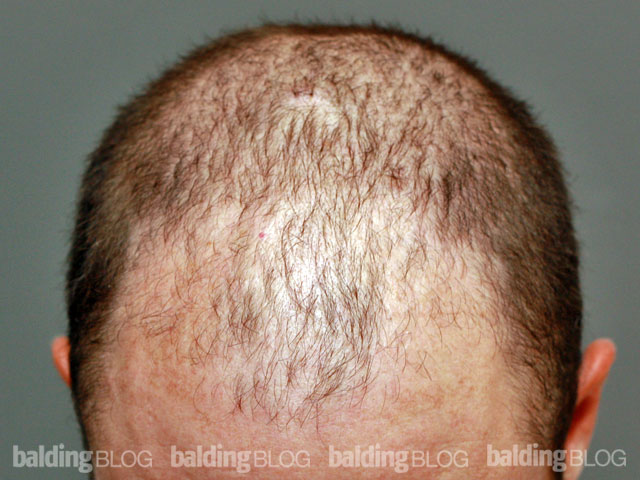
I’ve been writing about hair transplant failures more and more on this site lately, because it is a growing concern. I have been seeing, on average, 1 patient per week (from outside my office) who had a hair transplant with a significant failure of the grafts to grow (greater than an 80% failure).

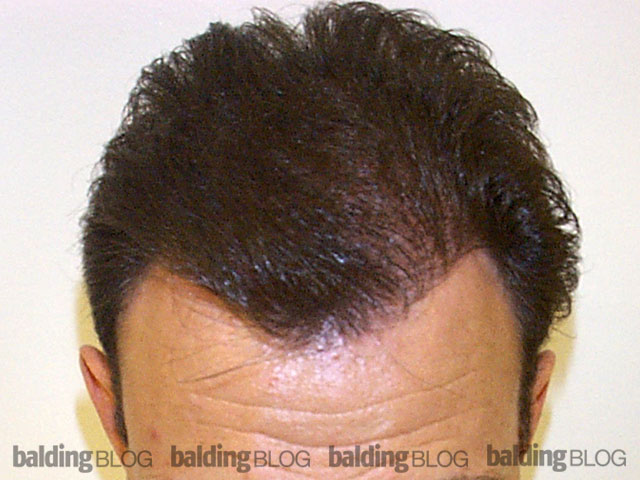
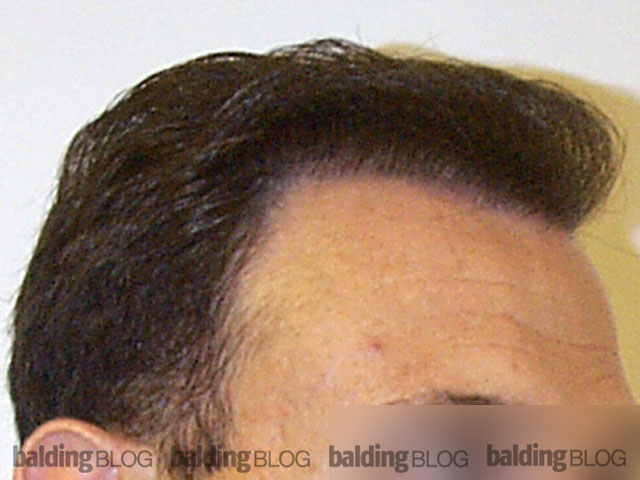
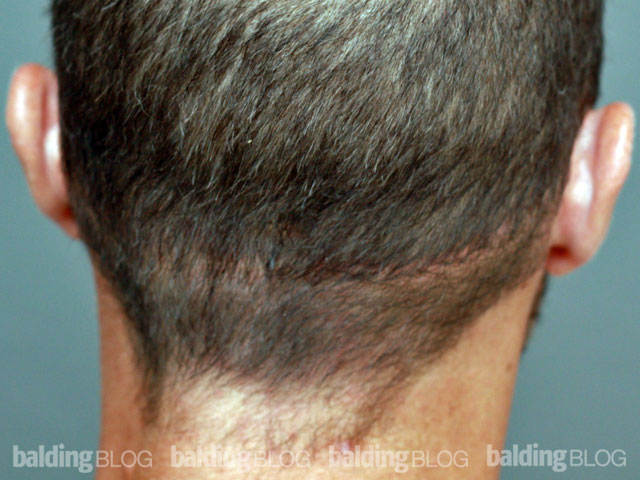
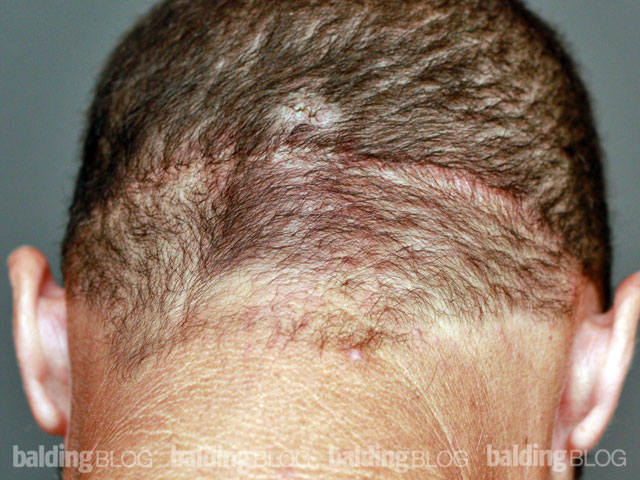
I just saw another patient who had received over 2000 grafts a few years ago. He was not a happy camper. There was very little growth and he had a very detectable scar which did not allow him to cut his hair short. He had such high hopes that the new hair from the transplant a few years ago would solve his image problems, but after much consternation and considerable anguish, he found that his situation was worse off than if he never had any procedure at all.

The patient explained that he did not like his doctor’s lack of concern in addressing the failure of his transplants to grow nor the detectable scar that plagued him every day. He was disappointed that his research on this particular doctor left no clue to the quality of this doctor’s work, nor his indifference to his plight. Before the surgery, when the doctor’s team “sold” him on the transplant solution, the environment was welcoming… but after the grafts failed to grow, he did not feel welcome by that particular doctor as he was made to feel that the failure of the transplant was his fault, not the doctor’s problem.

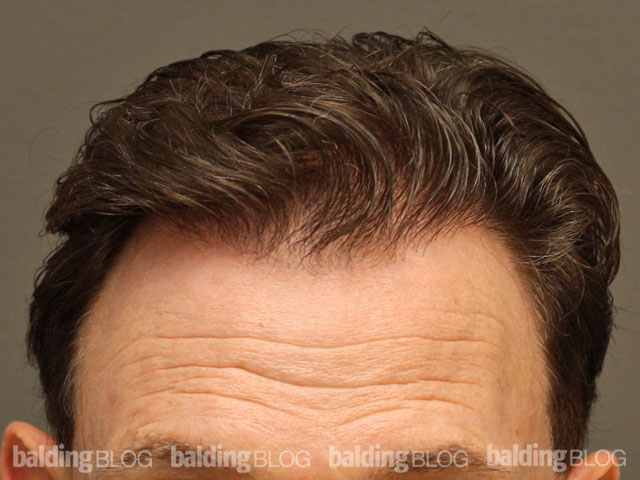
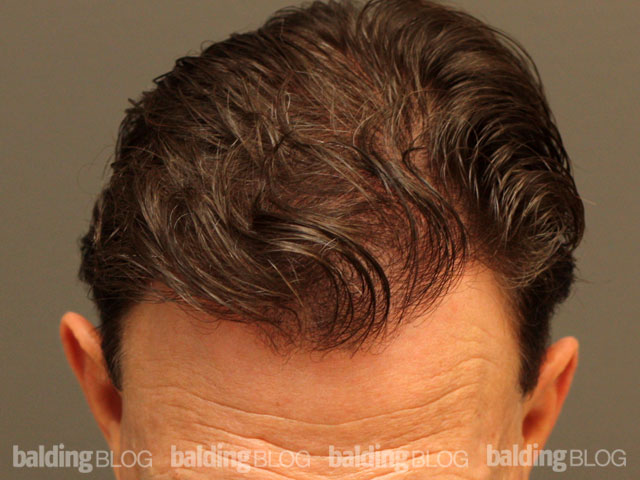
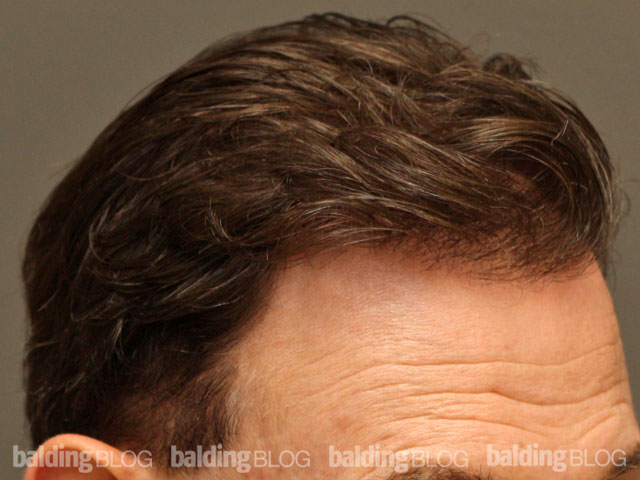
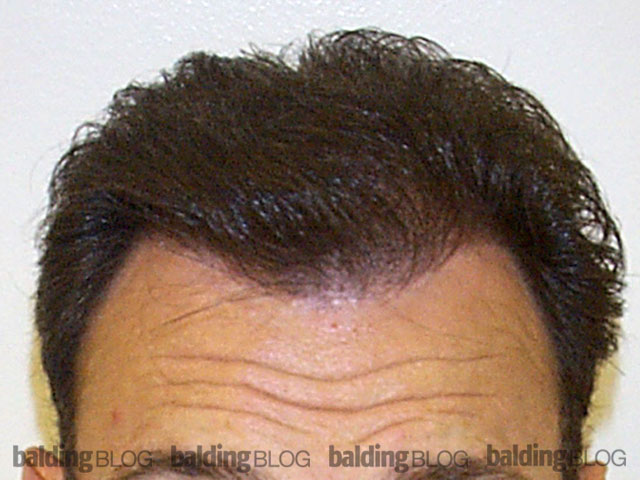
This particular patient had as much focus on his scar as he had with the failure for the transplants to grow, because he had the same look from the front and top view as he had before the surgery. He had no deformities from the surgery and his recipient area healed well with no scars present.

So what could be the possible causes for a failure of transplants to grow?

I should start off saying that I have never seen the cause of the problem stemming from something the patient did or did not do. Many of the patients who come to see me because their transplant did not grow felt that they were responsible for the failure. I think that patients feel that the surgery is a mysterious process and that there must be something wrong with them.

I have seen problems appear with graft growth in some women, as they may have had an undiagnosed condition called diffuse alopecia areata as a cause. Sometimes there may be problems with the recipient area skin (e.g. blood supply or scarring). That being said, most failures reflect surgical factors that are within the scope of what the surgeon and his team control.

Quality control means closely monitoring the activities of each and every staff member in the hair transplant process. Most of the failures reflect a failure of one or more of the following:

  • Graft drying: exposure to air for more than 10-20 seconds can kill the graft. The smaller the graft, the greater the risks for graft damage or graft kill. This risk occurs at many times in the procedure: (a) immediately after graft removal, the grafts are not immersed in a bath of a physiologic solution, (b) during graft trimming, when the grafts are optimized with regard to the size, (c), during movement of the graft from one place to another, (d) during placing, when the grafts are held in the air for more than 10-20 seconds.
  • Graft storage: The solutions used contribute to the survival of the graft and the longer it is out of the body, the greater the potential damage. This risk reflects upon the skill of the surgical team and the experience of each technician.
  • Graft handling: Managing the movement of the grafts from the physiologic bath solution to the recipient area takes time. Some doctor’s assistants who place the grafts will pile them up on the finger or hand, leaving them exposed to air for more than 20 seconds.
  • Graft placement: This requires a special skill that often takes more than a year to acquire. Often it reflects a talent. The grafts must be delicately handled, because crush injuries are a potential problem.
  • Graft depth: There is such a thing as a graft that is placed too deep or too superficial. Too deep can kill the graft as it turns the graft into a foreign body. It can also produce pimples or folliculitis sometimes weeks after surgery
  • Grafts destroyed or never done as claimed: For long cases, I am under the impression that some doctors and/or some of their technicians actually toss the grafts in the garbage because: (a) they were too tired, (b) the placing was too difficult, (c) they never harvested or placed the number of grafts that they actually charged for. All of these things probably happen far more often than anyone cares to admit, but because it is a financial issue, the doctor and/or the team gets greedy. That means that from some surgeons’ points of view the surgery is about money, not grafts… and certainly not results.

When I see claims of FUE or strip surgery in the numbers that some patients from other clinics tell me that they received, I know in my heart that it could be a scam. This, of course, is a felony, but how does anyone know it if it is not reported? I have been told by many technicians that these things happen at other medical offices where they worked. Once, I had a technician toss away some grafts in my own practice and I fired that tech on the spot. This problem is the most alarming of the problems in this industry.

When a surgeon and his/her team finish placing the grafts, violations to any significant degree of any of the above can result in placing grafts that were killed in the surgical process. The surgeon and the patient will not know if the procedure worked until 6+ months after the procedure was done. By that time, the patient’s check has cleared the surgeon’s bank account by the time he finds out if the surgical techniques worked out or if the patient was honestly delivered what they purchased.

Hair Loss InformationWould Mini-FUE Be Ideal for Treating Possible Triangular Alopecia? – Hair Loss Information – Balding Blog

Good day Dr Rassman,
I wonder if i would be an ideal candidate for your new FUE harvesting technique!

I have been in contact with you before. I am a 44yr old male with a small (1 inch) bald spot on my right side in front of the ear. i have never seen anyone else with this particular condition, i wonder if you have. i can resend pictures as no doubt you are unlikely to have the ones i sent to you some years ago. Hair miniaturised in this area probably at the start of my balding process (was gone by the time i was 30 i think). Many years of propecia and minoxidil have had no effect whilst they have had some effect on the top of my head.

A consultation with a dermatologist diagnosed triangular alopecia (although that was simply by looking and he may have just have piggy backed onto my suggestion that it was!!). A course of steroids both topical and injections have had no effect.

i wonder if this new technique could be the answer. My only concern is that if this is an immune system rejection of hair in that area, then i assume placing more hair there will be rejected as well but i am no expert just looking for a solution. many thanks

Block Quote

If you have a 1 inch area on one side of your head, a mini-FUE would possibly be ideal.

Before assuring your candidacy for surgery, I’d of course have to see precisely what you’re referring to and I’d want to know for sure what the diagnosis was. I don’t know why you’d think your immune system would reject hair transplanted into an area of your scalp.

Patient Results – 4149 Grafts Restored His Hairline (with Photos) – Hair Loss Information – Balding Blog

This patient with straight, medium fine hair had presented a Norwood class 3A pattern when I first met with him years back. His first hair transplant surgery was 1927 grafts, and while it gave him a hairline that he had been missing for years, he decided to have another procedure (of 2222 grafts) a year later to fill it out a bit more. No further procedures are planned.

Click the photos to enlarge.

After (4149 grafts total over 2 procedures):


Before:


Direction of Graft Growth – Hair Loss Information – Balding Blog

Hi Dr,

Can you explain how accurately a surgeon such as yourself can transplant grafts so that hairs grow in the same direction?

I have seen quite a few celebrity transplants where the hair still appears thin and the hair once grown out always looks messy because the direction of the grafts is not quite right.

How are you able to ensure that this doesn’t happen?

As someone with naturally fine and very straight hair then i imagine it would be essential that any transplant i had done should be performed by a top surgeon who is able to make sure that the angle of the transplanted graft is accurate. If i had thicker and naturally curly hair then i suppose this wouldn’t matter so much and is probably a part of the reason why those with curly make better candidates?

Thanks

Block Quote

Doctors have direct control of how the transplanted hair grows and how the transplanted hairs are distributed to give the most natural look. This is a very important point that most prospective patients do not take into account when searching for the right medical group for a hair transplant procedure.

You are correct in stating the fine straight hairs need careful attention to detail when undergoing a hair transplant procedure, but careful attention to detail is also a must for coarse hair, because each hair can have many times the bulk of a fine hair. A coarse hair put in the wrong direction will be more easily detected than a fine hair put in the wrong direction. Some surgeons, when placing the hairline, place the frontal hairs radially (like bicycle spokes). Is it possible that surgeons who do this do not understand the normal direction of the hair growth, just are ignorant of the facts? Sometimes I think so.

To be sure that these poor placement doesn’t happen to you, you have to do your own research and due diligence. There are many good doctors with great artistic skills. The best way to determine who these doctors are is to ask to meet some of their patients. My patients love showing off their results in the privacy of our office, so we set up circumstances once a month to allow this to happen. To me, this is just plain good medical education. This is why we have our monthly Open House events where anyone can come and see our former patients (up close) and speak with them face to face.

Hair Transplant from Non-Permanent Zones? – Balding Blog

Hi,

I’m in planning stages of surgery to fix some Norwood Class 3 corner recession, probably not more than 2000 grafts. Taking the grafts from the permanent zone has the disadvantage of setting me up for more surgery in the future, if finasteride doesn’t keep my hair, so I’m considering having the grafts taken from the midscalp instead. I will then have little to no need for additional surgeries, even if I keep thinning on top, as the transplanted hair will thin out along with
the rest of the hairs.

I understand that some might have a problem with a scar on the anterior mid scalp, but I already have a long scar there. It’s from an accident.

You need to discuss these issues with your surgeon and have a good basic concept of the Master Plan and future consequences. Mid-scalp harvesting can cause more scarring and an unnatural outcome. I do not know exactly what you are planning, but it does not sound realistic.

If the surgery is planned out well, you should not need more surgery because you continued to bald. You may look thinner over time, but it should still look natural, not prompting the need for another surgery. Wanting another surgery is a different story. Every surgery should stand on its own… at least, this has been my philosophy.


Related Posts Plugin for WordPress, Blogger...

Balding Forum - Hair Loss Discussion

Hair Loss InformationGraft Anchoring After a Hair Transplant – Hair Loss Information – Balding Blog

Hi,

I am confused by some of your answers in the forum relating to graft anchorage.

Specifically, in your study with Dr. Bernstein, you conclude that from the 6th day, it is not possible to dislodge a graft by pulling the hair. Similarly, this is not possible by the 9th day by pulling a scab attached to the scalp/hair.

However, on some of your answers to questions related to graft integrity, you mention that as long as the scab is present, there is risk to the graft coming out (e.g. you advocate not wearing a hat until scabs come out, etc.).

So, are you saying that from the 9th day onward, the graft will not come out even if the scabs are scrubbed off, wearing a hat, etc. and the only time to worry about losing grafts due to scabs is in the first 9 days? Or is it possible to still dislodge a graft after the 9th day?

The reason I ask, is that I have a lot of scabs and started trying to remove them on the 11th day, and am wondering if the grafts would have set permanently by then, scab or no scab.

Thank

Block Quote

The graft pull study (PDF file) was done to determine when the removal of the graft, really meant that the entire growth center of the graft was removed.

We found that in the first six days, although the physical graft could be pulled out, the graft growth center probably remained (reflected the sleeve of the graft itself). We generally felt better when the graft pull was done at 9 days, but that did not mean that the graft growth center could be removed at the 9th day.

We are big on post-operative correct washing to minimize the scabs present. Some doctors do not give the patient the instructions on proper washing and scabbing may remain for very long periods (as long as 3 weeks). Although pulling out the grafts (at say 20 days) would still have what appears to be graft material in the pulled samples, there is little doubt that the graft growth center did not come out with these pulled grafts at 14 or 20 days.

Hair Loss InformationShould I Have a Transplant Now or Wait Until My Balding Is Worse? – Hair Loss Information – Balding Blog

Hi Doctor,

I am considering a hair transplant and I just wanted to ask you a question. I’m 30 and a Norwood 3. I am thinning in and around that part of the hairline but maybe alittle on top. It’s thinner than my crown and sides let just say that. My back and crown is thick and untouched by the mpb gene. I’ve got very thick hair where it is not thinning and more than able donor supply. 2.0 cm hair count.

I’m just thinking in general should I do one now to get my hairline and thicken the front. Then 1-2 for the top over the next 10 years then done. Or wait 2-3 years and get a larger one done then another 2 years after? Just thinking in regards to scar and the lifetime master plan? Thanks

Block Quote

Only YOU can answer this question. A hair transplant is an elective cosmetic surgery to enhance your appearance. It is not a necessity. If you want to look better now with a fuller, hairier look, then it is your choice. If you want to wait until you have more hair loss before going ahead, that is also your choice.

Planning out how you may bald in the future and coming out with a life long strategy is also known as a Master Plan (something that I strongly advocate in my practice). The Master Plan is something you and your doctor need to discuss one-on-one.

Results After 3365 Grafts Transplanted About 15 Years Ago (with Photos) – Hair Loss Information – Balding Blog

This patient came back to see me some years after he had his last transplant with NHI. He had 3365 grafts transplanted over two procedures in 1995 and 1998 (grafts placed throughout the frontal hairline and top of the scalp).

This patient visited the office recently to ask about some thickening in the area behind the transplants where he believed he is thinning. He has been on Propecia since the transplants were done, and although most of the hair has been held, the genetics has been persistent at taking some of his hair away.

Click the photos to enlarge.

2012 (after):


1998 (before *):


* Note that the “before” photos above were actually from just before his 2nd procedure in 1998. The photos from before his 1st surgery in 1995 are not available (they weren’t digital), and although the quality of these 1998 photos isn’t the best, I really just wanted to show how the transplant looks after a lot of time has passed.

Another Hair Transplant Failure, This Time with Photos – Hair Loss Information – Balding Blog

We’ve written about hair transplant failures before (here and here), but this time we have some photos that we’ve been given permission to share.

This patient had 1000 grafts placed into the frontal area 10 years ago (not with us). Around 95% of the grafts have failed to grow either initially or since the surgery. In looking for a cause of the failure, I found that the donor area was taken from neck hair, not scalp hair. The incision high in the neck from a strip surgery healed better than most neck incisions, but below the incision the hair is significantly thinner than the area above it (see photos below).

The cause of the failure of the grafts could be from:

  1. The use of neck hair in the recipient area. It is well known that neck hair is not permanent and as this patient has thinning of the neck hair today (10 years after his transplant was done), it is possible that aptosis (cell death) was induced from the neck hair transplant.
  2. A failure of the quality control in the hair transplant process.
  3. A failure of the technique at the time of surgery.

Click the photos to enlarge.


How Bad Would a Thin Strip Scar Really Look If I Shaved My Head? – Hair Loss Information – Balding Blog

Hello, thank you Dr. Rassman and Dr. Pak, for maintaining this fantastic site.

You’ve explained that once transplant surgery has been performed, a patient cannot shave his head without scarring (either a FUT line or FUE dots) being visible.

My question is: If someone had a thin scar from FUT, would it really look so terrible if they shaved their head in the future (if Finasteride’s effectiveness waned and hair cloning treatments fail to emerge, and they become an advanced Norwood 6/7)?

Obviously, there are pictures of strip scars online, but it’s difficult to imagine what they would look like on a shaved head. Do you know of any patients who have done this?

Block Quote

You can look at how bad strip scars may look on our ScalpMicropigment.com website (see some of the before photos of scalp scars). Unless you shave your head, even the wider scar is not visible with long hair. My scar, after three strip surgeries, can barely be seen; however, if I decided to shave my head, everyone would see the 1-2mm scar I have. Now unless you are wanting to completely shave your head, you should not have to worry about the strip scar.

In general, you can keep your hair cut as short with a number 2 to 3 guard on hair clippers without the scar being noticeable in most cases.