Hair Loss InformationPatient Results – Restored Crown After 1870 Grafts (with Photos) – Hair Loss Information – Balding Blog

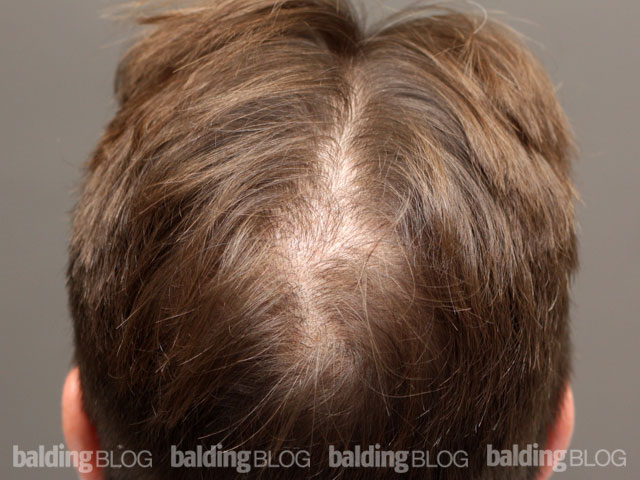
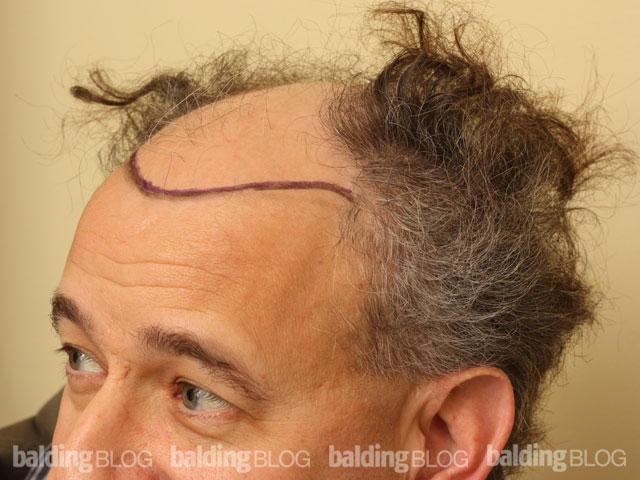
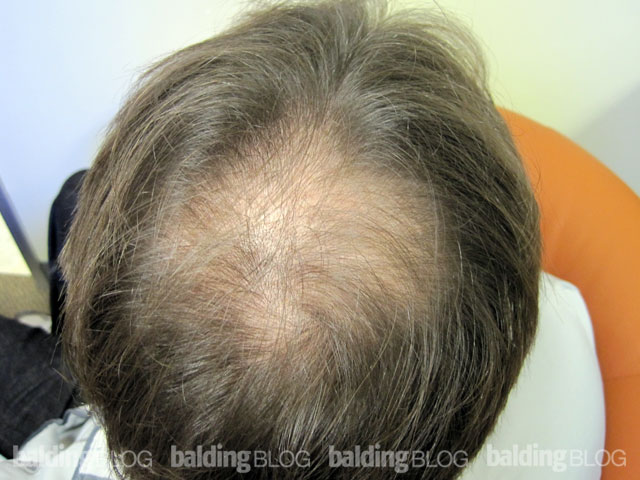
This patient stopped by to show me the results from his crown transplant a couple years ago. He is completely thrilled with the results, which are from the 1870 grafts he received in one session.

He liked the results so much that he started considering having surgery in an early mature hairline (he is 32 years old). I suggested that he hold off on any surgery to his hairline for a while, since it’s not bothering him much yet. Chasing a maturing hairline with transplants is never a good idea because in my opinion, this is a normal hairline for a man who is not balding.

But in any case, his crown looks much fuller now and he couldn’t be more pleased! Click the photos to enlarge.

Before (on left)  //  After (on right)
 

Update: A reader pointed out that we previously posted this patient last year (oops) — here. I corrected some info about the patient’s age and graft count. The after photo is more current on this post though.
Patient Results – Amazing Change in Just 9 Months After 2781 Grafts (with Photos) – Hair Loss Information – Balding Blog

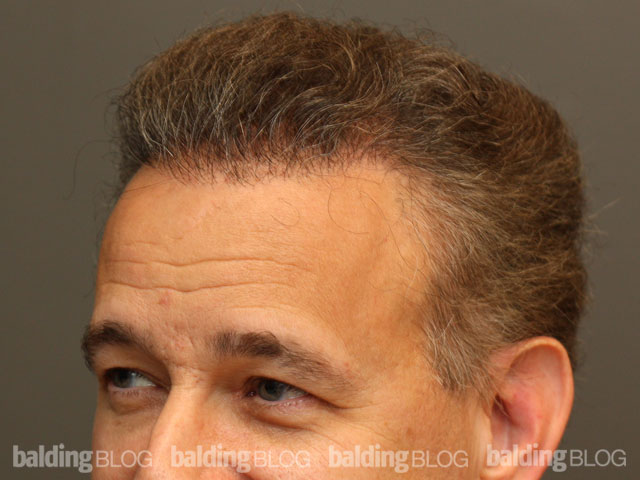
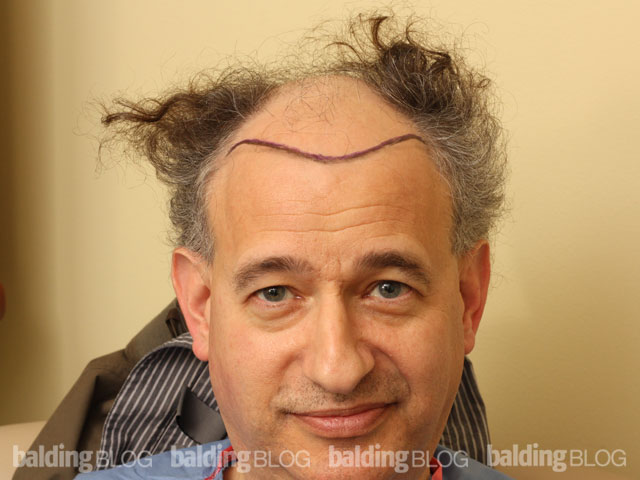
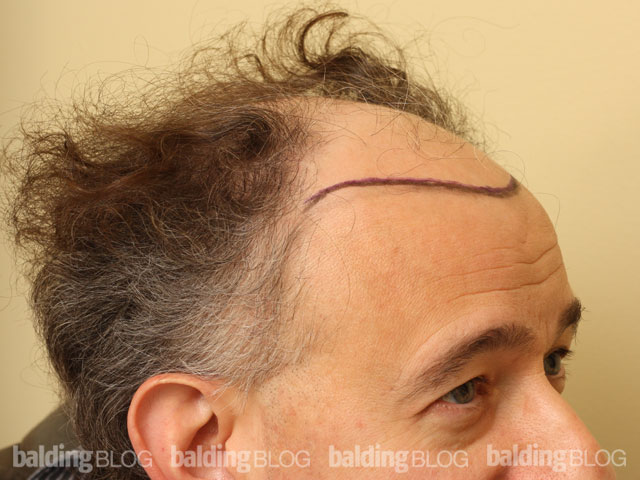
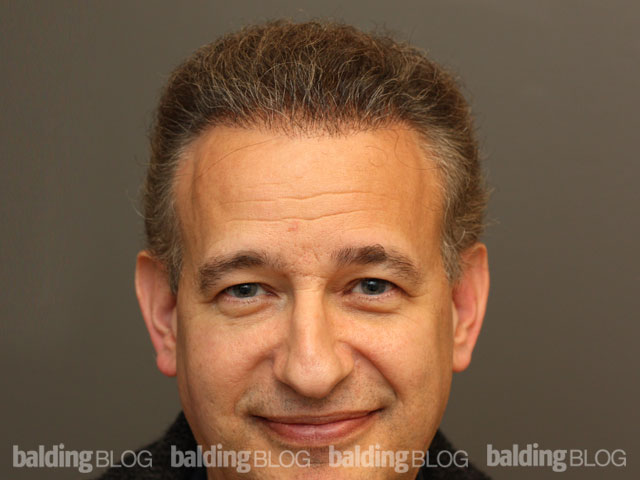
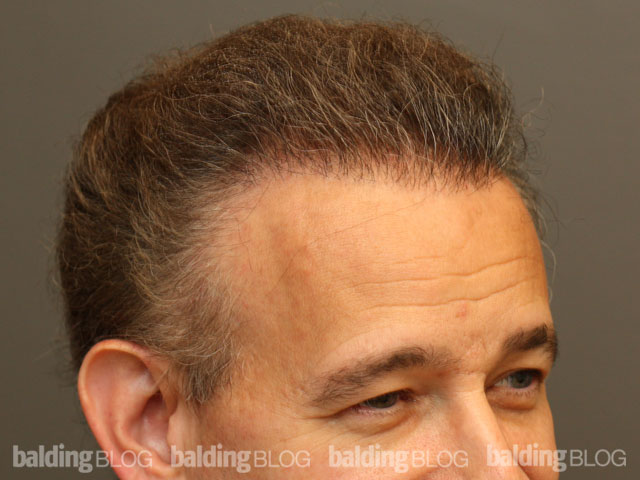
This patient is a doctor and appreciates the radical change in his hair over the past 9 months since he had his hair transplant. He told me that no one specifically noticed the change as his hair was growing in, but knew there was something going on that made him look around 10 years younger.

Some thought he was just exercising and eating better. He said that even when friends looked at his head, it wasn’t apparent to any of them that he had been growing hair where he was previously bald. But comparing his current look to his before photos, the change is quite apparent now.

Click the photos to enlarge.

After (2781 grafts in 1 procedure):


Before:


Should I Try Every Non-Surgical Treatment Before Going for a Hair Transplant at the Hairline? – Hair Loss Information – Balding Blog

Hello Dr. Rassman. I am in my early thirties and thinking of getting a transplant done. I have been on finasteride for quite some time with decent results. However, in the last few years my hair loss picked up in the front hair line but has slowed down up to this date. Should an individual, like myself, try ALL the available non surgery options like avodart, minoxodil, nizorol etc before going the hair transplant route?

Most of my hair loss im the frontal area. I still have decent coverage but I am thinning. Would I be at risk for severe shock loss even though I am on finasteride? Thank you.

Block Quote

Medications do not usually work to regrow hair in the frontal hairline, but hair transplant surgery generally address this area well. Whether you are ready or should undergo hair transplant surgery is between you and your doctor, and part of the Master Plan. Each and every patient is different, with different goals and expectations. There is no right answer to your question.

Many patients come to me and worry about shock hair loss, but this is part of the individual risk versus the benefit… as we discuss in the Master Plan. Most men in their 30’s with long term finasteride (Propecia) use and who are not rapidly losing hair, do not usually have shock loss. An ethical doctor would not recommend surgery to a patient if they feel the risk of shock loss is significant. I know I am a broken record on this, but this is why choosing a doctor and having a good Master Plan is very important.

I’m Having a Face Lift Done Soon – Can I Save the Sideburns to Transplant to My Eyebrows? – Hair Loss Information – Balding Blog

I am going to have a face/neck lift in the next few months. The skin on which my sideburns are will be cut out as part of the procedure. I wonder whether I could use those hairs to fill up my eyebrows? Could they be ‘saved’ by the surgeon temporarily for the hair surgeon?

Block Quote

Face lift and hair transplant can be done with the extra hairs harvested from the face lift surgery. But it needs to be coordinated by a hair transplant doctor and be done on the same day.

So technically yes, the hairs could be transplanted to your eyebrows… but both procedures need to be organized so that the grafts are not kept out of the body for too long.

Hair Loss InformationCan I Have Hair Transplanted Into a Scalp Scar I Got From a Machinery Accident? – Hair Loss Information – Balding Blog

My question is, can a hair transplant be successful on an scar that has no hair follicles? I got a 2 inch area on my head that was literally ripped from the top of my skull in a machinery accident. The top of my skull was literally exposed. Skin and tissue has grown back, but the problem is the hair follicles did not. So I now have about a 2 inch radius area on my head that is bald, and on me it looks really strange and dumb since I ain’t balding in any way. I have a full head of hair and it’s long hair even, except that one area that is just a bare bald spot now.

So can a hair transplant work on an area with no hair follicles?

Block Quote

There are many types of solutions for this type of problem, but I would need to know more about your specific issue before suggesting a transplant as the solution. As a start, send me good quality pictures and I will try to assess what the problem is (please reference this post when sending). The photos alone may not be enough though, and possibly an examination would be critical.

Transplanted hairs can grow into scars, but I don’t know enough about your case — when the injury occurred, your age, if you have any genetic hair loss (or family history), etc. Until I make an assessment, I couldn’t say whether a hair transplant would be the best path for you to take.

5 Months After My Transplant, Nothing Has Grown In and Now I’m Losing Hair All Over! – Hair Loss Information – Balding Blog

Hi Dr. Rassman,

I find your blog to be incredibly informative and helpful to those with concerns after their hair transplants. I decided to undergo a transplant exactly 5 months ago as preventative maintenance. 1,700 grafts to fill-in the thinning top portion of my head. I still have hair on my head, but under direct light you could visibly see through to my scalp. I followed my doctor’s instructions and had no major issues after the surgery.

At 5 months, the incision scar is still pink and I have occasional pimples on the top of my head (with what seems to be a noticeable increase in grease on my head). Also, after the surgery I had shock fallout. But it seems that ever since my surgery for the last five months my shedding has been consistently increased. Not just from the top of my head, but all over (sides and back). I have yet to see any growth from the grafts. But I have noticed white streaks in my hair. I have pitch black hair, and there are now random strips of white developing throughout my hair (I had never had white hair before the surgery). Is it possible that the shock of surgery would cause some of my hairs to begin to turn white?

And I’m also concerned at this point that my grafts will not grow in and that I will continue to get thinner and thinner since my fallout has increased. Thank you for your input and advice.

Block Quote

In my practice, we never recommend a hair transplant surgery for “preventive maintenance”, mainly because most patients would not likely see much of a result as they continue to bald and run the risk of being worse off. There is also a good possibility that the surgically induced hair loss might make it look worse, something we call “shock loss”.

If you are really losing hair on the sides, maybe something else is going on like diffuse unpatterned alopecia (DUPA). Shock loss doesn’t usually cause hair to fall out from the back and sides of the head. White hair does appear with stress on some people, but I really do not understand the cause. It sounds like you need a good doctor to talk with and be examined by. Perhaps the surgeon that did your transplant would be a place to start.

In general it takes about 6 to 8 months before you can see results and I tell my patients that most people can see 80% of the impact from a hair transplant in 8 months. You should notice growth beginning about now and see improvement in the next 3 months. If you are young and had the transplant without taking the drug finasteride, and assuming that your preventive hair transplants were not really needed, then you will most likely not have as much hair as you did before the transplant (based upon what you are saying here). Hopefully though, over the next 3 months you’ll see some gains.

I Started Using Minoxidil The Day After My Hair Transplant! – Hair Loss Information – Balding Blog

Very worried about something. Had hair transplant surgery three weeks ago and it went great… walked out after 12 hours with 4190 grafts. The doctor gave me a rx for propecia and also recommended using minoxidil. He didn’t mention WHEN to start using it; as a result, I started using the minoxodil the next day, and continued for about 5 days-week. There was no bleeding, etc., but I know there was a high degree of alcohol in it (Costco brand) and am now worried I did something to destroy or disrupt the grafts. All of the grafts have by two weeks.

Can’t find anything on the web that gives me info on this, other than to wait at least two weeks. Have you heard of this happening and causing any damage? I called his office and spoke with a surgical tech, who told me he should have told me to wait at least 3-4 days, but she didn’t think it could be harmful. Thanks for any advice you can give me…

Block Quote

We advise patients to wait at least 3 to 4 days (maybe a week) following a hair transplant before they resume the use of products like Rogaine (minoxidil). If you are asking if the use of Rogaine the day after surgery has harmed your grafts (due to its alcohol content), I really cannot say. I suppose time will tell.

How Do Celebrities All Seem to Have Great Hair? – Hair Loss Information – Balding Blog

What’s more common amongst celebrities? Propecia/rogaine usage, authentic looking wigs, or hair transplantation?

It’s ridiculous the amount of celebrities who have great hair. Is it more than a coincidence that rock bands with like 6 male members all keep full heads of hair in to their 50s and beyond?

Also – if I needed more donor hair for a transplant to ensure added thickness, could you transplant hair from a close family member with similar hair to mine?

Block Quote

EltonCelebrities are just people like you and me, and they have what you and I have, nothing more and nothing less… other than $$$. Some will opt for hairpieces/wigs, which can be expensive to maintain. Some will opt for hair transplants, which are permanent. Others will opt for medication, or a combination of surgery/meds. I have no way to know which method is most common amongst celebrities, but I do know that I’ve transplanted many.

Hair doesn’t give you talent, but it could likely provide confidence in your appearance… which may translate to confidence in your musical performance. If there’s a rock band that’s been around for decades and all of the members still have hair, it would be coincidence (or perhaps they’re wearing wigs). There are plenty of musicians with hair loss or a completely bald head — Rob Halford, Chris Daughtry, Michael Stipe, etc. And there are also musicians that are known to have had work done, such as Elton John.

Finally, at this point hair transplants can only be from oneself, not from anyone else. Since hair is an organ, transplanting from another person (unless it is an identical twin) would result in the body rejecting the hair unless potentially dangerous anti-rejection medication is taken. I’ve written about that before here.

Hair Loss InformationShedding Transplanted Hairs Years After the Procedure? – Hair Loss Information – Balding Blog

Hi Doctor,

A lot of questions on here about initial shedding after a transplant, but my question is regarding transplanted hairs shedding years later, due to the natural hair growth process.

I noticed my transplanted areas have become thinner over the past couple of months. It has been almost 4 years since my surgery. It is well known that the hair growth cycle for hair is between 3-4 years, then they shed to make room for new hair. I was wondering since all transplanted hairs are relatively growing at the same rate or time period, should we expect periods of thinness every 3-4 years when these hairs are ready to shed again? In other words going through a shed similar to your first initial shed before the hairs started growing again. I hope my question makes sense.

Block Quote

Transplanted hair is permanent for most people. In the recipient area, the surrounding non-transplanted hairs may not be permanent and you will continue to lose those hairs. Years after a hair transplant you may be noticing the non-transplanted hairs falling. This is assuming there was non-transplanted hairs mixed in with the transplanted hairs.

If your hairs were transplanted on a completely bald area of your scalp and you are noticing shedding, this is not considered normal. It may regrow if you are experiencing telogen effluvium, which is a temporary hair loss that can occur at any time… or you could be one of those rare people who lose transplanted hair. I always look at the permanent zone when someone asks me about hair loss in the recipient area, in case they are losing donor area hair. Whatever happens to the donor area will happen to the recipient area. For example — in elderly folks, there is a condition called senile alopecia which reflects thinning of the hair throughout the head, including the donor area.

In a very rare instance, you may actually be experiencing permanent transplanted hair loss which I have seen possibly a dozen times in my 20+ years in practice. I don’t remember a cause of this to ever have been pinpointed in most of those patients and I wonder if I should be biopsying them when I see that problem, looking for diseases like diffuse alopecia areata.

I Was a Victim of a Hair Transplant Pricing Scam – Hair Loss Information – Balding Blog

I am one of the latest victims of hair transplant scam in this country. I asked for a full head of hair and I was told all I need is 3600 grafts at a price of 1.75 dollar per graft (too good to be true). The person in charge claims that he transplanted 3800 grafts which mean 11000 hairs (an average graft is 3 hairs x 3800=11400 hairs). And I counted them one by one (this lie is in the consent form he prepared for me to sign) Is this true? No! Never! It is impossible to extract so many grafts from just a 20 sq. cm donor area.

So the strategy of these crooks is to bring down the price at one end and fake the number of grafts at the other end so to come up with the same dollar amount as with other companies but pretending to be competitive in the market. I borrowed money from Chase Health Advance and once I discovered that I was a victim of fraud I stopped making further payments. I have filed a complaint with Florida Department of consumer affairs, Department of Health and FBI in Miami, FL. I trusted these crooks through Chase Health Advance. The latter has stopped lending money to their prospects. I need your feedback to be more effective against these criminals. Please provide your advice.

Block Quote

The legal remedies include criminal and civil options. I am not a lawyer, but I’ve posted your email so that other people will remember that when someone promises you something that seems too good to be true, it usually is. I’ve written much about scams and “discount” hair transplants before (like in this post).

If you counted thousands of grafts or hairs, that is quite a task. Is it possible that your surgery wasn’t that long ago and the grafts haven’t grown in yet? I don’t know enough about your case to really offer much.